
On a June afternoon in 2019, thermometers across southern France climbed to 46.0 °C — a reading so far beyond anything in the country’s historical record that meteorologists double-checked their instruments before accepting it as real. This was not the Sahara. This was France: a temperate European nation long defined by mild summers, vine-covered hillsides, and the kind of predictable seasons that shaped its agriculture and architecture over centuries. That single number is a useful entry point into a much larger story about how France’s weather is changing, why it is changing faster than most people realise, and what the consequences are likely to be.
France’s Climate Baseline — and Why It Is Shifting
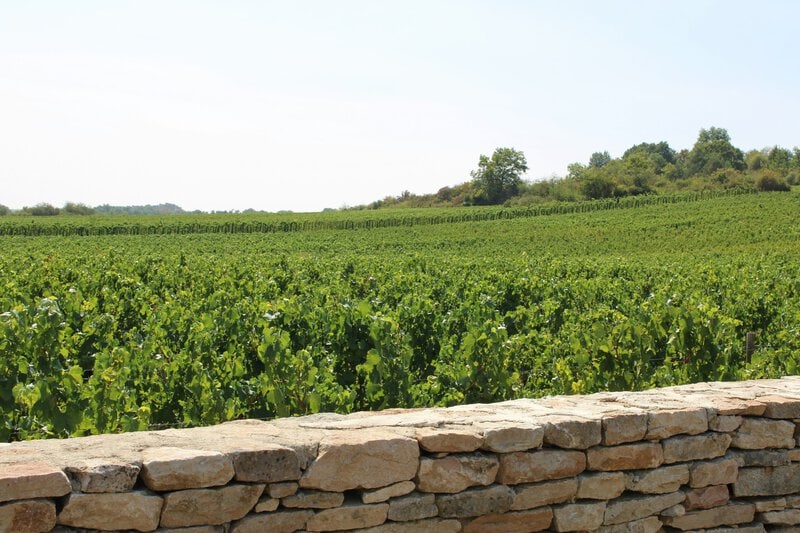
France sits firmly in the temperate zone — a classification that implies warm but not brutal summers, moderately cold winters, and rainfall distributed across the seasons rather than concentrated in a single punishing month. That climatic stability is not incidental to French life. It is embedded in the country’s wine culture, its centuries-old building stock, its farming calendar, and its sense of geographical identity. The cave-like stone farmhouses of Provence, the uninsulated apartment blocks of Paris, the drainage systems of the Loire Valley — all were designed around a climate that is now behaving differently.
According to France’s national meteorological records, the country is warming at approximately 0.1 °C every three years — a rate that compounds measurably over decades and outpaces the global average warming rate on land. The figure sounds modest in isolation. Compounded over decades, it is transformative.
Part of the mechanism driving this acceleration involves the jet stream, a high-altitude river of wind circling the Northern Hemisphere that normally acts as a barrier separating Arctic cold air from subtropical heat pressing northward. As the Arctic warms disproportionately fast — a process scientists call Arctic amplification — the temperature contrast that energises the jet stream weakens. The stream becomes more prone to looping and stalling, and when it stalls, so does the weather beneath it. Heat domes can park over Western Europe for days or weeks rather than moving through in a matter of hours.
It is important to be precise about what is settled and what is not. That the jet stream is weakening under Arctic amplification is broadly accepted across the climate science community. Exactly how dramatically this increases the waviness of its path — and therefore how directly it explains specific European heat waves — remains genuinely contested. Some modelling studies project significant changes to atmospheric circulation; others find more modest effects. The overall direction of travel is clear. The precise mechanism is still being worked out.
Heat Waves: From Exceptional to Expected
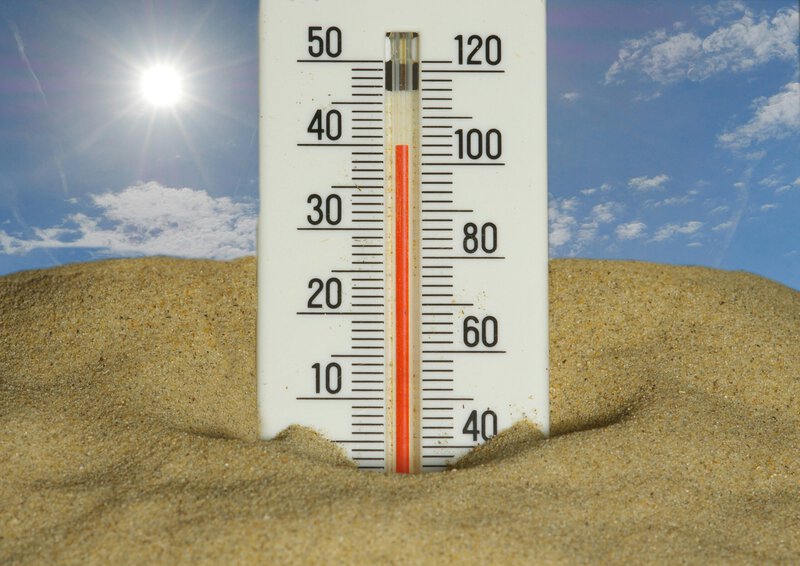
French weather officials confirmed the 46.0 °C reading as the country’s all-time hottest day on record — a milestone that illustrates a concept climate scientists call “loading the dice.” Background warming does not simply make every day a little hotter. It shifts the entire distribution of possible temperatures, pushing what were once statistically freakish extremes into the realm of plausibility and eventually regularity.
The World Weather Attribution consortium, a leading international group that conducts rapid scientific analysis of extreme weather events, has developed frameworks showing that every 1 °C of global average warming makes previously once-in-50-year heat events roughly five times more likely over Western Europe. That multiplier carries real human weight. The 2003 European heat wave — which the World Health Organization estimates killed approximately 70,000 people across the continent — was once considered a near-impossible event under pre-industrial climate conditions. Attribution studies now classify it as at least five times more probable as a result of human-caused warming.
What is firmly established by scientific consensus is that heat waves in France are becoming more frequent, more intense, and longer in duration. What remains genuinely uncertain is the precise ceiling: exactly how hot individual peak events will reach by 2050 or 2100 depends on global emissions trajectories, on feedbacks that models still capture imperfectly, and on regional land-use changes. The science is clear enough to plan around. It is not precise enough to treat any single projected number as a guarantee.
The human consequences of this shift are not evenly distributed. Urban residents — particularly the elderly, the very young, and those without access to air conditioning or green space — face disproportionate risk during extreme heat events. The 2003 disaster exposed severe gaps in France’s social infrastructure, prompting the government to establish a national heat-health warning system. Whether that system is adequately resourced for a future in which such summers become routine is a question French public health planners are actively debating.
The Mediterranean Creep — A Climate Zone on the Move
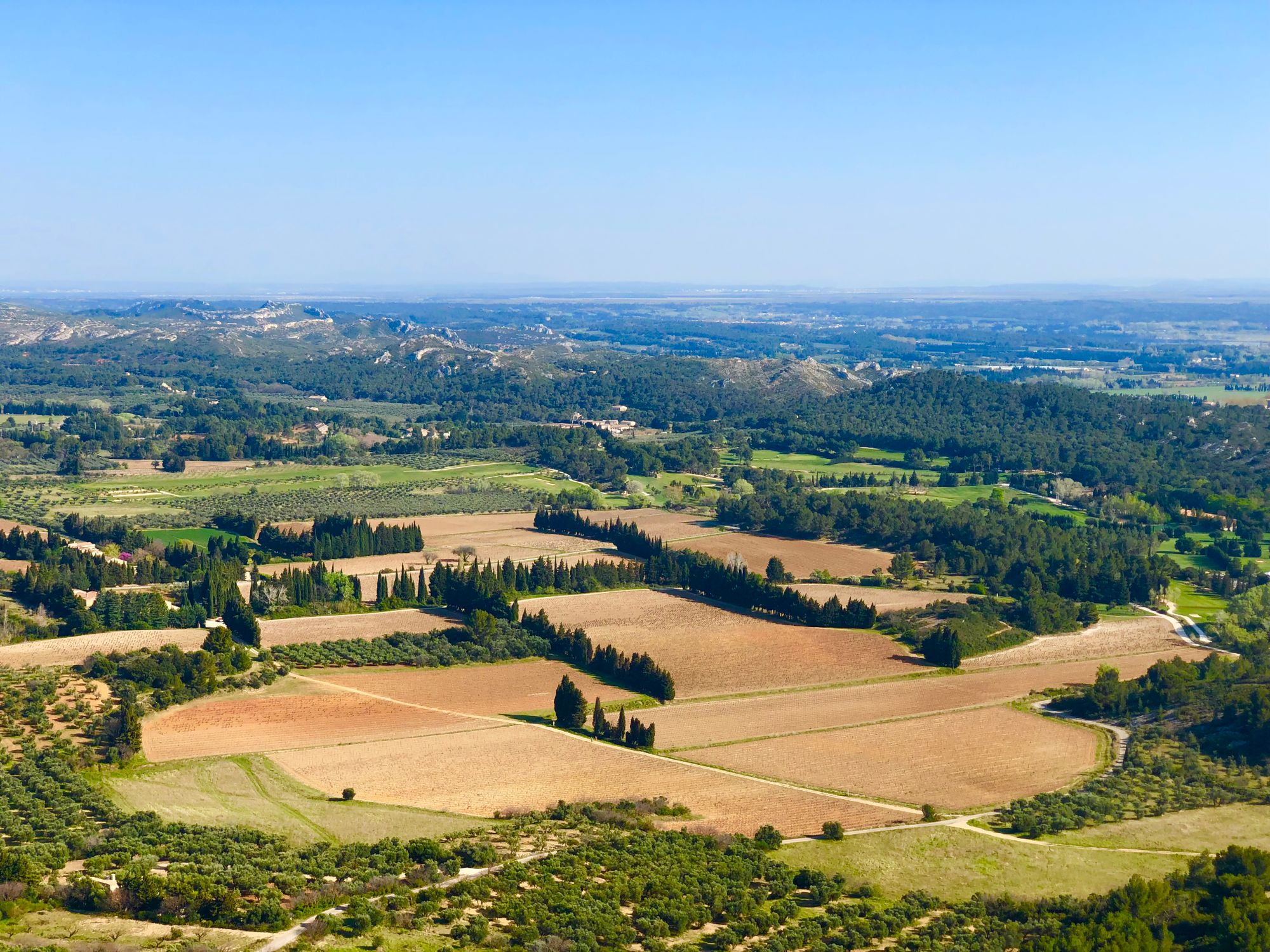
Perhaps the most structurally significant change underway in France is one that unfolds slowly enough to escape daily headlines: the northward migration of Mediterranean climate conditions. For general readers, the Mediterranean climate is best understood as the Provence template — hot, dry summers with very little rainfall, and mild, wet winters that replenish water stores. Historically, that climate zone ended well south of Paris. It is now expanding.
The driver is a planet-scale atmospheric circulation system called the Hadley Cell, a large convective loop that determines where subtropical dry zones form. Under greenhouse warming, the Hadley Cell is expanding poleward, pushing the boundary of Mediterranean-type conditions toward latitudes that once received reliable summer rainfall. Research published in journals including Nature Climate Change has documented this poleward expansion across the Northern Hemisphere, with the European sector among the most clearly affected regions.
The consequences are already visible in France’s agricultural heartland. Wine regions in Burgundy and Champagne — historically prized precisely because their cool, marginal growing conditions produced wines of particular tension and complexity — are recording harvest dates weeks earlier than mid-20th-century averages. Earlier harvests are a well-established proxy for warmer growing seasons, and both independent agronomists and the Intergovernmental Panel on Climate Change’s Sixth Assessment Report cite them as evidence of measurable climate-zone migration.
The implications extend beyond wine. Cereal farmers in central France are adjusting planting calendars. Foresters in the southwest are managing accelerating die-off of species ill-suited to drier conditions. Water managers across the Rhône basin are confronting reduced snowpack in the Alps, which historically buffered summer water availability. These are not hypothetical future problems. They are operational challenges that French land managers are navigating now.
Whether this shift stabilises at a new equilibrium or continues indefinitely depends heavily on the global mitigation trajectory. Current peer-reviewed projections for France’s climate by 2100 span a wide range of outcomes — not because the science is weak, but because the outcome genuinely depends on decisions not yet made.
Floods and the Paradox of Too Much and Too Little Water
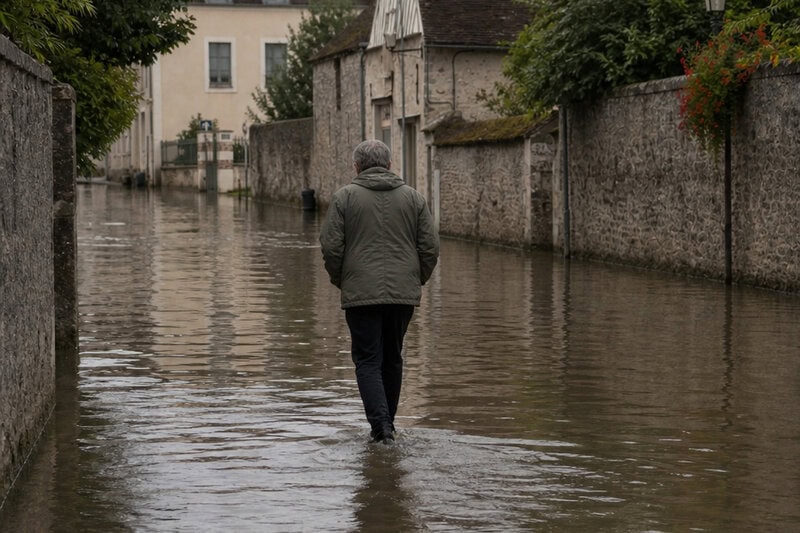
One of the features of France’s changing weather that most confuses general audiences is what appears to be a direct contradiction: the same country baking in record heat and facing expanding drought is simultaneously experiencing more intense rainfall and catastrophic flash flooding. The paradox dissolves quickly once the basic physics is understood.
Warmer air holds more water vapour — approximately 7 percent more for every additional degree Celsius of warming, a relationship described by the Clausius-Clapeyron equation. This means that even in regions experiencing lower total annual rainfall, when precipitation does arrive it arrives in heavier, more concentrated bursts. The result is flash flooding in landscapes that are simultaneously becoming more drought-prone on seasonal timescales. Soils hardened by summer drought are less able to absorb intense autumn rainfall, compounding the runoff problem further.
France’s southern departments illustrate this dynamic acutely. The Aude and Var regions have experienced repeated catastrophic flash-flood events in recent decades. Météo-France, the national meteorological service, has linked increased rainfall intensity in these events to warmer Mediterranean Sea surface temperatures, which load more moisture into the storm systems that periodically slam into southern France. The warmer sea both intensifies the storms and extends the season during which such events are possible.
Climate scientists draw an important distinction that matters for public understanding. Attributing any single flood event directly to climate change requires a formal event-attribution study — a specific type of analysis with its own methodological standards. What scientists state with high confidence, based on accumulated evidence, is that the probability and intensity of extreme rainfall events across the region is increasing. The individual storm may be natural. The odds tilting toward it are not.
Wildfires: A Compounding Risk
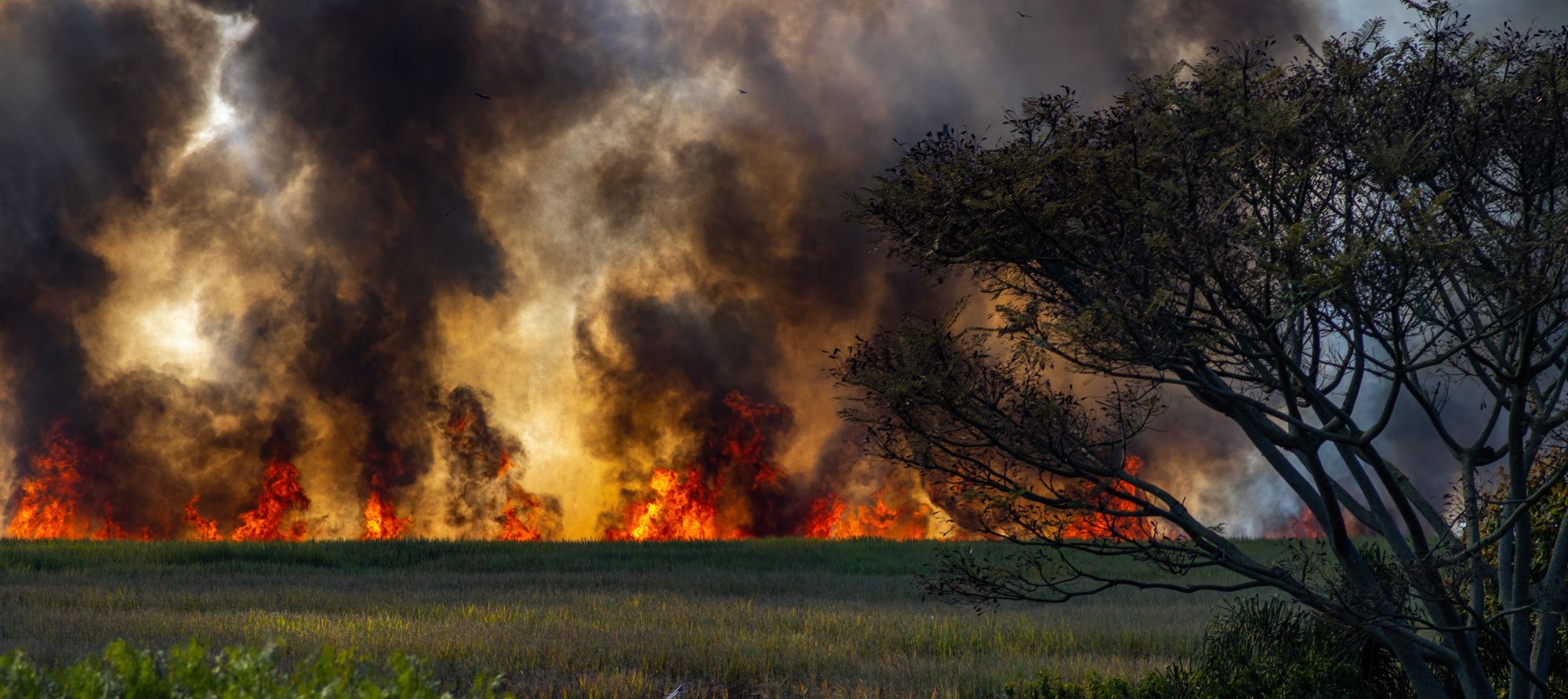
Heat, drought, and shifting vegetation zones are combining to produce a risk that was historically marginal in much of France but is becoming structurally significant: wildfire. The Gironde fires of 2022 burned more than 26,000 hectares of forest — the largest fires in southwestern France in decades — and forced the evacuation of tens of thousands of residents. Investigators and meteorologists linked the conditions directly to the exceptional heat and drought of that summer.
Wildfire risk in France is not simply a function of temperature. It depends on soil moisture, wind patterns, the composition and density of vegetation, and the proximity of human activity to fire-prone areas. But higher baseline temperatures and longer, more intense dry seasons systematically increase the number of days per year on which fire conditions are dangerous, extend the geographic range where those conditions occur, and reduce the window available for controlled burning and other preventive management. The European Forest Fire Information System has documented a northward and westward expansion of high fire-danger days across Europe, with France’s Atlantic coast — once largely outside the high-risk zone — increasingly included in that expansion.
What This Means for the Rest of Europe
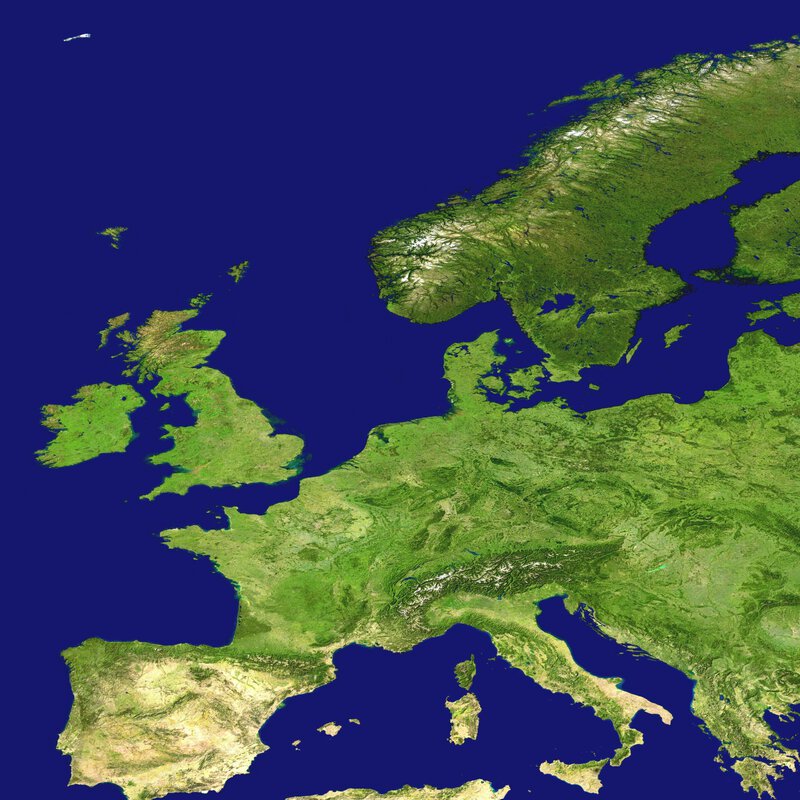
France occupies a distinctive position in the European climate system. It sits at the intersection of Atlantic, continental, and Mediterranean climate influences, making it unusually sensitive to shifts in each of those systems simultaneously. What happens to France’s climate is therefore not merely a national story — it is a leading indicator of how climate zones across the broader European continent are reorganising.
The European Environment Agency’s 2023 climate assessment found that Europe is warming faster than any other continent, at roughly twice the global average rate. The Mediterranean basin — which encompasses France’s southern coast and much of the country’s agricultural heartland — is specifically identified as a climate-change hot spot facing compounding risks from drought, extreme heat, and wildfire that interact and amplify one another rather than occurring in isolation.
The cascading implications extend well beyond weather itself. Shifting climate zones affect crop yields and the agreements governing water sharing between nations. They stress insurance markets priced against a climate that no longer reliably exists. They expose infrastructure — bridges, drainage systems, urban heat management — designed to specifications derived from historical climate data that is rapidly becoming obsolete. These are interconnected pressures that no single country can address in isolation, however competent its national policy response.
Adaptation strategies are increasingly discussed at the European Union level: heat-action plans, urban green corridors to reduce the urban heat-island effect, revised building codes for warmer conditions, and updated flood-risk zoning. The pace of implementation and the equitable distribution of funding between northern and southern member states — those already bearing the sharpest climatic stress — remain points of active and unresolved political contention.
What Comes Next — and What Remains Within Our Influence
The trajectory documented in France’s climate record — roughly 0.1 °C of warming every three years — is not a fixed destiny written into the atmosphere. It is a trajectory that steeper or shallower emissions curves will bend. The difference between a world that limits warming to 2 °C above pre-industrial levels and one that reaches 3 °C translates into meaningfully different outcomes for French summers, for the extent of Mediterranean climate creep, and for the frequency of the kind of extreme event that produced that 46.0 °C reading.
The IPCC Sixth Assessment Report’s most counterintuitively hopeful finding may be its most important one for public understanding: every fraction of a degree of warming avoided corresponds to measurably reduced risk. This is not a rhetorical flourish. It is a statement with specific quantitative backing across hundreds of peer-reviewed studies. The science does not offer a clean escape from consequences already locked in by past emissions. It does offer genuine reason to treat every increment of mitigation as worthwhile.
France’s all-time heat record, its documented warming rate, the northward march of Mediterranean conditions, intensifying floods, and expanding wildfire risk together represent converging evidence that Western Europe’s climate zones are reorganising at a pace that outstrips many of the planning assumptions built into current infrastructure, agriculture, and policy. The science supporting that conclusion is clear enough to act on, uncertain enough in its finer details to demand continued intellectual humility, and consequential enough that understanding it at a general level matters for every European citizen making decisions — about where to live, what to grow, how to build, and whom to hold accountable for the choices that will determine how much worse the next record needs to be before it stops being surprising.