
In Phoenix, a free throw is no longer just a basketball skill — it is an entry point into projectile motion, computer vision, and aerospace engineering. A cluster of programs across the city, from a Honeywell-backed STEM camp to a purpose-built coding academy, is demonstrating that basketball can move test-ready concepts in physics, coding, and design off the whiteboard and into students’ hands and minds.
The Phoenix Suns and Mercury Foundation Built a Multi-Station STEM Camp Around the Sport
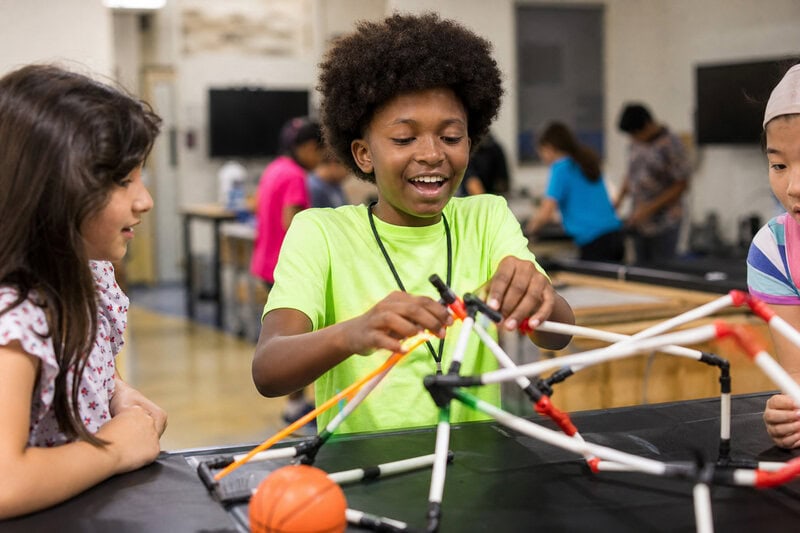
The Phoenix Suns/Phoenix Mercury Foundation hosted a structured STEM camp in which students rotated through interactive learning stations, each blending basketball gameplay with concepts drawn from coding, physics, or engineering design. Every station was built around a distinct learning objective — this was not a pep rally or a meet-and-greet, but a deliberate instructional environment in which the sport served as the primary teaching vehicle.
The approach reflects what education researchers call contextual learning: anchoring abstract concepts to a familiar, motivating physical activity in order to lower the barrier to entry for STEM subjects. By grounding ideas like arc, velocity, and computational logic in something students already care about, organizers aimed to make the first encounter with those concepts feel approachable rather than intimidating.
Honeywell Aerospace Co-Sponsored the Mercury’s Camp, Bringing Working Engineers Into the Gym
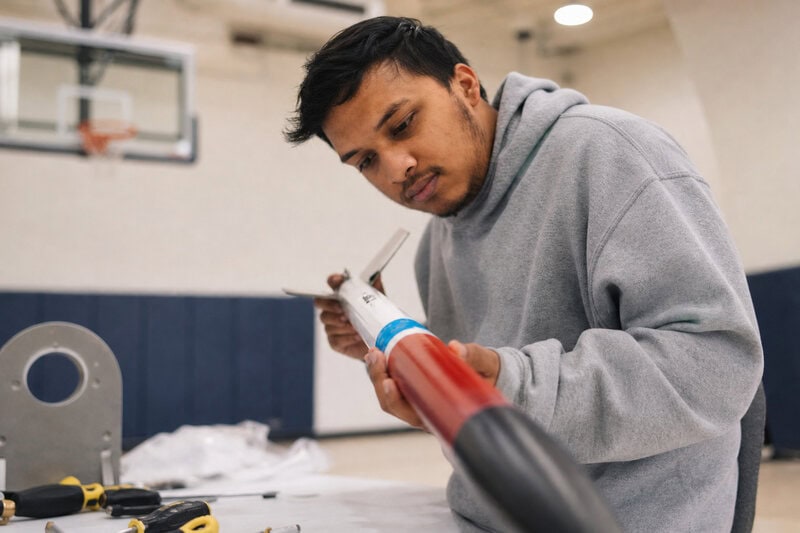
The Phoenix Mercury partnered directly with Honeywell Aerospace to produce and fund the camp, giving the program both corporate credibility and access to working engineers and scientists. The arrangement is an example of what the National Science Foundation classifies as informal STEM education — learning experiences outside the traditional classroom backed by professional-sector partners who can connect curriculum to real careers.
Honeywell Aerospace’s involvement carried a pointed signal to participants: the computational thinking and physics reasoning introduced at each station are not academic abstractions but the same skills aerospace professionals apply daily. That alignment between camp content and industry practice is precisely what distinguishes a meaningful STEM-through-sports program from a branded promotional event.
The Camp Deliberately Connected Middle School Girls With Women Working in Science and Technology
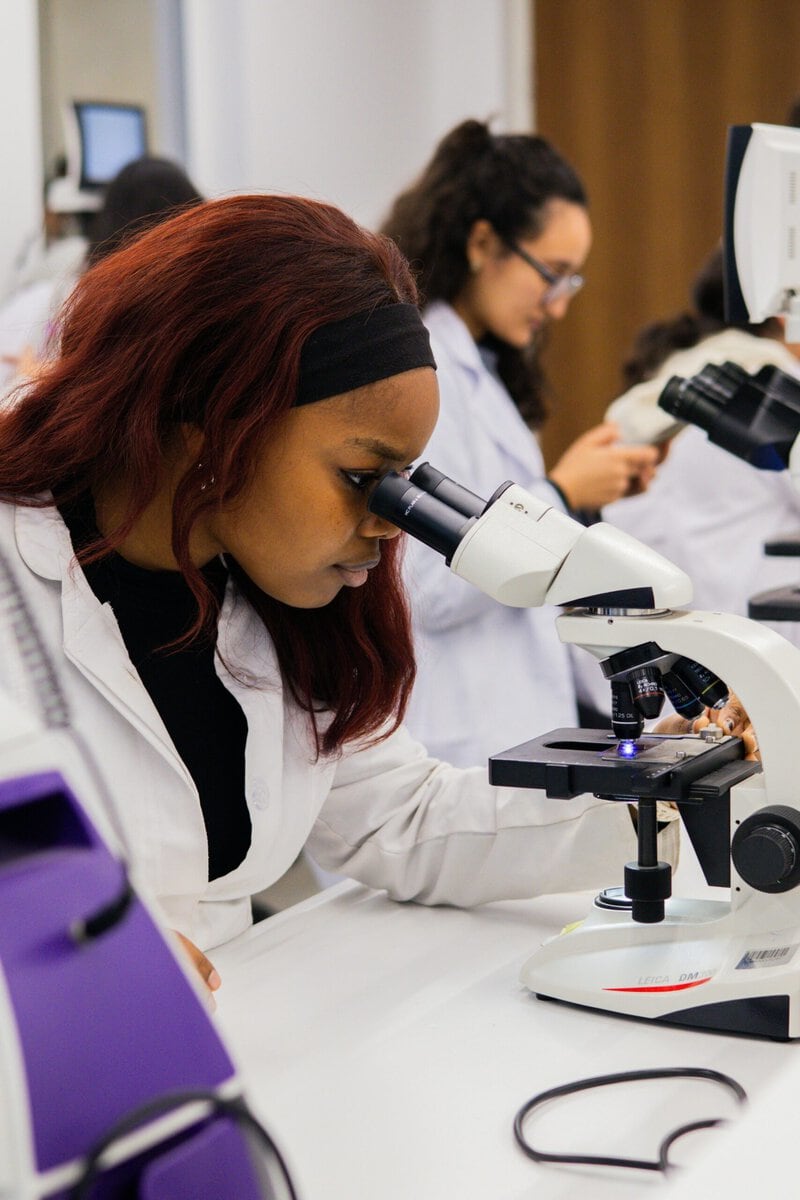
Organizers targeted middle school girls — the age range at which research from the American Association of University Women identifies a measurable drop in girls’ self-identification as “science people.” Participants were introduced to women who currently work in science and technology fields, providing same-gender role models, a factor that meta-analyses published in the journal Sex Roles link to increased persistence in STEM among female adolescents.
Using a professional women’s basketball franchise as the host institution reinforced a complementary message: high achievement in a competitive physical domain and high achievement in technical fields are not mutually exclusive. For a middle school girl who already admires athletes on the Mercury roster, seeing those athletes share a gym with aerospace engineers is a form of proof that broadens what she considers possible for herself.
A Basketball-Themed Coding Course at Phoenix Coding Academy Has Students Build Computer Vision Projects
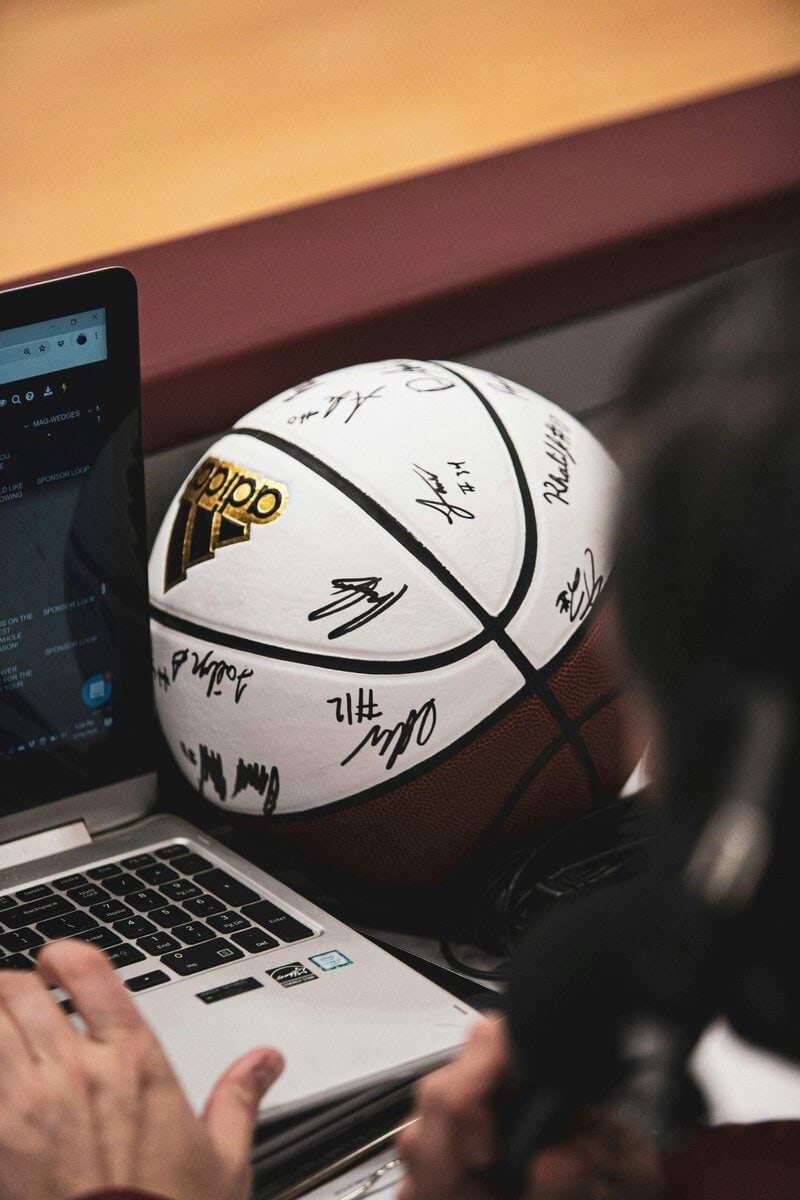
In a coding course at Phoenix Coding Academy, student teams do not simply write code in isolation — they design and build computer vision projects, meaning their software must interpret real visual input such as a moving ball or a changing arc. Computer vision, a branch of artificial intelligence in which software is trained to identify and interpret images or video, is among the fastest-growing technical skill sets in the labor market: the U.S. Bureau of Labor Statistics projected software developer employment to grow 25 percent through 2032.
Using basketball as the thematic frame gives students a concrete, testable subject for their computer vision work rather than abstract datasets disconnected from lived experience. A ball in flight has measurable properties — speed, trajectory, spin — that make debugging feel meaningful and make success immediately visible, sustaining the motivation that sport-integrated coding curricula depend on to hold students’ attention across a full semester.
The IMPAC4T Framework Gives the Basketball-and-Coding Curriculum a Defined, Replicable Structure
Rather than improvising lessons around a sports theme, the basketball-and-coding class at Phoenix Coding Academy uses the IMPAC4T Framework, a structured educational model that maps curriculum components in a defined sequence. Frameworks of this kind function similarly to what the Buck Institute for Education calls a project-based learning scaffold: they ensure student teams move through investigation, design, building, and reflection in a deliberate order rather than skipping foundational steps that later prove essential.
The existence of a named, replicable framework carries practical significance beyond any single classroom. It means the sports-integrated curriculum can in principle be adopted or formally studied by other schools — a prerequisite for the peer-reviewed efficacy research that distinguishes scalable education innovations from one-off experiments that succeed because of a single extraordinary teacher rather than a transferable method.
Students Work in Teams on Embodied Learning Projects Rather Than Solo Seat-Work
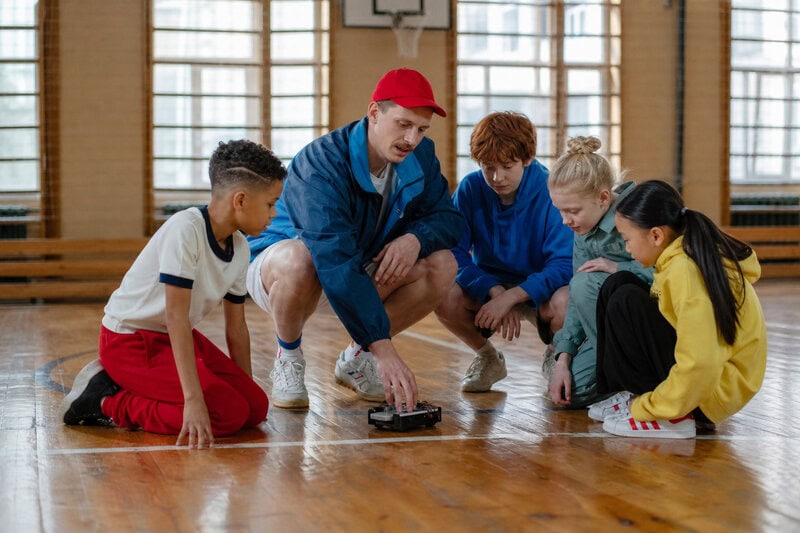
Embodied learning is a pedagogical term for instruction in which physical movement is integral to the cognitive task, as opposed to learning that takes place entirely at a desk. In the basketball-coding class, embodied learning means students physically interact with the sport — dribbling, shooting, observing trajectories — and then translate those kinesthetic experiences directly into code and design decisions, creating a feedback loop between the body and the screen.
Research published in the journal Educational Psychology Review finds that embodied learning approaches produce stronger retention of abstract concepts, particularly in STEM subjects, compared with text-only instruction. Working in teams amplifies that effect by requiring students to articulate their physical observations in language precise enough for teammates to act on — a practice that mirrors how engineering and data-science teams actually function in professional settings.
Phoenix Coding Academy Is a Standalone Technology-Focused School Now in Its Third Academic Year
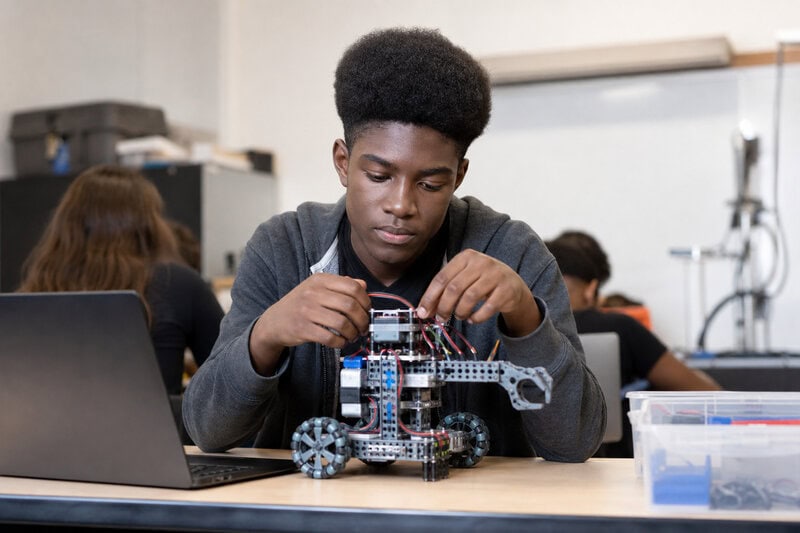
Phoenix Coding Academy is not a magnet program housed inside a comprehensive school — it is a standalone specialty institution with a technology focus, giving its entire curriculum a coherent computational thread from one course to the next. As of this article’s publication, the school is in its third academic year, meaning it is past the turbulent launch phase but still accumulating the longitudinal outcome data that rigorous program evaluations require before definitive conclusions about student achievement can be drawn.
Specialty technology schools represent one model for what the National Academy of Sciences has described as coherent STEM pathways — sequences of courses designed to build skills cumulatively rather than in isolated units. A student who encounters basketball-based projectile motion in one class and computer vision coding in another receives reinforcing instruction in theory, though demonstrating that cumulative effect will require the multi-year data the school is still gathering.
The School Operates From a Purpose-Built 42,000-Square-Foot Facility Designed for Project-Based Learning
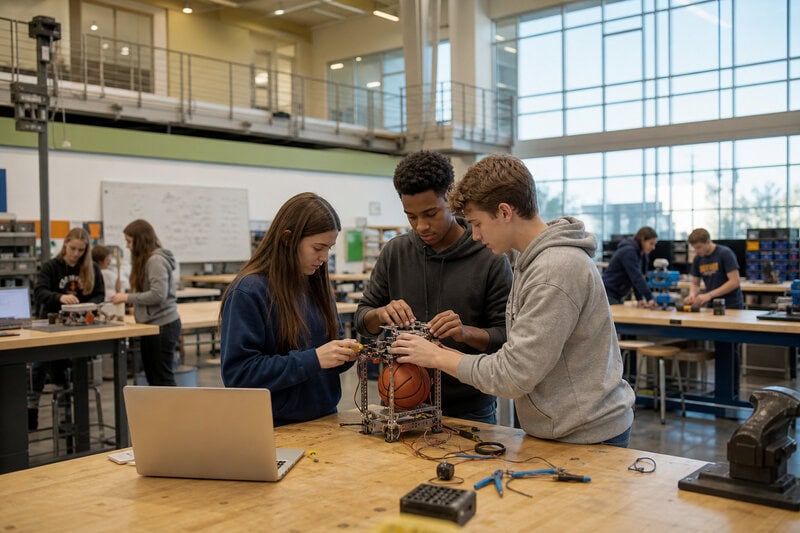
The school occupies a 42,000-square-foot, two-story building purpose-built to support technology-integrated education. Facility scale matters for project-based STEM instruction: the National Clearinghouse for Educational Facilities notes that maker-style, project-based learning requires significantly more square footage per student than traditional lecture-based classrooms, because students need room to build, test, and iterate physical prototypes alongside their digital work.
A dedicated, adequately sized physical space also signals institutional commitment to the program’s longevity in a way that borrowed cafeterias and after-hours gym time cannot. For a curriculum that asks students to capture ball trajectories on camera, write code to analyze them, and present working systems to peers, having a permanent home large enough to accommodate that full cycle of design activity is not incidental — it is a structural requirement of the pedagogy itself.
What is taking shape in Phoenix is less a collection of isolated experiments than a converging body of evidence that sport-integrated, project-based learning in physics and coding can be designed with the rigor that serious educators and industry partners demand. A basketball, properly deployed, turns out to be a surprisingly versatile scientific instrument.