
In 2022, a single LiDAR (Light Detection and Ranging) survey in Guatemala revealed more than 1,000 previously unknown Maya structures in under a week — proof that monumental discoveries still await beneath ordinary soil. Archaeologists estimate that less than 10 percent of the world’s ancient sites have been systematically excavated, meaning the mathematical odds favor more lost treasures of ancient civilizations existing undiscovered than have ever been found.
Separating Legend from Legitimate Archaeology
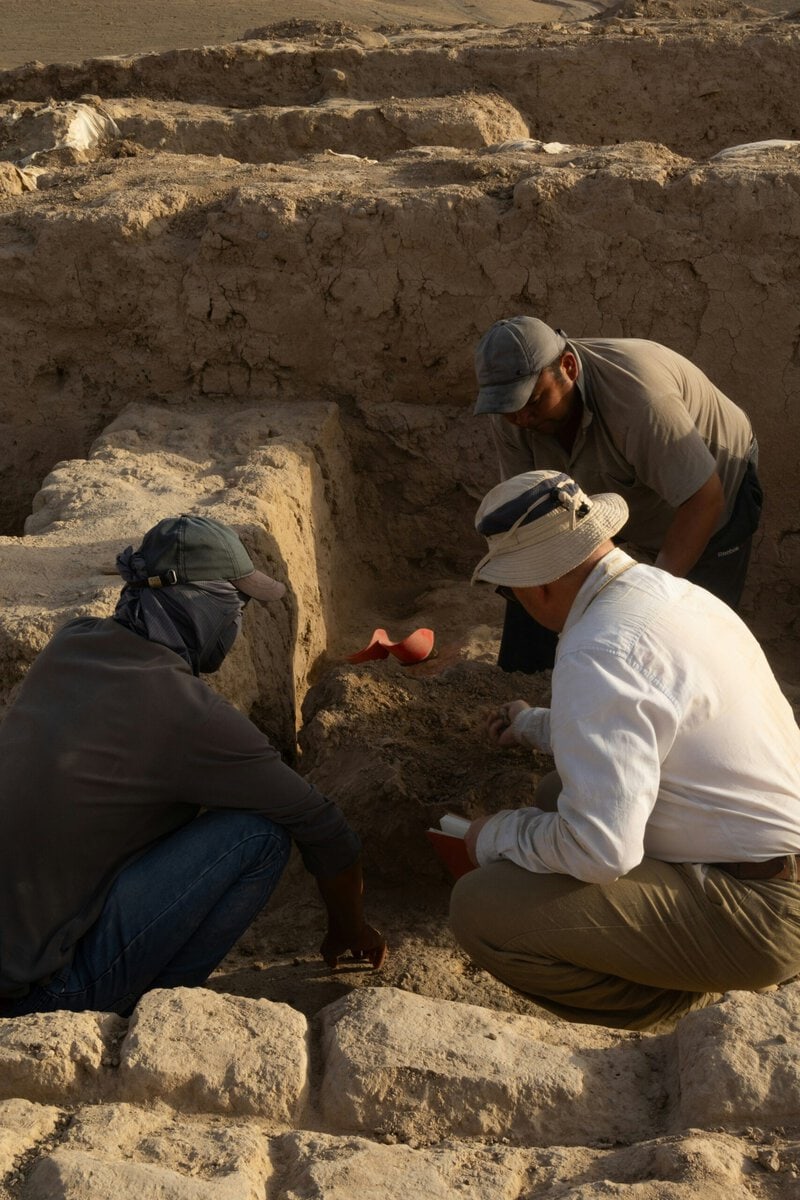
The five artifacts and collections examined here are not folklore. Each has a credible evidentiary trail — ancient texts, corroborating physical evidence, or documented last known locations — that serious researchers still actively follow. Distinguishing legend from legitimate archaeology requires asking one clarifying question: is there primary-source documentation of the object’s existence before it vanished? Every entry on this list clears that bar. Purely speculative candidates — including the treasures of El Dorado and the Oak Island money pit — were excluded because they lack that foundational documentation.
The Ark of the Covenant: Last Documented, Then Gone (586 BC)
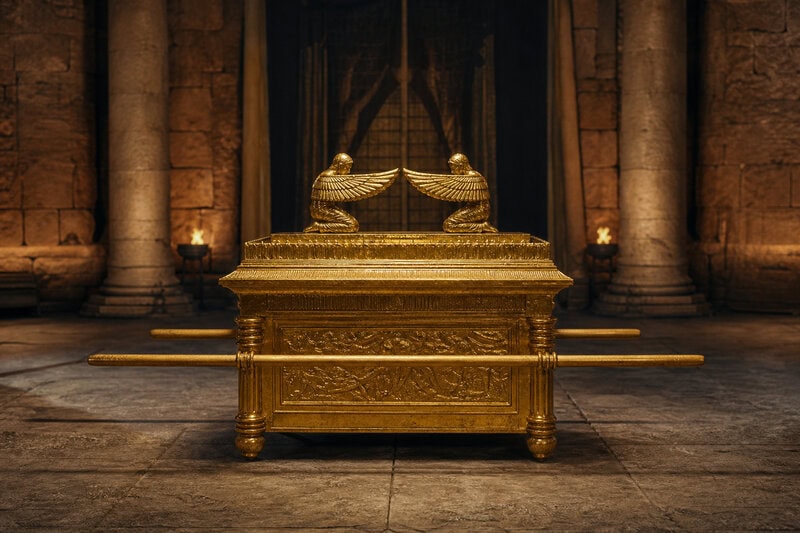
The Ark of the Covenant ranks among the most credibly lost artifacts of the ancient world. Its disappearance is linked to the Babylonian sack of Jerusalem in 586 BC — an event confirmed independently by both the Hebrew Bible and Babylonian cuneiform records, giving historians a firm documentary anchor. What makes the Ark’s fate genuinely puzzling is a conspicuous absence: it does not appear on Nebuchadnezzar’s enumerated list of temple spoils recorded in 2 Kings 25, making outright Babylonian capture an unlikely explanation and lending weight to theories of deliberate priestly concealment before the city fell.
The most persistent modern lead is the Ethiopian Orthodox Church’s claim that the Ark rests in Axum, at the Church of Our Lady Mary of Zion. No independent scholarly verification has been permitted, and researchers classify this as an unconfirmed but geographically plausible hypothesis rather than an established fact. Contextual support for a tradition of deliberate concealment comes from an unexpected source: the Copper Scroll, found among the Dead Sea Scrolls and authenticated by the Israel Antiquities Authority, lists 64 locations of hidden temple treasure — strong evidence that systematic priestly concealment of sacred objects was real historical practice, not retrospective myth-making.
What would recovery mean? The Ark was the central ritual object of the First Temple period. Its confirmed discovery — with intact context — would be among the most consequential finds in the history of biblical archaeology, directly informing debates about the material culture of early Israelite religion that have occupied scholars for more than a century.
The Library of Alexandria’s Lost Scrolls: Knowledge Erased Over Centuries
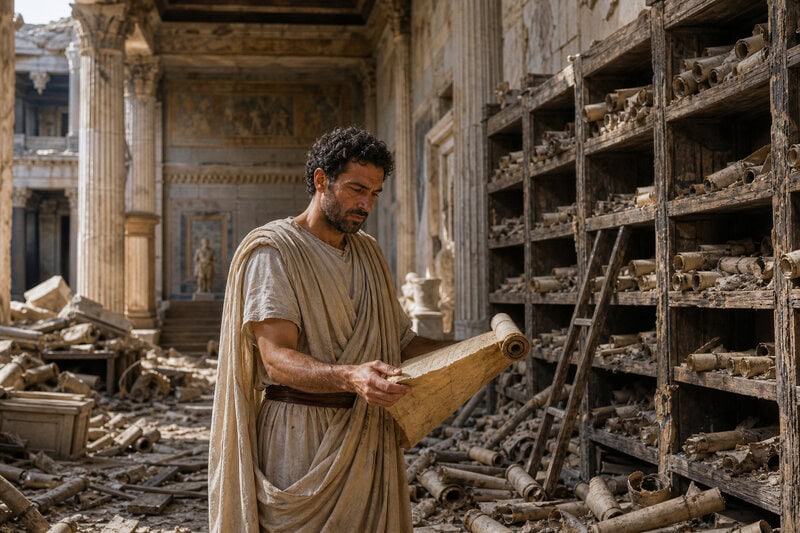
When people imagine the Library of Alexandria lost to a single catastrophic fire, they are working from a myth. Historians describe the library’s decline as a centuries-long attrition of neglect, funding cuts, and partial destructions spanning roughly 48 BC to 642 AD — no single event accounts for its disappearance. At its height, the library is estimated by classical scholars, including researchers associated with the modern Bibliotheca Alexandrina, to have held between 400,000 and 700,000 papyrus scrolls, the vast majority of which have never been recovered.
The search remains archaeologically active. Ongoing excavations beneath Alexandria’s Brucheion district, conducted by a Polish-Egyptian archaeological mission, have produced Roman-era architectural remains consistent with the Mouseion complex that housed the library. A vivid demonstration that lost Alexandrian knowledge can still surface came in 2008, when researchers digitized the Archimedes Palimpsest — a 10th-century manuscript that had physically overwritten a mathematical treatise by Archimedes — and recovered the erased text using multispectral imaging. The recovered text revealed that Archimedes had developed mathematical concepts approaching integral calculus roughly 1,800 years before Newton and Leibniz. If a single overwritten manuscript can hide a lost work for a millennium, intact scroll caches beneath Alexandria remain a legitimate scientific possibility.
The stakes extend well beyond curiosity. Ancient catalogs reference works by Aristotle, Euclid, Eratosthenes, and hundreds of lesser-known authors that are entirely unrepresented in surviving manuscript traditions. Recovery of even a fraction of that material would reshape the history of science, medicine, and philosophy.
The Tomb of Genghis Khan: A Deliberate Erasure

Few burial sites in history were hidden with such ruthless operational precision. According to the 13th-century Persian chronicler Ata-Malik Juvaini — whose account remains among the primary historical sources on the burial — the funeral party is said to have killed witnesses to ensure the tomb’s location would never be revealed. Medieval sources further hold that a river was diverted over the grave to conceal surface evidence, a practice with documented precedents in Eurasian steppe burial tradition.
Remote sensing surveys by the Mongolian and American Valleys of the Khans Project, using satellite imagery and ground-penetrating radar across the Khentii Mountains of northeastern Mongolia, have identified multiple subsurface anomalies consistent with large-scale earthwork — but no confirmed burial site has emerged. The search is further constrained by Mongolian law, which restricts invasive excavation within the Ikh Khorig, a government-protected sacred zone where medieval sources place the burial. Non-invasive remote sensing is currently the only legally and ethically available tool.
Discovery would rank among the most significant finds in Eurasian archaeology. Historical accounts describe burial goods drawn from the plunder of dozens of conquered civilizations, potentially including artifacts from Jin China, the Khwarazmian Empire, and early Rus principalities — a cross-section of 13th-century Eurasian material culture that no museum currently holds in concentrated form.
Cleopatra’s Tomb: A Specific Description, a Promising Site
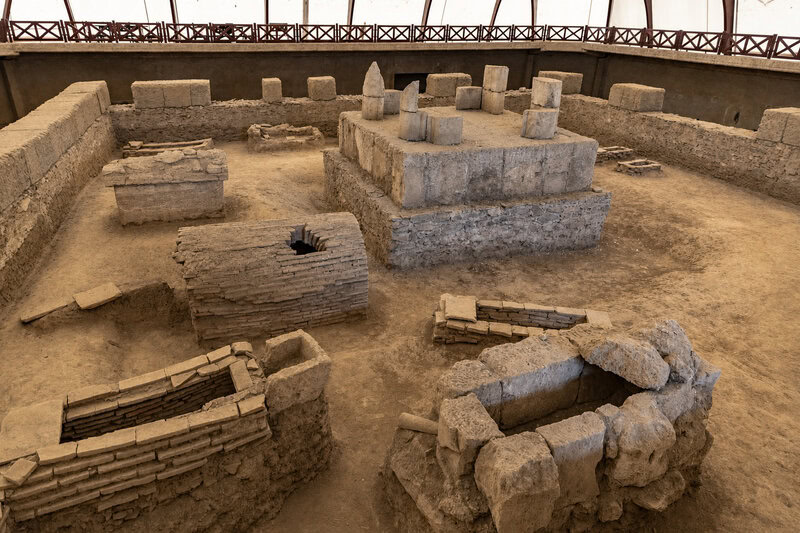
Ancient historian Plutarch wrote that Cleopatra VII and Mark Antony were buried together in a monument “of wonderful height and beauty” near a temple of Isis — a description specific enough that archaeologists treat it as a credible geographic reference rather than literary embellishment. Egyptian archaeologist Kathleen Martinez has been excavating at Taposiris Magna, a major Isis temple complex located approximately 45 kilometers west of Alexandria, since 2005 under a joint mission with the Egyptian Ministry of Tourism and Antiquities.
The site’s credentials are substantial. Martinez’s team has recovered coins bearing Cleopatra’s image, gold artifacts consistent with Ptolemaic royal production, and an extensive network of tunnels cut through the bedrock. A 2022 announcement from the mission reported the discovery of a tunnel carved through solid rock at 13 meters depth and extending more than 1,300 meters — an engineering scale the team described as comparable to the ancient Eupalinos tunnel of Samos, suggesting deliberate monumental construction rather than incidental quarrying or storage.
Consensus among Egyptologists remains appropriately cautious: Taposiris Magna’s Ptolemaic credentials are strong, but no sarcophagus or unambiguous royal inscription has yet been found. This places the site firmly in the “promising but unconfirmed” category — precisely where rigorous archaeology should place it at this stage. A confirmed find would settle a debate about Ptolemaic burial practice and provide the first securely identified tomb of a Ptolemaic ruler excavated with modern stratigraphic methods.
The Nazca Puquios and Their Hidden Votive Caches
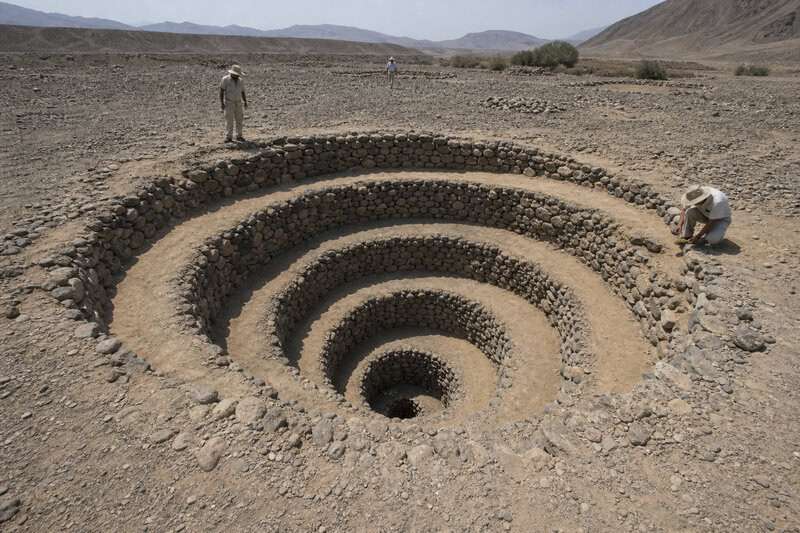
The Nazca civilization of coastal Peru, active from approximately 100 BC to 800 AD, engineered a sophisticated underground aqueduct system called puquios — spiral-mouthed shafts whose surface openings remain visible today. A 2016 study by researchers at the Italian Institute of Geophysics and Volcanology confirmed that these structures were engineered to channel groundwater using wind pressure, resolving a long-standing debate about their function. What has received less scholarly attention is what the Nazca deposited inside them.
Archaeological surveys documented for the Peruvian Ministry of Culture recorded that Nazca ritual offerings — including gold objects, Spondylus shells traded from Ecuador, and ceramic caches — were deposited at hydraulic junctions throughout the puquio network, indicating deliberate votive concealment at known but unexcavated nodes. Ground-penetrating radar surveys published in the Journal of Archaeological Science in 2019 identified multiple subsurface voids along known puquio routes that have not been excavated; the authors characterized these as candidates for undisturbed ritual deposit contexts.
Unlike some entries on this list, Nazca caches are modest in monetary scale but exceptionally high in scientific value. Intact organic materials preserved in the hyperarid Peruvian coastal desert could include textiles, botanical specimens, and pigments that are degraded or entirely absent from excavated Nazca sites closer to the surface. The puquios represent one of the few cases where the approximate location of undiscovered deposits is already known — the research challenge is excavation logistics and permit access, not detection.
Why These Treasures Matter Beyond the Romance of Discovery
Each artifact or collection profiled here represents a gap in the documentary record of human civilization. Recovering even one with proper stratigraphic documentation would force meaningful revisions to established historical timelines, ancient trade-network maps, or the scholarly understanding of religious history. That is not sensationalism — it is a straightforward consequence of what these objects are and what they once contained.
Modern non-invasive archaeology has genuinely transformed the probability of detection. LiDAR, multispectral satellite imaging, ground-penetrating radar, and AI-assisted pattern recognition now allow researchers to identify subsurface anomalies without disturbing a single centimeter of stratigraphy — the layered soil record that gives excavated objects their historical context and much of their scientific value. Discovery is more likely now than at any prior point in history precisely because the tools no longer require a shovel as a first step.
Any future finds will also face immediate legal scrutiny. The 1970 UNESCO Convention on the Means of Prohibiting the Illicit Import, Export and Transfer of Ownership of Cultural Property established the modern framework governing national ownership of undiscovered archaeological material — a policy dimension that directly shapes which sites receive excavation permits, under what conditions, and which country retains the finds.
The genuine scientific value of archaeology still hidden in the ground lies not in monetary worth but in contextual information. An artifact excavated with stratigraphic care — its precise position, soil layer, and associated materials fully documented — yields exponentially more historical knowledge than the same object extracted and sold on the antiquities market. The Society for American Archaeology has stated this principle as foundational to the discipline. The ground beneath our feet is still hiding history. The question is not whether more will be found, but whether it will be found carefully enough to matter.