
Inside a rock pulled from Yunnan Province in southwestern China, researchers could still see a reddish-colored liver — an organ that belonged to a marine reptile that died 245 million years ago. That single detail, as much as any discovery in recent paleontology, illustrates how dramatically the boundaries of what fossils can preserve are being redrawn.
A Sea Reptile Named Austronaga minuta, Frozen in Extraordinary Detail
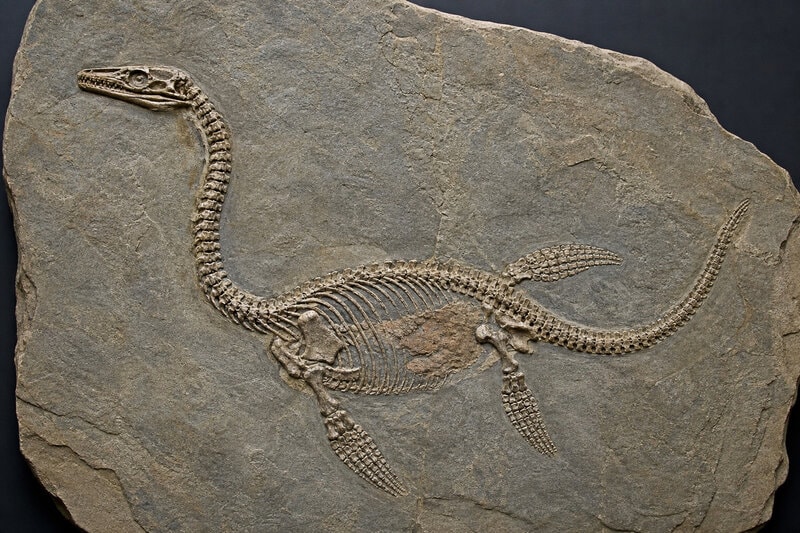
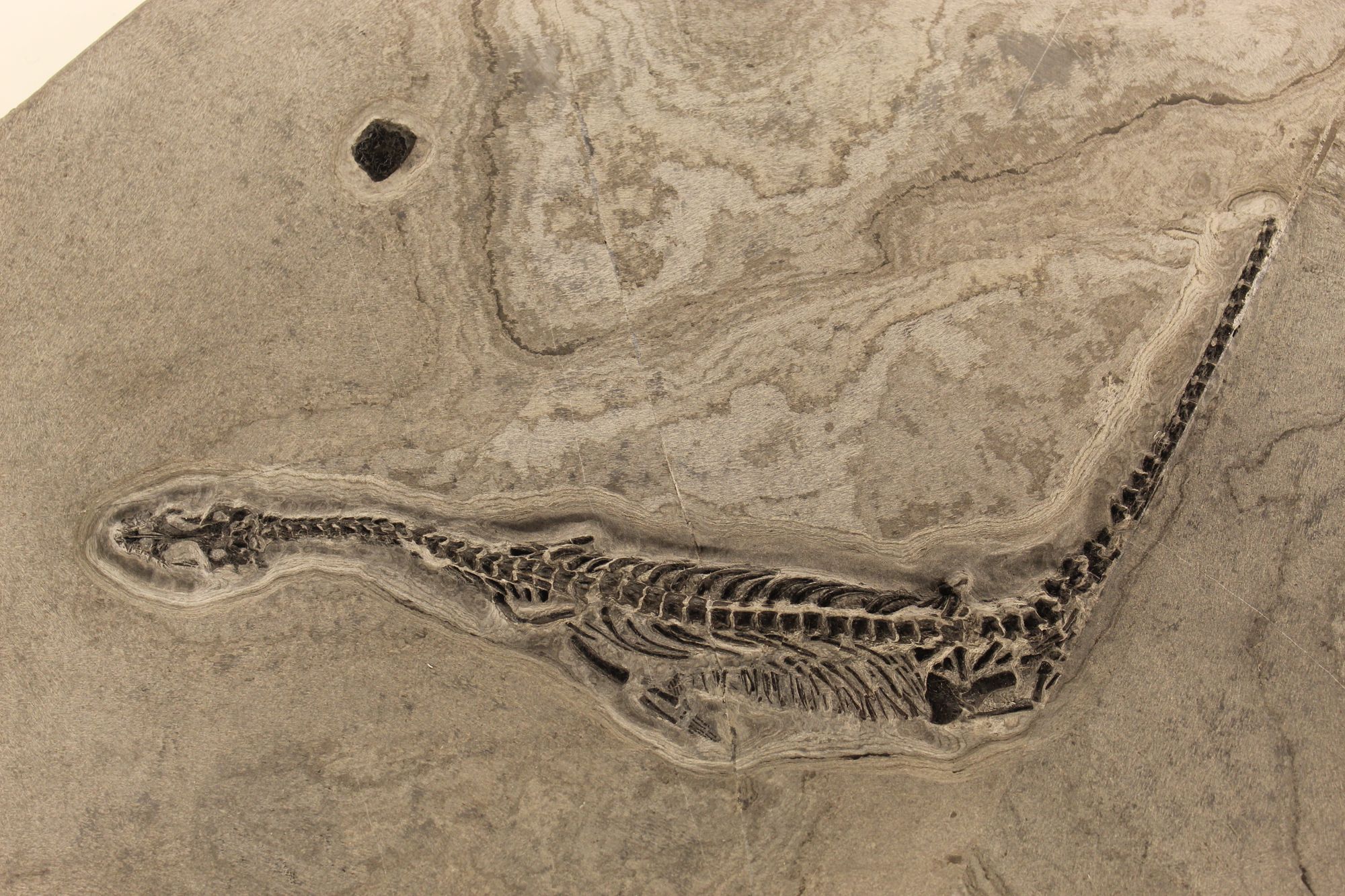
The animal at the center of this discovery is Austronaga minuta, a Triassic-period marine reptile equipped with a long neck built for reach, a long tail that would have driven it through the water, and a diet centered on fish. It was a genuine ocean predator, patrolling shallow Triassic seas at a time when reptiles were still consolidating their grip on marine environments — roughly 245 million years ago, well before dinosaurs came to dominate the land.
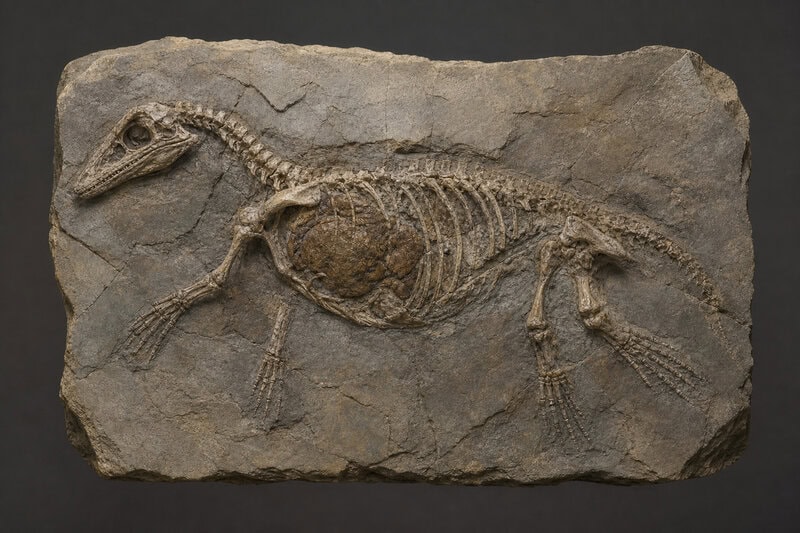
What makes this fossil exceptional is not the skeleton, which is itself nearly complete, but what lies inside it. Preserved alongside the bones are soft internal organs: a stomach, a liver, and intestines, together constituting one of the oldest digestive tracts ever recovered from the fossil record. The preservation has been described by researchers as exquisite — a term with specific scientific meaning, indicating that organ boundaries are distinct enough to map anatomically rather than representing a blurred chemical smear.
Soft tissue preservation — the retention of non-mineralized biological material such as organs, skin, or muscle across geological time — is vanishingly rare. Bacteria, oxygen, and chemical decay normally destroy organic matter within years to centuries of death. The fact that Austronaga minuta‘s digestive tract survived at all demands an explanation, and that explanation tells its own scientific story.
The Triassic World Austronaga Inhabited
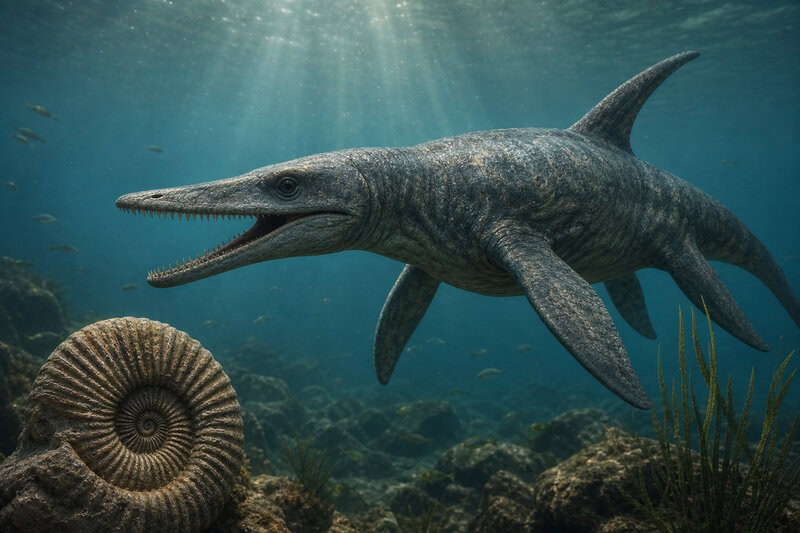
The Triassic period, spanning roughly 252 to 201 million years ago, was the era immediately following Earth’s worst mass extinction event — the end-Permian extinction, which eliminated an estimated 90 percent of marine species. The ecological vacancies left by that catastrophe created an opening for rapid diversification, and marine reptiles moved swiftly to fill it. Austronaga belongs to this early radiation: a lineage of ancient sea reptiles that would eventually give rise to more familiar forms, including the long-necked plesiosaurs that dominated Mesozoic oceans for tens of millions of years.
Yunnan Province is one of the world’s most productive windows into this period. The region has yielded a remarkable concentration of Triassic marine fossils, making it an essential field site for scientists reconstructing early Mesozoic ocean life. The species name minuta likely refers to the animal’s relatively small body size, while the genus Austronaga places it within a lineage that researchers are still actively mapping — underscoring that this is a creature science is only beginning to understand.
Why Soft Tissue Almost Never Survives — and What Had to Go Right This Time
The standard pathway of fossilization does not accommodate organs. Normally, only hard materials — bone, shell, and teeth — survive long enough for mineral-rich groundwater to gradually replace biological structure with rock, a process called permineralization. Everything else — muscle, skin, fat, and internal organs — is consumed by microbes or dissolved by chemical processes long before rock has a chance to lock anything in place.
For Austronaga‘s internal organs to have survived, multiple conditions almost certainly had to align. Rapid burial in fine-grained, low-oxygen sediment is broadly accepted among paleontologists as a prerequisite for soft-tissue preservation of this kind: it physically cuts off microbial communities from their oxygen supply and removes the animal from scavengers. The specific geochemistry of Yunnan’s ancient seafloor may have further stabilized organic molecules by creating an environment hostile to the biological and chemical agents that drive decay.
A clear distinction is worth drawing between what is established and what remains under investigation. Rapid burial as a necessary condition is scientific consensus. The precise molecular mechanisms that allowed liver pigment to remain visibly reddish after 245 million years, however, are an active area of research. Whether original organic molecules persist, or whether what scientists observe are chemically transformed derivatives of those original compounds, is one of the central questions the research team intends to pursue with further analysis.
What the Preserved Organs Reveal About How This Animal Lived
The scientific value of the Austronaga soft-tissue preservation lies in what it allows researchers to infer directly, rather than reconstruct indirectly from bone morphology alone. A skeleton can indicate body size and approximate locomotion; preserved internal organs can begin to address questions of physiology and behavior that bones simply cannot answer.
The liver’s size and position relative to the skeleton, for instance, can inform hypotheses about Austronaga‘s metabolic rate and how it processed a fish-heavy diet. The stomach’s location and structural characteristics may eventually yield evidence about whether Austronaga was an active pursuit predator or an ambush feeder — a distinction that carries real consequences for reconstructing Triassic food-web dynamics. These are not certainties the fossil delivers on its own, but they are questions the fossil now makes answerable in principle, where they were previously inaccessible.
The reddish color of the liver is itself a data point of scientific interest. Iron-rich compounds produced during the breakdown of hemoglobin-related proteins are known to leave characteristic color signatures in fossil material, consistent with research on other exceptionally preserved vertebrate fossils. That the liver of this Triassic ocean predator retains visible color after nearly a quarter of a billion years is arresting not just visually but chemically: it points toward a form of molecular persistence that challenges intuitions about geological time.
How Scientists Confirm That What They See Is Real
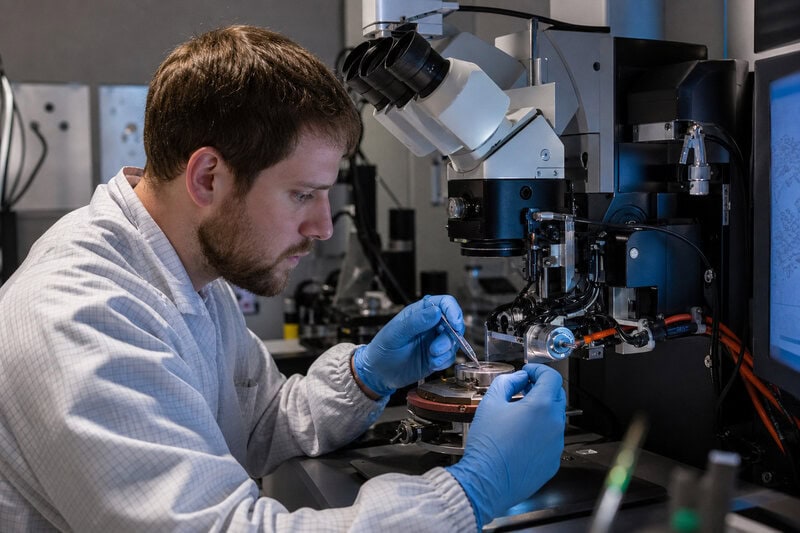
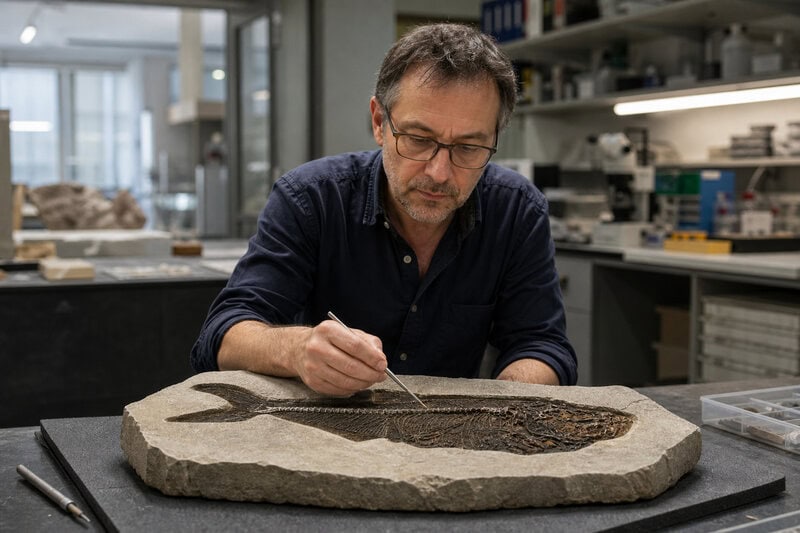
Calling something a preserved organ carries scientific weight only when backed by rigorous compositional analysis, not visual resemblance alone. Modern paleontology deploys a toolkit well beyond the naked eye: scanning electron microscopy, energy-dispersive X-ray spectroscopy, and micro-CT scanning allow researchers to distinguish genuine biological residue from mineral staining, sediment infill that mimics organ shape, or bacterial mats that can produce organ-like outlines in rock.
Scientists must specifically rule out the possibility that what appears to be soft tissue is actually a pseudomorph — a mineral formation that has taken the shape of a biological structure without retaining any biological material. Rigorous chemical analysis is the standard method for making that distinction, and the Austronaga study is reported to meet that standard. This verification process matters not only for the integrity of this particular claim but for public understanding of how paleontological discoveries are validated — a step that separates genuine discovery from wishful interpretation.
Where This Discovery Sits in the History of Soft-Tissue Fossils
A small number of extraordinary fossil deposits, known as Lagerstätten — a German term used by paleontologists to describe sites of exceptional preservation, literally meaning “storage place” — have previously yielded soft-tissue evidence. The Burgess Shale in Canada preserves soft-bodied animals from the Cambrian period. The Solnhofen limestone in Germany yielded feathered dinosaurs and Archaeopteryx, the earliest known bird. These sites have rewritten entire chapters of evolutionary history by capturing biology that standard fossilization erases.
Among marine reptiles specifically, soft-tissue outlines have been documented in ichthyosaurs — dolphin-shaped Mesozoic sea reptiles whose body silhouettes are preserved in some Jurassic deposits. But the preservation of discrete, identifiable internal organs in a species as old as Austronaga pushes the record for Triassic fossil preserved organs significantly further back and adds a level of anatomical specificity that silhouette preservation cannot match.
The Yunnan find contributes to a growing body of evidence that soft-tissue preservation is more geologically durable than the field once assumed. This is an emerging shift in scientific thinking, not a fully settled matter. Some paleontologists appropriately caution that each soft-tissue claim must be evaluated independently, because taphonomy — the study of how organisms decay and become fossilized — demonstrates that preservation quality varies enormously even within the same deposit. The Yunnan site has produced exceptional material before, but no two fossils share identical preservation histories.
Unanswered Questions and the Science Still to Come
The research team behind the Austronaga discovery has indicated that further chemical analysis of the reddish liver material is planned, with the goal of determining whether original organic molecules or their chemically transformed derivatives persist in the rock. That distinction matters enormously: if original biomolecules survive intact, it would push the known boundary of biological information storage in geological material to a new extreme and open fresh questions about the theoretical limits of molecular preservation.
Comparative anatomy work will position Austronaga‘s organ layout against living reptiles and fish to build a more detailed physiological model of early marine reptile biology. This kind of cross-referencing between fossil anatomy and living organisms is how paleontologists translate structural observations into functional biology — moving from “here is where the liver was” to “here is what that liver’s size and position imply about how the animal lived and hunted.”
The Yunnan excavation site continues to yield material, and the possibility of additional Austronaga specimens — or related species with comparable preservation — remains real. Further finds could confirm or refine the interpretations drawn from this first specimen, which is always the preferred scientific outcome over reliance on a single example. Single specimens, however extraordinary, carry inherent interpretive limitations that only a larger sample can resolve.
Perhaps the broadest implication of the discovery is methodological. It reinforces the value of applying advanced imaging and chemical analysis to fossils that might previously have been catalogued as bone-only specimens and set aside. Soft-tissue data may already be sitting in museum collections worldwide, waiting for the right analytical techniques to reveal it. The reddish liver of Austronaga minuta, still faintly colored after 245 million years, is a reminder that the fossil record has not yet finished surprising the people who study it — and that the most important question paleontologists can now ask may be how many other extraordinary specimens are hiding in plain sight.