
When researchers sequenced variola virus DNA recovered from Viking-age and medieval human remains, they did not find what they expected. The ancient genomes looked, in the words of scientists working in the field, “very strange” — distinct enough from the modern virus that they forced a fundamental reconsideration of what smallpox actually was across most of recorded human history.
A Virus We Thought We Knew Turns Out to Have a Hidden Past
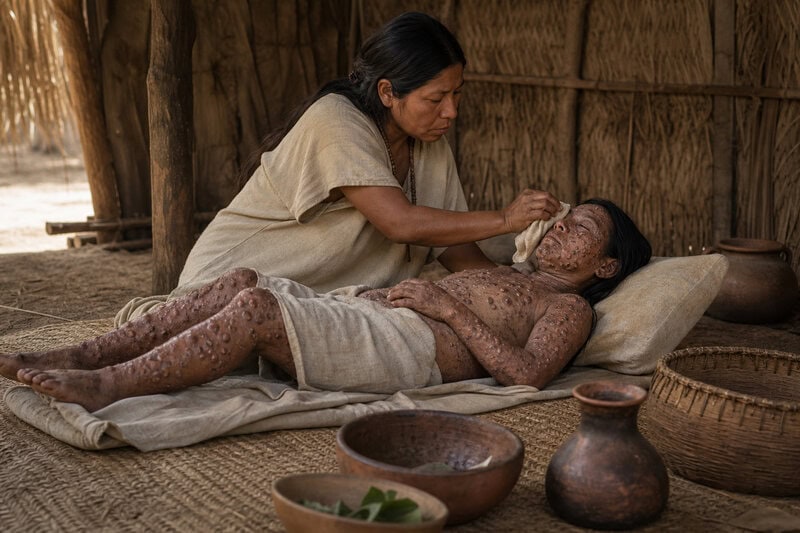
For generations, smallpox has occupied a fixed place in the human imagination: a timeless, merciless killer capable of wiping out up to 30 percent of the people it infected, one that reshaped empires, felled monarchs, and devastated Indigenous populations in the Americas following European contact. That reputation was earned in blood, and nothing about the new genomic research erases it. But ancient DNA evidence is quietly complicating the story, suggesting that the virus responsible for the worst historical epidemics was not the same pathogen circulating in earlier centuries — and that the history of smallpox’s evolution is far longer and stranger than anyone had assumed.
The emerging findings center on variola virus genomes — the complete genetic blueprints of the pathogen — recovered from teeth and bones dating back roughly 1,000 to 1,700 years. Researchers including teams affiliated with the University of Copenhagen’s Section for Evolutionary Genomics have published analyses in peer-reviewed journals, including Science, demonstrating that these ancient strains cluster separately on the viral family tree, look genetically distinct from the modern virus, and appear to lack several genes scientists believe are central to the modern pathogen’s lethality. Sample sizes remain small, and interpretations are actively debated among virologists. But the picture that is emerging is compelling enough to reshape how the scientific community thinks about the relationship between a pathogen’s age and its capacity to kill.
What Ancient DNA Analysis Actually Found
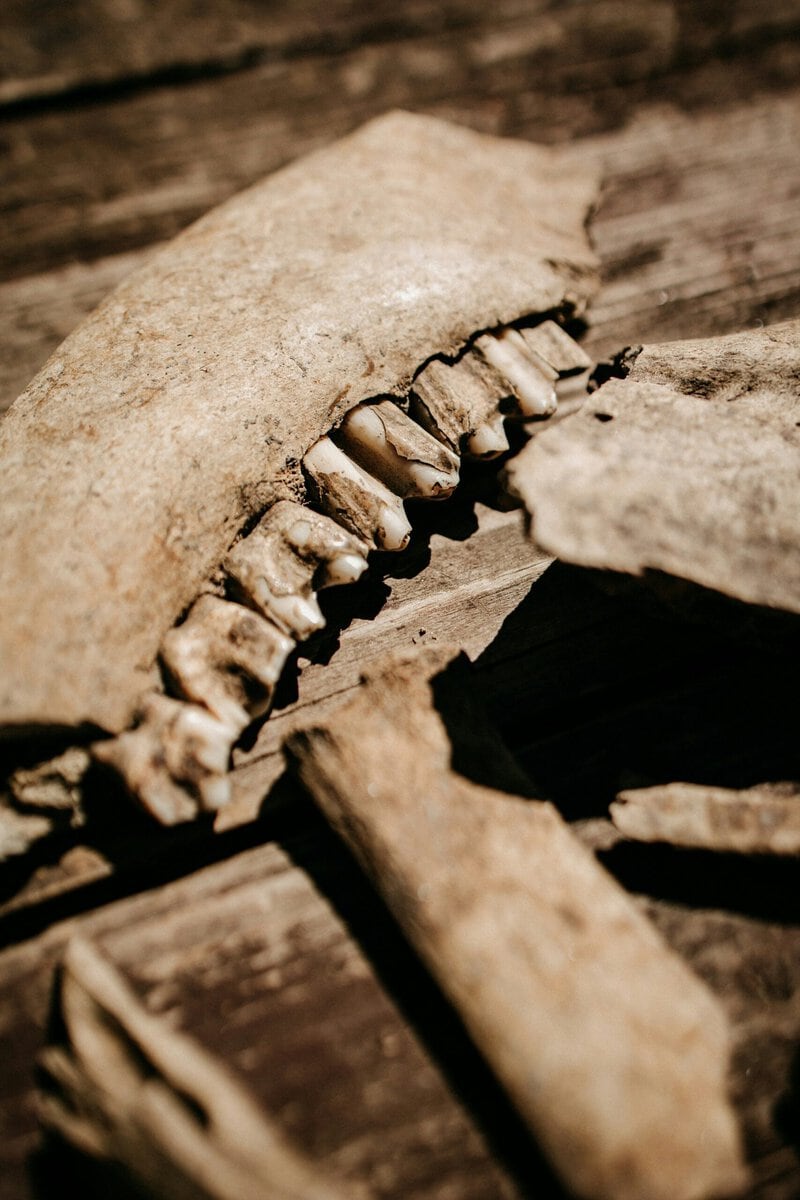
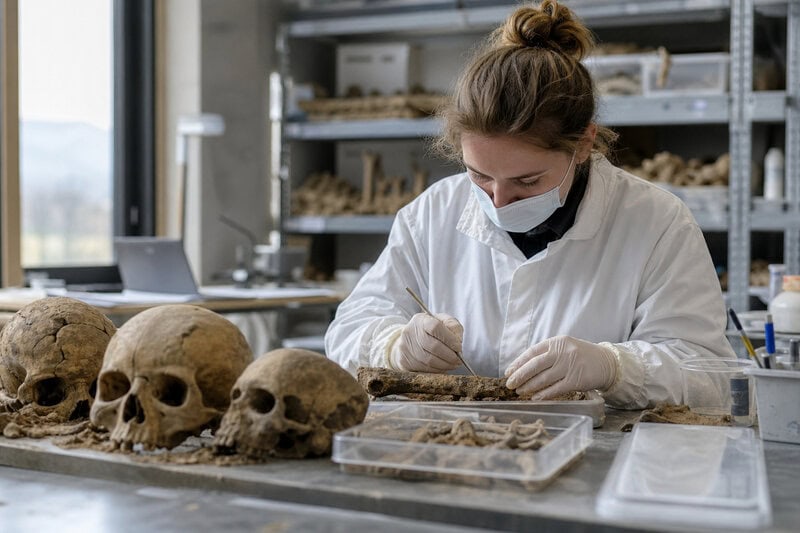
The discipline making this research possible is palaeogenomics — the reconstruction of genetic material from ancient biological remains, typically teeth and bones, where DNA can survive for centuries under the right preservation conditions. By sequencing variola virus DNA extracted from medieval European remains, researchers have been able to compare ancient viral genomes directly against the well-characterized modern strains that caused 20th-century epidemics before smallpox was declared eradicated by the World Health Organization in 1980.
The comparison revealed meaningful differences. The ancient variola strains appear to carry incomplete or absent versions of genes present in the modern virus — genes thought to help the pathogen suppress and evade the human immune response. In evolutionary terms, the ancient strains seem to sit at an earlier branch of the viral family tree, predating the genomic changes that may have made smallpox significantly more dangerous in the early modern period. Critically, the ancient strains do not appear to be simply older versions of the same disease running the same biological program. They look, genetically, like something in between — related to modern variola, but not identical to it.
It is important to be precise about what this means and what it does not mean. Researchers are not arguing, on the basis of current evidence, that ancient smallpox was harmless or even necessarily mild. They are arguing that the variola virus demonstrably evolved over centuries, that its genome changed in ways that are biologically significant, and that the version of the disease described in the most devastating historical accounts may represent a later, more dangerous iteration of a pathogen that began its relationship with humanity in a somewhat different form.
Smallpox Evolution: How a Virus Becomes a Mass Killer
To understand why these findings matter, it helps to understand a concept virologists call virulence — a pathogen’s capacity to cause severe disease or death in a host. Virulence is not a fixed property. It can increase or decrease as a virus accumulates mutations across generations, and the selective pressures acting on a pathogen shift as the environment around it changes.
The variola virus belongs to the orthopoxvirus family and carries a large, relatively stable DNA genome. Unlike RNA viruses such as influenza, which mutate rapidly and unpredictably, DNA viruses like variola change more slowly. That stability makes the evolutionary changes detected in ancient strains all the more significant: when a slow-mutating virus shows detectable genomic differences across a span of several centuries, those differences are likely to be biologically meaningful rather than random noise.
One leading hypothesis among researchers is that smallpox co-evolved with growing, densely packed human populations. As European cities expanded during the early modern period — roughly the 15th through 18th centuries — conditions that favor more transmissible and immune-evasive pathogens intensified. Natural selection, operating across millions of viral replications, may have gradually favored strains better equipped to spread through crowded urban environments and overcome human immune defenses. The inadvertent result, by this hypothesis, was a progressively deadlier virus.
Scientists are careful to distinguish between two related but separate questions the current evidence cannot fully resolve. The first is whether the ancient virus caused a milder form of the same illness we recognize as smallpox. The second, more radical possibility is that it caused a sufficiently different illness that labeling it “smallpox” at all — with all the catastrophic associations that label carries — may be misleading. Resolving that distinction will require more ancient samples, more genomic data, and careful experimental work that has not yet been completed.
The Immune-Evasion Genes: The Mechanistic Heart of the Story
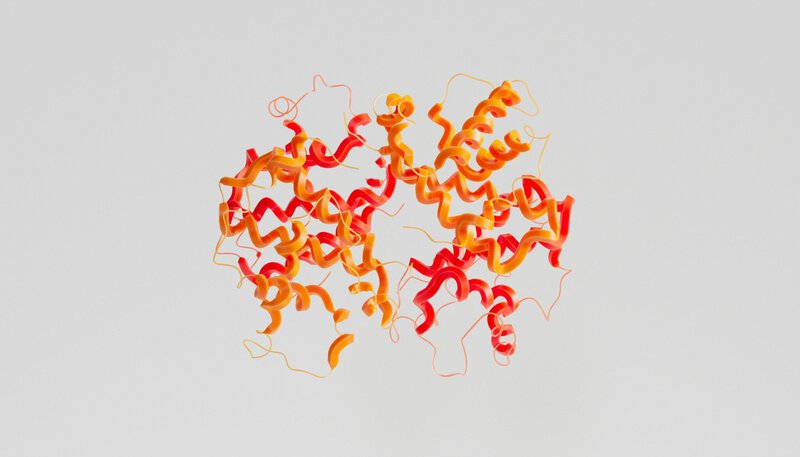
The most technically striking finding involves a category of genes encoding immunomodulatory factors — proteins that the modern variola virus uses to interfere with the human immune system. A healthy immune response to a viral infection involves a cascade of molecular signals that alert the body to the threat and coordinate a defense. Modern variola appears to carry an array of genetic tools that allow it to suppress those signals, delay the immune response, and make it harder for an infected person’s body to fight back effectively. That immune-evasion capability is considered a significant contributor to why modern smallpox killed so efficiently.
Ancient variola strains, based on current genomic analysis, appear to carry incomplete or absent versions of some of these immunomodulatory genes. The implication — and researchers are careful to present it as an implication rather than a confirmed finding — is that the ancient virus had not yet fully assembled the immune-evasion toolkit that made its descendants so dangerous. To use a plain-language analogy: imagine a pathogen that, over centuries of evolutionary pressure, learns to disable increasingly sophisticated immune defenses. An earlier version could still cause serious illness, but may have been far easier for the immune system to contain. The later version had acquired capabilities the earlier one had not yet developed.
The critical caveat is that linking specific gene absences to reduced clinical severity in actual human patients is an inferential step, not a directly observed outcome. No ancient patient records exist — no clinical notes, no mortality tallies — that would allow researchers to confirm whether people infected with ancient variola strains experienced meaningfully milder illness than those who died in 18th-century epidemics. The proposed mechanism is biologically plausible and internally consistent with the genomic data. It is not yet proven.
Why This Challenges the Standard Historical Narrative
The conventional history of smallpox treats the disease as an essentially consistent force operating across millennia — a factor in the decline of the Roman Empire, a weapon of colonial devastation in the Americas after 1492, and a recurring catastrophe in early modern Europe. If the virus was still meaningfully evolving into its most dangerous configuration during the medieval period, that timeline becomes considerably more complicated.
Historical descriptions of epidemic diseases before roughly the 16th century are notoriously difficult to match to specific pathogens. Ancient and medieval physicians lacked the tools to distinguish between diseases that produced superficially similar symptoms, and the vocabulary of historical medical texts does not map cleanly onto modern diagnostic categories. The new genomic evidence raises the possibility that some outbreaks historically attributed to smallpox may have involved a less lethal ancestral strain — one that caused significant suffering without necessarily producing the mass-mortality events associated with later epidemics.
None of this diminishes the catastrophic scale of mortality during the 17th and 18th centuries, when smallpox was unambiguously devastating. It does, however, suggest that the disease’s deadliness was not a fixed historical constant — that it was, in a meaningful sense, a product of the same evolutionary forces that shaped every other aspect of the virus’s biology. History books that treat smallpox as a single, unchanging threat across two millennia may need revision.
What the Scientific Community Is — and Isn’t — Certain About
There is genuine scientific consensus on several points. Variola virus has a detectable evolutionary history that can be recovered through ancient DNA analysis. Its genome changed meaningfully between the Viking age and the early modern period. Palaeogenomics has established that the pathogen circulating roughly a thousand years ago was not genetically identical to the one responsible for 20th-century outbreaks.
Beyond those points, the picture becomes less settled. Whether the genomic changes detected in ancient strains actually translated into measurable differences in clinical severity — how sick people got, how many of them died — remains contested. Virologists caution that genome changes do not map neatly onto clinical outcomes without experimental or epidemiological evidence to support the connection. A gene that appears important in laboratory settings may behave differently in the complex environment of a living human body with its own unique immune history.
Some researchers have raised a more fundamental challenge: that the ancient sequences may represent a related but distinct orthopoxvirus — a cousin of variola rather than a direct ancestor — which would substantially reframe the entire narrative. If the ancient strains are not, strictly speaking, ancestral smallpox but rather a related poxvirus that later gave rise to variola, the story of how smallpox evolved becomes both more interesting and harder to tell with confidence.
The field’s most pressing need is more data. A larger collection of ancient samples from a wider geographic range and a broader span of time periods would allow researchers to test whether the patterns identified so far are representative of the pathogen’s global history or reflect the particular populations and preservation conditions of the sites studied to date. Ancient remains from Asia, Africa, and the Americas — regions where smallpox also caused catastrophic outbreaks — are especially needed to fill geographic gaps in the current dataset.
Why It Matters Now: Lessons for Modern Viral Threats
The smallpox evolution story is not merely of historical interest. It is a documented case study in how a pathogen can shift dramatically in danger level across centuries — a dynamic with direct relevance to current public health concerns. Mpox, formerly known as monkeypox, belongs to the same orthopoxvirus family as variola and has shown signs of increased transmissibility in recent outbreaks, prompting the World Health Organization to declare it a public health emergency of international concern in 2024. Understanding the mechanism by which variola became a mass killer over time offers a conceptual framework for monitoring how related viruses might change under similar pressures.
The findings also underscore the scientific value of palaeogenomics as a discipline. Variola is one of the most studied pathogens in history — the subject of decades of intensive research before its eradication and the focus of carefully controlled laboratory work since. The fact that ancient DNA analysis revealed major genomic surprises about a virus this well-characterized makes a strong argument for investing in long-term pathogen surveillance and the continued development of ancient genome sequencing techniques. If even smallpox held secrets, other familiar pathogens almost certainly do as well.
There is a cautionary dimension to the story. A pathogen that appears relatively contained or less severe in one historical era can, given the right combination of evolutionary pressures — denser human populations, increased global movement, shifts in immune landscapes — emerge in a later era as something far more dangerous. The modern smallpox that killed an estimated 300 million people in the 20th century alone may have begun as something that looked, to medieval observers, like a serious but ultimately survivable illness.
The ancient smallpox findings do not rewrite history so much as add a missing chapter — one that reminds us that the deadliest version of a disease is not necessarily its original form, and that evolution, not mere antiquity, determines how much damage a virus can ultimately do. What researchers found in those Viking-age and medieval bones was not reassurance. It was evidence that biological history is still being written, and that even the diseases we believe we understand completely can hold surprises capable of reshaping everything we thought we knew.