
For the fourth consecutive year, Miami has claimed the dubious title of America’s most termite-infested city, topping Orkin’s annual Top 50 Termite Cities list. Researchers and pest-management professionals say the problem runs deeper than any single season’s data can capture, with invasive colonies quietly expanding through the soil beneath block after contiguous city block — and no eradication in sight.
Miami’s Four-Year Reign as America’s Termite Capital
Miami’s position at the top of Orkin’s ranking is not a statistical fluke or a close contest. The pest-control company compiles its list from actual termite-related treatment and service data recorded by its technicians across each metro market over a 12-month period, making it a real-world proxy for active infestation pressure rather than a theoretical risk model. Four straight years at number one signals a structural condition, not a seasonal anomaly.
The rest of the top five reinforces how thoroughly Florida dominates the national termite landscape. Tampa ranks third on Orkin’s most termite-infested cities list, meaning Florida alone accounts for two of the three most termite-threatened metro areas in the United States. Los Angeles ranks second and Washington, D.C. fourth — a geographic spread that underscores a point entomologists have argued for decades: termites are a national infrastructure problem, not a regional curiosity confined to the South.
Florida’s dual placement — Miami first, Tampa third — reflects vulnerability across the entire peninsula. The University of Florida Institute of Food and Agricultural Sciences (UF/IFAS) has mapped established invasive termite populations across dozens of Florida counties well beyond Miami-Dade, confirming that the risk is statewide even if the epicenter is unmistakably Miami. The U.S. termite damage bill runs into the billions of dollars annually, and Florida consistently absorbs a disproportionate share of that cost.
Why Miami? The Climate and Geography Behind the Infestation
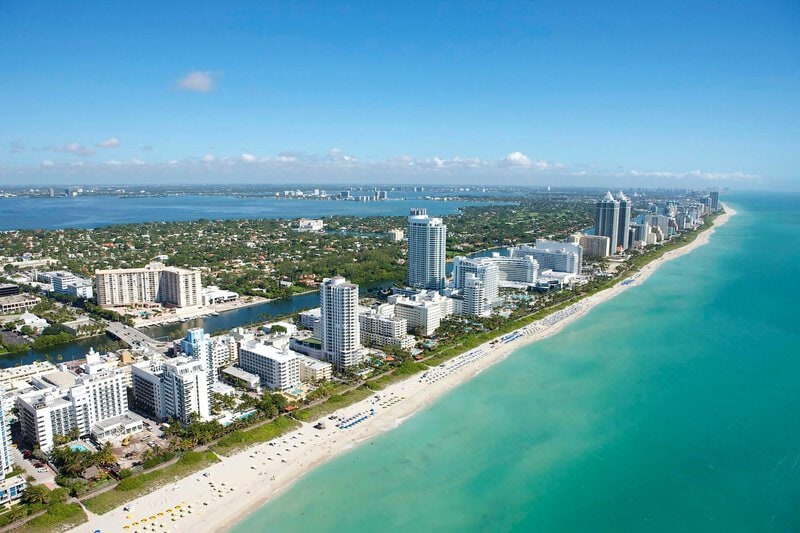
Termites have straightforward environmental preferences: warmth, moisture, and wood. Miami delivers all three in exceptional quantity. The city averages more than 60 inches of annual rainfall, and temperatures rarely fall below 60 degrees Fahrenheit even in the depths of winter. That near-permanent subtropical greenhouse effect means termite colonies face none of the cold-season population checks that naturally suppress activity in more temperate cities. Pest-management research identifies warm, humid climates combined with dense urban development as the primary drivers of elevated termite risk — a description that fits Miami almost perfectly.
Dense development matters as much as climate. City blocks packed with aging wooden structures, shared soil, and mature tree canopies give underground colonies uninterrupted foraging corridors. Miami’s position at sea level compounds the problem further: the city sits atop shallow, moisture-laden soil that subterranean termite species — which must maintain continuous contact with ground moisture to survive — can exploit across virtually the entire urban footprint. The result is an environment where colonies do not merely survive; they expand year over year, spreading laterally through soil that offers almost no natural barriers.
Meet the Culprits: Formosan and Asian Subterranean Termites
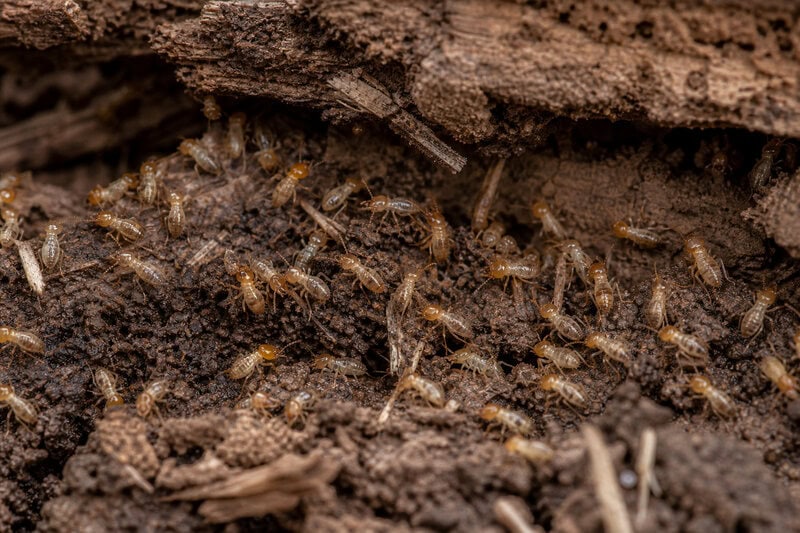
Two invasive species are primarily responsible for Florida’s worst infestations. The Formosan subterranean termite (Coptotermes formosanus) and the Asian subterranean termite (Coptotermes gestroi) were both introduced to the United States through international shipping ports decades ago. Today, in South Florida, both species breed freely in the wild without any ongoing human introduction — they are, in the scientific sense, established invasive populations with no expectation of natural decline.
The scale difference between invasive and native colonies is what makes these species so destructive. According to UF/IFAS research, a Formosan subterranean termite colony can contain several million workers, compared to a few hundred thousand in a typical native colony. That population advantage translates directly into consumption: Formosan colonies can devour roughly 13 ounces of wood per day, a rate that can compromise structural timber in months rather than years.
UF/IFAS researchers have documented that Formosan and Asian subterranean termites can interbreed under laboratory conditions, raising a developing scientific concern about hybrid colonies in the field with amplified reproductive potential. Scientists are careful to distinguish between what has been demonstrated in controlled settings and what has been confirmed in wild urban populations. The question remains an active area of research, but even the theoretical possibility adds another layer of complexity to an already difficult management challenge.
What “A Colony Under Almost Every Block” Actually Means
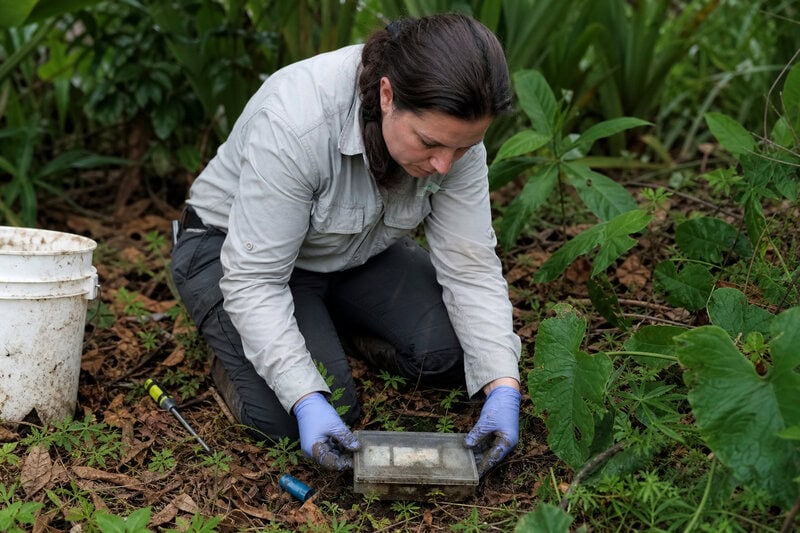
The phrase sounds hyperbolic until the biology is examined closely. Urban entomologists use soil sampling and in-ground bait-station monitoring to estimate colony density in city environments. In heavily infested Miami neighborhoods, research has documented overlapping foraging territories that place active termite colonies beneath contiguous city blocks. A single Formosan subterranean termite colony’s foraging range can extend more than 300 feet in radius underground, meaning one colony can simultaneously threaten multiple adjacent properties without any of the respective owners being aware that shared infrastructure is being compromised.
Above-ground signs of infestation — mud tubes running along foundation walls, discarded wings accumulating near windowsills after a reproductive swarm, wood that sounds hollow when tapped — are often the first human-visible evidence of a colony that may have been actively foraging for three to five years, according to UF/IFAS extension guidance. By the time a homeowner notices these indicators, significant structural damage may already have occurred.
The practical implication for Miami property owners is particularly sobering: a home can test negative for termite activity today and face active foraging pressure within months — not from a new introduction of termites to the area, but from the lateral expansion of an established neighboring colony moving through shared soil. Individual treatment is necessary but structurally insufficient without broader neighborhood-level coordination.
How Researchers and Pest Managers Are Responding
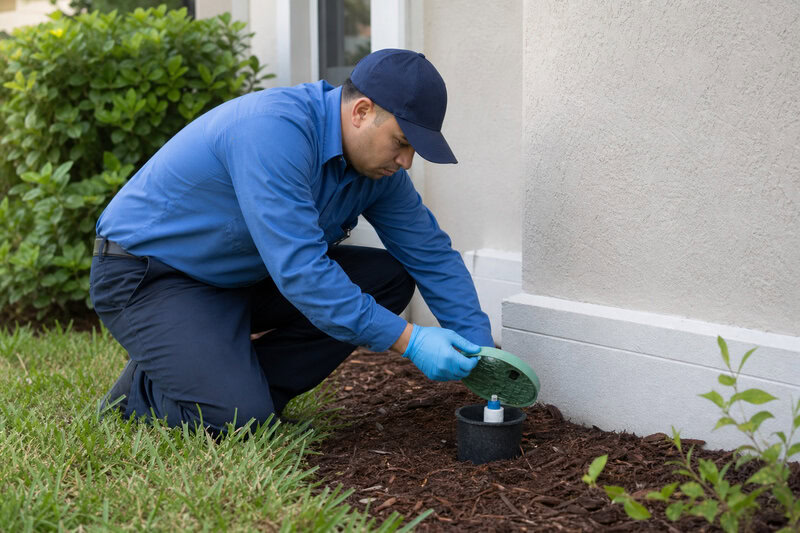
The primary tool for large-scale colony suppression in American cities is the baiting system. Devices installed in the soil at regular intervals around a structure contain slow-acting insect growth regulators — compounds that disrupt the molting process in termite workers. Affected workers carry the agent back to the colony before it takes full effect, gradually collapsing the population from within rather than simply killing foragers at the perimeter.
The most-cited model for coordinated urban termite suppression is Operation Full Stop, a USDA-led initiative conducted in New Orleans in the late 1990s and early 2000s that demonstrated measurable colony reduction across a defined city grid through community-wide baiting. That program established a baseline finding that continues to guide management philosophy: no city has successfully eradicated an established invasive termite population. The realistic, scientifically supported goal is suppression to levels that prevent structural damage, not elimination.
Emerging technologies — including remote-sensing tools and acoustic-detection devices designed to locate termite activity inside walls and structural timber without destructive inspection — are being piloted by researchers but are not yet standard practice in routine pest management. They represent a promising frontier rather than a readily available solution for most property owners.
What Miami Homeowners and Buyers Should Know Right Now
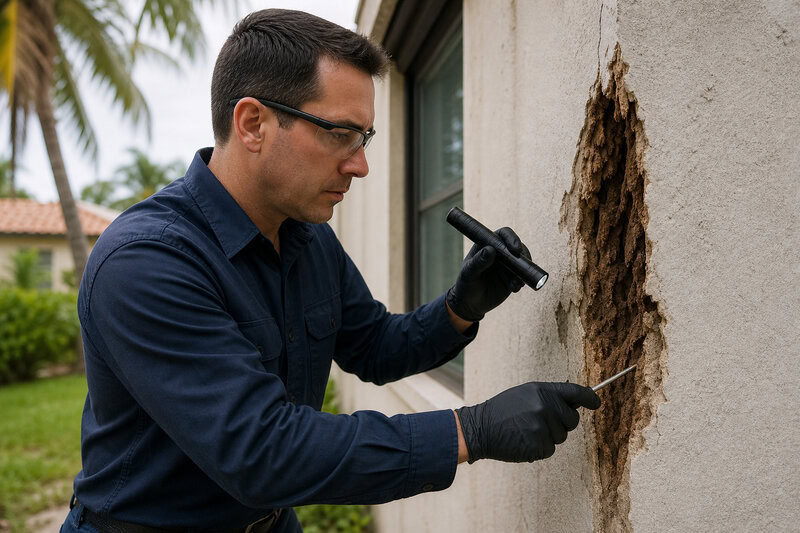
UF/IFAS recommends annual professional inspections as the baseline standard for any property in Miami-Dade and Broward counties, given the documented density of invasive termite colonies in South Florida’s soil. This is not a precautionary recommendation for a hypothetical risk — it reflects the on-the-ground reality that Miami’s soil, in heavily infested neighborhoods, functions as a continuous termite habitat regardless of what is happening on a single lot.
Preventive construction practices provide meaningful, evidence-based risk reduction. Using pressure-treated lumber, installing physical termite barriers during construction or major renovation, and eliminating wood-to-soil contact around foundations are all first-line defenses supported by research. None of these measures eliminates risk entirely, but each reduces the probability and speed of structural damage in a demonstrable way.
For anyone purchasing property in the Miami metro area, Miami’s status as the nation’s most termite-infested city for four consecutive years is a data point that belongs in every due-diligence conversation. Florida real estate practice recognizes this reality: buyers are routinely advised to request a Wood-Destroying Organism (WDO) inspection report, a standard pre-closing document that provides a licensed inspector’s assessment of existing termite activity and damage. Carefully reviewing a WDO report before closing is among the most concrete protective steps any buyer can take.
The broader takeaway from Orkin’s ranking, supported by years of UF/IFAS field research and the lessons of urban control programs like Operation Full Stop, is that Miami’s termite challenge is a systemic, citywide condition shaped by climate, geography, aging building stock, and the biology of two of the world’s most aggressive invasive species. National termite infestation data consistently ranks Florida among the highest-risk states in the country, and Miami’s persistent hold on the top position in Orkin’s city-level rankings gives that statewide picture a precise, sobering address — one that property owners, buyers, and policymakers across South Florida can no longer afford to ignore.