21. The Titius-Bode Law
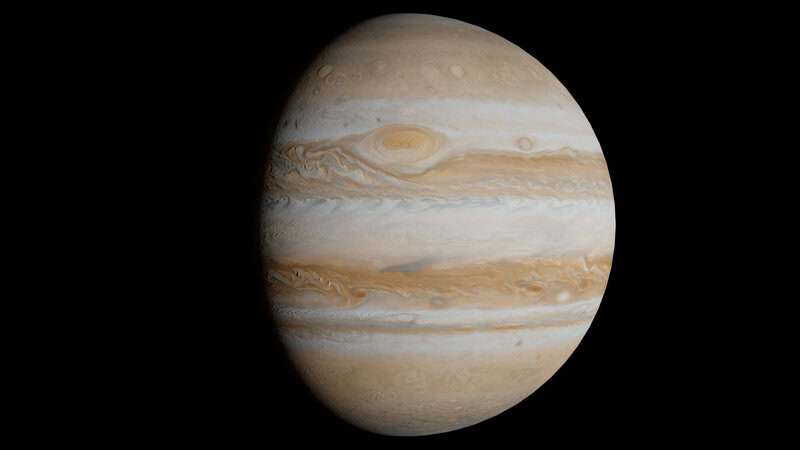
The Titius-Bode Law is an empirical formula that predicts the approximate distances of planets from the Sun. It begins with the sequence 0, 3, 6, 12, 24, 48, 96, 192, 384, where each number after 3 is twice the previous one. Adding 4 to each number and dividing by 10 yields distances in astronomical units (AU): 0.4, 0.7, 1.0, 1.6, 2.8, 5.2, 10.0, 19.6, 38.8, 77.6. This sequence closely matches the distances of Mercury, Venus, Earth, Mars, Jupiter, Saturn, Uranus, and Neptune from the Sun. (britannica.com) The law was first proposed by Johann Daniel Titius in 1766 and popularized by Johann Elert Bode in 1772. It successfully predicted the positions of Uranus and the asteroid belt. However, it does not accurately predict the position of Neptune, leading some scientists to view it as a numerical curiosity rather than a fundamental principle of planetary formation. (britannica.com) Despite its limitations, the Titius-Bode Law has intrigued astronomers and has been the subject of various studies attempting to explain its origins and implications. Some researchers have explored whether the law arises from the dynamics of planetary formation processes, while others consider it a coincidence without underlying physical significance. (astronomy.com) For a more detailed exploration of the Titius-Bode Law, refer to NASA’s history of the law. (britannica.com)