
On August 15, 1977, astronomer Jerry Ehman sat down with a paper printout from Ohio State University’s Big Ear radio telescope and circled six characters — 6EQUJ5 — scrawling a single word in the margin that would define the next 47 years of humanity’s search for extraterrestrial intelligence: Wow! That annotation, made in red pen on an unremarkable strip of computer paper, remains the closest science has come to detecting a signal that might not be ours.
What the Wow! Signal Actually Sounded Like
Most people encounter the Wow! signal as a string of characters on a printout. Far fewer know it can be heard. A 1 minute 15 second audio reconstruction of the Wow! signal is available through Wikimedia Commons, translating the raw intensity data — those six alphanumeric characters — directly into sound. The reconstruction maps signal strength to pitch and volume, so the listener experiences the signal’s gradual rise, its dramatic peak, and its symmetric fade in roughly the same proportions that the telescope recorded them. It is not a recording of radio waves intercepted from space; radio signals at 1420 megahertz are far outside the range of human hearing. It is, instead, an honest data sonification: a scientifically grounded method of making numerical measurements perceptible in a way a spectrogram cannot.
The result is austere — a tone that swells and recedes over little more than a minute — and that austerity is part of what makes it striking. There is no embedded melody, no pattern, no message. Just intensity, rising and falling exactly as physics would predict for a fixed cosmic source drifting through a stationary telescope’s beam as Earth rotates. Discussions in the SETI community, including analysis shared on the r/SETI subreddit, have explored what the reconstruction does and does not faithfully represent. The honest answer is that the audio conveys the signal’s shape and duration with reasonable fidelity, while inevitably collapsing several layers of scientific abstraction into a form accessible to any listener.
A 72-Second Burst That Fit the Profile Almost Too Well
The signal Ehman flagged lasted exactly 72 seconds. Its intensity rose for roughly 30 seconds, peaked, then faded symmetrically over the following 30 seconds — a bell-shaped curve that is precisely what astronomers would expect from a fixed cosmic source passing through a stationary telescope’s narrow field of view as Earth rotated. The signal did not flicker or cut out abruptly. It behaved exactly as a distant, unmoving point source should behave, which is one of the primary reasons it was not immediately dismissed as terrestrial interference.
The source appeared to originate from the direction of the constellation Sagittarius. No confirmed signal of comparable characteristics has been detected from that region of sky in the nearly five decades since, making the Wow! signal the strongest unverified candidate for extraterrestrial radio transmission ever recorded. It occupies a genuinely unusual position in science: too compelling to dismiss outright, too singular to confirm.
What ‘6EQUJ5’ Actually Means
The characters Ehman circled are not random. Big Ear’s computer logged radio signal intensity using an alphanumeric scale: digits 1 through 9 represented low-to-moderate signal strength, while letters A through Z extended the scale upward for stronger readings. The letter U, near the center of the sequence, indicated an intensity roughly 30 times above the ambient background noise — an extraordinary spike by any measure in radio astronomy. The full sequence 6EQUJ5 traces the signal’s rise and fall in a single continuous sweep, with each character representing a 12-second averaged sample. The result is a time-resolved fingerprint of the event, not merely a single anomalous data point.
Equally important was the signal’s frequency. It was narrowband — concentrated in a very tight slice of the radio spectrum near 1420 megahertz, the natural emission frequency of neutral hydrogen atoms. Hydrogen is the most abundant element in the universe, and as far back as 1959, physicists Giuseppe Cocconi and Philip Morrison proposed in the journal Nature that 1420 MHz represented a logical, universal frequency for interstellar communication — a channel any technologically capable civilization would know to use. Broadband signals, by contrast, are routinely produced by terrestrial interference, lightning, and satellite electronics. The Wow! signal’s extreme narrowband profile is one of the primary reasons it remains scientifically interesting rather than being filed away as ordinary noise. A full technical breakdown is available through Wikipedia’s extensively sourced entry on the Wow! signal.
The Instrument That Caught It — and Can Never Be Replicated
The Ohio State Radio Observatory’s Big Ear telescope, which operated from 1963 to 1998, was a fixed flat-reflector design spanning roughly the area of three football fields. Unlike steerable dish antennas, Big Ear could not be pointed; it scanned the sky purely through Earth’s rotation. Any source it detected would naturally rise and fall in signal strength as the beam swept past — precisely the bell-shaped intensity profile that Ehman observed. The telescope was not behaving anomalously. It was performing exactly as designed.
Big Ear was conducting a systematic SETI survey at the time of the detection. The Wow! signal was not an accidental discovery but the product of a deliberate, methodical scientific program. That context matters: the signal emerged from exactly the kind of careful, patient observation that SETI researchers argue is necessary to have any realistic chance of detecting a rare or intermittent transmission.
In 1998, Big Ear was demolished to make way for a golf course expansion — a loss that SETI researchers have cited as a significant setback for the field. The telescope’s specific configuration, including the precise geometry of its horn receivers and its geographic location, cannot be replicated to conduct a direct observational follow-up under identical conditions. The instrument that made the detection no longer exists. The SETI Institute’s overview of the Wow! signal places this loss in the context of the broader challenges facing long-term SETI programs.
Why It Fits the Profile of an Alien Signal — and Why That Remains Uncertain
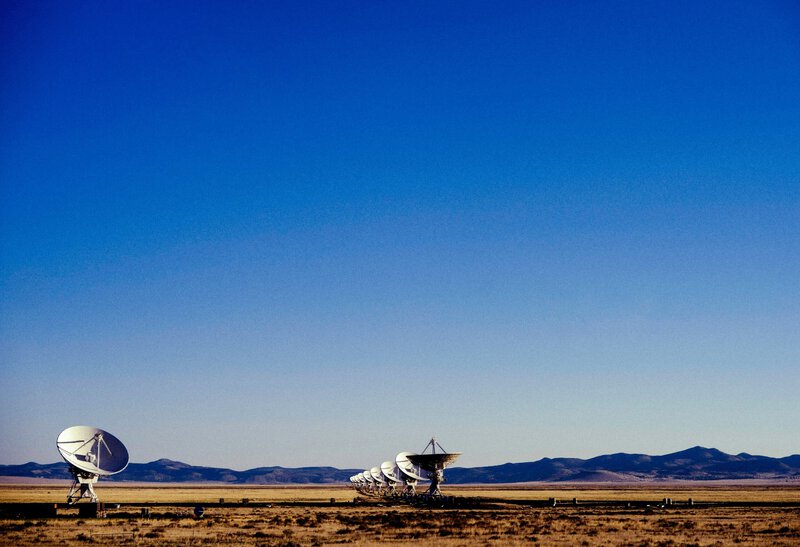
The Wow! signal satisfies several criteria that SETI researchers have long considered hallmarks of a potentially artificial transmission: a narrowband frequency near the hydrogen line, a high signal-to-noise ratio, a sky position near the galactic plane, and an intensity profile consistent with a fixed point source. These are not arbitrary benchmarks. They trace back to frameworks developed by pioneers including Frank Drake, whose Project Ozma at the National Radio Astronomy Observatory in 1960 established many of the foundational assumptions still used in the field today.
Critically, however, no message or repeating pattern was embedded in the signal. The 72-second detection contained intensity variation but no decodable information structure, leaving open the possibility that it was a brief, unmodulated carrier wave — or a natural phenomenon not yet fully understood. A genuine alien beacon intended for detection might be expected to repeat or to transmit continuously. The complete failure to re-detect the signal across decades of follow-up observations by multiple facilities — including those with far greater sensitivity than Big Ear possessed in 1977 — is the single most compelling argument against an extraterrestrial origin. The signal appeared once, behaved ideally, and vanished.
The Leading Natural Explanations — and Why None Fully Sticks
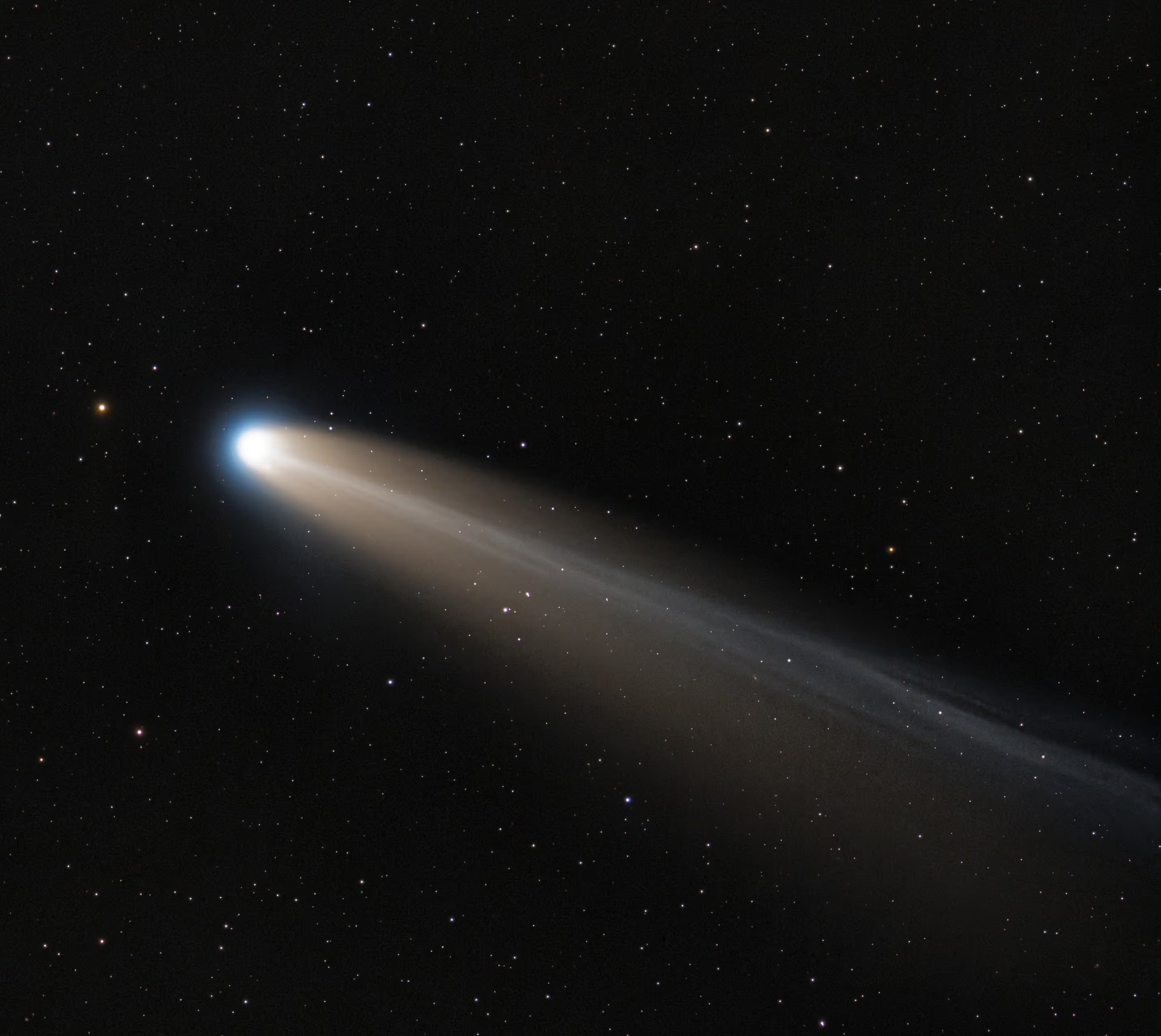
In 2017, astronomer Antonio Paris, publishing in the Journal of the Washington Academy of Sciences, proposed that the signal was caused by hydrogen gas clouds surrounding one or both of two comets — 266P/Christensen and P/2008 Y2 — that were passing through the same region of sky in 1977. The hypothesis attracted widespread media coverage, but it was subsequently criticized by multiple researchers for methodological inconsistencies, including questions about whether cometary hydrogen envelopes could produce a signal with the observed narrowband characteristics and the correct intensity profile.
Other proposed natural explanations include interstellar scintillation — the radio-wave equivalent of starlight twinkling, caused by irregularities in interstellar plasma — which can temporarily amplify a faint continuous source to apparent prominence. Critics note, however, that this would require an underlying persistent source that has never been identified. Radio frequency interference from human-made satellites or aircraft has been largely ruled out given that the signal’s frequency fell within a band internationally protected from terrestrial transmissions at the time of detection.
The scientific consensus, as reflected in assessments by the SETI Institute and in the Ohio State SETI program’s own records, is that no single natural explanation has been demonstrated to reproduce all observed characteristics of the Wow! signal simultaneously. It remains formally unexplained rather than definitively solved — a distinction that matters enormously in science.
47 Years of Silence, and What That Silence Does and Does Not Mean
Within weeks of Ehman’s annotation, Big Ear conducted approximately 50 follow-up observations of the same sky coordinates and detected nothing. That pattern of silence has been replicated by radio observatories around the world for nearly five decades. In 2012, a team organized through Arecibo Observatory transmitted a response message toward the Wow! signal’s approximate origin point, a crowdsourced effort marking the signal’s 35th anniversary. Even if that transmission reaches an intended recipient, any reply traveling at the speed of light could not return for decades at minimum.
The absence of re-detection does not scientifically rule out an extraterrestrial origin. A directed beam sweeping the galaxy, a one-time transmission, or a source that has since gone silent are all theoretically consistent with the observational record — possibilities that have been discussed in peer-reviewed literature. Science cannot prove a negative from a single non-repeating observation, and astronomers are generally careful to say so.
The Wow! signal directly shaped the protocols modern SETI programs use today, including the widely adopted requirement that any candidate signal must be detected on at least two independent occasions before being formally announced. The Wow! signal itself, ironically, fails to meet that standard — which is precisely why it has never been officially classified as confirmed evidence of extraterrestrial intelligence, despite being the strongest candidate the field has ever produced.
For the broader public, the signal functions as a concrete reminder — documented, dated, and still audible in reconstructed form — that the search for extraterrestrial intelligence is an empirical scientific discipline with real data, real instruments, and genuine unanswered questions. A PBS documentary on the Wow! signal presents the history accessibly for general audiences and captures why the detection continues to resonate beyond specialist circles. Until a natural mechanism is demonstrated that reproduces the signal’s narrowband frequency, intensity profile, and 72-second duration under 1977 observing conditions — or until the signal reappears and is independently confirmed — it will remain exactly what Ehman called it: the most evocative open question in modern astronomy, written in the margin of a printout, in red ink, nearly half a century ago.