
On August 12, 2026, the Moon’s shadow will race from the Arctic Ocean to Spain in roughly 96 minutes — covering thousands of miles at a speed no aircraft in regular service can match, yet delivering totality that feels, to anyone standing beneath it, like a moment of perfect stillness. That paradox is not a trick of perception. It is written directly into the orbital geometry of the Earth-Moon system, and understanding it changes the way you look at every eclipse photograph ever taken.
A Dark Spot Racing Across the Arctic at Supersonic Speed
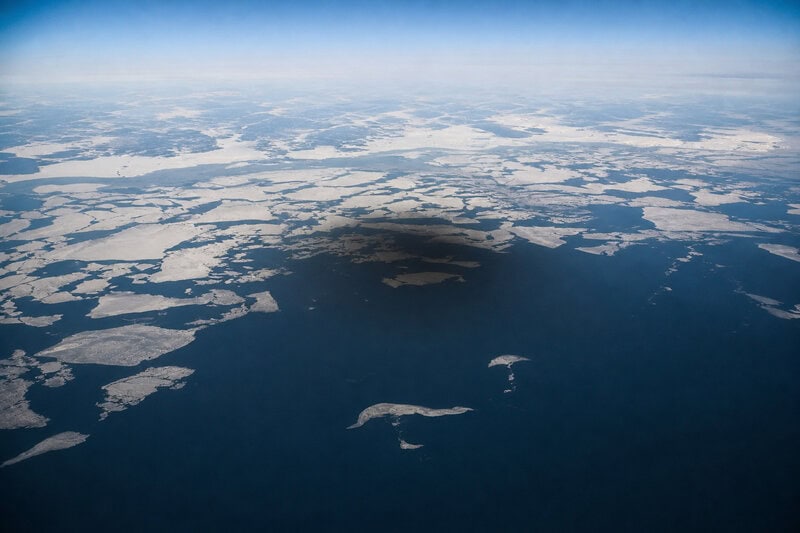
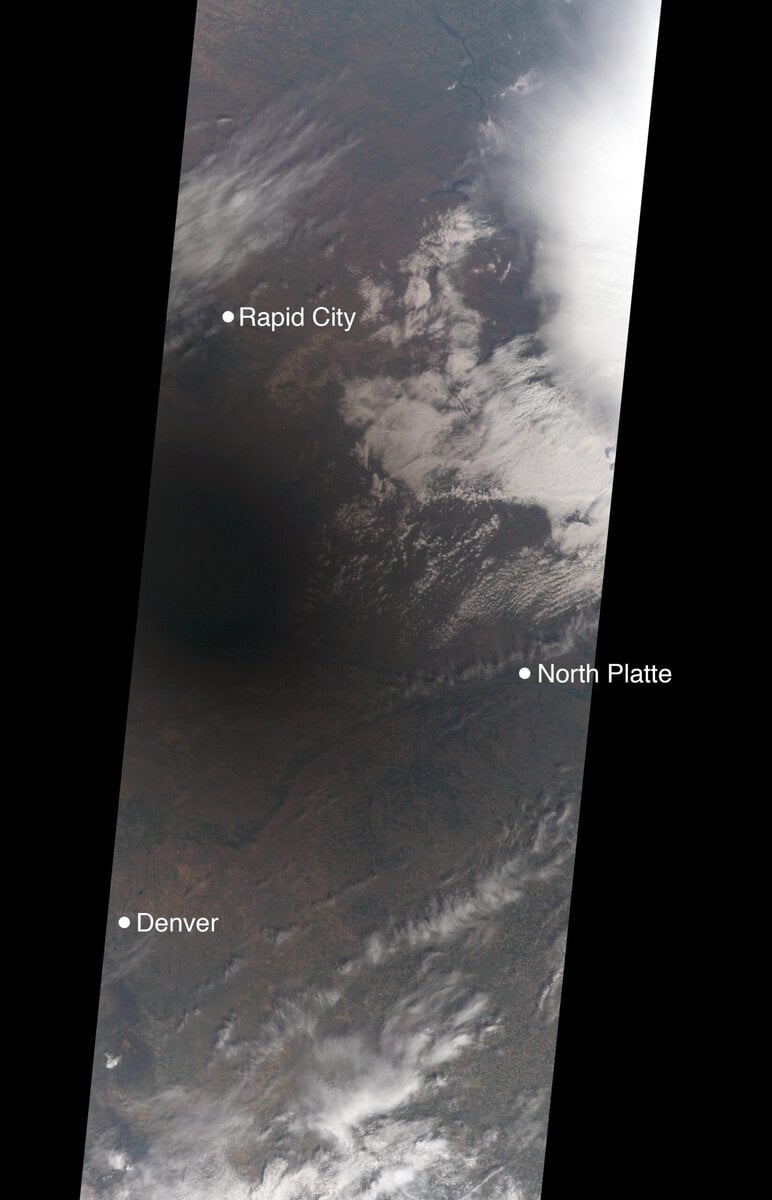
NASA captured the reality of that geometry in a striking image taken on June 10: the Moon’s shadow appears as a blurry, dark brown spot over the Arctic. The image is disorienting in the best possible way. The umbra — the Moon’s darkest, central shadow cone, where the Sun is most completely blocked — looks almost modest from space, a smudge on a blue marble. On the ground beneath it, daylight dims dramatically in minutes.
That single photograph reframes the eclipse experience entirely. You are not simply watching the sky go dark above you. You are standing on a rotating planet while a shadow cast across roughly 93 million miles of space sweeps over you at supersonic speed and moves on. The shadow does not linger because it cannot. Physics will not allow it.
This is the central paradox of eclipse chasing: the shadow moves faster than a rifle bullet, totality lasts only minutes, and the reasons for both facts emerge from the same set of orbital numbers.
How Fast Is the Moon’s Shadow, Really?
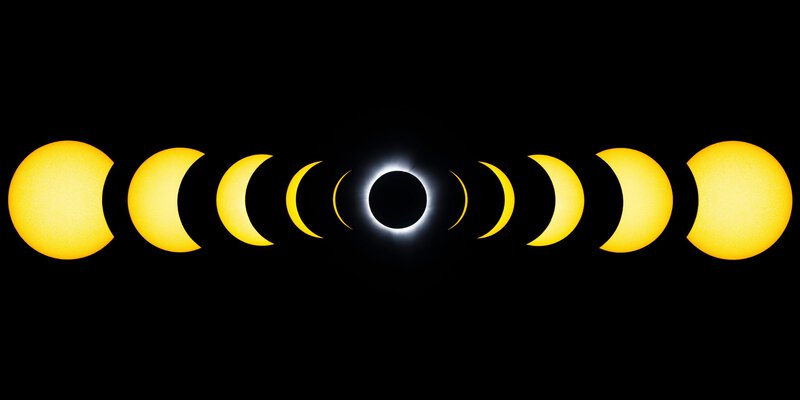
The speed of the Moon’s shadow on Earth’s surface is not a single fixed number — it varies considerably depending on where along the eclipse path you are standing. At mid-latitudes, the umbra’s ground speed typically exceeds 1,000 miles per hour. Near the poles, where Earth’s curved surface tilts sharply away from the shadow’s trajectory, that speed can surpass 5,000 miles per hour. These figures are consistent with orbital mechanics models maintained by NASA’s Goddard Space Flight Center, which publishes eclipse path data and ground-speed calculations for each event.
To put those numbers in context: a commercial jetliner cruises at roughly 575 mph. The SR-71 Blackbird, the fastest crewed aircraft ever flown in operational service, reached approximately 2,200 mph — fast enough, in principle, to partially pace an eclipse shadow at certain mid-latitude positions, but far too fuel-limited and range-constrained to follow a 96-minute transoceanic track across an Arctic ocean. The shadow outruns everything humanity has built to fly.
The underlying reason is straightforward. The Moon orbits Earth at approximately 2,288 miles per hour relative to Earth’s surface. When the Moon’s shadow falls on a planet, that shadow travels across the surface at a speed derived from the Moon’s orbital velocity — but modified, often dramatically, by the angle at which the shadow strikes the ground. Near the equator, Earth’s surface is relatively perpendicular to the incoming shadow, so the projected speed stays closer to the Moon’s actual orbital velocity. At high latitudes, the surface slants sharply away, and the shadow’s footprint stretches and accelerates across the oblique geometry. The Arctic segment of the 2026 eclipse sits squarely in that high-speed zone, which is why the opening minutes of the path will be among the most fleeting of the entire event.
The Geometry That Makes the Path Surprisingly Narrow
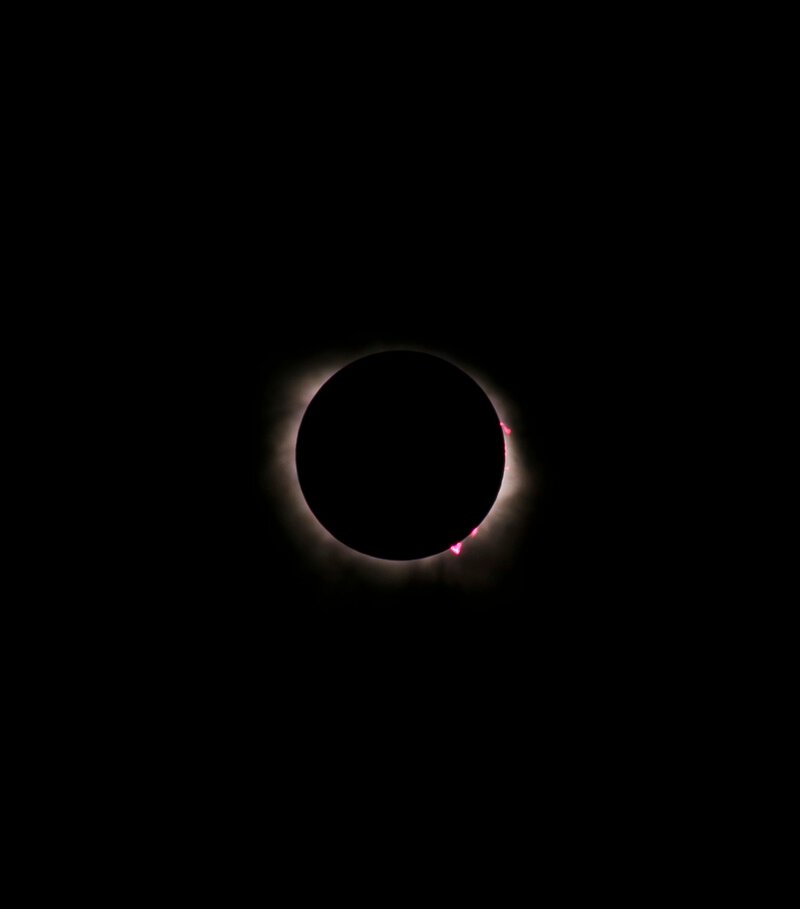
Given that the Moon is 2,159 miles in diameter, you might expect its shadow to drape across a substantial portion of Earth’s surface. In practice, the umbral shadow — the region of true totality — is typically only 60 to 100 miles wide. That narrowness is a direct consequence of a remarkable coincidence: the Moon is just barely large enough, as seen from Earth’s surface, to cover the solar disk completely.
The Sun is roughly 400 times larger than the Moon, but it is also roughly 400 times farther away, which means both objects subtend almost identical angles in Earth’s sky. The result is a shadow cone that reaches Earth’s surface as a relatively small spot rather than a broad wash of darkness. Eclipse geometry data published by NASA’s eclipse cartographer Fred Espenak has long documented this relationship and its consequences for path width.
That coincidence has a time limit. The Moon is slowly drifting away from Earth at approximately 1.5 inches per year — a rate established by lunar laser-ranging experiments that have been running since retroreflectors were placed on the Moon’s surface during the Apollo missions. As the Moon recedes over geological time, its apparent diameter will eventually shrink enough that it can no longer fully cover the Sun, and total solar eclipses will cease to occur. That endpoint is hundreds of millions of years away, but the drift is real, measured, and ongoing.
For observers on the ground, the path’s narrowness has an immediate practical consequence. Stepping even 50 miles outside the umbral track places you in the penumbra — the zone of partial eclipse — where the Sun is only partly covered, the sky does not go fully dark, and the temperature does not drop in that sudden, disorienting way that makes totality one of the most viscerally unusual experiences in nature. Eclipse chasers travel intercontinental distances for what amounts to a margin of a few dozen miles.
The Arctic Ocean Crossing: What Makes 2026 Scientifically Unusual
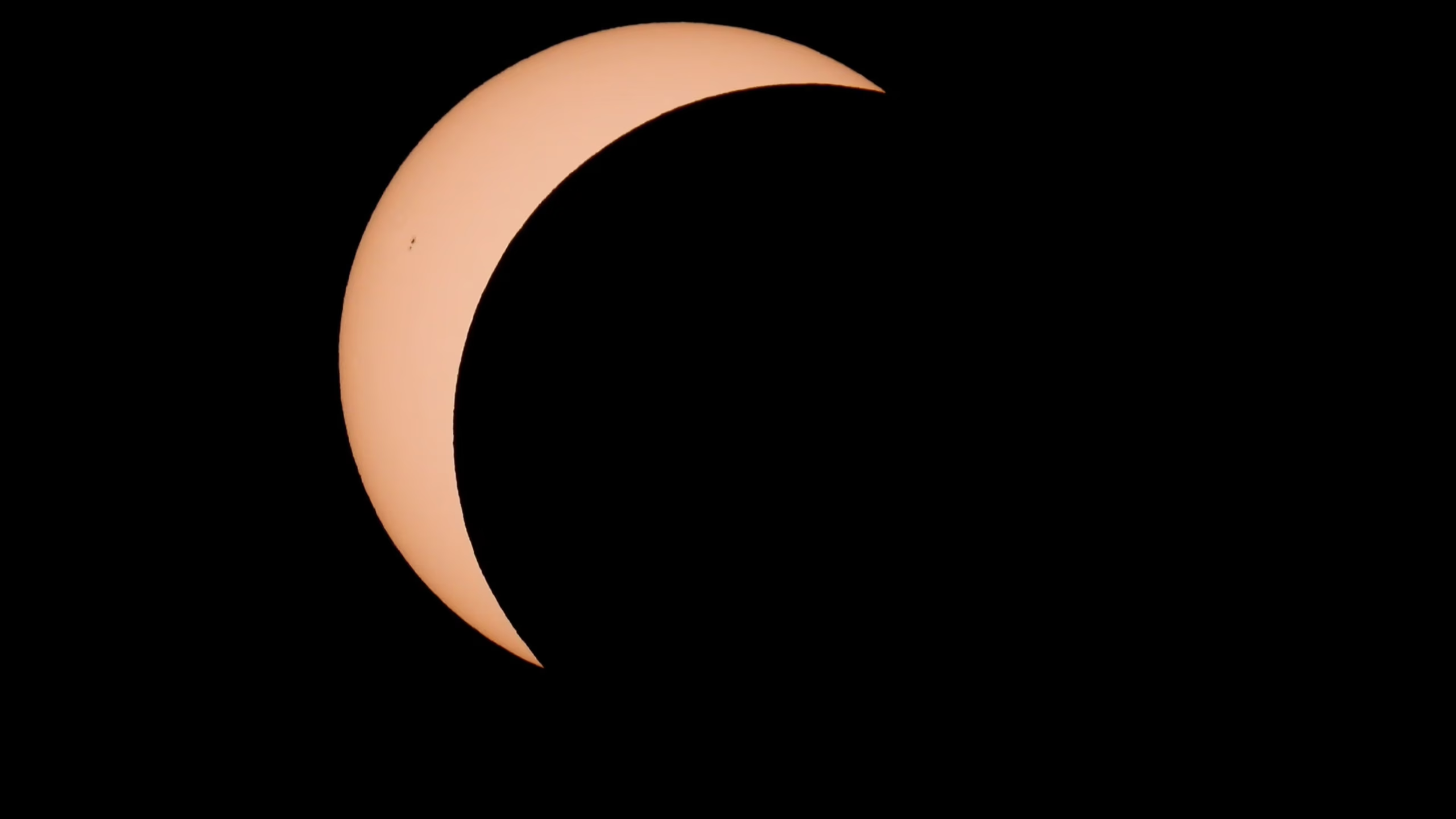
The August 12, 2026 eclipse shadow opens over one of Earth’s most remote and least-observed ocean regions before crossing eastern Greenland and eventually reaching Spain — a traverse that compresses an enormous range of latitudes, shadow speeds, and environmental conditions into a single 96-minute event. That combination of geography and geometry makes this eclipse scientifically notable in ways that go beyond spectacle.
For atmospheric researchers, the Arctic opening presents a rare opportunity. The sudden reduction of solar radiation during totality produces measurable effects in the lower atmosphere, including localized pressure and temperature changes sometimes referred to as the eclipse wind effect. How those effects behave over open polar water, with its distinctive thermal and humidity properties, is not well characterized in the existing literature. The 2026 eclipse offers a narrow observational window that researchers are unlikely to see repeated over the same geography anytime soon.
Higher in the atmosphere, the effects are equally measurable. Researchers have used previous trans-oceanic eclipses to calibrate satellite sensors and test ionospheric models, since the abrupt cutoff of solar ultraviolet radiation produces a detectable depression in electron density — effectively a temporary hole in the ionosphere that propagates and then fills as the shadow moves on. The 2026 Arctic track, precisely because it crosses such an understudied region, offers a valuable new data point for those models.
The practical challenge is access. Expedition ships are already being chartered to position observers within the path of totality over the Arctic Ocean and along the Greenland coast, since aircraft cannot pace the shadow at polar latitudes and land-based infrastructure does not exist across the relevant stretches of ocean. Ship-based viewing introduces its own complications — weather windows at Arctic latitudes in August are not guaranteed, and sea ice conditions affect routing — but the geometry of the 2026 path leaves few alternatives for the opening segment of the eclipse.
Why Totality Feels Like Stillness When the Shadow Is Moving at Supersonic Speed
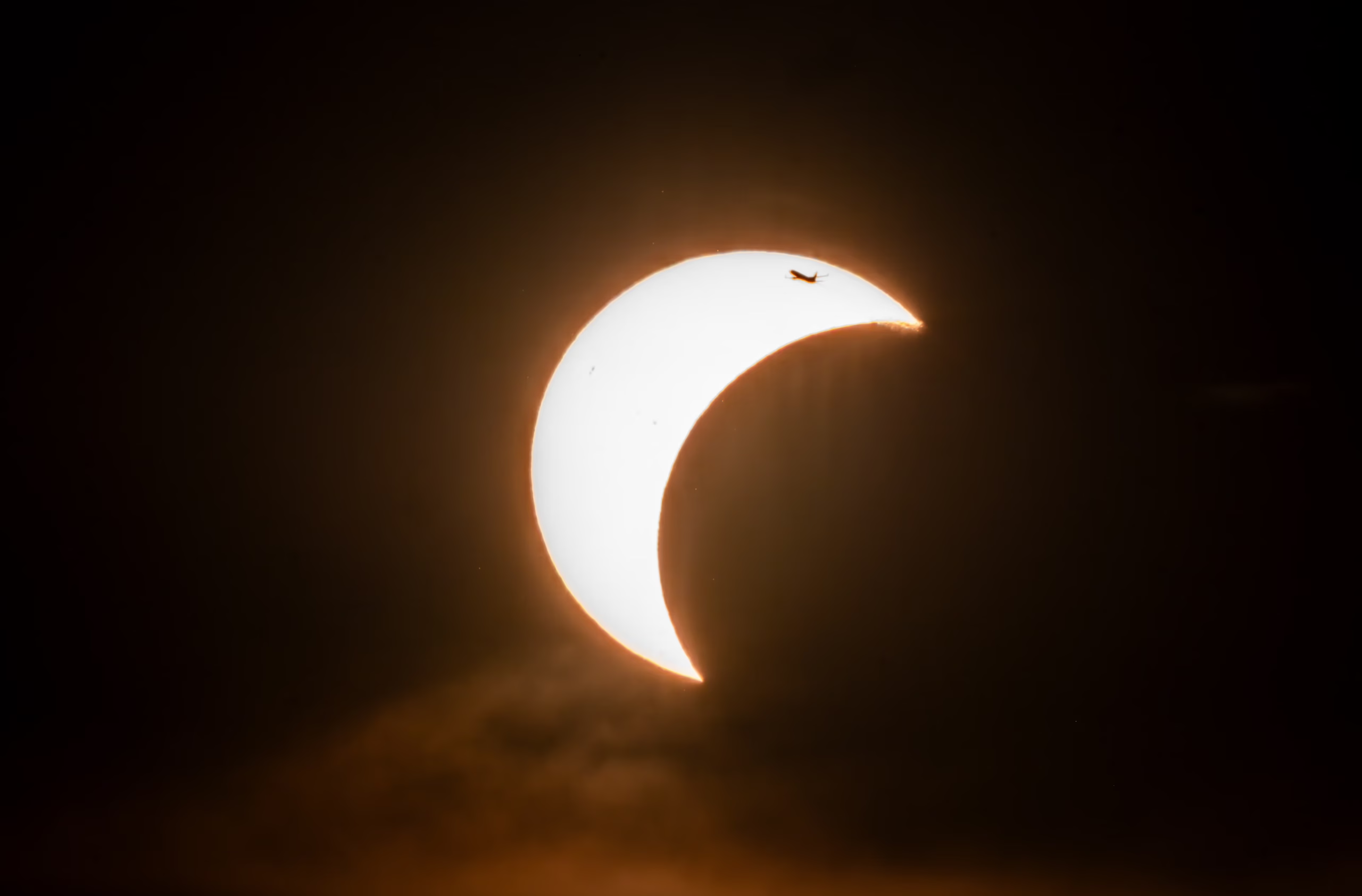
The sensory experience of a total solar eclipse contradicts its physics almost completely. Observers standing in the path do not perceive a supersonic object passing over them. They experience an encroachment of darkness from the west, a sudden arrival of totality, and then a retreat of light to the east — a sweep detectable across wide landscapes but imperceptible as motion from any single vantage point.
The reason is scale. The umbra is enormous relative to a single observer’s field of view. Its leading edge does not appear as a defined boundary racing toward you; it manifests as a deepening of shadows, a shift in the quality of light, and then an extinction of direct sunlight. The only moment when the shadow’s actual velocity becomes faintly visible to the naked eye is in the seconds just before totality, when certain atmospheric conditions produce shadow bands — faint, rippling striations that race across light-colored surfaces, caused by atmospheric refraction of the last slivers of sunlight. Even then, the effect lasts only seconds and is easily missed.
During totality itself, the umbra’s center point is, in a meaningful sense, stationary relative to any individual observer for the duration of their experience. The shadow is moving, but the observer is inside it, and it is larger than the distance it travels during the time human senses can process the change. That is why totality at a given location can last anywhere from a few seconds at the edge of the path to a theoretical maximum of 7 minutes 32 seconds near the centerline at favorable geometries — a maximum that according to NASA eclipse records was approached during a 1973 eclipse over Africa.
The stillness is not an illusion. It is an accurate description of the local geometry at that moment. You are, for those minutes, a stationary point that a supersonic shadow has temporarily engulfed.
Could You Ever Outrun an Eclipse? The History of Trying
The most sustained attempt to pace a solar eclipse by aircraft remains the 1973 Concorde experiment, in which a team of scientists flew at approximately 1,250 mph along the eclipse path over the Atlantic Ocean and the African continent. By matching a portion of the shadow’s ground speed — which over equatorial Africa was running near 1,400 mph, relatively slow by eclipse standards — the team extended their observation of totality to approximately 74 minutes. That remains the longest artificially extended totality observation on record, documented in a paper published in the journal Nature in 1974.
The Concorde experiment succeeded because the conditions were unusually favorable: a relatively slow-moving equatorial shadow, a supersonic aircraft with sufficient range, and a long continental track. None of those conditions apply to the 2026 Arctic segment. At polar latitudes, shadow speeds climb well beyond any crewed aircraft’s capability, and the geographic track crosses open ocean with no diversion or landing options. No aircraft in operational service today can sustain the speeds necessary to follow that portion of the path.
Modern eclipse-chasing flights work on a different principle. Rather than racing the shadow, chartered jets position themselves within the path at a calculated moment — climbing above weather systems to guarantee a clear view of totality from a fixed point in the sky. The shadow still passes over them at supersonic speed. They simply ensure they are in the right place when it does.
What the 2026 Eclipse Reveals About Shadows, Speed, and Scale
The Moon’s shadow moving at over 1,000 miles per hour across Earth’s surface is not an anomaly or a curiosity reserved for polar geometry. It is a direct readout of the Moon’s orbital velocity, projected onto a curved planetary surface at an angle determined by the eclipse’s latitude. Every number in that calculation is known, has been known for centuries, and can be verified through basic orbital mechanics. The 2026 Arctic eclipse makes those numbers vivid by staging them over one of the most dramatic and logistically difficult regions on Earth.
NASA’s orbital photography of the Moon’s shadow over the Arctic — that dark smudge crossing an ocean — turns abstract mathematics into something you can examine directly. The 96-minute transit from the Arctic Ocean to Spain accomplishes the same thing across time. Both are expressions of the same underlying fact: the solar system is in constant, measurable, rapid motion, and a total solar eclipse is one of the rare moments when that motion intersects with a specific human location in a way that is impossible to ignore.
August 12, 2026 will arrive on schedule. In the Arctic Ocean, in eastern Greenland, along the coast of Spain, a shadow larger than most countries will pass overhead in minutes, carrying with it several millennia of accumulated human wonder and several decades of precise orbital science. It will not slow down for observers. It never does.