20. Autumn Olive (Elaeagnus umbellata)
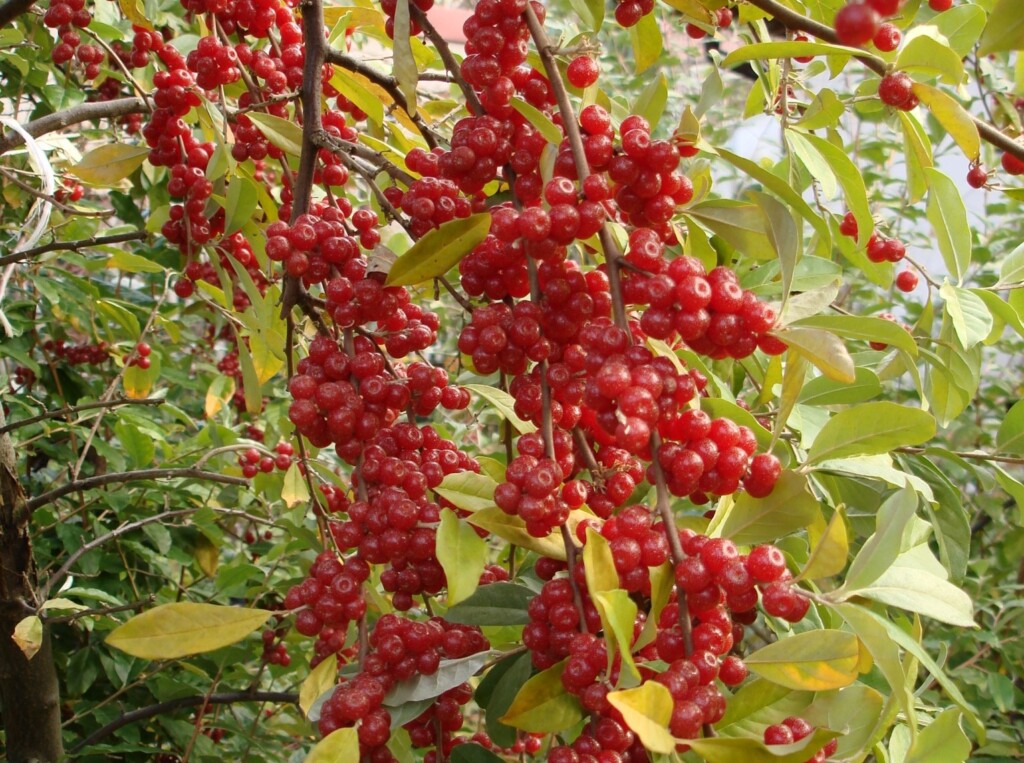
Silvery leaves dance in the breeze – nature’s warning sign ignored by foragers seeking its deceptively edible berries. This invasive beauty employs a subtle strategy: long-term exposure rather than immediate effects. Birds feast freely on its fruits, yet humans who regularly consume them report increasingly severe digestive issues. The tree’s true cunning lies in its accumulation of soil toxins, which concentrate in its berries over time. Local folklore speaks of autumn fevers tied to these innocent-looking fruits, while modern science confirms the gradual buildup of harmful compounds.