
At exactly 11:43 a.m. EDT on August 1, a SpaceX Falcon 9 rocket was scheduled to leave the ground at Kennedy Space Center — not 11:42, not 11:44, and emphatically not “sometime that morning.” With less than 20 minutes remaining on the Crew-11 countdown clock, NASA confirmed the mission still on schedule — a detail that sounds routine until you understand that the precision behind that single minute is not operational caution but gravitational law.
Why August 1 — and Why 11:43 a.m. Exactly
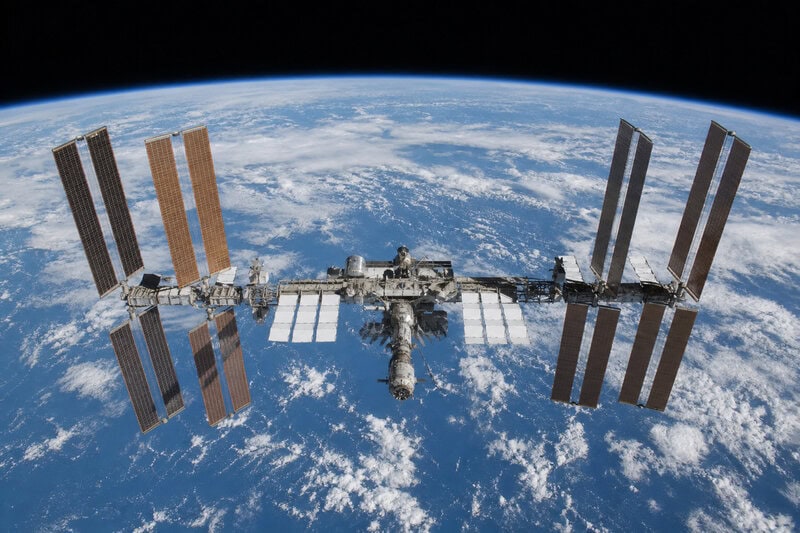
The International Space Station travels at roughly 17,500 miles per hour, completing a full orbit of Earth approximately every 90 minutes, according to NASA. That works out to about five miles every single second. The station does not hover conveniently overhead while engineers troubleshoot a sticky valve or wait for a cloud bank to clear. It moves on an unalterable path dictated entirely by gravity, and it will be somewhere else entirely in a matter of minutes.
A launch window exists because a rocket must leave a point on Earth’s surface at the precise moment that point, the vehicle’s ascent trajectory, and the station’s orbital path form a specific geometric alignment. Miss that alignment and the geometry simply does not exist again for hours — sometimes an entire day. This is not a scheduling inconvenience. It is a consequence of orbital mechanics, the branch of physics governing how objects move through space under the influence of gravity, a science first formalized by Johannes Kepler in the 17th century and given its full mathematical foundation by Isaac Newton.
Kepler’s laws establish that two objects in space can only rendezvous if they share compatible orbits that intersect at a common point in time. There is no shortcut, no override, no workaround. NASA’s Flight Dynamics Officers calculate these intersections months in advance using ephemeris data — mathematical tables that precisely describe a body’s position in space over time — and the result is a launch window that can be as narrow as one to ten seconds for crewed missions to the ISS.
The delta-v required — the change in velocity a spacecraft must generate to alter its orbit — to compensate for even a few minutes of launch delay can render a mission unfeasible given the propellant a vehicle carries. You cannot simply launch late and burn harder to catch up. The math closes the door.
Orbital Mechanics in Plain Language: Gravity Writes the Timetable
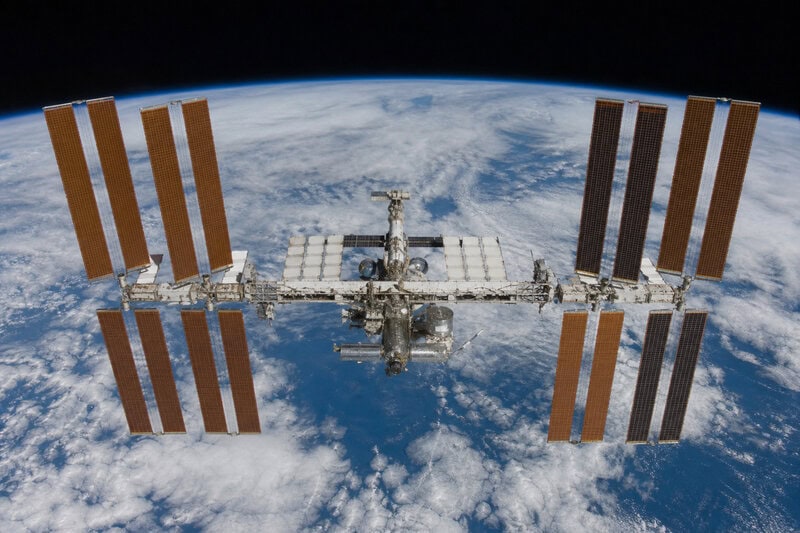
Consider a useful analogy: the ISS is a bus traveling a fixed circular highway with no exits, no stops, and no speed variation. The rocket is a car attempting to merge from an on-ramp. That on-ramp aligns with the highway at exactly one calculable instant, determined by Earth’s rotation rate and the angle of the station’s orbit. The car must be moving and positioned correctly at that instant — not approximately, not close enough. Exactly.
The ISS orbits at an inclination of 51.6 degrees relative to Earth’s equator. That angle was chosen deliberately to make the station accessible from multiple international launch sites, including those in Russia, Japan, and the United States. But that inclination is itself a hard physical constraint. It defines precisely which ground tracks — the paths traced across Earth’s surface by the station’s orbit — pass over any given launch site, and therefore on which days and at which times a rocket launched from that site can intercept the station at all.
Launch too early and the rocket arrives at rendezvous altitude before the station does, forcing it to waste propellant on a slow drift while the ISS catches up. Launch too late and the station has already passed the intersection point, requiring an aggressive and propellant-intensive chase maneuver that may simply exceed the fuel reserves the vehicle was designed to carry. Both scenarios can end a mission. Neither is recoverable through cleverness alone.
Why Kennedy Space Center Is Not Interchangeable With Any Other Launch Site
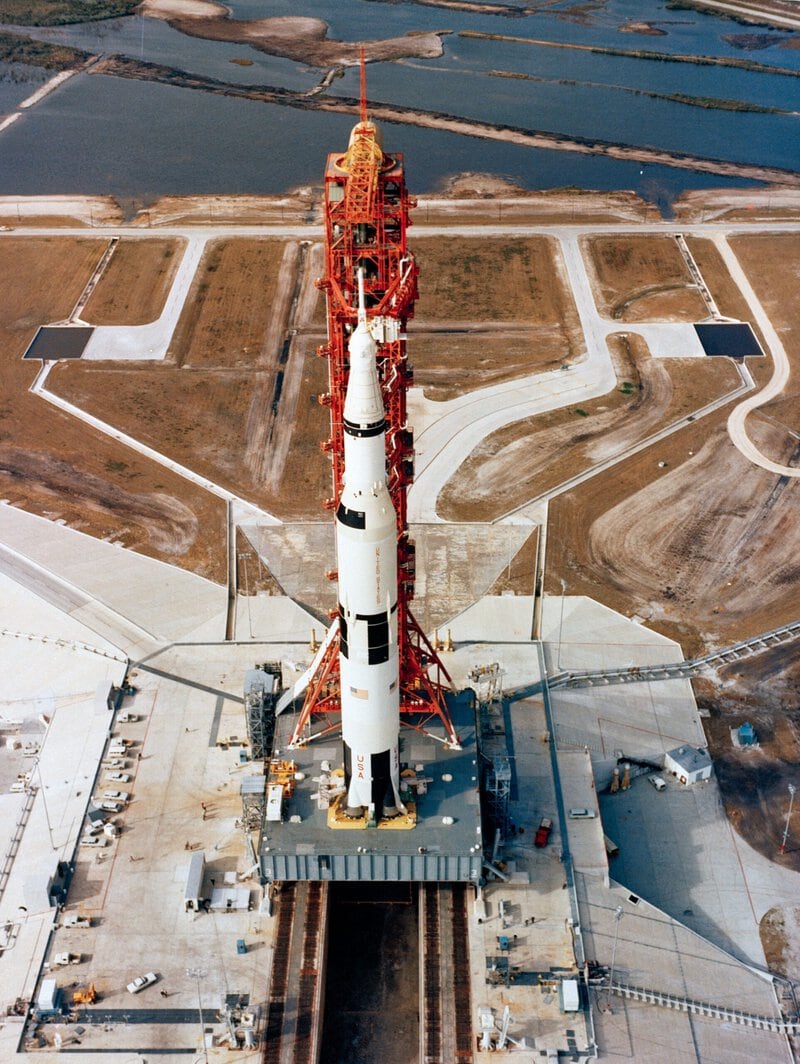
Kennedy Space Center sits at approximately 28.5 degrees north latitude. Because of that position, Earth’s rotation provides eastward launches with a free velocity contribution of roughly 915 miles per hour — a meaningful fraction of the total orbital speed the rocket must achieve. This is why launch sites are built as close to the equator as geography and politics allow; every free mile per hour from planetary rotation is propellant saved.
But that latitude also means that the specific longitude of Kennedy Space Center rotates with Earth at a known rate, lining up with the ISS orbital plane overhead only at specific, calculable times each day — sometimes twice, sometimes once, and sometimes not at all for a given calendar date. When a launch is scrubbed past the available window, the typical wait is not one hour but roughly 24 hours, until Earth’s rotation brings the launch site back into the correct geometric relationship with the station’s orbit. In some cases, the next opportunity requires recalculating an entirely new trajectory.
SpaceX mission planners work alongside NASA’s Launch Services Program to identify what are formally called “instantaneous launch windows” — the narrowest possible time slots — alongside slightly wider launch periods of a few minutes during which small trajectory corrections remain within the vehicle’s performance capability. But even the wider periods are narrow by any ordinary human standard, and the instantaneous window is exactly what it sounds like.
When Humans Are Aboard: The Compounding Pressure of a Crewed Window
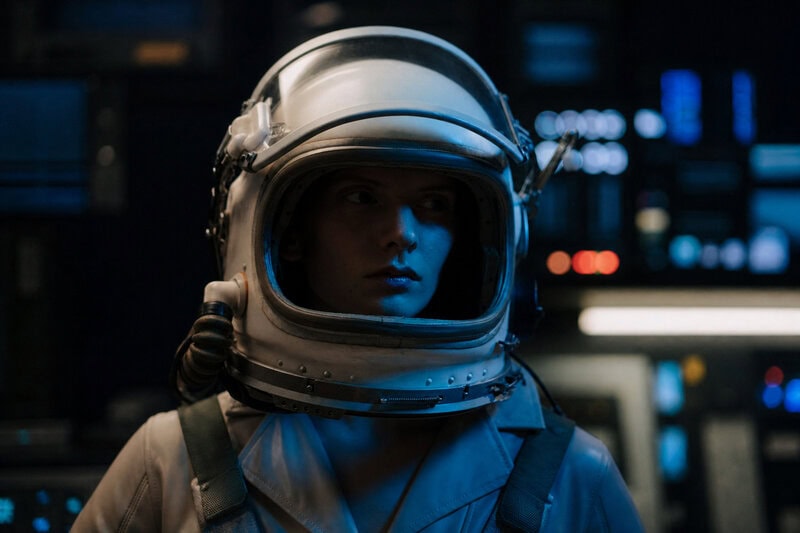
Unmanned cargo missions carry hardware constraints. Crewed missions carry all of those, plus people. Crew medical readiness assessments, pressure suit integrity checks, abort scenario validations, and life support verifications all feed into the same narrow countdown clock. A single anomaly anywhere in that chain — a sensor reading outside its acceptable range, a suit seal that fails to hold to spec — can force a scrub with seconds remaining. The window does not pause while the anomaly is investigated.
The orbital mechanics governing departure from the ISS are identical to those governing arrival. When NASA astronauts Bob Behnken and Doug Hurley undocked from the International Space Station on August 1 during the historic Demo-2 mission, their deorbit burn had to occur at a physics-dictated moment aligned with their splashdown target zone. The return window, like the launch window, was written by gravity — not by mission controllers, not by the crew, and not by weather forecasters.
That reality was underscored again when a SpaceX capsule carrying the four-member Crew-11 team returned to Earth after one crew member experienced a health issue during the mission. The capsule’s reentry still had to execute at the orbital-mechanics-dictated moment. A medical situation aboard an orbiting spacecraft does not grant an extension on the laws of gravitation. NASA’s Human Research Program has documented extensively that crew health contingencies in orbit cannot override the orbital timetable — a reality that places extraordinary weight on pre-launch medical screening and continuous in-mission health monitoring.
Weather, Hardware, and the Hierarchy of What Forces a Scrub
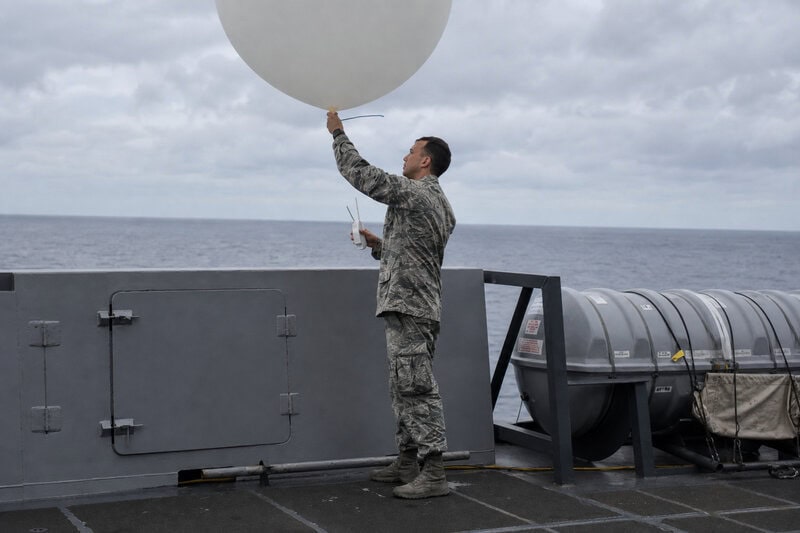
Not every scrub originates with a physics problem. The 45th Weather Squadron at Patrick Space Force Base, which supports launches from Kennedy Space Center, has reported that weather rule violations account for roughly half to more than two-thirds of launch scrubs in a typical year. Clouds, wind shear at altitude, lightning within a defined radius of the pad, and anvil cloud formations from distant thunderstorms all constitute violations of the Launch Commit Criteria — safety rules that exist because a vehicle ascending through electrically active atmosphere can trigger a lightning strike even on an otherwise clear-looking day.
Range safety — the requirement that the rocket’s flight corridor over the Atlantic Ocean remain clear of aircraft and maritime traffic, enforced by the U.S. Space Force’s Eastern Range — can independently close a window regardless of vehicle readiness or sky conditions. Hardware anomalies, by contrast, represent a statistically smaller share of scrubs but receive disproportionate public attention because they tend to surface late in the countdown, when cameras are rolling and audiences are watching.
What all three categories share is their interaction with the same immovable orbital deadline. The window does not extend while engineers confer. This is why NASA and SpaceX build multiple backup launch attempt dates into every mission schedule from the earliest planning stages — not as hedges against failure, but as acknowledgment that the orbital geometry will offer another alignment, and the team must be ready to meet it.
What the Precision of Crew-11 Reveals About the Future of Human Spaceflight
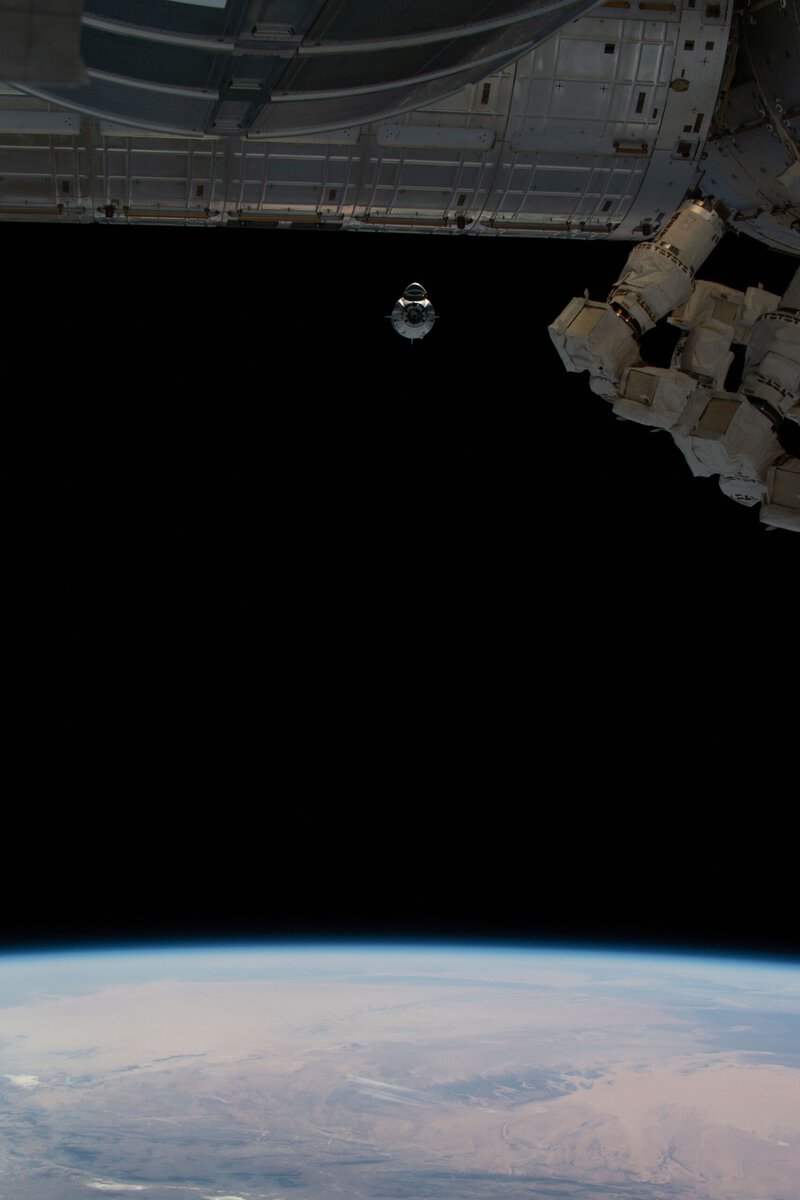
The instantaneous launch window is, paradoxically, a monument to human achievement rather than a limitation of it. The fact that engineers can predict the International Space Station’s position to within meters months in advance — and design a rocket trajectory to intercept it within a second of precision — reflects centuries of accumulated science running from Kepler’s ellipses through Newton’s universal gravitation to the relativistic corrections that modern navigation systems require.
As SpaceX expands its crewed launch cadence and NASA advances Artemis lunar missions, the discipline of launch window science will grow more demanding, not less. Trans-lunar injection windows — the burns that send a spacecraft from Earth orbit toward the Moon — are governed by the Moon’s orbital position and the geometry of the Earth-Moon system, constraints that are in some respects even less forgiving than ISS rendezvous timing. The Moon, like the station, moves on gravity’s schedule.
Emerging technologies, including real-time trajectory optimization software and expanded abort mode capability, may gradually widen the practical launch period for some mission profiles. But they will not eliminate the underlying orbital mechanics that created windows in the first place. The physics is non-negotiable in the most literal sense: it is a description of how the universe actually behaves, not a rule that a sufficiently advanced rocket can outrun.
The next time a countdown reaches zero and holds — or a launch is scrubbed with the clock in single digits — the accurate framing is not failure but deference. Humans and their machines, pausing at the edge of the atmosphere, waiting for the universe to rotate back into alignment. Because the alternative is asking gravity to wait, and gravity has never once obliged.