
It should not exist. Soft tissue — the delicate biological material that decays within days or weeks after death — has somehow survived intact inside a fossil that formed roughly 450 million years ago, long before dinosaurs, long before flowering plants, long before most of the world as we know it had any shape at all. And yet, there it is.
A Fossil So Rare, It Stopped Researchers Cold
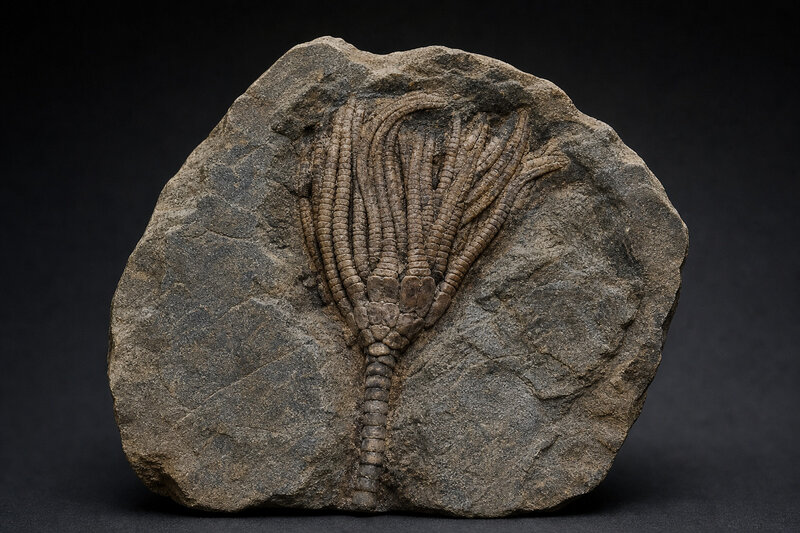
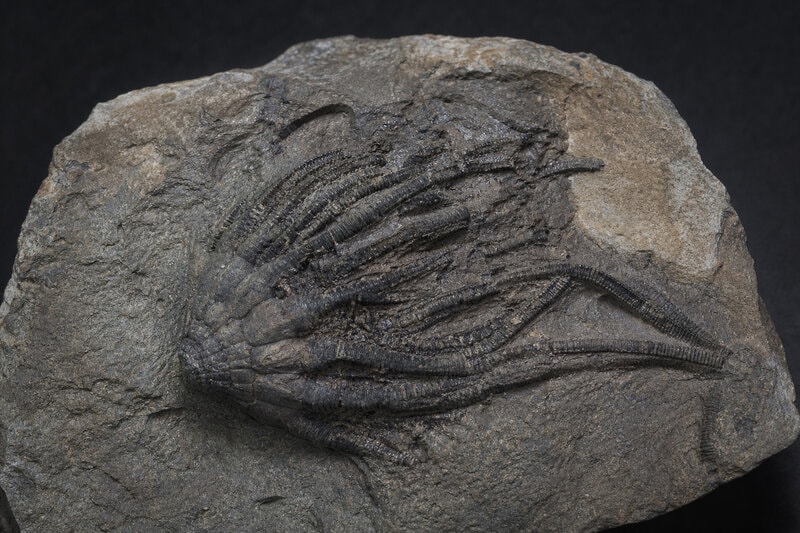
Paleontologists at the University of Oklahoma have identified what they are calling the oldest known fossilized crinoid soft tissue ever found — a specimen so improbable that it has left researchers openly astonished. This ancient animal’s body endured ice ages, mass extinctions, the slow grind of tectonic upheaval, and nearly half a billion years of geological pressure. Its delicate internal structures survived all of it.
The reaction among the research team was immediate and unambiguous. As researcher Cole put it, “Preservation like this is truly one in a million.” That phrase is not hyperbole — it is a precise reflection of just how vanishingly rare this kind of find is in the entire history of paleontology. You can read the team’s full account of the discovery at the University of Oklahoma’s official news page.
Meet the Animal: What Is a Crinoid?
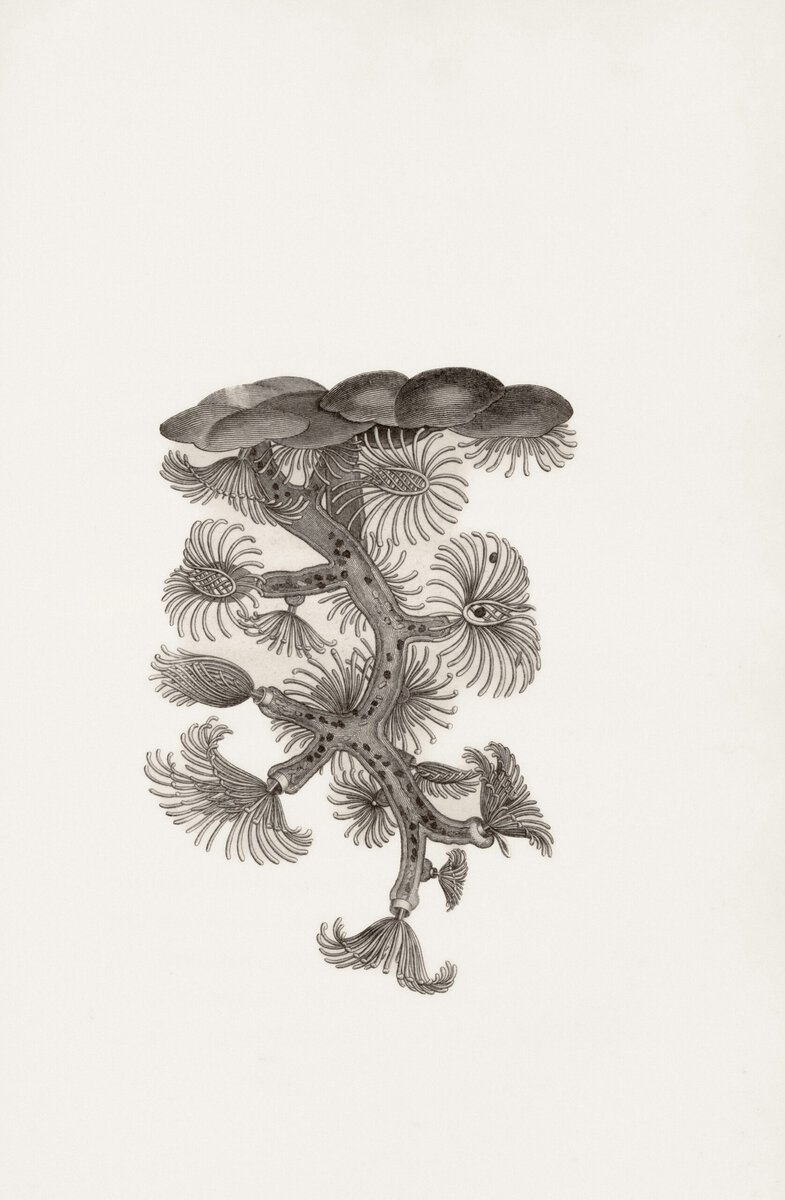
The creature at the center of this discovery is Dendrocrinus simcoensis, a species of crinoid — a marine invertebrate more commonly known as a “sea lily.” Despite the floral nickname, crinoids are animals, not plants. They anchored themselves to the seafloor and extended feathery arms into passing currents to filter food from the water, a feeding strategy so effective that the crinoid body plan has persisted, largely unchanged, into the present day.
During the Ordovician period, roughly 450 million years ago, crinoids were among the dominant architects of reef ecosystems. Shallow seas blanketed much of what is now North America, and crinoids populated these underwater environments in vast numbers, contributing to what geologists and paleontologists call the Great Ordovician Biodiversification Event — one of the most explosive expansions of marine life in Earth’s history. Dendrocrinus simcoensis itself vanished from Earth long before the first dinosaur ever walked — an entire evolutionary chapter that opened and closed without leaving much more than stone.
Or so scientists thought. Crinoid hard-part fossils — the calcite plates and stem segments that make up their skeletons — number in the millions worldwide. They are among the most common fossils a person might encounter. That abundance makes the soft tissue find all the more striking: out of millions of specimens studied across generations of research, preserved soft tissue has now been documented in a crinoid fossil exactly twice.
What Was Actually Preserved — and Why It Matters
When paleontologists refer to “soft tissue” in a fossil context, they mean the biological material that does not mineralize easily: skin, organs, connective structures, the fleshy architecture that gives an animal its form in life. This is the material that almost always disappears without a trace. Bones and shells can last indefinitely under the right conditions. Soft tissue, under virtually any conditions, does not.
What the University of Oklahoma team found preserved inside this 450-million-year-old specimen offers something rare and irreplaceable: direct physical evidence of how Dendrocrinus simcoensis was actually constructed and how it functioned as a living animal. Hard parts tell scientists that an organism existed. Soft tissue tells them how it worked.
The scientific value of that distinction is difficult to overstate. Evolutionary questions about how early reef animals developed their body plans, how they processed food, how their internal systems were organized — these are questions that shells and bones simply cannot answer. Soft tissue data can. Nautilus explores why this find carries such profound biological significance for our understanding of ancient life.
How Does Soft Tissue Survive 450 Million Years?
The preservation of soft tissue across geological time requires what scientists sometimes describe as a near-perfect storm of conditions arriving simultaneously. Rapid burial is essential — the organism must be entombed in sediment quickly enough to cut off oxygen and exclude scavengers and bacteria before decay can take hold. Beyond that, the local chemistry of the surrounding sediment matters enormously. Specific mineral conditions must be present for organic material to be replaced or coated at the cellular level before it dissolves.
This process — known as permineralization or authigenic mineralization — involves minerals gradually infiltrating biological structures and effectively casting them in stone, molecule by molecule, before the original material breaks down. When conditions align precisely, the result can be extraordinary: a faithful, durable record of tissue that would otherwise vanish within days of an animal’s death.
The challenge with Ordovician soft tissue preservation specifically is one of time and odds. The older the rock formation, the longer geological processes have had to destroy delicate evidence — heat, pressure, groundwater, erosion, and tectonic movement all erode the record. That anything this fragile survived from 450 million years ago is, as the researchers’ own language suggests, essentially miraculous from a statistical standpoint.
Discoveries like this one reshape the scientific conversation about what the fossil record is actually capable of preserving — and prompt researchers to ask what else might be hiding, unrecognized, in existing collections around the world. SciTechDaily outlines the broader implications for paleontology and soft tissue preservation research.
How the Discovery Actually Happened
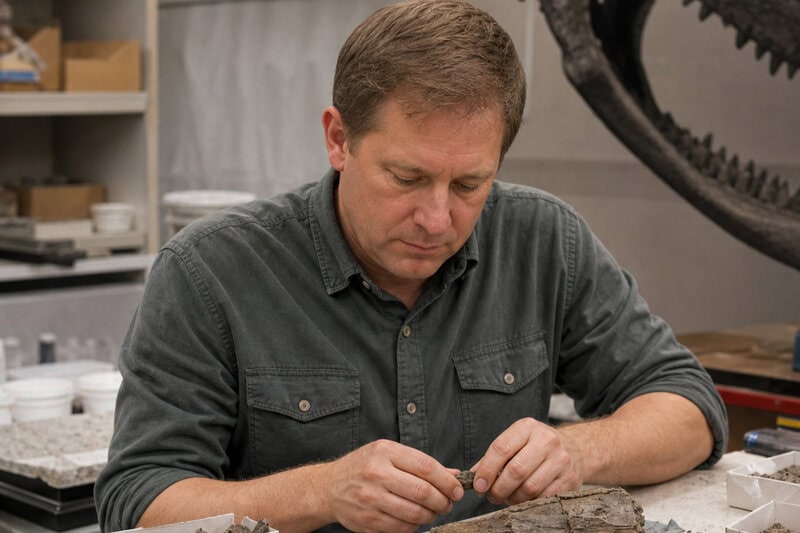
The identification came from paleontologists at the University of Oklahoma, whose careful, methodical examination of the specimen revealed what might easily have been overlooked. This is the nature of discoveries like this one: they rarely emerge from dramatic excavations in remote landscapes. More often, they surface through patient, close analysis — the kind of sustained attention that separates a routine specimen from a landmark find.
The moment of recognition, when researchers realized they were looking at preserved soft tissue rather than ordinary mineral staining or rock matrix, is the kind of inflection point that defines a career in science. The specimen is now positioned as one of the most significant Ordovician fossils on record, a reference point for future research into early marine life and the outer limits of fossilization.
Gizmodo’s reporting on the find and Colombia One’s coverage both provide additional detail on how the University of Oklahoma team made and confirmed the identification.
What This Tells Us About Earth’s Ancient Reefs
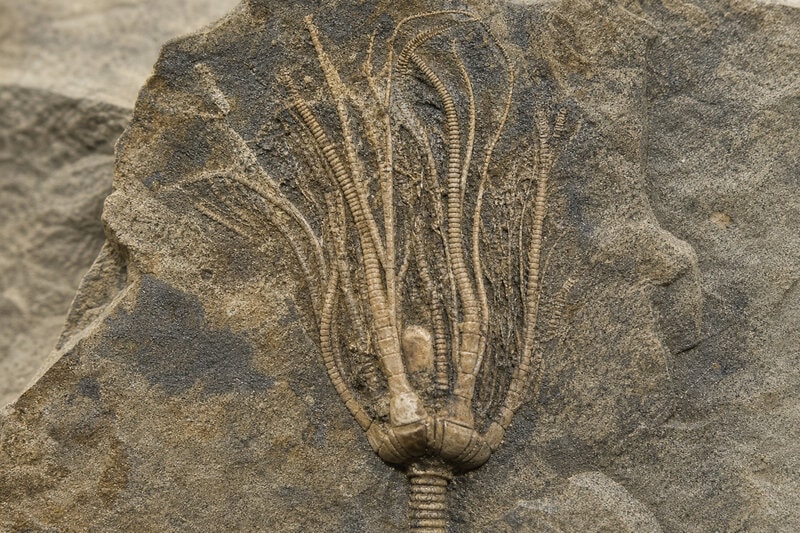
The researchers say the find reveals something genuinely new about how some of Earth’s earliest reef animals lived and evolved. The Ordovician period was a time when marine ecosystems were diversifying at a pace that would not be matched for hundreds of millions of years. Crinoids were central players in that world — abundant, ecologically important, and structurally complex in ways that fossils of their hard parts alone have never fully captured.
Soft tissue evidence fills in that biological detail. It offers a richer, more complete portrait of an ancient ecosystem that most people know only as a vague chapter in deep time. The find may also encourage paleontologists to re-examine existing museum collections with fresh attention, looking for signs of soft tissue preservation that previous generations of researchers were not looking for — or did not have the tools to detect.
Why This Discovery Resonates Beyond the Lab
A one-in-a-million fossil discovery carries meaning that extends well beyond the walls of a research institution. Most of life’s history on Earth is invisible to science. The conditions required to preserve any biological evidence across millions of years are so stringent, and so rarely met, that the fossil record represents only the thinnest possible sample of the living world that actually existed. Soft tissue preservation narrows that gap, however briefly, however improbably.
What this specimen demonstrates — quietly but unmistakably — is that Earth’s ancient oceans were populated by complex, biologically sophisticated life far earlier than many people appreciate. The creatures inhabiting those Ordovician seas were not simple or primitive in any meaningful sense. They had bodies, structures, and systems that functioned with the same kind of biological precision that life demands today.
After 450 million years of burial, pressure, and geological upheaval, a single small animal still has something to teach us about what life looked like at the dawn of complex ecosystems. Scientists are only beginning to listen — and what they are hearing is extraordinary.