
Sometime between your fiftieth and seventy-fifth birthday, something measurable and previously unrecognized may happen inside your brain — not a gradual fade, but a discrete biological shift that researchers at the New York Genome Center were not expecting to find. The discovery, rooted in cutting-edge genetic analysis of individual brain cells, suggests that the aging brain does not simply wear down on a single, continuous slope; it may instead pass through a distinct phase transition, the way water turns to ice at a precise temperature rather than cooling slowly into nothing.
The Finding That Reframes Middle Age
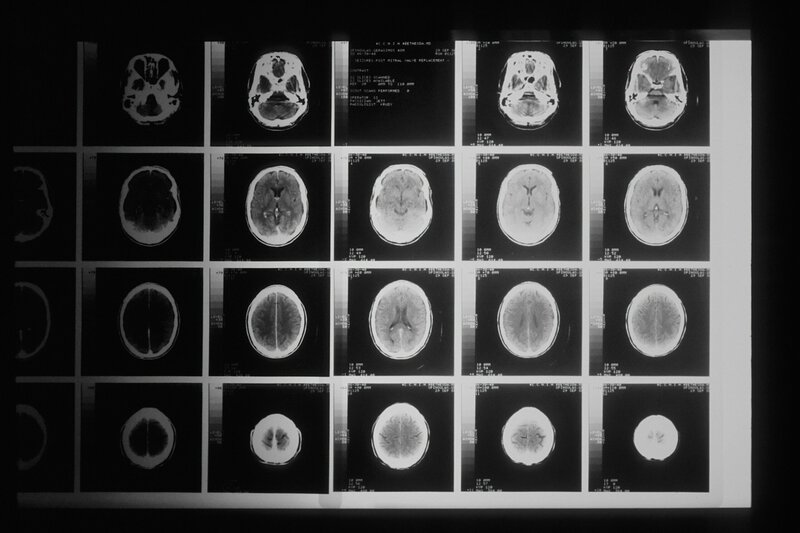
For decades, neuroscience treated brain aging as a largely uniform process of gradual decline — neurons lost, connections weakened, function slowly eroded across the lifespan. A new study from the New York Genome Center challenges that model directly. By mapping gene expression across thousands of individual brain cells from donors spanning a wide range of ages, researchers identified a striking reorganization of the brain’s immune landscape concentrated in the 50-to-75 age window — a period the field had not previously flagged as a discrete biological event.
The study’s central finding involves microglia, the brain’s resident immune cells. Between approximately ages 50 and 75, the prevalence of traditional microglia declined, while immune cells with stronger pro-inflammatory gene signatures became more common. Researchers describe this shift as one of the most striking results in the data. It implies that what happens to the brain at 50 and beyond is not simply passive deterioration but something more purposeful: an active biological remodeling, possibly executing a program encoded long before humans routinely lived into their eighties.
What the New York Genome Center Study Actually Did

The methodological backbone of this research is single-cell RNA sequencing — a technique that reads the genetic activity of individual cells rather than averaging signals across a block of mixed tissue. That distinction matters enormously. Traditional bulk-tissue studies of postmortem brains could tell scientists that something was changing in a region; they could not reliably identify which specific cell types were changing, in what direction, or how dramatically. Single-cell analysis resolves that ambiguity, detecting minority cell populations and subtle shifts in cellular identity that bulk approaches routinely miss.
By applying this higher-resolution lens to human brain tissue across a broad age spectrum, the New York Genome Center team produced a detailed cellular map of human brain aging — one that revealed the 50-75 window as a period of unusual and concentrated activity rather than a featureless stretch of the aging curve. The study revises the previous understanding of how brain immune cells behave during human aging, shifting the conceptual model from passive decline toward active biological remodeling.
Microglia: The Brain’s Maintenance Crew and Why Their Shift Matters
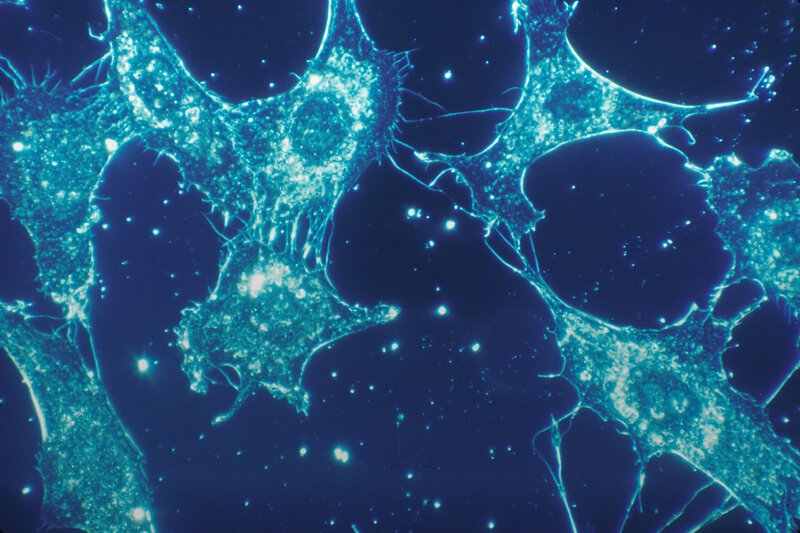
To understand why the microglial finding is significant, it helps to understand what microglia normally do. These cells are the central nervous system’s primary immune force: they continuously patrol brain tissue, clear cellular debris, prune unnecessary synaptic connections, and mount responses to injury or infection. They are, in functional terms, the brain’s custodial and security staff operating around the clock.
When that workforce is replaced by cells carrying stronger inflammatory profiles, the implications extend well beyond cellular biology. Chronic neuroinflammation — meaning persistent, low-grade immune activation in the brain without an obvious trigger like infection or injury — has been independently linked in prior research to Alzheimer’s disease, Parkinson’s disease, and accelerated cognitive decline. The microglial transition identified in this study would, if the new cells behave as their gene signatures suggest, represent a structural shift toward that inflammatory state.
The critical caveat is that the current study raises this possibility without resolving it. Whether the microglial shift causes cognitive changes, results from them, or represents a separate adaptive response the brain uses to manage aging-related stress remains an open and actively debated question. Correlation observed in postmortem tissue, however compelling, is not causation, and the researchers are explicit on that point.
Active Remodeling, Not Passive Decay: A Conceptual Shift

The broader implication of these findings is as much conceptual as it is biological. If the brain between 50 and 75 is executing a coordinated program of immune remodeling rather than simply accumulating damage, it belongs in a different scientific category than researchers had previously assumed. Phase transitions of this kind are well established elsewhere in biology: puberty reorganizes the endocrine and neurological system over a defined window; menopause represents a discrete hormonal phase change; metamorphosis in insects involves rapid, coordinated biological transformation rather than linear change. The 50-75 brain window may belong in that company.
This framing is supported by emerging evidence reviewed across multiple levels of neuroscientific analysis, including cellular, molecular, and systems-level research, suggesting that middle age marks a genuine inflection point in brain biology rather than simply the early portion of a long decline. That convergence across disciplines lends the hypothesis more credibility than any single study could supply on its own.
Researchers are nonetheless careful to position this as an emerging, not yet consensus, finding. The postmortem nature of the current data means scientists are working from snapshots rather than continuous observations. Larger longitudinal studies — tracking living individuals across years and decades — will be required before the phase-transition model can be considered established science rather than a well-supported hypothesis.
Converging Evidence From Across the Field

The New York Genome Center findings do not stand alone. Independent neuroimaging studies have reported accelerated changes in white matter integrity — the brain’s internal communication infrastructure — and in network connectivity beginning in the fifth and sixth decades of life, lending structural plausibility to what the single-cell data shows at the cellular level. These imaging signals suggest that whatever is happening among microglia may have detectable consequences at the scale of whole-brain organization.
Proteomics research — the large-scale study of proteins in blood and cerebrospinal fluid — has separately identified midlife as a period of unusual biochemical flux. Certain plasma proteins shift more rapidly between ages 50 and 70 than at any other adult life stage, an independent signal that the body’s molecular environment is undergoing concentrated change during this window.
Epidemiological data has pointed in the same direction for years. Dementia risk research has long established that midlife, not just late life, is a critical period for risk accumulation — that decisions, exposures, and biological events occurring between 50 and 75 carry disproportionate weight for what happens in the decades that follow. What the New York Genome Center study potentially provides is a cellular mechanism that could help explain why midlife has always looked so important in that epidemiological data: the brain’s immune architecture may be reorganizing precisely then, and the outcome of that reorganization may shape neurological vulnerability for years afterward.
What This Means Practically — and What It Does Not

The 50-75 window identified by researchers roughly coincides with the period when most people first notice subjective cognitive changes: occasional difficulty retrieving a word, a sense of slower processing speed, a feeling that the mind takes longer to warm up. The convergence of biology and lived experience at the same inflection point is notable, though scientists caution against reading too much into the alignment without controlled prospective data.
Importantly, the existence of a biological transition does not mean cognitive decline in this window is inevitable or irreversible. Phase transitions are, in principle, modifiable. Established evidence from independent research already supports that aerobic exercise, sleep quality, and dietary patterns influence neuroinflammatory processes in the brain. If the microglial shift identified here is a modifiable biological event rather than a fixed developmental program, those interventions may carry particular mechanistic relevance during the 50-75 period. That said, direct evidence specifically connecting lifestyle factors to this microglial transition remains preliminary, and drawing firm clinical recommendations from this single study would go well beyond what the data currently support.
Clinicians and researchers are consistent in cautioning against over-interpreting any single finding, however well-designed. The current results should be understood as a hypothesis-generating discovery — striking, methodologically rigorous, and deserving of serious follow-up — rather than a confirmed description of what every brain in this age range is definitively doing.
What Comes Next for the Science
The immediate scientific priority is replication. Larger and more demographically diverse postmortem cohorts will need to show the same microglial transition before it can be treated as a robust, generalizable feature of human brain aging rather than a finding specific to one study’s sample. Alongside replication, researchers are working to develop non-invasive biomarkers — measurable signals in blood or cerebrospinal fluid — that could detect the microglial transition in living people, enabling the longitudinal studies required to establish causality.
Scientists are also asking whether the transition is uniform across all humans in this age range, or whether genetics, biological sex, ethnicity, and cumulative lifestyle factors produce meaningful variation in its timing and intensity. If individual variation proves substantial, the findings could eventually inform personalized risk assessment: identifying which people are undergoing a more intense or earlier microglial shift, and whether that predicts worse neurological outcomes downstream.
On the therapeutic side, researchers are already exploring drugs that selectively modulate microglial states — shifting cells away from pro-inflammatory profiles toward more protective ones. None is approved specifically for aging-related neuroinflammation, but the new findings give that line of inquiry a more precise cellular target and a more defined time window to aim at. The broader scientific ambition is to move from describing what happens to the aging brain toward understanding it well enough to intervene. Identifying a discrete biological phase is the prerequisite for designing interventions precise enough to work — and that is precisely what this research, if confirmed, may have accomplished.