
Two overlapping craters — one roughly 18 meters wide, the other about 16 meters across — now sit permanently etched into the lunar far side, the unexpected calling card of an 8,800-pound piece of space junk that nobody was officially watching. When NASA’s Lunar Reconnaissance Orbiter photographed that double crater, scientists realized the SpaceX Falcon 9 upper stage hadn’t just hit the moon as predicted: it had left behind a shape that standard impact physics cannot fully explain.
A Rocket Nobody Was Tracking — Until It Was Too Late to Stop
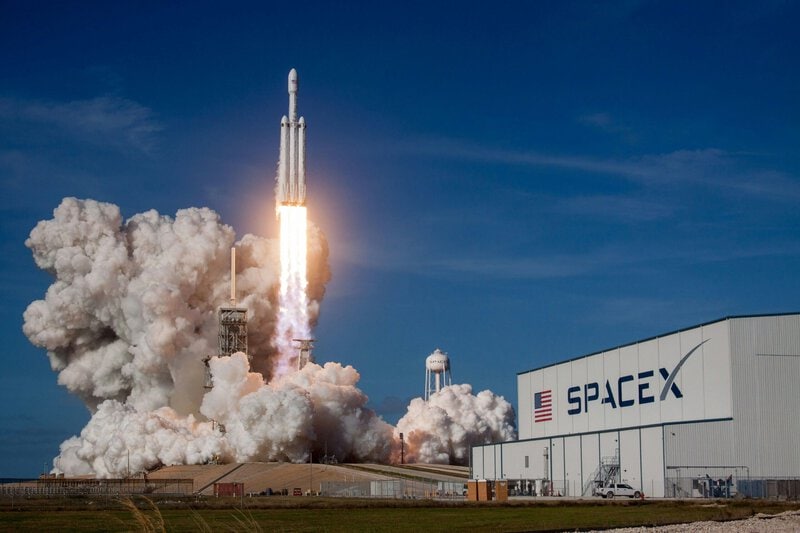
The story begins not with a launch decision gone wrong, but with neglect by omission. A SpaceX Falcon 9 upper stage — the second-stage booster that separates from a rocket after it delivers its payload to orbit — was left adrift in a chaotic, high-energy orbit following a 2015 deep-space mission. Upper stages used for missions beyond low Earth orbit frequently lack the fuel to perform a controlled re-entry or reach a stable disposal orbit, and without a legal or operational obligation to track them continuously, this one drifted off the radar for years.
Astronomers reacquired it only when a telescope in Chile picked up the object on a trajectory unmistakably converging with the moon. Orbital mechanics — the branch of physics that uses gravitational forces and velocity to calculate where any object in space will travel — allowed trajectory specialists to back-calculate the booster’s path and project a lunar intersection weeks in advance. The mathematics left little room for ambiguity. Astrophysicist Jonathan McDowell, one of the most widely cited trackers of orbital debris, stated publicly that there is “no doubt in my mind” the Falcon 9 upper stage crashed into the moon, making this one of the most confidently attributed accidental lunar impacts in spaceflight history.
No one directly observed the actual collision. The impact site was on the moon’s far side, shielded from Earth-based telescopes at the precise moment of impact. Confirmation had to wait for orbital imaging — specifically, for NASA’s Lunar Reconnaissance Orbiter (LRO) to swing over the predicted coordinates and photograph whatever the rocket left behind. What it found closed the loop between forecast and fact, but simultaneously opened a new set of questions.
The Physics of Hitting the Moon at 5,400 Miles Per Hour

To understand why the crater pattern matters, it helps to understand the violence of the event itself. The Falcon 9 upper stage struck the lunar surface at approximately 5,400 mph (8,700 kph) — roughly five times the speed of a rifle bullet. At that velocity, the 8,800-pound rocket body carried kinetic energy equivalent to detonating several tons of TNT concentrated into a single point.
The moon’s lack of atmosphere is critical here. On Earth, even large meteors are slowed and partially ablated — eroded by friction — as they descend through the atmosphere. The moon offers no such cushion. The rocket booster struck at essentially its full interplanetary speed, with nothing to absorb or redirect the blow. The outer shell vaporized on contact. The impact excavated a pit in the regolith — the loose, fragmented rock and dust layer blanketing the lunar surface to depths of several meters — and ejected a debris plume across a wide radius.
Standard impact models, calibrated over decades using meteorite craters and controlled NASA crash experiments, predicted what any high-velocity collision with a compact object should produce: a single, roughly circular crater. The LRO images revealed something else entirely.
The Double Crater Problem: Why the Hole Doesn’t Add Up

NASA scientists examining the LRO imagery noted that the rocket body produced two overlapping craters — an eastern crater roughly 18 meters wide and a western crater approximately 16 meters across. This double-crater configuration had never previously been documented from a human-made object striking the moon. Natural impactors, which are typically dense and compact, do not produce this pattern from a single strike.
The leading hypothesis, described by NASA’s LRO science team, is that the Falcon 9 upper stage had significant mass concentrated at both ends of its body rather than primarily at one end. A rocket booster does carry mass concentrated at its engine end, but the standard expectation is that the engine-heavy end strikes first and dominates the crater shape. A symmetric double crater implies something unexpected — residual hardware, an undisclosed secondary mass, or an attached component — was present at the opposite end of the booster at the time of impact.
It is essential to state clearly that this remains an emerging and contested finding. Scientists have proposed explanations, but no single answer has achieved consensus among the planetary science community. The double crater is an active area of investigation, not settled science. What is not in dispute is that the pattern is anomalous, and that anomaly carries real consequences beyond scientific curiosity.
If orbital debris objects have undisclosed or poorly documented mass configurations — internal fuel residue, attached hardware, structural asymmetries — then the predictive models planetary scientists use to forecast impact effects become less reliable for future events. The crater is not just a geological feature. It is a data problem with direct implications for how agencies plan and respond to future uncontrolled impacts.
Rare, but Not Unprecedented — and Not Reassuring
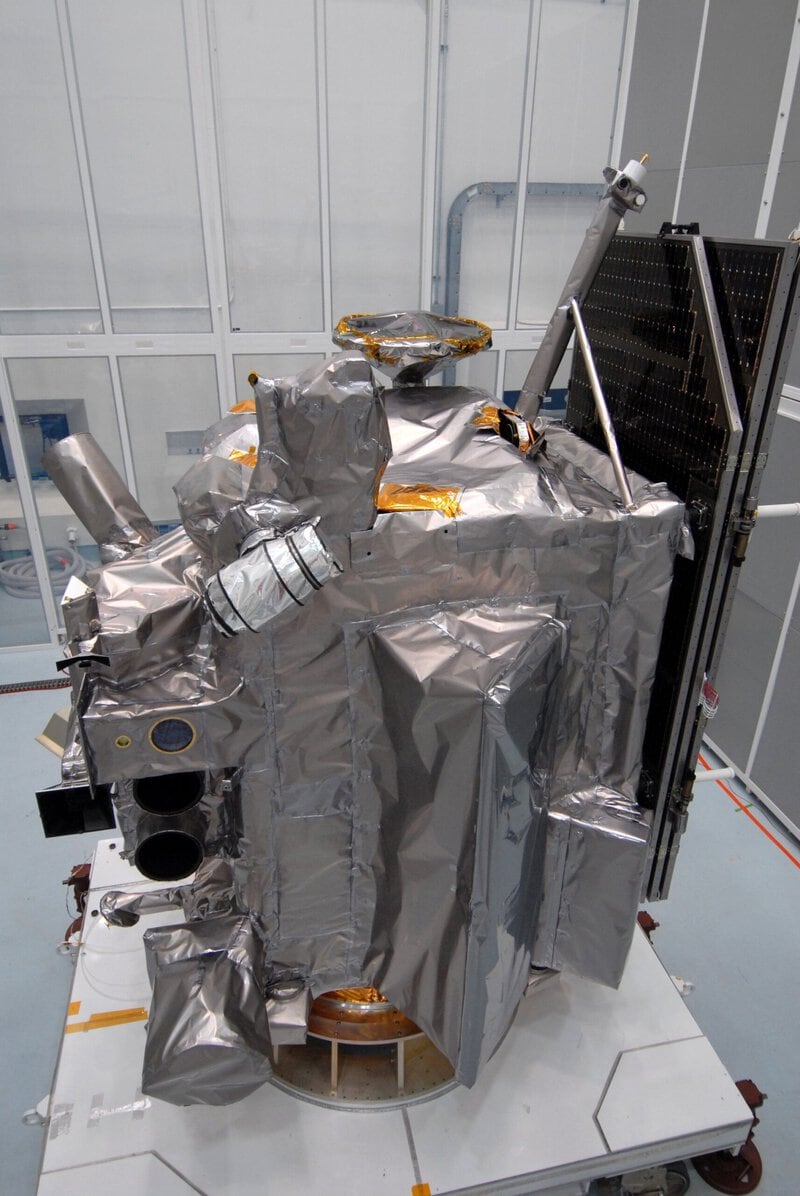
Researchers have described this SpaceX moon crash as a rare case of a man-made collision with the lunar surface, but it is not the first time human hardware has hit the moon. NASA deliberately crashed the LCROSS spacecraft into a permanently shadowed polar crater in 2009, specifically to study the resulting debris plume for evidence of water ice — and found it. Apollo-era booster stages were also intentionally impacted on the lunar surface to calibrate seismometers placed by astronauts.
What distinguishes the Falcon 9 event is the absence of official tracking. The booster had been effectively invisible to routine monitoring for years before astronomers reacquired it. That gap is not primarily a technical failure — it is a governance failure. Under current international space law and debris monitoring frameworks, rocket upper stages that escape low Earth orbit carry no mandatory long-term tracking obligation. Once a mission ends and the booster drifts beyond standard catalog ranges, no agency is formally required to keep watching it.
This is not a small policy gap. Researchers estimate that dozens of untracked debris objects may currently occupy Earth-moon space, most too small or too dim for existing survey telescopes to catalog reliably. The Falcon 9 booster was detected only because a dedicated astronomer in Chile happened to be scanning the right region of sky with the right equipment at the right time. That is not a detection system. That is luck.
What the Crater Tells Us — and What Still Needs Answering
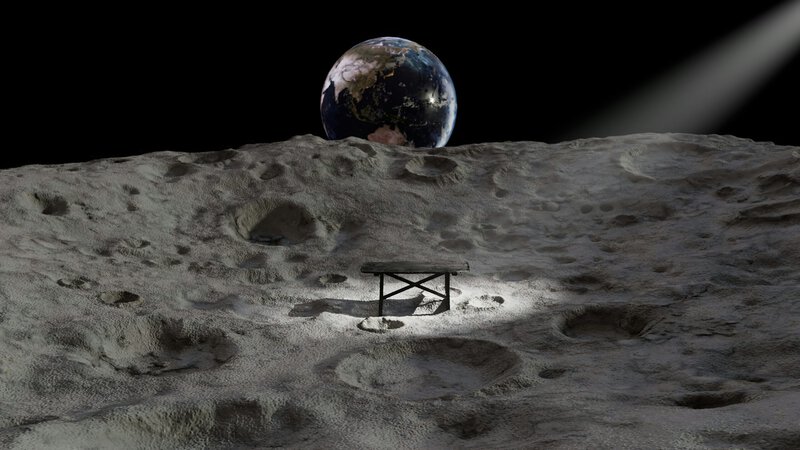
Jonathan McDowell and other orbital analysts have argued publicly that any object placed in a chaotic, high-energy orbit intersecting the Earth-moon system should be tracked continuously until it re-enters Earth’s atmosphere or impacts a known body. As commercial launch rates accelerate globally, the statistical probability of future uncontrolled lunar impacts rises proportionally. More rockets reaching deep-space trajectories means more upper stages potentially drifting into unmonitored orbits.
The Vera C. Rubin Observatory, currently coming online in Chile — notably the same country whose telescope first reacquired this booster — may offer meaningfully improved survey capability to detect such objects earlier, giving scientists more lead time to characterize trajectories and alert relevant agencies. Whether that observational capacity translates into enforceable policy remains an open question that the international space community has not yet answered.
Meanwhile, the LRO science team plans continued high-resolution imaging of the double crater site. Researchers hope that precise measurements of the crater geometry and ejecta pattern, compared against computer simulations and historical natural impact data, will eventually allow them to reverse-engineer the Falcon 9 upper stage’s mass distribution at the moment of impact — potentially resolving the mystery of what caused the anomalous double structure.
Unanswered questions also include whether any unburned propellant survived long enough to chemically react with the surrounding regolith. Even a small chemical alteration of the lunar surface could complicate future scientific measurements and resource extraction planning in that region — both of which are becoming increasingly relevant as multiple national space agencies and private companies announce lunar surface missions for the coming decade.
The crater itself will outlast every institution that helped put the rocket there. With no weather, no erosion, and no plate tectonics to rework the surface, the moon preserves impact features for billions of years. The double crater left by this untracked piece of space debris is, in the most literal sense, a permanent record — a precisely dated calibration event for planetary scientists, and an unambiguous reminder that objects abandoned in deep space rarely stay lost forever.