
Sixteen hours and 42 minutes. That is all the time Rocket Lab needed to go from receiving a formal military launch order to placing a U.S. Space Force satellite into orbit — the fastest response ever recorded for a Tactically Responsive Space mission, and a number that is quietly rewriting assumptions about what small rockets can do for national security.
The Number Rewriting Small-Launch History
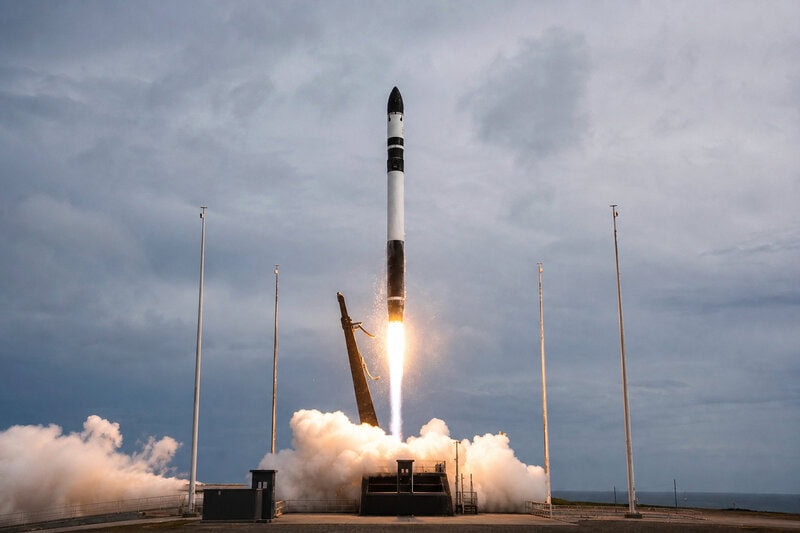
When the U.S. Space Force issued its Notice to Launch for the VICTUS HAZE mission, Rocket Lab had its Electron rocket off the pad and into orbit in just 16 hours and 42 minutes. According to Rocket Lab’s official mission documentation, this represents the fastest response time ever recorded for a U.S. Space Force Tactically Responsive Space (TRS) mission — a program specifically designed to test how quickly the military can place satellites into orbit during a crisis scenario.
To put that window in perspective: most traditional government launch campaigns require months of scheduling, integration, and range coordination. VICTUS HAZE compressed that entire pipeline into roughly the length of a transatlantic workday — a compression of effort that would have seemed implausible to defense planners even five years ago.
The record did not arrive in isolation. Within the same operational period, NASA separately selected Rocket Lab to provide three Electron launches for its PolSIR and TSIS-2 Earth and solar science missions, as reported by Yahoo Finance. Together, these developments signal that both defense and civilian agencies now treat rapid small-launch capability as a strategic asset — not merely a commercial novelty. For Rocket Lab (Nasdaq: RKLB) and for the small-launch sector broadly, these parallel wins represent a measurable inflection point worth examining beyond the headline numbers.
What Tactically Responsive Space Actually Means — and Why Speed Is the Whole Point
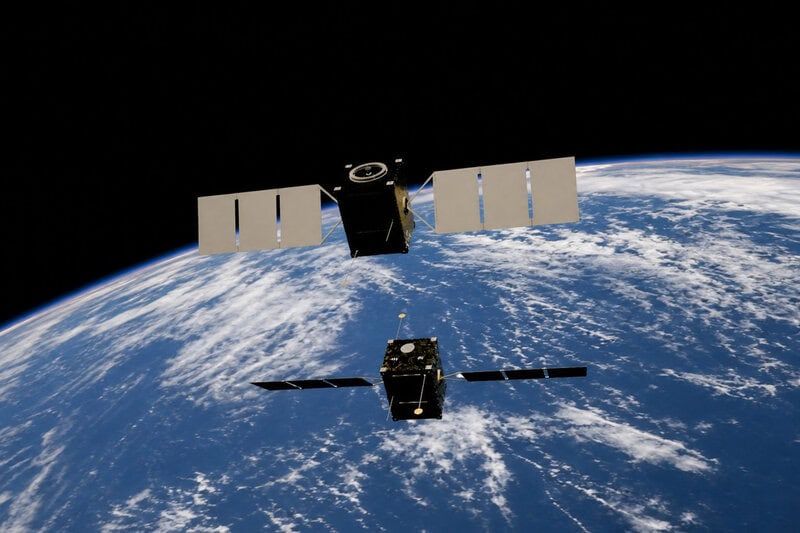
Tactically Responsive Space is a U.S. Space Force initiative that stress-tests the nation’s ability to launch satellites on short notice, simulating real-world scenarios in which adversaries destroy or disable on-orbit assets and commanders need rapid replacement capability. The program is not an exercise in showing off — it is a structured rehearsal for a threat environment that defense planners consider increasingly realistic.
A Notice to Launch — the formal trigger that started VICTUS HAZE’s clock — is deliberately issued with minimal warning. That design choice is intentional: it prevents launch providers from pre-positioning resources in ways that would be impossible during an actual military contingency. The clock is meant to simulate genuine operational pressure, not favorable laboratory conditions.
Previous TRS demonstrations, including the VICTUS NOX mission in 2023, had already pushed response windows below 24 hours, establishing that sub-day launch capability was at least theoretically achievable. VICTUS HAZE moved that achievement from theoretical to demonstrated, setting a new benchmark that confirms sub-17-hour launch readiness is operationally viable — a distinction that matters enormously to Space Force planners evaluating real-world contingency options.
The strategic logic behind TRS is straightforward but consequential. A nation that can reconstitute a satellite constellation in hours rather than months fundamentally changes adversary risk calculations about the value of attacking space infrastructure. If destroying a satellite simply invites its rapid replacement, the strategic payoff of an anti-satellite strike diminishes considerably. Launch speed, in this context, functions as a deterrent — not just a logistical convenience.
How Rocket Lab’s Electron Is Engineered for Rapid Turnaround
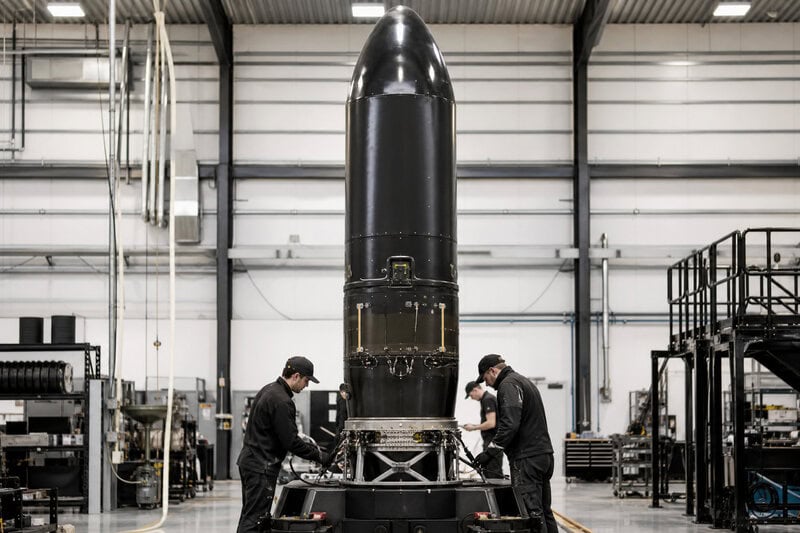
Electron is a small-lift launch vehicle capable of placing up to 300 kilograms into low Earth orbit. Unlike larger rockets that require extensive multi-day fueling sequences and systems checkouts involving dozens of coordinating agencies, Electron’s architecture centers on a simplified propellant loading process and a launch infrastructure that Rocket Lab owns and operates outright — giving the company direct control over scheduling variables that would otherwise be subject to external queues.
Rocket Lab’s Rutherford engines are produced using additive manufacturing at the company’s Huntington Beach, California facility. That approach reduces supply-chain bottlenecks that traditionally introduce delays in rocket production. When a manufacturer controls its own engine production rather than depending on external suppliers, it retains the ability to accelerate or adapt output in ways that are harder for less vertically integrated competitors to match.
The VICTUS HAZE mission also benefited from a pre-integrated satellite — the payload was already mated to its dispenser before the Notice to Launch clock began. This preparation strategy front-loads integration work into the period before the formal mission trigger, a legally and operationally sanctioned approach within TRS rules. The effect is to eliminate one of the largest traditional time sinks in a launch campaign before the countdown officially starts.
Perhaps most critically for turnaround speed, Rocket Lab operates its own launch ranges: Launch Complex 1 at Mahia, New Zealand, and Launch Complex 2 at NASA Wallops Flight Facility in Virginia. Proprietary ranges eliminate dependency on government-managed facilities whose scheduling queues can add weeks — sometimes months — to a campaign. When a company controls the range, it controls the clock.
The NASA Contract: PolSIR and TSIS-2 Explained
NASA’s selection of Rocket Lab for three Electron launches covers two distinct science missions. PolSIR — the Polarimetry of Storms in the Infrared — will study how storm systems interact with Earth’s radiation budget, providing data relevant to understanding severe weather dynamics and their relationship to the planet’s energy balance. TSIS-2, the Total and Spectral Solar Irradiance Sensor-2, is a follow-on instrument designed to measure the Sun’s total energy output with high precision, generating data critical for both climate modeling and solar-cycle research.
Both missions will launch from Rocket Lab’s Launch Complex 1 in New Zealand, whose geographic position provides favorable orbital inclination access for Earth-observing and solar-monitoring payloads — a technical advantage that makes the New Zealand site particularly well-suited to science missions requiring specific orbital geometries.
TSIS-2 carries particular scientific weight because it continues a measurement record begun by TSIS-1, which currently operates aboard the International Space Station. Maintaining an unbroken long-term solar irradiance record is a stated priority of NASA’s Earth Science Division. Any gap in that record complicates decades of accumulated data, making launch reliability and schedule certainty central selection criteria — not peripheral ones.
The contract award also reflects a broader policy shift within the agency. NASA has accelerated its move toward fixed-price, commercially managed small-launch services through its Commercial Launch Services program, reducing the government’s role in directing launch operations and placing more responsibility — and flexibility — in the hands of providers. Rocket Lab’s selection under this framework signals that the company has earned credibility not just on price, but on demonstrated mission reliability.
Mission 76 and the Cadence Story Behind ‘Follow My Speed’
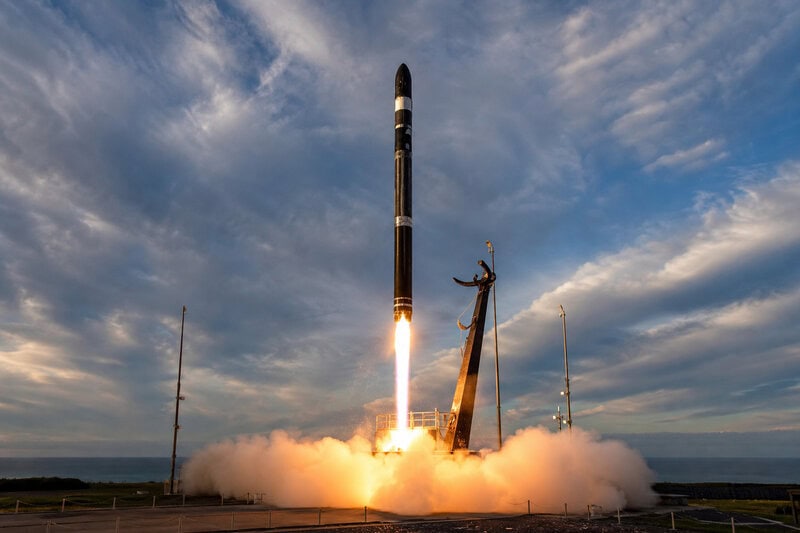
The Electron ‘Follow My Speed’ mission was the rocket’s 76th launch overall and its 18th launch of that calendar year. That cadence places Rocket Lab among the highest-frequency small-launch operators globally and illustrates the industrial throughput required to sustain TRS-class responsiveness. Launching once is a demonstration; launching 18 times in a year is a system.
Achieving 18 launches on a small vehicle within a single year requires more than hardware production. It demands a parallel ecosystem of range operations, customer integration support, and regulatory clearance management — each of which can independently gate a launch campaign. A vehicle that is technically ready but regulatory-clearance-pending is, operationally, a grounded vehicle. Managing all three pipelines simultaneously, at pace, is the less-visible capability that makes the headline numbers possible.
High launch cadence also produces a compounding reliability effect that is well-documented in aerospace industry experience. More flights generate more telemetry data, which feeds iterative improvements to vehicle systems. The SpaceX Falcon 9 program demonstrated this dynamic at larger scale: reliability improved substantially as flight rate increased and anomalies were identified and corrected across a growing data set. Rocket Lab is operating within the same logic at the small-launch tier.
The mission name itself carried an inadvertent resonance. ‘Follow My Speed,’ chosen by the customer, publicly underscored how Rocket Lab’s operational tempo has become a brand-level differentiator — not merely a technical specification buried in a contract. As Rocket Lab noted following the VICTUS HAZE launch, the company’s ability to respond when called is increasingly central to its identity in both commercial and government markets.
What the Record Turnaround Means for National Security Space Architecture
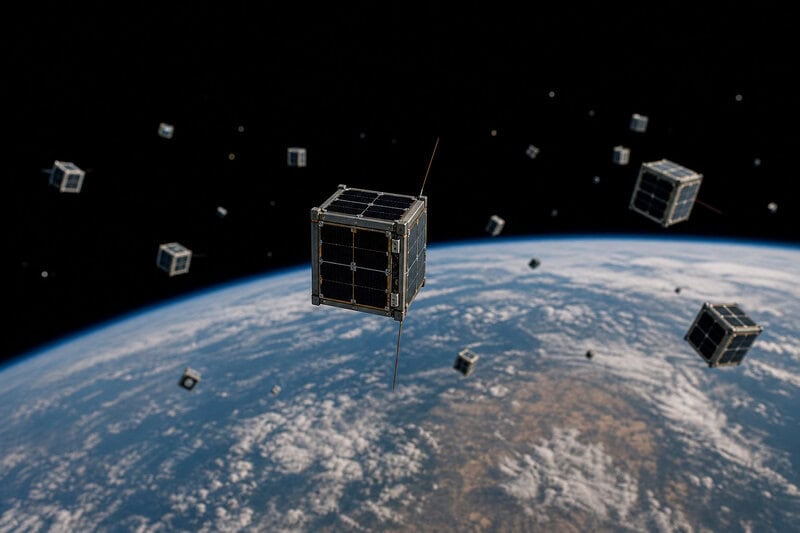
Defense analysts and the U.S. Space Force have publicly described a proliferated satellite architecture — many small, replaceable satellites distributed across orbit rather than a few large, expensive platforms — as the long-term answer to adversary anti-satellite threats. Rapid launch responsiveness is the operational spine that makes a proliferated architecture credible. Without the ability to quickly replace destroyed satellites, a constellation of small satellites offers resilience in theory but not in practice.
VICTUS HAZE demonstrated that the launch segment of that architecture can now credibly operate on sub-24-hour timelines — a threshold the Space Force has identified in public planning documents as operationally meaningful for contested-environment scenarios. The gap between planning document and demonstrated capability has now closed for at least one provider, on at least one vehicle class.
The record also carries direct procurement implications. Demonstrated TRS performance can influence future contract awards under the Space Force’s Orbital Services Program and related responsive-launch acquisition vehicles. There is a clear commercial incentive for launch providers to invest in turnaround infrastructure, because that infrastructure translates into contract eligibility that less-capable competitors cannot access — a dynamic that effectively rewards speed with sustained revenue access.
Analysts and defense officials caution, however, that launch speed is only one variable in a complex system. Satellite manufacturing lead times, ground-station availability, and command-and-control integration remain significant bottlenecks that a fast launch alone cannot resolve. A rocket on the pad in 16 hours means little if the replacement satellite takes six months to build. The VICTUS HAZE record is a genuine operational achievement, but it highlights remaining work across the broader responsive-space ecosystem rather than completing it. That honest accounting matters for anyone evaluating what the record actually proves.
What Comes Next for Rocket Lab and the Small-Launch Market
Rocket Lab is in active development of Neutron, a medium-lift reusable rocket targeting payloads up to 13,000 kilograms to low Earth orbit. If Neutron inherits even a portion of the responsiveness culture demonstrated by Electron, it could extend rapid-launch capability to a payload class currently served only by vehicles with substantially longer preparation timelines — a meaningful expansion of the responsive-launch market’s effective capacity that would open new national security contracting opportunities.
The combination of the NASA PolSIR and TSIS-2 contract wins and the VICTUS HAZE record positions Rocket Lab as one of a very small number of launch providers with demonstrated credibility in both civil science and national security markets simultaneously, as noted in analysis examining the company’s competitive positioning. That dual-market footprint reduces revenue concentration risk and opens access to two distinct procurement pipelines with different funding cycles and selection criteria — a structural advantage that single-market providers cannot replicate without equivalent investment and demonstrated performance.
The small-launch sector remains financially demanding. Low per-launch revenues require high cadence to approach profitability, and Rocket Lab has publicly stated that its path to sustained profitability includes growth in spacecraft manufacturing and satellite components alongside launch revenue. The company is not betting its future on launches alone — it is building a vertically integrated space business in which launch is one revenue stream among several, with the VICTUS HAZE and NASA wins serving as proof points that underpin both government confidence and investor thesis.
For the broader industry, VICTUS HAZE establishes a performance benchmark that competitors — including Firefly Aerospace and others pursuing TRS-eligible contracts — will face as the Space Force expands its responsive-launch program. That competitive pressure is likely to accelerate investment in rapid-integration infrastructure across the sector, compressing response timelines industry-wide in ways that benefit national security planners regardless of which company holds any individual contract. The 16-hour-42-minute record may not stand forever. But the capability threshold it proves is now a permanent part of what the market — and the military — expects.