3. Bacterial Immune Defense: How CRISPR Works
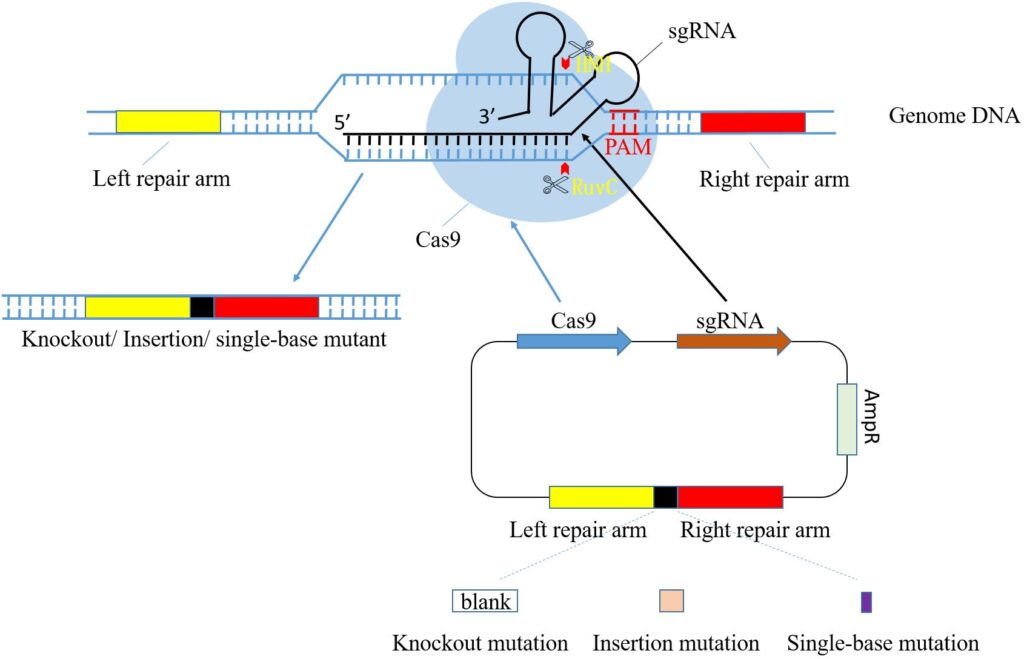
When a virus invades a bacterium, the CRISPR system captures fragments of the viral DNA and inserts them as “spacers” between the repeating sequences. This stored genetic information acts as a genetic memory, enabling bacteria to recognize and mount a defense against future attacks by the same virus. When re-infected, the bacterium produces RNA copies of the spacers, guiding CRISPR-associated proteins to destroy the invader’s DNA. [Source: NIH]