
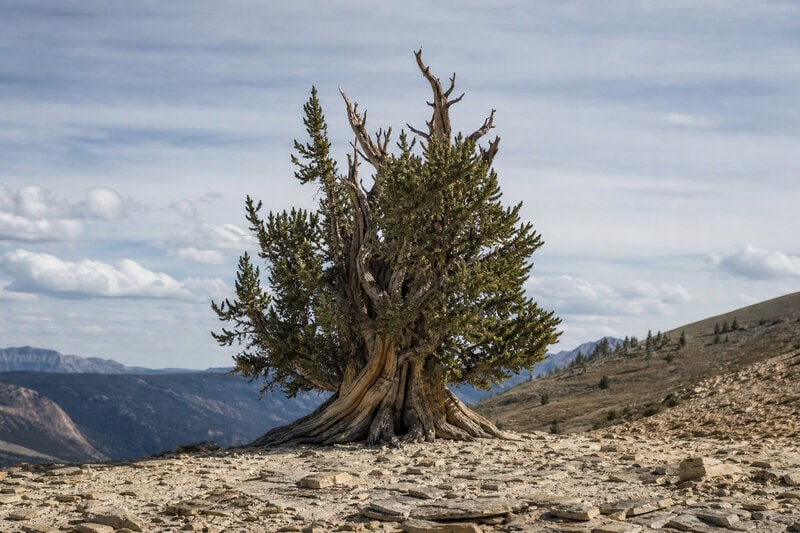
A bristlecone pine in California’s White Mountains has been alive for more than 5,000 years — older than the Egyptian pyramids, older than written language. Yet according to emerging research in conservation genetics, that tree may carry fewer evolutionarily critical genetic variants than a 400-year-old survivor clinging to a mountainside where its species once nearly vanished. The reason has nothing to do with the tree’s rings and everything to do with what happened to its population in the centuries between germination and today.
The Oldest Tree in the Room May Not Be the Most Important One
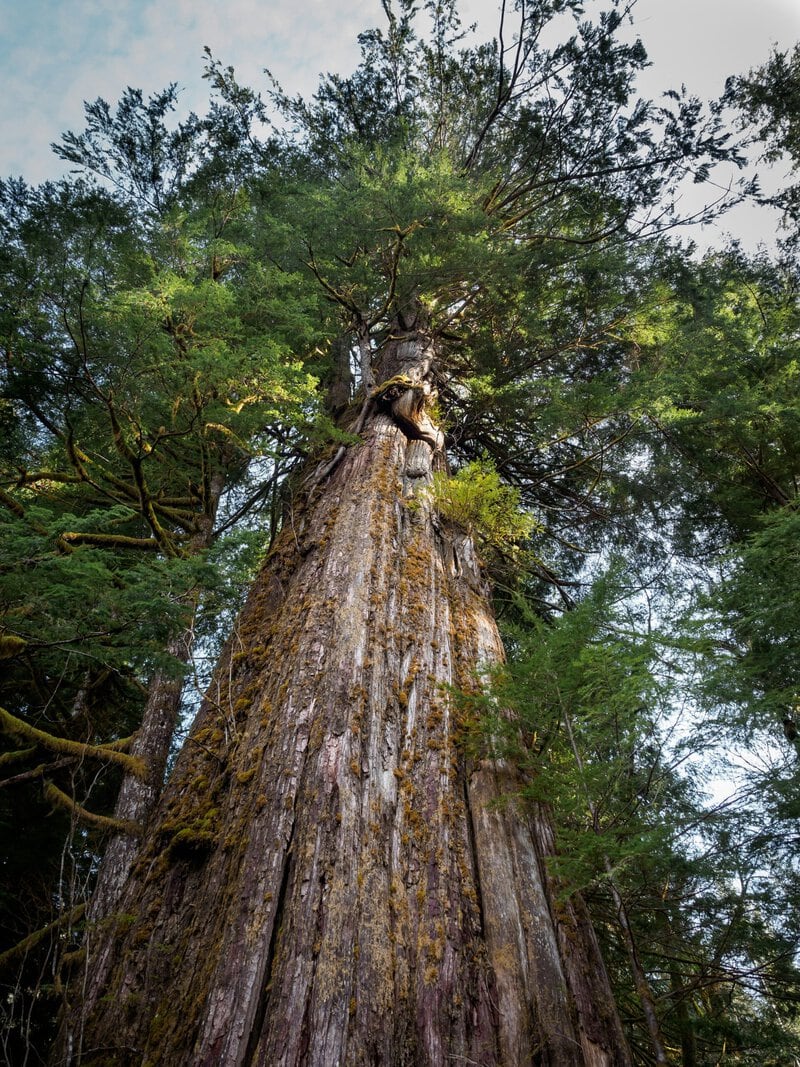
A widespread assumption in conservation planning holds that the oldest individual trees are automatically the most genetically valuable — living vaults of rare variants accumulated across millennia. Emerging research is overturning that assumption, showing that population history, not calendar age, is the primary driver of an ancient tree’s genomic importance. The distinction is not academic. Conservation programs that rank trees by ring count may be systematically overlooking the individuals carrying the rarest, most evolutionarily critical genetic material.
The science behind this finding draws on population genomic analyses — studies that examine genetic variation across many individuals within and between populations — of six major European forest tree species, as well as broader work on ancient tree ecology. Together, these lines of research point toward a more nuanced, and more actionable, framework for deciding which trees most urgently deserve protection.
What Genomic Importance Actually Means — and Why Age Is a Proxy, Not a Guarantee
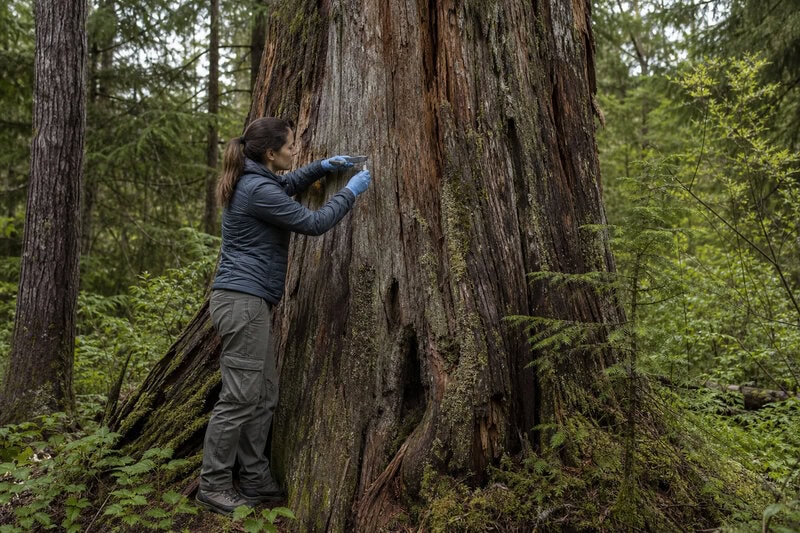
Genomic importance, in this context, refers to the degree to which an individual tree carries genetic variants — alleles (alternative versions of a gene), structural variants, or sequences acquired through hybridization with other species — that are rare or absent in the broader living population. A tree rich in such variants functions as a unique evolutionary archive: its genome contains information that no living descendant may otherwise possess.
Age correlates with genomic importance only under specific conditions. When a population has experienced a dramatic decline, called a bottleneck, survivors from before that crash can retain variants that younger trees never inherited. The crash randomly eliminated most of the population’s diversity, and the survivors’ genes were then amplified across all subsequent generations. In that scenario, an old tree is genuinely irreplaceable.
In stable, continuously large populations, however, an ancient tree is statistically likely to carry a representative sample of common variants. Its longevity is biologically extraordinary, but its genome is not a unique treasure chest — it reflects the same diversity pool available in younger trees. Research on old and ancient trees as evolutionary resources has emphasized that ancient trees radically alter variance in generation time and population-level genetic processes, meaning a single very old tree can skew the effective genetic history of an entire stand — but only when the demographic context makes that skew meaningful.
The Bottleneck Effect: When History Carves Rarity Into a Genome
A population bottleneck occurs when a species or local population is reduced to a small number of individuals, randomly eliminating most genetic diversity in the process. Whatever variants survive that reduction are then amplified across all future generations — the genomic equivalent of reprinting only a fraction of a library after a fire. Ancient trees that germinated before a bottleneck can preserve a genetic snapshot of the world before the crash, carrying alleles that no subsequent generation ever received.
This is the mechanism that makes population history so decisive. Population history, not age, drives ancient trees’ evolutionary importance in endangered conifers, according to conservation genetics research — a finding with direct implications for which stands deserve priority sequencing and protection. Two trees of identical age can have wildly different genomic value depending entirely on what happened to their population between germination and the present day.
Population genomic data from six major European forest tree species, analyzed to assess genetic vulnerability related to demographic history, confirmed that genetic patterns across species reflect demographic history as the dominant force shaping vulnerability — not the raw age of individual trees. Across all six species studied, the signature of past population contractions and expansions consistently outweighed individual tree age as a predictor of which trees carried the rarest and most conservation-relevant genetic variants.
Nuclear Genomes as History Books: Admixture, Introgression, and Hidden Ancestry
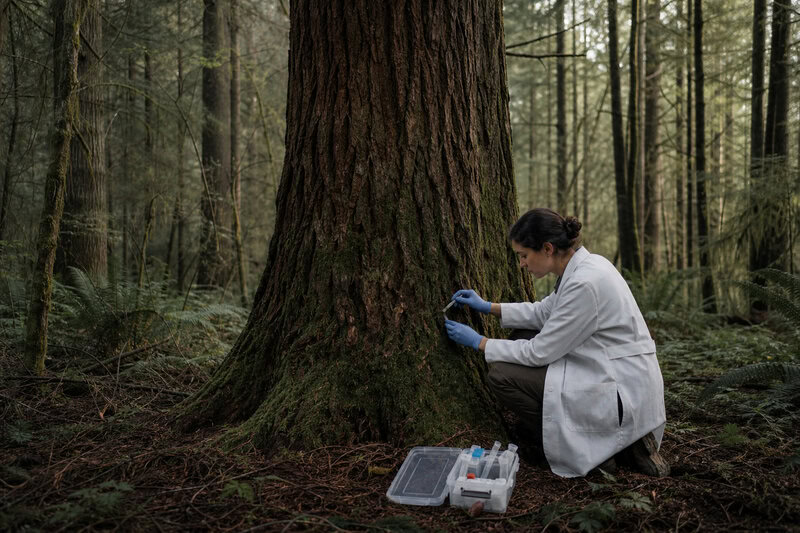
Beyond rare alleles, ancient trees can preserve evidence of genetic exchanges between species — a process called admixture, or introgression when beneficial genes cross species boundaries — that have since been obscured by subsequent generations of crossing and selection. These exchanges are written into the nuclear genome, the full complement of DNA housed in a cell’s nucleus, and can persist as readable signals for thousands of years.
Nuclear genomes can retrace genetic exchanges between species, providing historical support for admixture in most modern oak forests and for succession patterns — revealing that many forests we consider pure single-species stands are in fact hybrids across deep time. Research on ancient DNA, oaks, forests, and humans has documented how these deep genetic exchanges shaped the forests that exist today, and how ancient genomes could aid in detecting extinct species or populations and revealing the role of adaptive introgression in long-term evolution.
The claim that ancient genomes could illuminate adaptive introgression at scale remains promising but not yet established consensus. It rests largely on inference from living-tree nuclear genomes and limited ancient DNA samples, since direct sequencing of truly ancient tree tissue across large populations has not yet been achieved. For conservation geneticists, however, the implication is significant: an ancient tree may be the last living repository of a genetic exchange that shaped the adaptability of an entire regional ecosystem, and losing it means losing that record permanently.
The 100-200 Year Cohort: Why Mid-Aged Trees Deserve More Credit
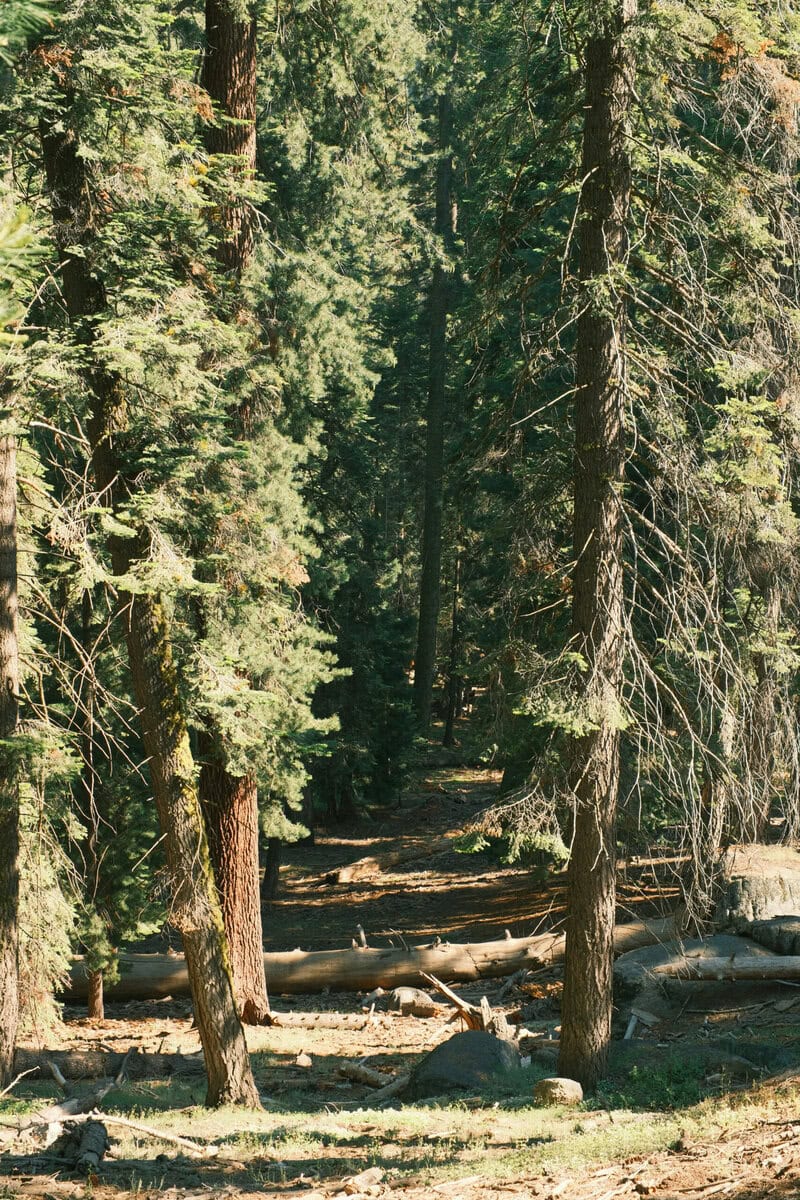
Counterintuitively, research indicates that a larger proportion of trees in the 100-200 year age range is important for population development and genetic diversity — a cohort that rarely receives the cultural reverence granted to millennia-old giants. These mid-aged trees function as active genetic bridges: old enough to carry variants from earlier demographic regimes, young enough to still be reproducing and injecting that diversity into the next generation.
Ancient trees are an emergent property of forests that requires many centuries to generate. That biological fact carries a direct conservation corollary: protecting only the current ancients without also safeguarding the pipeline of maturing trees guarantees a future forest with no old-growth genomic depth. Conservation strategies that focus exclusively on record-breaking individuals while clearing 150-year-old trees for timber or development are, in genomic terms, burning the library’s card catalog while preserving only the showpiece manuscripts.
Research on predicting the age of ancient trees and the factors that shape their longevity underscores that reaching extreme age is a probabilistic outcome — a function of genetics, site conditions, disturbance history, and chance. The trees currently in the 100-200 year range are the candidates from which the next generation of ancient trees will emerge, and their genetic diversity will determine the genomic richness of forests centuries from now. Treating this cohort as expendable is a long-term conservation error with consequences that will not be visible until it is too late to correct them.
Practical Implications: How This Science Should Reshape Conservation Priorities
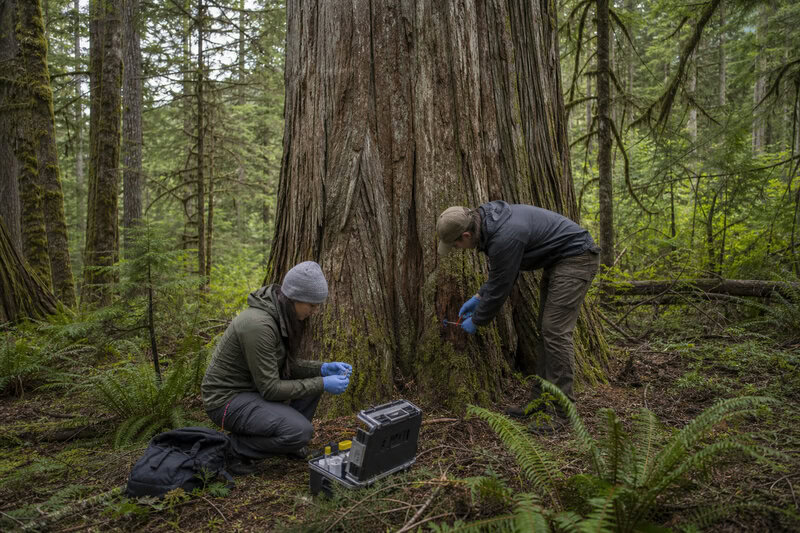
A genomically informed conservation approach requires pairing age data with population demographic history — specifically, identifying which populations experienced bottlenecks, isolation, or rapid decline in the past few centuries. A remnant stand of 300-year-old trees from a once-decimated mountain population may warrant higher protection priority than a healthy ancient grove of the same species that never experienced a significant contraction, even if the latter contains older individual trees.
Practical tools now exist to act on this understanding. Modern population genomic sequencing can identify which individual trees carry the highest proportion of rare or population-unique alleles, allowing land managers to rank trees by genomic value rather than age alone. This kind of triage is particularly urgent in fragmented or commercially managed landscapes where not every tree can be protected and trade-offs are unavoidable.
The field openly acknowledges, however, that sequencing costs and analytical complexity still limit wide deployment. Whole-genome sequencing of forest trees across large populations remains expensive, and the bioinformatic expertise required to interpret demographic history from genomic data is not uniformly available to conservation practitioners. Developing clear, science-based frameworks for which populations to sequence first is an urgent practical need — one the field has not yet fully resolved and one that deserves dedicated funding and policy attention in its own right.
What Remains Unknown — and Why That Matters for Policy Today
The field of ancient tree genomics is young. Most large-scale population genomic datasets for forest trees cover fewer than a dozen species, and the degree to which demographic-history findings generalize across tropical, boreal, and dryland forests remains an open and actively contested question. The six European species analyzed in recent work represent an important proof of concept, not a universal rule, and researchers are careful to say so.
There is also a genuine value tension that science alone cannot resolve. Culturally iconic ancient trees carry irreplaceable ecological, historical, and psychological significance that is not captured by allele-frequency statistics. A 5,000-year-old bristlecone pine is a monument to deep time in ways that matter profoundly to human communities and to the non-human species that depend on its microhabitat — the cavities, deadwood, and bark architecture that only centuries of growth can produce. Any conservation framework will need to weigh genomic value alongside these dimensions rather than treating sequence data as the only relevant input.
The clearest consensus point is this: age is a useful but insufficient proxy for genomic importance, and conservation policies built on age alone will systematically misallocate resources — directing protection toward trees that may be genetically redundant while leaving unprotected the individuals carrying variants that could determine whether a species survives the next century of climate disruption. That conclusion is robust enough to act on now, even as the finer details of ancient tree genomics continue to be worked out. The oldest tree in the room deserves respect. But genuine genomic stewardship demands that we look beyond the rings — and that we start building the policy frameworks to do so before the most irreplaceable trees are gone.