
In 2007, a team led by Graham Fleming at Lawrence Berkeley National Laboratory published a finding in Nature that quietly upended half a century of biology education: energy moves through a photosynthetic protein not by bumbling from molecule to molecule like a billiard ball, but through quantum coherence — a wavelike, simultaneous sampling of multiple pathways that allows the system to find the most efficient route almost instantaneously. The same process that every middle-school graphic organizer reduces to two tidy boxes turns out to involve physics that scientists once believed existed only in laboratory equipment cooled to near absolute zero.
What a Photosynthesis Graphic Organizer Gets Right: The Two-Stage Framework
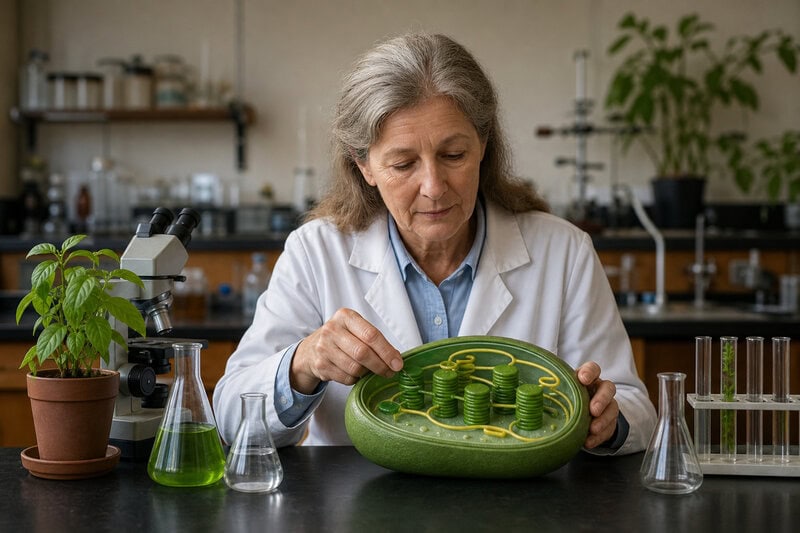
Before examining what standard curricula miss, it is worth being precise about what they get correct — because the foundational structure holds up. Photosynthesis, performed by green plants, algae, and certain bacteria, is legitimately divided into two stages: light-dependent reactions, which occur in the thylakoid membranes inside the chloroplast, and light-independent reactions, commonly called the Calvin cycle or dark reactions, which occur in the surrounding stroma. That division is established scientific consensus, not a simplification that needs to be abandoned.
The light-dependent stage accomplishes two linked tasks. The first is photolysis — the light-driven splitting of water molecules (2H₂O → 4H⁺ + 4e⁻ + O₂) — which releases oxygen as a byproduct. The second is the activation of the electron transport chain, which harvests the energy liberated by photolysis and converts it into ATP and NADPH, the chemical currency the plant will spend in stage two. Carbon fixation — the Calvin cycle’s process of capturing atmospheric CO₂ and binding it into organic molecules that eventually become glucose — is a discrete, well-characterized subprocess, and placing it in a separate box from the light reactions on a classroom diagram is scientifically accurate.
The terms that populate standard fill-in-the-blank charts — light reactions, dark reactions, photolysis, electron transport chain, carbon fixation, ATP, glucose, water, oxygen — all belong there. A well-constructed photosynthesis graphic organizer that maps these terms to their locations and functions gives students a retrieval scaffold that cognitive science supports. The framework is not wrong. It is incomplete in ways that have misled generations of students about the mechanism driving the process’s extraordinary efficiency.
The Step Scientists Contested: Energy Transfer in the Light Reactions
The classical model, taught for decades, assumed that after a photon strikes a chlorophyll antenna complex, the excitation energy random-walks through the antenna — a slow, collision-based process — until it accidentally reaches the reaction center where charge separation can occur. This model predicted meaningful energy loss at every step. It could not satisfactorily account for the near-100 percent quantum yield — the fraction of absorbed photons that successfully drive chemistry — that experiments repeatedly measured in living systems.
The 2007 paper by Engel and colleagues in Fleming’s group offered a different explanation. Studying the Fenna-Matthews-Olson (FMO) antenna complex of green sulfur bacteria, the team found signatures of quantum coherence: the energy appeared to explore multiple transfer pathways simultaneously, wavelike, before collapsing onto the most efficient route. The finding launched quantum biology as a recognized subfield and generated enormous popular-science excitement, some of which overstated what had actually been demonstrated.
That excitement drew productive scrutiny. Research published around 2018 by groups including scientists at the University of Chicago and the University of Michigan raised a pointed challenge: some of the coherence signals observed in laboratory conditions may be partly measurement artifacts produced by the ultrafast laser pulses used to probe the system, rather than signatures of biologically functional quantum effects. Whether living photosynthetic systems actively exploit quantum coherence — or merely tolerate it as a byproduct of their molecular architecture — remains a genuinely contested question that researchers had not resolved as of 2024.
What is not contested is the outcome. The electron transport chain in the light-dependent reactions moves electrons with an efficiency that classical random-walk diffusion models cannot fully predict or explain. Whether the mechanism is quantum coherence, some refined classical description, or a hybrid yet to be characterized, the first nanoseconds of photosynthesis are stranger and more elegant than any current textbook depicts. That gap between the simplified graphic organizer version and the research frontier is not a minor footnote — it is the live edge of the science.
Photolysis Up Close: The Reaction Textbooks Underexplain
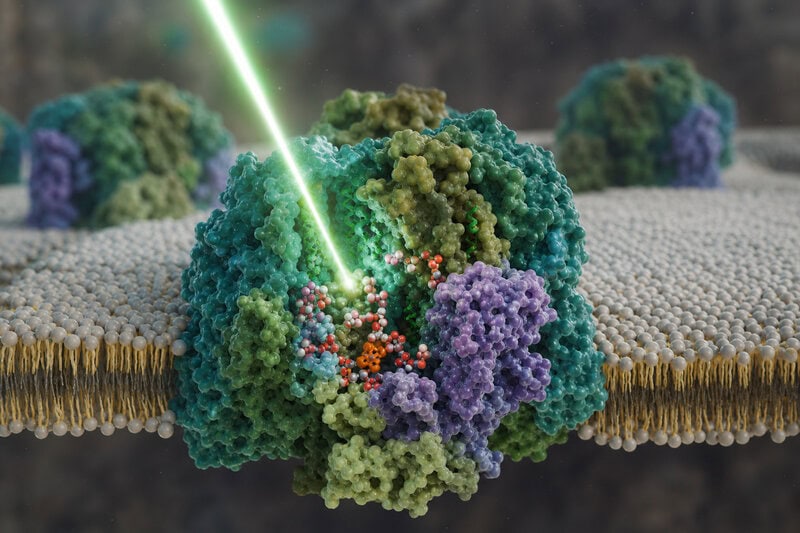
Photolysis appears on virtually every biology curriculum graphic organizer as a labeled arrow or box, but its mechanism is almost never described in enough detail for students to understand why it is remarkable. The reaction occurs inside Photosystem II, a protein complex embedded in the thylakoid membrane, and it is the original source of every oxygen molecule in Earth’s atmosphere — a fact that is genuinely surprising when stated plainly.
From the plant’s perspective, the oxygen released by photolysis is waste. What the plant wants are the hydrogen atoms — delivered as electrons and protons — that feed into the electron transport chain to drive ATP synthesis. The oxygen is simply what remains after the useful chemistry has been extracted from water.
What standard curricula rarely explain is the precise mechanism by which Photosystem II splits water. At its core sits a cluster of manganese atoms called the oxygen-evolving complex. This cluster must accumulate four separate photon-driven charge separations — in a precise sequence — before it releases a single oxygen molecule. This four-step cycle, described by Pierre Joliot and Bessel Kok in the 1970s through elegant flash-illumination experiments, remains one of the most striking examples of molecular-scale precision in biology. Replicating it artificially is a primary goal of solar-fuel research; as of 2024, no synthetic catalyst performs water oxidation at biological speed and stability, according to review literature from the U.S. Department of Energy’s Joint Center for Artificial Photosynthesis.
Carbon Fixation and the Calvin Cycle: Where Glucose Actually Comes From
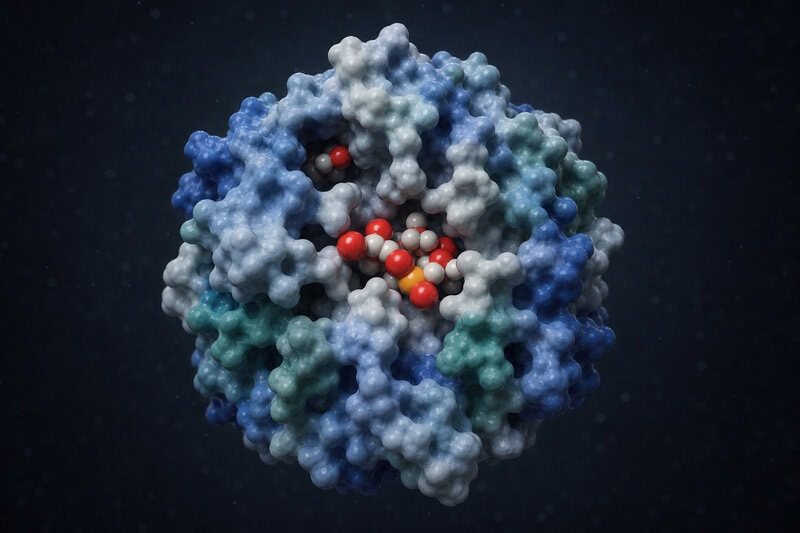
The Calvin cycle begins with an enzyme called RuBisCO — ribulose-1,5-bisphosphate carboxylase/oxygenase — capturing a CO₂ molecule from the air and attaching it to a five-carbon sugar. This step is the primary entry point of inorganic carbon into the biosphere. It is also, paradoxically, one of the slowest and most error-prone catalytic reactions in biology. A 2020 review in Annual Review of Plant Biology documented RuBisCO’s notorious inefficiency: the enzyme occasionally binds oxygen instead of CO₂, forcing the plant to run a costly repair process called photorespiration that consumes energy without producing useful carbon compounds.
That inefficiency is why C4 plants — corn and sugarcane being the most familiar examples — evolved anatomical structures that concentrate CO₂ around RuBisCO, effectively shielding it from oxygen and bypassing the photorespiration penalty. Engineering a more efficient version of RuBisCO is an active food-security priority; the International Rice Research Institute lists improved photosynthetic efficiency among its ongoing targets for raising crop yields under climate stress.
One nuance that fill-in-the-blank flow charts almost universally omit: the Calvin cycle’s direct output is not glucose. The cycle produces glyceraldehyde-3-phosphate (G3P), a three-carbon molecule from which glucose and other carbohydrates are assembled in subsequent reactions. The graphic organizer label “glucose” is a reasonable shorthand for introductory purposes, but students who encounter biochemistry later are sometimes surprised to discover the intermediate steps that the simplified diagram skips.
The separation of carbon fixation from the light reactions in graphic organizers is, however, one of the things standard curriculum genuinely gets right. The dark reactions do not require light directly — they can, in principle, proceed in darkness — though they depend entirely on the ATP and NADPH produced by the light-dependent stage. The dependency is real; the directness is not.
How to Build a Better Photosynthesis Graphic Organizer
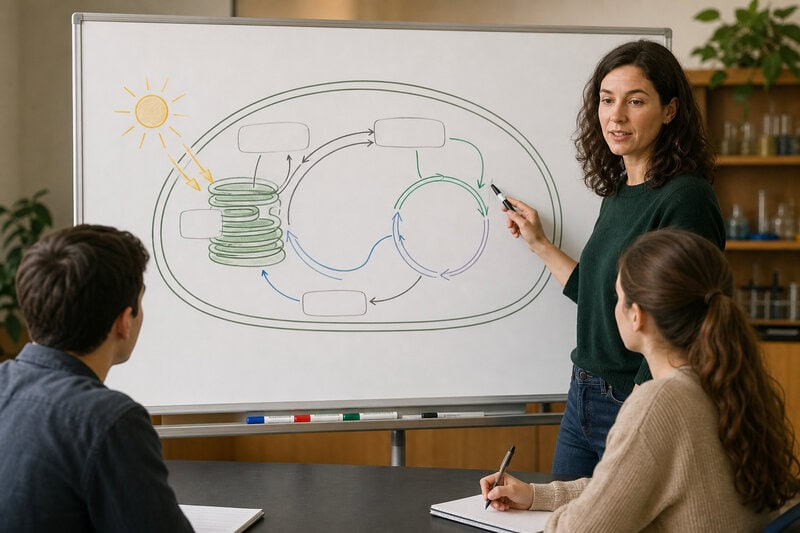
Fill-in-the-blank graphic organizers comparing light-dependent and light-independent reactions remain effective pedagogical tools. Retrieval-practice research, summarized by Roediger and Butler in a 2011 review in Annual Review of Psychology, consistently shows that forcing students to actively reconstruct information — rather than passively re-read it — produces more durable learning. Linking terms like photolysis, electron transport chain, and ATP to their locations and functions through a structured diagram does exactly that.
An upgraded organizer for contemporary learners should add a transitional layer between “photon absorbed” and “electron transport chain begins,” labeled something like “energy transfer through antenna complex — mechanism under active scientific investigation.” That label accurately represents the state of the science without requiring students to master quantum mechanics. Free photosynthesis graphic organizer templates are widely available and can be annotated or extended to incorporate this additional stage without redesigning the entire resource.
Educators can use the quantum coherence debate as a case study in how science self-corrects: a celebrated 2007 result was substantially challenged around 2018 and continues to be refined. Walking students through that sequence — discovery, challenge, ongoing investigation — is as valuable as the biology content itself, because it models scientific revision as a feature of the enterprise rather than a sign of failure. Structured photosynthesis organizers that reserve space for “what remains under investigation” alongside “established consensus” teach epistemology alongside biochemistry — a combination that prepares students for science as it is actually practiced.
Any honest graphic organizer should also close the loop visually by pairing outputs with each stage: oxygen and ATP/NADPH from the light reactions; G3P (and ultimately glucose) along with recycled ADP and inorganic phosphate from the Calvin cycle. Students who see those outputs labeled alongside the inputs — water, CO₂, light energy — understand photosynthesis as a system with balanced inputs and outputs, not a one-way assembly line that starts with sunlight and terminates mysteriously in food. Chapter-level organizers that map both stages in sequence are particularly effective for making that closed-loop structure visible.
Five concrete additions that elevate any photosynthesis graphic organizer from adequate to genuinely instructive:
- Label the oxygen-evolving complex within Photosystem II and note that it requires four sequential charge separations to release one O₂ molecule — a detail that makes photolysis feel like precision engineering rather than a simple splitting reaction.
- Replace “glucose” as the Calvin cycle output with “G3P → glucose,” so students encounter the intermediate without being misled by the shorthand.
- Add an “antenna complex” node between photon absorption and the reaction center, with a brief note that the energy-transfer mechanism at this step is still being characterized by researchers.
- Show the recycled molecules — ADP, inorganic phosphate, and NADP⁺ — returning from the Calvin cycle to the light reactions, reinforcing that the two stages are coupled rather than independent.
- Include a “Why it matters” cell connecting RuBisCO’s inefficiency to C4 crop engineering and artificial photosynthesis research, giving students a reason to care about the molecular details.
Why Getting Photosynthesis Right Matters Beyond the Classroom
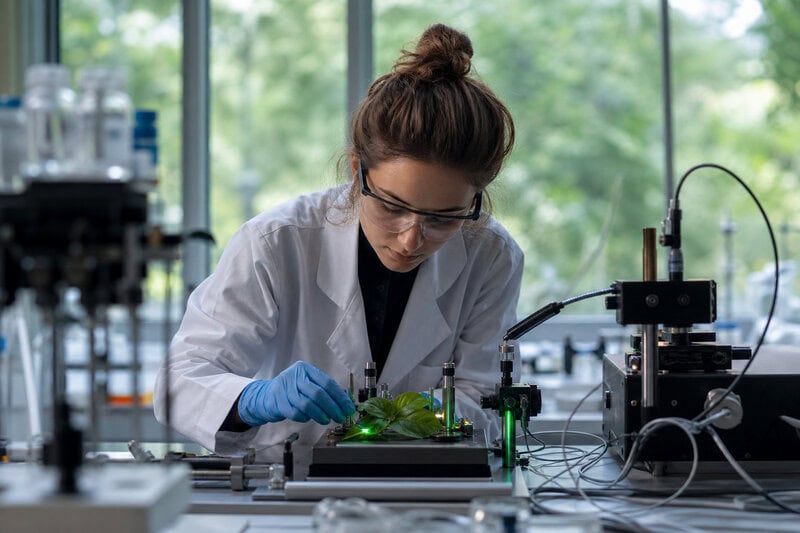
Photosynthesis fixes approximately 120 billion metric tons of carbon per year globally, according to NASA Earth Observatory data, making a mechanistic understanding of its efficiency directly relevant to climate modeling and carbon-capture technology. The difference between a random-walk model and a quantum-coherence model of energy transfer is not academic — it changes the engineering targets for artificial photosynthesis systems designed to convert sunlight into storable fuel.
Quantum biology — the field that emerged partly from the photosynthesis coherence debate — now extends to bird navigation via cryptochrome proteins, enzyme catalysis, and potentially DNA mutation rates. The contested step in photosynthesis science inadvertently opened one of biology’s most productive new subfields. That is a pattern worth teaching explicitly: interrogating a mechanism precisely enough to test it rigorously is how science advances, whether or not the original hypothesis survives intact.
The honest summary for any reader, student, or educator is this. The two-stage photosynthesis framework is correct and worth learning in detail. The energy-transfer mechanism inside the light reactions is more elegant and stranger than any textbook currently depicts. The enzyme responsible for carbon fixation is simultaneously the most consequential and one of the most imperfect catalysts in the living world. And the gap between what a standard graphic organizer shows and what research continues to uncover is not a reason to distrust the organizer — it is a reason to treat it as a starting point rather than a final answer, which is precisely how science treats every model it builds.