
A rare but consequential mutation can allow blood cancer cells to survive drugs specifically engineered to destroy them — including the newest generation of therapies that doctors had hoped would close the very loophole older treatments left open. A Sylvester Comprehensive Cancer Center-led study has now mapped exactly how that escape happens, and that map may point toward ways to block it.
BTK Inhibitors: A Decade of Hard-Won Progress Now Under Pressure
To understand why this finding matters, it helps to understand what BTK inhibitors do — and why their arrival was considered a genuine turning point in blood cancer medicine. BTK stands for Bruton’s tyrosine kinase, a protein that functions like a molecular on-switch inside blood cancer cells, signaling them to multiply and stay alive. BTK inhibitor drugs are built around a single purpose: shutting that switch off.
The drug class transformed the treatment landscape for several B-cell blood cancers, most notably chronic lymphocytic leukemia (CLL) and mantle cell lymphoma (MCL). For many patients, BTK inhibitors offered a meaningful alternative to traditional chemotherapy — one with a more targeted mechanism and, in many cases, a more tolerable side-effect profile. That shift in the standard of care represented years of scientific and clinical work, and it gave thousands of patients with previously difficult-to-treat cancers a viable path forward.
The most recent advance in this drug class is pirtobrutinib, sold under the brand name Jaypirca. The FDA approved pirtobrutinib in January 2023 specifically for patients with mantle cell lymphoma whose cancer had either stopped responding to prior treatment or had relapsed after it. What distinguished pirtobrutinib from its predecessors was its binding mechanism: where first-generation BTK inhibitors attach permanently to the BTK protein, pirtobrutinib was engineered to bind differently — in a reversible, noncovalent fashion — allowing it to work even in cancer cells that had already developed resistance to the older drugs. It was, in essence, designed as a second line of defense when the first had failed.
That design logic made the Sylvester finding especially significant. If pirtobrutinib was built to circumvent existing resistance, the discovery that cancer can outsmart it too reveals a deeper and more adaptive threat than the drug’s architecture was intended to address. A broader review of precision therapy advances in blood cancer underscores just how central BTK inhibition has become to modern treatment — which is precisely why understanding its vulnerabilities is now a scientific priority.
How Cancer Learns to Dodge a Drug
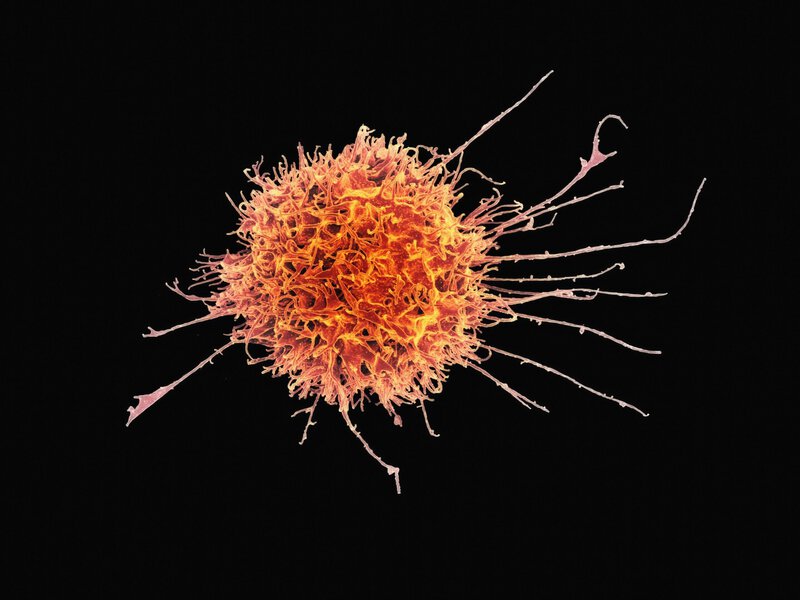
Drug resistance is not a failure of medicine so much as a consequence of biology. Cancer cells reproduce rapidly and accumulate random genetic mutations along the way. Most of those mutations are neutral or harmful to the cancer cell itself, but occasionally one happens to neutralize the drug being used against it. Cells carrying that mutation survive while others die, then multiply — a form of accelerated natural selection unfolding inside a single patient’s body. The drug, in effect, becomes a selection pressure that inadvertently promotes the survival of the very cells it cannot kill.
It has long been established that blood cancers can develop resistance to first-generation BTK inhibitors. A well-characterized mutation at the C481 site on the BTK protein is among the most documented mechanisms — one that alters the covalent binding site just enough to render first-generation inhibitors ineffective. Pirtobrutinib was deliberately engineered to work around that specific mutation. What was less understood was how cancers also escape pirtobrutinib itself. That gap in knowledge is what the Sylvester study set out to fill.
Understanding resistance mechanisms is not merely academic. Without knowing the specific route a cancer cell takes to evade a drug, oncologists cannot rationally design combination therapies, adjust treatment sequencing, or develop the next intervention that might stay one step ahead. As research into the long-term impact of next-generation BTK inhibitors has shown, the question of what happens when these therapies eventually fail is one that clinicians are already grappling with in practice.
The Sylvester Finding: A Mutation That Rewires the Escape Route
The central discovery from the Sylvester-led study is that a rare but consequential mutation enables blood cancer cells to evade not only approved BTK-targeted treatments but also next-generation therapies including pirtobrutinib. The mutation bridges two generations of resistance — and does so through a mechanism that differs in an important way from what researchers had previously mapped.
Most previously characterized resistance mutations affect the drug-binding site directly: they change the shape of the target so the drug no longer fits. The mechanism identified here operates differently. The mutation appears to alter the cancer cell’s internal signaling in a way that reduces its dependence on BTK itself. When BTK is no longer the cell’s primary survival signal, blocking it no longer delivers the killing blow the drug was designed to land. The cell has effectively found a biological detour around the roadblock — one the drug cannot address because it is still aimed at a switch the cancer has largely stopped relying on.
This is scientifically notable precisely because it falls outside the drug-binding resistance model that has guided most prior research. Rather than modifying the target, the cancer appears to reroute its survival signaling through an alternative pathway — operating upstream or downstream of BTK’s point of action. That makes this class of resistance harder to predict through standard target-site analysis and potentially harder to counter through incremental modifications to BTK inhibitors alone. The implications of this discovery are drawing attention precisely because they suggest the resistance problem is more structurally complex than the binding-site model would indicate.
Transparency about what remains uncertain is warranted. The study identifies the mechanism, but several important clinical questions remain open: how frequently this mutation arises across the patient population, whether it is present before treatment begins or is selected for by the drug itself, and whether it operates identically across different blood cancer subtypes. These are questions that require further clinical investigation before definitive conclusions can be drawn.
Which Patients Are Most Affected — and What the Stakes Are
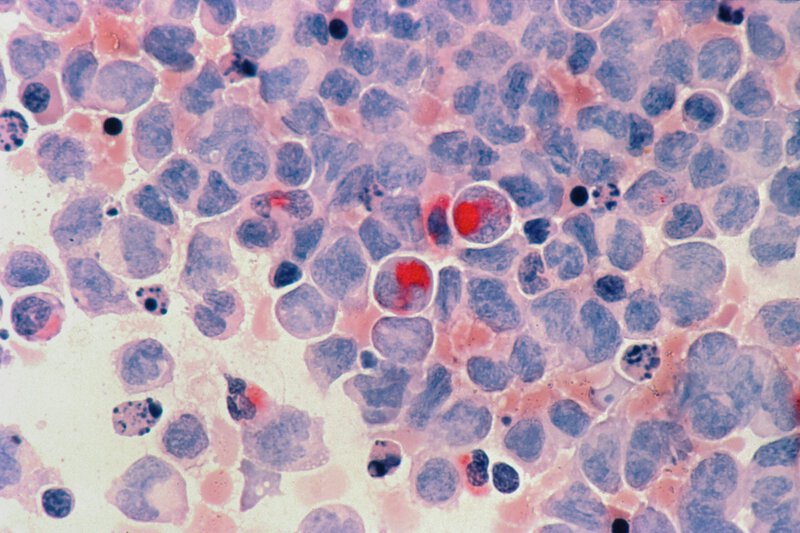
BTK inhibitors are used across a range of B-cell blood cancers, but mantle cell lymphoma and chronic lymphocytic leukemia represent the most clinically relevant contexts for this research. These are the diseases where BTK inhibitor therapy — including pirtobrutinib — is most established, and where the consequences of resistance are most immediately felt by patients and their care teams.
Resistance does not mean the drug fails for everyone. The mutation identified by the Sylvester team is described as rare, meaning most patients currently on BTK inhibitor therapy are not expected to carry it. That distinction matters and should not be lost in the broader narrative. But even a rare resistance mechanism is clinically significant, because it reveals a structural vulnerability in the overall treatment strategy — one that can inform how future therapies are designed and how existing ones are sequenced.
The population most immediately relevant is also the most clinically vulnerable: patients who have already relapsed after first-generation BTK inhibitors are precisely the group for whom pirtobrutinib was approved. If this secondary resistance mechanism takes hold in that population, therapeutic options narrow further at a moment when they are already limited. Sylvester researchers have emphasized that identifying the mechanism is a first step toward addressing it — but it is a step, not a solution.
An important caveat for any reader who is a patient or caregiver: this study is a research finding, not a clinical guideline change. Patients currently on BTK inhibitor therapy should consult their oncologist before drawing any conclusions about their own treatment from this research. Individual circumstances vary significantly, and only a treating physician has the full picture needed to evaluate what a finding like this means in a specific clinical context.
What Can Be Done — and How Long It Will Take
The Sylvester study does not conclude with the problem. Researchers point toward potential strategies that could prevent or delay resistance to BTK-targeted therapies, though these remain investigational and have not yet been validated in clinical trials.
The general logic of resistance-prevention strategies is straightforward even if the execution is not. Once scientists know the specific detour a cancer cell takes, they can in principle design roadblocks for it. That might mean combination drug regimens that simultaneously block BTK and the alternative signaling pathway the mutation activates — removing the detour at the same time as the primary route. It might mean sequencing therapies differently to prevent the conditions under which this mutation is selected for in the first place. Or it could mean developing inhibitors specifically targeting the bypass pathway, in effect building a third line of defense while the second is still in use.
The distance between a mechanistic discovery and a clinical intervention, however, is real and should not be underestimated. Translating this finding into an effective treatment strategy will require preclinical validation, clinical trial design, patient enrollment, safety and efficacy evaluation, and regulatory review — a process that typically unfolds over years, not months. This finding is a meaningful and necessary step. It is not an immediate solution.
The broader scientific value extends beyond any single drug or disease. Mapping resistance mechanisms in blood cancer contributes to a growing field sometimes called resistance biology — the systematic study of how cancers evolve in response to treatment. Insights generated here inform how researchers approach targeted therapy development across oncology more widely, making each mechanistic discovery a contribution to a larger, shared body of knowledge.
An Arms Race That Medicine Is No Longer Fighting Blind

Every targeted therapy faces the same underlying evolutionary pressure. Cancer cells mutate, the most drug-resistant survive, and the treatment that once worked eventually faces a cancer that has adapted around it. The Sylvester finding is a vivid, concrete example of that dynamic playing out at the molecular level — not as an abstraction, but as a specific mutation with a specific mechanism operating in specific disease types affecting real patients.
The measured but genuinely forward-looking observation is this: the fact that scientists can now detect and characterize resistance mechanisms at this level of molecular detail represents real progress. The arms race between medicine and cancer has never been equal, and the history of oncology is full of hard lessons about the limits of therapeutic optimism. But medicine is no longer fighting blind. Each resistance mechanism identified is one that can, in principle, be anticipated, modeled, and eventually countered.
To state the key takeaway plainly: a Sylvester Comprehensive Cancer Center-led study has identified a rare mutation that allows blood cancers to evade both approved and next-generation BTK inhibitor therapies, revealed the mechanism by which that evasion occurs — one that bypasses the drug’s target rather than simply modifying it — and pointed toward potential strategies to counteract it. The finding advances scientific understanding of how to stay ahead of drug-resistant blood cancer in diseases where that question carries urgent clinical consequences.
Science moves incrementally. This study adds an important piece to a complex puzzle, and what that piece ultimately enables — in the laboratory and in the clinic — will depend on the research that follows. Researchers, clinicians, and patients will be watching closely as the implications are tested in future work.