
Nearly seven in ten adults worldwide may be losing meaningful sleep — and a growing body of peer-reviewed research suggests that most of them have been given an incomplete explanation for why.
The Prevalence Gap: Why the Numbers Are So Wide
Estimates of how many adults experience significant sleep problems span a striking range: from roughly 30% to 70% of the global adult population, depending on how researchers define the problem. That spread is not a sign of sloppy science. It reflects a genuine and documented failure among clinicians and researchers to agree on shared diagnostic criteria — a gap examined in a study published on PubMed Central that analyzed the scope and complexity of sleep disorders worldwide.
The lived experience behind those numbers is concrete. Data compiled by HelpGuide shows that almost 30% of adults report regular difficulty falling or staying asleep, while more than 27% experience daytime sleepiness severe enough to impair normal function. These are not occasional bad nights. They represent persistent, functional impairment affecting hundreds of millions of people every day.
The dominant public narrative frames this as a lifestyle failure: too much screen time, too little discipline, not enough wind-down routine. Emerging research tells a more complicated and more consequential story — one that implicates biological vulnerabilities, structural inequities, and widespread clinical misdiagnosis alongside behavioral factors. This article separates established scientific consensus from contested or preliminary findings, defines technical terms as they appear, and attributes every claim to a named source.
What the Research Actually Shows
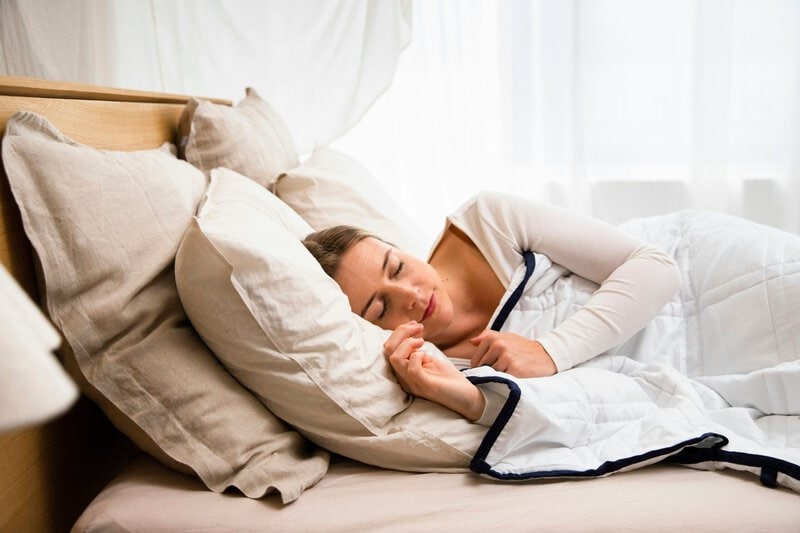
The PubMed Central study found that between 30% and 35% of adults globally show clinically meaningful insomnia symptoms — where insomnia refers specifically to persistent difficulty initiating or maintaining sleep, not occasional restlessness. That figure rises as high as 75% in older populations, suggesting that age amplifies underlying biological vulnerabilities already present in younger adults.
A separate study published in Sleep Medicine examining worldwide prevalence of sleep problems in community populations corroborates this trajectory: sleep disorders spanning insomnia, obstructive sleep apnea (OSA), and excessive daytime sleepiness affect between 30% and 70% of older adults worldwide. At that prevalence, poor sleep in older age begins to look less like an individual anomaly and more like a normative biological feature of aging that the healthcare system has been slow to address.
The consequences extend well beyond fatigue. Stanford Medicine (2025) reports that roughly one in four adults has a chronic sleep disorder — a clinical diagnosis such as OSA or insomnia disorder — rather than merely a transient disruption. Stanford Medicine further reports that people diagnosed with insomnia are ten times more likely to experience certain serious adverse health outcomes, a risk multiplier that reframes chronic sleeplessness as a public-health emergency comparable in scale to obesity or hypertension, not a personal inconvenience to be managed with better habits.
The Misdiagnosis Problem: Why “Just Stress” Is an Incomplete Answer

An American Academy of Sleep Medicine (AASM) survey found that more than half of respondents reported disrupted sleep due to stress (74%), anxiety (68%), or depression (55%). These figures dominate public awareness and lead most people — and many clinicians — to treat sleep loss as a psychological problem requiring psychological solutions.
Stopping there is scientifically incomplete. Stress, anxiety, and depression are themselves frequently downstream consequences of disordered sleep, meaning the causal arrow can run in either direction. This bidirectional relationship — disrupted sleep worsening mood, poor mood further disrupting sleep — makes single-cause explanations misleading and single-treatment approaches likely to underperform. A person prescribed an antidepressant for anxiety-driven insomnia may find limited lasting relief if undiagnosed OSA is the structural source of their fragmented nights.
Sleep researchers now distinguish between two separate mechanisms that require separate interventions. The first is sleep reactivity — a neurobiological trait describing how strongly an individual’s sleep system responds to psychological stress, shaped by the sensitivity of the hypothalamic-pituitary-adrenal (HPA) axis, the brain’s primary stress-response circuit. The second is learned behavioral perpetuation, in which conditioned associations between the bed and wakefulness sustain insomnia long after its original trigger has resolved. These are different problems requiring different solutions, which explains why so many people cycle through remedies — melatonin, sleep restriction, relaxation apps — without achieving durable improvement.
It is also worth noting, with appropriate caution because this remains an area of active rather than settled research, that chronic exposure to artificial light at night, ultra-processed diets, and sedentary work patterns may alter circadian gene expression — the molecular clocks operating inside nearly every human cell. If confirmed at scale, that line of research would mean that environmental and economic shifts over recent decades have compounded individual biological vulnerability in ways that standard sleep-hygiene advice cannot fully reach.
The Biology Underneath: How Sleep Regulation Actually Works
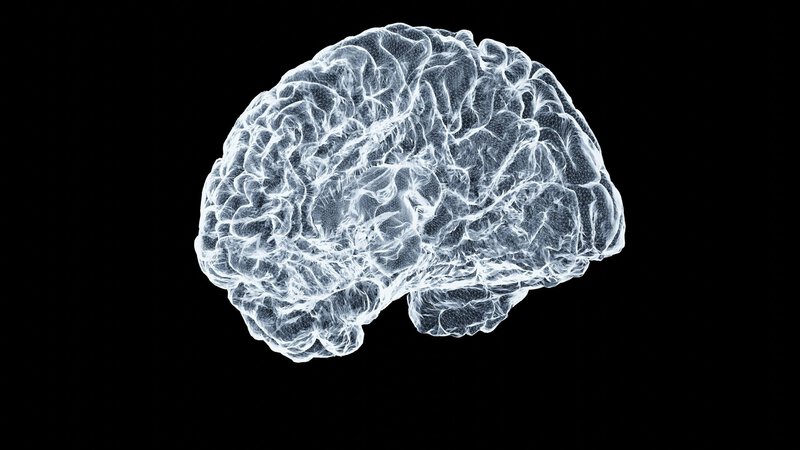
Understanding why so many people struggle with sleep requires a brief account of the mechanics. Sleep scientists describe the regulation of wakefulness and sleep as governed by two interacting forces. Process C is the circadian rhythm — a roughly 24-hour internal clock driven primarily by light signals received by the suprachiasmatic nucleus, a cluster of neurons in the brain’s hypothalamus. Process S is sleep pressure — the accumulation of adenosine, a chemical byproduct of waking neural activity, that builds continuously throughout the day and dissipates during sleep. When these two processes operate in synchrony, sleep arrives reliably and feels restorative. Disruption to either — through shift work, chronic light exposure at night, aging, or structural airway collapse — produces the conditions that clinicians diagnose as sleep disorders.
Obstructive sleep apnea illustrates precisely why biology is so often misread as psychology in clinical settings. OSA is a structural and neuromuscular condition in which the upper airway repeatedly collapses during sleep, briefly interrupting oxygen delivery and forcing the brain into partial arousal — often dozens of times per hour, without the sleeper’s awareness. Stanford Medicine (2025) identifies OSA as one of the most prevalent chronic sleep disorders, yet it remains massively underdiagnosed because its primary presenting symptom — fragmented, unrefreshing sleep with significant daytime fatigue — is clinically indistinguishable from insomnia disorder without a formal polysomnographic sleep study. Many people living with undiagnosed OSA are told they have anxiety, prescribed accordingly, and do not improve because the structural problem has never been identified.
The two-process model of sleep regulation described here is firmly established in sleep science. By contrast, the proposed role of the gut-brain axis and intestinal microbiome in regulating sleep architecture is actively studied but not yet clinically actionable, and should not be presented — in this article or elsewhere — as a proven therapeutic target.
Who Bears the Greatest Burden
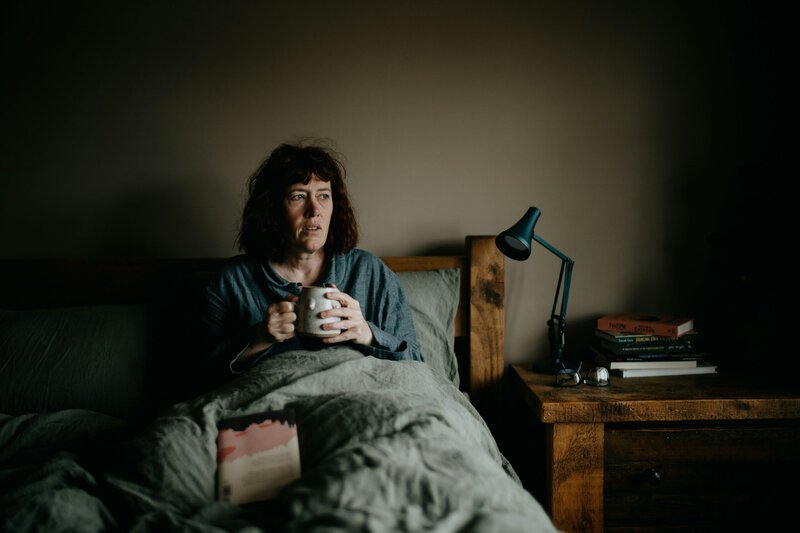
Older adults carry a disproportionate share of the problem. The National Council on Aging (NCOA) reports that up to 50% of adults aged 60 and over experience insomnia symptoms, driven largely by age-related reductions in slow-wave sleep — the deepest and most physically restorative stage of the sleep cycle — and by a forward shift in circadian phase that makes earlier bedtimes and earlier morning waking biologically inevitable rather than chosen. These are structural physiological changes. Behavioral adjustment and stress management can support but cannot reverse them entirely.
Shift workers represent a second high-burden population that receives comparatively little attention in mainstream coverage. Forced misalignment between work schedules and biological clocks — a condition termed circadian misalignment — is linked by the AASM to elevated cardiovascular and metabolic risk that exists independently of total sleep duration. Sleeping enough hours at the wrong biological time still carries measurable health costs, a finding with significant implications for the roughly 15% to 20% of the workforce employed outside standard daytime hours.
Women are diagnosed with insomnia at roughly 1.4 times the rate of men, a disparity rooted in hormonal fluctuations across the menstrual cycle, perimenopause, and menopause that directly modulate neurotransmitter systems governing sleep onset and maintenance. This represents a biological vulnerability, not a temperamental or psychological one, and it warrants clinical recognition as such.
Socioeconomic factors compound every other risk. Noise pollution, multi-person households with shared sleeping spaces, limited access to sleep-medicine specialists, and occupations requiring sustained hypervigilance create structural sleep inequities that no behavioral intervention can fully overcome. Public-health research is increasingly clear on this point, even if consumer sleep content rarely reflects it.
What the Evidence Shows Actually Works

Matching the intervention to the underlying mechanism is the starting point for any effective approach. Cognitive Behavioral Therapy for Insomnia — known as CBT-I, a structured six-to-eight-session program that directly targets the thoughts and behaviors perpetuating sleeplessness rather than its original triggers — is the first-line treatment recommended by the AASM, the American College of Physicians, and the European Sleep Research Society. Clinical trials consistently show that CBT-I outperforms sleep medication on long-term outcomes, including time to fall asleep, frequency of nighttime awakenings, and daytime function, without the dependency risks associated with sedative drugs. It is notably underused relative to the strength of its evidence base.
For OSA, Continuous Positive Airway Pressure (CPAP) therapy — which delivers pressurized air through a fitted mask to prevent airway collapse during sleep — remains the gold-standard intervention per Stanford Medicine (2025). Treating OSA frequently resolves co-occurring insomnia and daytime sleepiness that had previously been misattributed to psychological causes, underscoring why a proper diagnostic workup matters before committing to any treatment path.
Light-based interventions serve a well-supported adjunct role. Morning bright-light exposure — approximately 10,000 lux for 20 to 30 minutes — and reduction of blue-spectrum artificial light in the two hours before bed are supported by robust circadian-rhythm research for phase-shifting the internal clock. These are evidence-based complements to clinical treatment, not substitutes for it, and their benefit is most pronounced in people with a measurable circadian phase disorder rather than primary insomnia.
Pharmacological options have expanded, including newer dual orexin receptor antagonists — medications that block the brain’s wake-promoting orexin signaling rather than broadly sedating the central nervous system — which have received FDA approval for short-term insomnia management. The AASM cautions explicitly against long-term benzodiazepine use due to risks of dependency, tolerance development, and suppression of slow-wave sleep. That distinction matters when evaluating any prescription or over-the-counter sleep-aid claim.
A Systemic Problem Requires a Systemic Diagnosis
The 30%-to-70% prevalence range is not statistical noise. It reflects a field still resolving its own diagnostic definitions, with prevalence figures shifting substantially depending on whether researchers rely on self-reported symptoms, polysomnography (the overnight laboratory sleep study considered the diagnostic gold standard), or consumer wearable-device data — each of which captures a meaningfully different subset of the population and a different dimension of the problem.
The AASM finding that 74% of disrupted sleepers cite stress as a cause of their disrupted sleep does not confirm stress as the root driver of the epidemic. It confirms that stress is the most consciously accessible explanation — the one people can name, feel, and describe. Structural, biological, and socioeconomic drivers operate largely below the threshold of personal awareness, which is precisely why they remain unaddressed for so long in so many people.
Addressing sleep loss at a population level requires at minimum three connected shifts in how clinicians, policymakers, and individuals think about the problem: from self-blame to structural awareness; from sedative prescriptions to evidence-based behavioral therapy as the recognized clinical default; and from treating sleep as a lifestyle preference to recognizing it as a biological necessity with measurable downstream consequences for mental health, cardiovascular function, immune response, and cognitive performance. If nearly seven in ten adults are losing meaningful sleep, the most productive question is no longer what is wrong with these individuals — but what has changed in the built environment, the labor economy, and the clinical system that makes adequate sleep so difficult to sustain. The science, while not yet complete, is generating answers that deserve more serious attention than they have so far received.