
In states that enacted total abortion bans after the Supreme Court’s 2022 Dobbs decision, the share of female high school students reporting suicidal thoughts rose by approximately 4.3 percentage points compared with states where abortion remained legal — and the increase appeared even among girls with no known personal exposure to an unwanted pregnancy. That finding, now published in JAMA Network Open, one of medicine’s most rigorously peer-reviewed journals, is prompting public-health researchers to ask a harder question: can a reproductive law reshape the psychological landscape for an entire generation of adolescent girls, regardless of whether any individual girl ever faces an unwanted pregnancy?
The Number That Stopped Researchers Cold
The 4.3-percentage-point increase in suicidal ideation among adolescent girls in total-ban states does not exist in a vacuum. What sharpens its significance is what was happening simultaneously in states without abortion bans: suicidal ideation among teenage girls there was actually falling, dropping from 33 percent to 29 percent over the same period. Suicide attempt rates in non-ban states also declined.
That divergence is the study’s analytical engine. Adolescent mental health was, on balance, modestly improving nationally during this window, which makes the ban-state trend considerably harder to explain away as a residual effect of pandemic-era psychological damage or broad societal deterioration. Something was pushing the two groups of states in opposite directions at precisely the moment abortion bans took effect.
Perhaps the most striking detail in the data is that the increase in suicidal ideation held across the female adolescent population in ban states — not just among girls who were pregnant or at immediate risk of unwanted pregnancy. That breadth implies a population-wide psychological mechanism, a finding that challenges individual-risk models and demands explanation.
Why Dobbs Made This Research Suddenly Possible

Before the Supreme Court’s June 2022 ruling in Dobbs v. Jackson Women’s Health Organization eliminated the federal constitutional right to abortion, reproductive-policy researchers lacked the geographic variation needed to isolate how outright bans — as distinct from gestational limits or parental-consent requirements — affect mental health at a population level. The post-Dobbs landscape, in which more than a dozen states moved almost overnight to total or near-total bans, created what social scientists call a natural policy experiment: different policy environments applied to otherwise comparable populations at roughly the same moment in time.
A total abortion ban, as defined in the JAMA Network Open study, is a state prohibition with no health exception broad enough to preserve routine access — the most restrictive end of the reproductive-policy spectrum. That definitional precision matters because grouping together gestational-limit laws, waiting-period requirements, and outright bans would obscure any dose-response relationship between restriction severity and health outcomes.
The urgency of the question predates Dobbs. Prior research examining the association between abortion restrictiveness and suicidality found that suicidality increased among commercially insured birthing people between 2006 and 2017 — a pre-Dobbs baseline establishing that the relationship between reproductive policy and mental health distress predates the current legal landscape and now appears to extend into a younger and broader demographic.
How the Study Was Actually Conducted
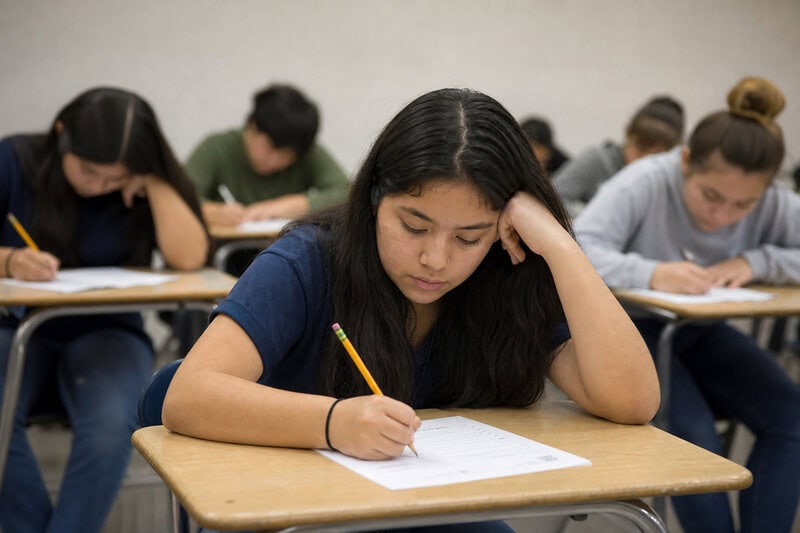
The JAMA Network Open paper uses a cross-sectional design, meaning it compares different groups of students surveyed at specific points in time across ban and non-ban states, rather than following the same individuals over years. That distinction is not a minor technical footnote — it directly shapes what the research can and cannot claim.
Researchers drew on large-scale adolescent health survey data tracking self-reported suicidal ideation and suicide attempts, enabling state-level comparisons before and after abortion-ban implementation. The analysis controlled for pre-existing state-level differences in adolescent mental health trends, attempting to isolate the policy effect from confounding variables such as baseline depression rates or economic conditions.
Because the design is observational, the study establishes a statistically significant association — not a proven causal mechanism. The authors themselves emphasize this distinction, and any responsible reading of the findings must preserve it. Association and causation are not synonyms in epidemiology, and the difference carries real consequences for how clinicians, policymakers, and the public should interpret the results.
Economists and public-health analysts reviewing the study’s methodology have noted that the pre-trend controls strengthen the credibility of the association, while also underscoring that replication across independent datasets remains essential before treating these findings as definitive.
The Mechanism: How a Law Can Affect Girls Who Aren’t Pregnant
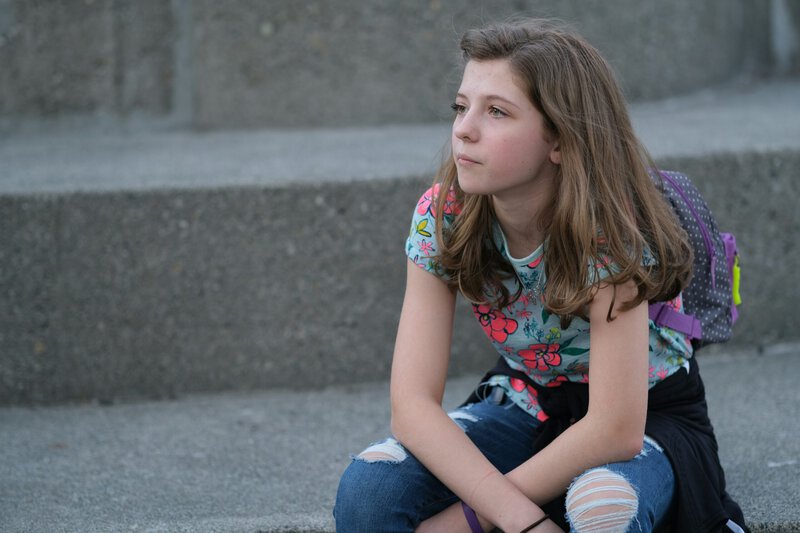
If the harm were confined to girls facing actual unwanted pregnancies, the individual-exposure pathway would be straightforward. The more difficult — and more consequential — question raised by this study is why suicidal ideation appears to have risen across the broader female adolescent population in ban states.
Public-health researchers point to several plausible pathways, each grounded in adjacent psychological literature rather than directly tested by the JAMA Network Open study itself.
- Anticipatory stress: The psychological burden of knowing that an unwanted pregnancy would carry severe legal, logistical, and medical consequences can elevate chronic anxiety even without a pregnancy occurring. Chronic anticipatory stress is a recognized risk factor for depression and suicidal ideation in adolescent populations.
- Diminished sense of personal control: Adolescent girls may internalize state-level restrictions as a signal that their bodily autonomy and future options are constrained. Prior literature links a reduced perception of personal control — the sense that one’s life circumstances are governed by forces outside one’s influence — to elevated rates of depression and suicidality.
- Erosion of care infrastructure: Reproductive health providers frequently deliver broader sexual health services, contraceptive counseling, and mental health support. When those providers close or reduce services in response to bans, teenagers lose access to support systems that address far more than pregnancy alone.
- Community stigma: The social environment surrounding abortion restrictions may amplify stigma around reproductive and sexual health, reducing the likelihood that adolescent girls will seek help for related anxieties or disclose distress to trusted adults.
These mechanisms remain hypotheses. The JAMA Network Open study documents the association; it does not — and by design cannot — definitively rank which pathway carries the most explanatory weight. That question belongs to the next generation of research.
What the Data Does and Doesn’t Prove
The cross-sectional methodology is the study’s primary limitation, and honest science communication requires stating it plainly. Because researchers are comparing different cohorts of students rather than tracking the same girls over time, it is harder — though not impossible — to rule out the presence of some unmeasured state-level factor that independently drove the divergence in mental health trends, separate from the abortion ban itself.
The finding that suicidal ideation rose regardless of personal pregnancy status is simultaneously the study’s most significant result and the one most urgently in need of replication. It implies a population-wide psychological effect that standard individual-risk frameworks do not anticipate, which is precisely why the scientific community will want to see it tested across different datasets and methodological approaches before treating it as settled.
Scientists distinguish between emerging findings — a single well-designed study demonstrating a new association — and established consensus, which reflects a body of replicated, convergent evidence. This research firmly occupies the emerging-findings category and should be read accordingly: as a credible, peer-reviewed signal that warrants serious attention and further investigation, not as a closed verdict.
Where This Fits in the Broader Science of Reproductive Policy and Mental Health
The new adolescent data does not arrive without intellectual predecessors. The Turnaway Study — a landmark longitudinal project conducted by researchers at the University of California, San Francisco — previously found that women denied wanted abortions experienced worse mental health outcomes over time than women who received care. That body of work provides a theoretical foundation that the new adolescent findings appear to extend into a younger and, apparently, broader demographic.
The American Academy of Pediatrics and adolescent psychiatry groups have separately documented that teenage girls carry a disproportionate burden of suicide risk, establishing an already-alarming baseline against which the ban-state increase stands out further. A 4.3-percentage-point rise in suicidal ideation among a population already flagged as high-risk is not a finding that public-health researchers can responsibly treat as background noise.
Taken together, the emerging literature points toward reproductive autonomy as a potential social determinant of mental health — a concept familiar in public-health frameworks, where housing, income, and education have long been understood to shape psychological wellbeing — but one only now being tested empirically in the context of legislative abortion restrictions. Early coverage of the study has characterized the trend as a “concerning increase” warranting clinical and policy attention, a characterization the data supports while stopping well short of a definitive causal claim.
What Researchers and Clinicians Say Should Happen Next
The field’s most-needed next step is longitudinal research: studies that follow the same cohorts of adolescent girls across multiple years and multiple policy environments. Longitudinal designs allow researchers to observe change within individuals over time, providing far stronger grounds for causal inference than cross-sectional snapshots can offer. Several research groups are understood to be designing such follow-up studies using the post-Dobbs policy environment as their natural laboratory.
In clinical settings, professional bodies are advising mental health practitioners working with adolescents in ban states to screen proactively for policy-related stress and anticipatory anxiety — even in patients who present with no pregnancy-related concerns. The logic is straightforward: if the association documented in the study reflects a real psychological mechanism operating at the population level, clinicians cannot wait for patients to self-identify a reproductive-policy connection to their distress before offering support.
Policymakers across the ideological spectrum have cited the study since its publication, a pattern researchers caution against overinterpreting in either direction. A single cross-sectional paper, however well-designed and prominently published, should not serve as the sole basis for sweeping policy conclusions. The strength of the evidence must match the magnitude of the policy response, and replication across independent datasets and methodologies remains essential before drawing firm conclusions.
What the JAMA Network Open publication unambiguously represents is a first word, not a final verdict. It opens a critical and previously understudied line of inquiry into how reproductive law shapes the psychological landscape for the generation of girls growing up entirely in the post-Dobbs era — a generation for whom the legal environment established before their adolescence is simply the world as they have always known it. Understanding what that world is doing to their mental health is not a peripheral scientific question. It is an urgent one.
If you or someone you know is struggling with thoughts of suicide, contact the 988 Suicide and Crisis Lifeline by calling or texting 988. Trained counselors are available 24 hours a day, seven days a week.