
A fossilized pea crab — a parasitic crustacean smaller than a thumbnail — recovered from the ancient marine sediments of Calvert Cliffs, Maryland, has been formally named Pinnotheres prochowniki after Bill Prochownik, a self-taught fossil enthusiast who spent decades combing those same shores and became a cornerstone of his region’s paleontological community. The honor, typically reserved for credentialed scientists, marks both a genuine paleontological milestone and a rare institutional acknowledgment of what dedicated citizen science can accomplish.
A Tiny Creature, Millions of Years Old, Bears One Man’s Name
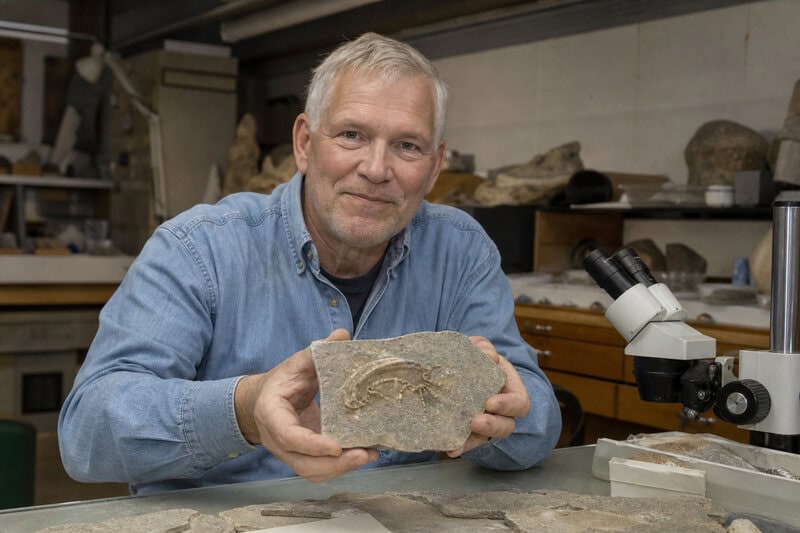
Calvert Cliffs rise above the western shore of the Chesapeake Bay in Calvert and St. Mary’s counties, Maryland, exposing roughly 15-million-year-old sediments from the Miocene epoch — a geological interval when a warm, shallow sea covered much of the Mid-Atlantic region. Those eroding bluffs have yielded an extraordinary catalog of ancient life: sharks, rays, whales, dolphins, and hundreds of species of marine invertebrates. Now, following a formal species description announced by the Calvert Marine Museum, that catalog includes a newly described fossil pea crab bearing the name of the man who dedicated so much of his life to finding such things.
The naming of Pinnotheres prochowniki is simultaneously a paleontological contribution — a formally described new fossil species added to the global taxonomic record — and a tribute to the irreplaceable role that amateur collectors play in advancing the science of ancient life. The Baltimore Sun reported that the honor reflects both Prochownik’s personal legacy and the broader ecosystem of volunteer-driven discovery that has made Calvert Cliffs one of the most scientifically productive fossil sites on the U.S. East Coast.
Who Was Bill Prochownik?
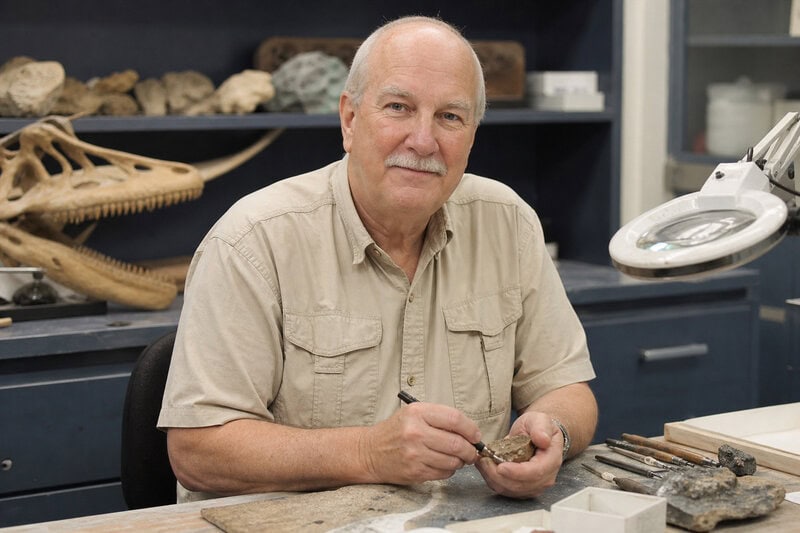
Bill Prochownik never held a professional scientific degree, but in Calvert County’s tight-knit paleontological community, his credentials were measured differently. He was a longtime volunteer at the Calvert Marine Museum — the regional institution dedicated to the paleontology, estuarine biology, and maritime history of the Chesapeake Bay region — and his sustained fieldwork along the shoreline beneath Calvert Cliffs earned him the kind of respect that institutions typically extend only to credentialed staff.
Prochownik’s value extended well beyond the specimens he personally recovered. He was known for sharing knowledge with fellow collectors, mentoring newer fossil hunters, and contributing finds that advanced formal research — exactly the behaviors that transform an enthusiastic hobbyist into a genuine scientific collaborator. He is now deceased, making the species naming a posthumous honor. The Southern Maryland Chronicle reported that the gesture has resonated deeply within the regional community that knew his work firsthand.
In a region where fossil hunting is both a local pastime and a serious scientific pursuit, Prochownik occupied an unusual and valuable position: trusted by professionals, beloved by amateurs, and committed to the kind of systematic, patient fieldwork that rarely makes headlines but consistently produces results. The permanent attachment of his name to a newly described prehistoric species is a precise reflection of that contribution.
What Is a Fossil Pea Crab — and Why Does This Discovery Matter?
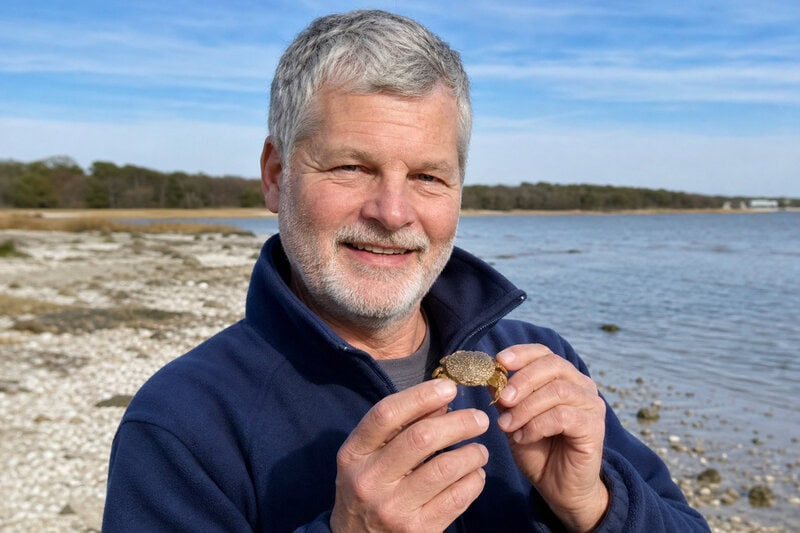
Pea crabs, members of the family Pinnotheridae, are among the smallest crabs on Earth. Living species spend their adult lives as parasites or commensals inside the shells of bivalves such as oysters, mussels, and clams — either feeding at the host’s expense or simply sharing its shelter. Their common name is straightforwardly descriptive: many species are roughly the size and shape of a garden pea.
Finding one in the fossil record is genuinely unusual. Pea crabs possess thin, delicate shells that decompose rapidly under normal conditions. Fossilization requires an uncommon convergence of circumstances: rapid burial that protects the organism from scavengers and physical disturbance, low-oxygen sediment conditions that slow microbial decay, and the gradual mineral replacement of organic material over geological time. Each confirmed fossil pea crab specimen represents a minor geological improbability — which is precisely what makes each one scientifically valuable.
For researchers studying the ancient Miocene sea that once covered the Chesapeake Bay region, Pinnotheres prochowniki fills a meaningful ecological gap. The Calvert Formation already documents an impressive range of Miocene marine life, but parasitic and commensal crustaceans have been poorly represented in that record. A fossilized pea crab speaks directly to the ecological relationships of the ancient ecosystem — evidence that bivalves existed in sufficient numbers to support a specialized parasite, and that conditions occasionally conspired to preserve the proof.
Formal description of the species required physical examination of specimens, systematic comparison against the published literature for all known related species, identification of diagnostic morphological features distinguishing it from everything previously named, and publication in a peer-reviewed scientific venue. The process concluded with the designation of a type specimen — a physical reference example deposited in a museum collection — and the assignment of an official Linnaean binomial name. Pinnotheres prochowniki has completed that process and is now an accepted entry in the global taxonomic record.
How Calvert Cliffs Became a Fossil Hunter’s Paradise
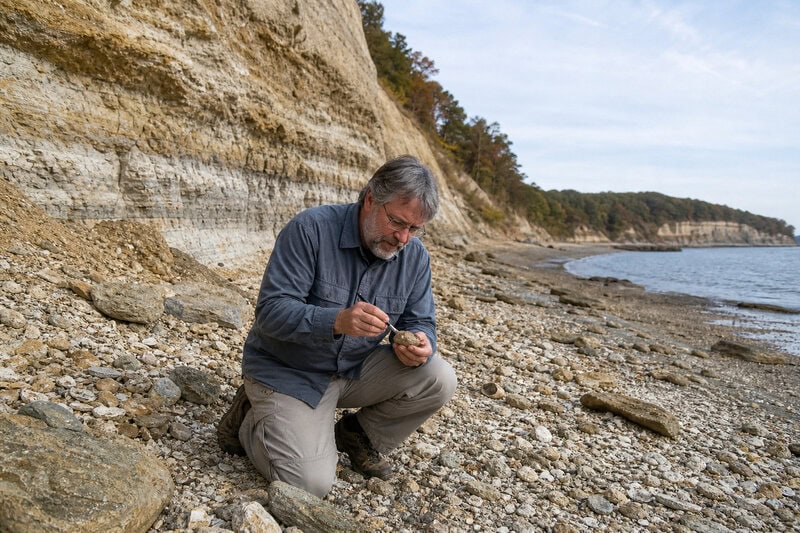
The geological engine driving discovery at Calvert Cliffs is straightforward: Miocene-age marine sediments, relatively soft and continuously undercut by Chesapeake Bay wave action, erode at a steady pace, exposing fresh material on the beach below on a near-constant basis. What one visit misses, the next storm may reveal. The cliffs stretch approximately 30 miles along the bay’s western shore, and the exposed Calvert Formation has yielded more than 600 identified species of Miocene marine invertebrates, fish, and marine mammals — a figure that continues to grow as new specimens are found and described.
Unlike many productive fossil localities on private land, in remote terrain, or within strictly protected reserves, portions of Calvert Cliffs State Park permit public fossil collecting on the beach itself. Visitors are legally allowed to keep what the waves wash out, within established guidelines. That combination of geological productivity and legal accessibility is rare in American paleontology, and it has created a self-sustaining culture of fossil hunting spanning generations of Calvert County residents and Maryland visitors alike.
That culture has generated a pipeline of scientifically significant specimens. Finds from Calvert Cliffs — recovered by amateurs, donated to or studied by institutions — have contributed to research at the Calvert Marine Museum and at the Smithsonian’s National Museum of Natural History in Washington, D.C. The accessibility of the site is not incidental to its scientific productivity; it is the mechanism by which decades of volunteer hours are converted into peer-reviewed knowledge.
How a Fossil Earns an Official Species Name
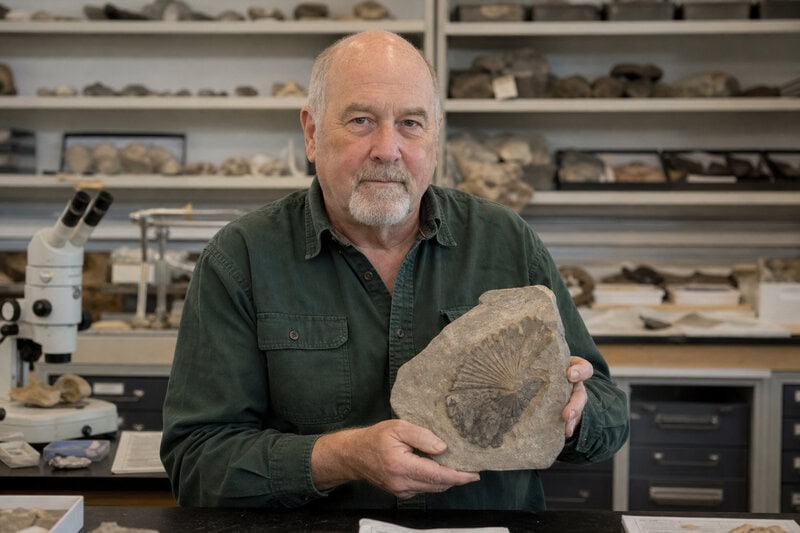
The practice of naming new species after individuals — known as eponymy — has a long and established history in biology and paleontology. Scientists name organisms after colleagues, mentors, donors, and occasionally community contributors whose work has advanced the field outside conventional academic channels. The practice is governed by the International Code of Zoological Nomenclature, which sets the rules for how animal species are formally named and ensures that each name, once validly published, is globally recognized and stable.
An honorific name carries no scientific implications about the organism itself. Pinnotheres prochowniki is not named after Prochownik because it resembles him or shares his habits. It is named after him because the researchers who described it judged his contributions worthy of a form of recognition that, in scientific terms, is effectively permanent. Barring formal reclassification — which does occur as taxonomic understanding evolves — the name will appear in the scientific literature indefinitely.
Some questions are likely to remain subjects of ongoing investigation. The specific bivalve host or hosts that Pinnotheres prochowniki parasitized, the full geographic extent of its range within the ancient sea, and its precise evolutionary relationships to living pea crab species may not be fully resolved by a single published description. That is normal for newly described fossil taxa and represents opportunities for future research rather than deficiencies in the current finding.
Why Amateur Collectors Are Indispensable to Paleontology
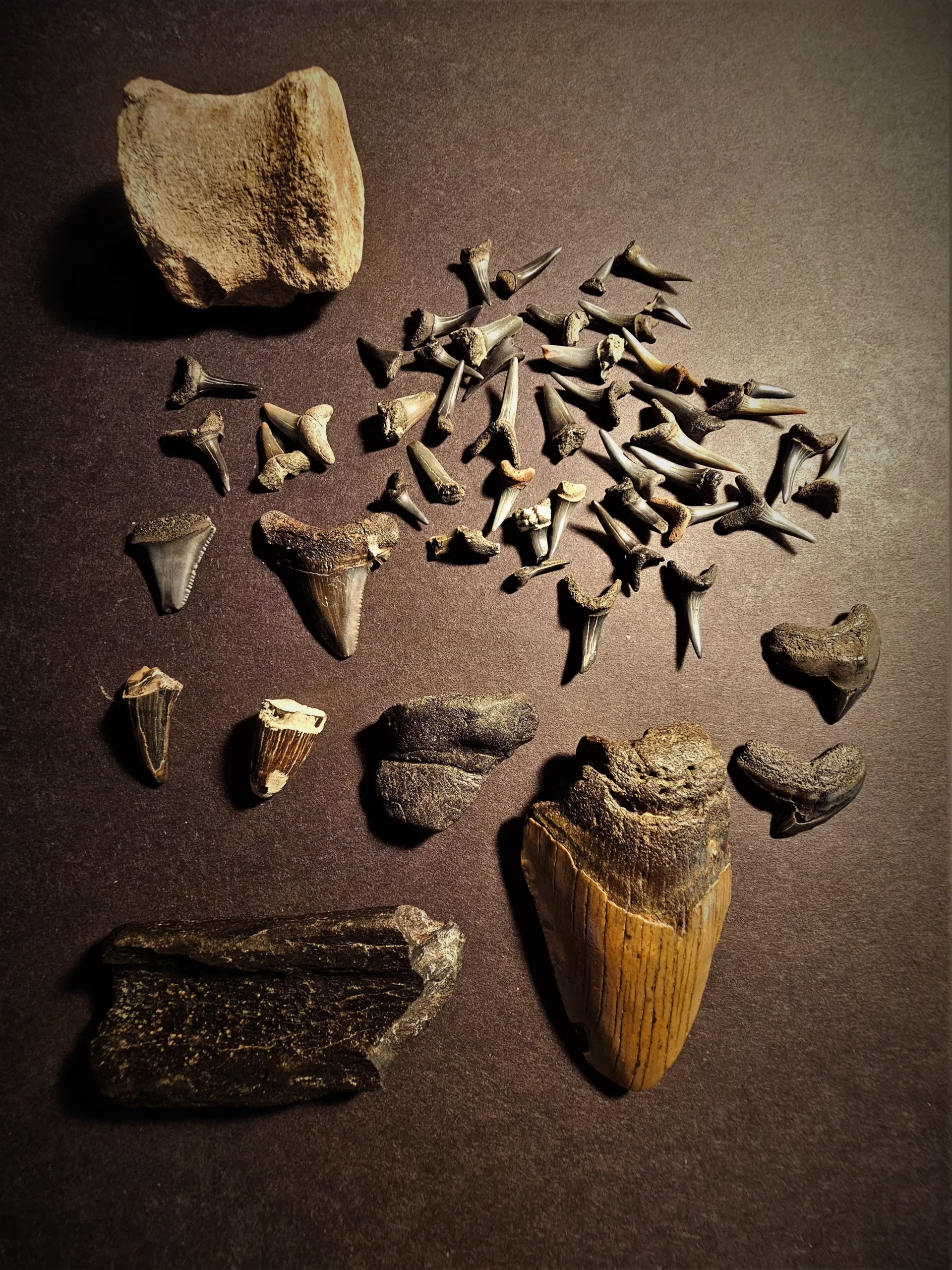
Professional paleontologists are significantly outnumbered by the fossil-bearing terrain available to study. The ratio of credentialed researchers to productive fossil localities is, in practical terms, deeply unfavorable to comprehensive survey coverage. Dedicated amateur collectors — people like Bill Prochownik, who return to the same sites across seasons and years — collectively log vastly more field hours than academic researchers can manage, and their finds routinely seed formal scientific discoveries.
Institutions like the Calvert Marine Museum occupy a critical bridging role in this ecosystem. By training volunteers, providing curatorial infrastructure for donated specimens, and facilitating productive relationships between collectors and credentialed researchers, such museums convert community enthusiasm into publishable science. The museum’s announcement of Pinnotheres prochowniki reflects that institutional function operating exactly as intended: a volunteer’s decades of fieldwork, channeled through institutional relationships, resulting in a formally described new species.
A common misconception positions amateur fossil collecting as a hobby that runs parallel to, but separate from, professional science. At sites like Calvert Cliffs — where public access and geological productivity combine to make citizen participation both practical and productive — that distinction largely dissolves. When conducted responsibly and in coordination with research institutions, amateur paleontology is a recognized and essential component of the broader scientific enterprise. It is not a supplement to professional fieldwork but, in many instances, its starting point.
As professional research budgets face sustained pressure and academic field survey capacity remains constrained, the pipeline represented by citizen scientists who find, document, and donate specimens becomes increasingly critical to maintaining the pace of new species discovery. The fossil record does not wait for funding cycles, and the waves at Calvert Cliffs do not pause.
Legacy in Stone: What the Naming of Pinnotheres prochowniki Means
Most people who dedicate significant portions of their lives to a passion outside a formal profession receive little lasting institutional recognition — a local reputation, perhaps; gratitude from those they mentored; memories that fade with the generation that holds them. Bill Prochownik, through the formal description of a 15-million-year-old parasitic crustacean, has received something considerably more durable.
In the taxonomy of ancient life, a species name is among the most permanent forms of acknowledgment that science confers. Pinnotheres prochowniki will appear in peer-reviewed literature, in museum databases, and in future research on Miocene marine ecosystems for as long as those records are maintained — long outlasting any obituary or local memorial. The type specimen, deposited in an institutional collection, will be physically available to researchers who have not yet been born.
The discovery also carries an implicit invitation. Along the Chesapeake Bay’s eroding shores, and at productive fossil sites across the country, the next significant specimen could tumble from an ancient cliff face at any moment. Whether it is recovered by a credentialed researcher or by a self-taught enthusiast who simply keeps showing up is, in many cases, a matter of who is actually there — walking the beach, paying attention. The relationship between that person and a research institution is what determines whether the find becomes science.
The naming of Pinnotheres prochowniki after Bill Prochownik is a reminder that paleontology — the science of life’s deep history — has always depended on people willing to walk the same shoreline, again and again, looking carefully at what the water reveals.