
NASA’s Perseverance rover has detected complex organic carbon in two separate Martian rocks — Cheyava Falls and Walhalla Glades — located roughly 100 metres apart inside Jezero Crater. The detection in two geologically distinct outcrops, rather than one, rules out a simple contamination or instrument-artefact explanation and is pushing scientists to ask harder questions about what Mars was, and what it may once have harboured.
Two Rocks, One Hundred Metres, and a Finding That Has Scientists Talking
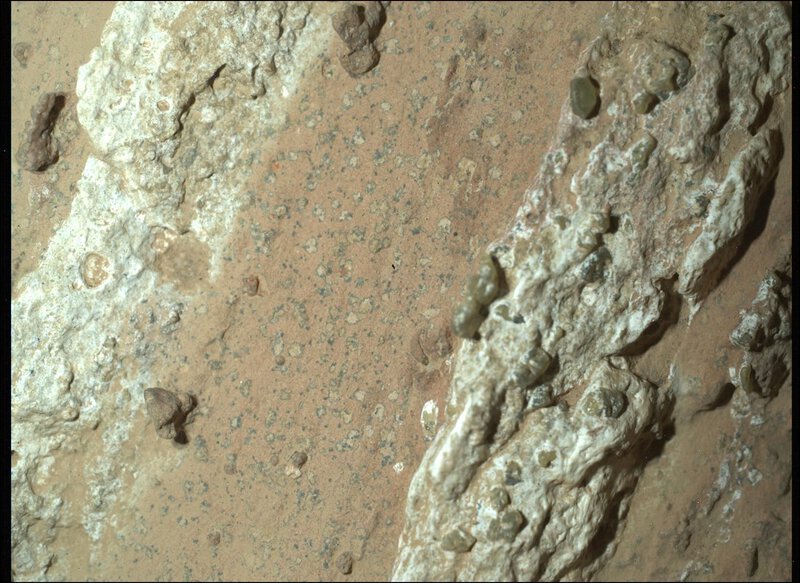
The carbon type identified is macromolecular carbon: large, chemically intricate molecular networks that, on Earth, are most commonly produced by living organisms or by the slow geological transformation of once-living material. This marks the first confirmed detection of macromolecular carbon in mudstones in Jezero Crater. Because the signal appears in two separate mudstone outcrops rather than one, researchers cannot easily attribute it to a localised anomaly or instrument noise.
What elevates the discovery further is its context. The organic carbon was found inside sedimentary rock that also contained a potential biosignature — a chemical or structural pattern that could, under the right conditions, indicate past life. Neither finding is conclusive on its own. Together, they make Jezero Crater one of the most scientifically significant sites in the solar system.
What Is Macromolecular Carbon, and Why Does It Matter?
Macromolecular carbon refers to large, complex networks of carbon-based molecules, distinct from simpler organic compounds such as methane or formaldehyde that Mars science has documented before. On Earth, macromolecular carbon appears in coal, kerogen — the carbon-rich precursor to oil — and the preserved remains of ancient microbes, making its presence a recognised marker of biologically rich or organically active chemistry.
Critically, abiotic processes can also produce macromolecular carbon. Volcanic activity, meteorite delivery, and hydrothermal chemistry are all viable formation mechanisms, so detection alone does not confirm life. Scientists are careful to maintain that distinction publicly. What macromolecular carbon does offer is chemical durability: these large molecules can survive billions of years of radiation and oxidation on a planet like Mars, meaning what Perseverance found could be a molecular relic of an era when Mars was warmer, wetter, and far more hospitable.
SHERLOC: The Instrument That Made the Detection Possible

The detection was made by SHERLOC — Scanning Habitable Environments with Raman and Luminescence for Organics and Chemicals — a rover-mounted instrument that uses Raman spectroscopy. The technique fires an ultraviolet laser at a rock surface and reads the way light scatters back, identifying molecular fingerprints without physically touching or destroying the sample. SHERLOC’s ultraviolet laser is particularly sensitive to the carbon-ring structures characteristic of macromolecular carbon, making it well suited to exactly this kind of detection.
By registering matching carbon signatures in two geologically distinct mudstone outcrops 100 metres apart, SHERLOC provided spatial evidence that the organic material is a feature of the local geology rather than an isolated event. The mudstone context matters enormously: mudstones form from fine sediment that settled slowly in liquid water, creating the low-energy, chemically stable environments that, on Earth, are most likely to preserve organic material across geological time.
Jezero Crater: A Location Chosen Precisely for This Moment

Perseverance landed in Jezero Crater in 2021 because orbital data suggested it once held a lake fed by an ancient river delta — an environment that, on Earth, would be prime real estate for microbial life and organic preservation. The mudstones where the organic carbon was found are sedimentary rocks built layer by layer from material deposited in standing water, likely billions of years ago when Mars still maintained a thicker atmosphere capable of sustaining liquid water at the surface.
Jezero’s geological history also includes episodes of hydrothermal activity — hot, mineral-rich water circulating through fractured rock. On Earth, such settings support chemolithotrophic microbes, organisms that derive energy directly from inorganic rock chemistry, and also concentrate and preserve organic carbon through entirely abiotic means. The co-location of macromolecular carbon with a potential biosignature within the same sedimentary formation elevates the scientific interest of this site beyond what either finding would represent alone.
Additional context on the Jezero findings and their implications is available in Dawn’s coverage of the NASA organic carbon discovery.
The Central Question: Biology, Chemistry, or Both?
The Perseverance science team identifies three plausible origins for the macromolecular carbon detected on Mars: delivery by carbon-rich meteorites, synthesis through abiotic hydrothermal or photochemical reactions, or production by ancient biological organisms. Current rover-mounted instruments cannot yet distinguish between these pathways, and researchers are deliberate in saying so publicly.
The presence of a potential biosignature in the same rock as the organic carbon is what makes this discovery both compelling and contested. Biosignatures are patterns — chemical ratios, isotopic signatures, morphological structures — that life preferentially produces but that geology can sometimes replicate. Scientists deliberately use the word “potential” as a caution reflecting the field’s hard-won lesson from the 1996 ALH84001 Mars meteorite controversy, when preliminary life claims damaged scientific credibility and permanently raised the evidentiary bar for extraordinary conclusions.
Resolving the question definitively may require the physical return of Perseverance’s sealed sample tubes to Earth, where laboratories can apply isotopic analysis and sub-nanometre imaging at resolutions that rover-mounted instruments cannot achieve. That capability defines the long-term stakes of the Mars Sample Return programme — and explains why the samples currently cached in Jezero are considered among the most scientifically valuable objects ever collected.
How This Fits Into the Broader Search for Life on Mars
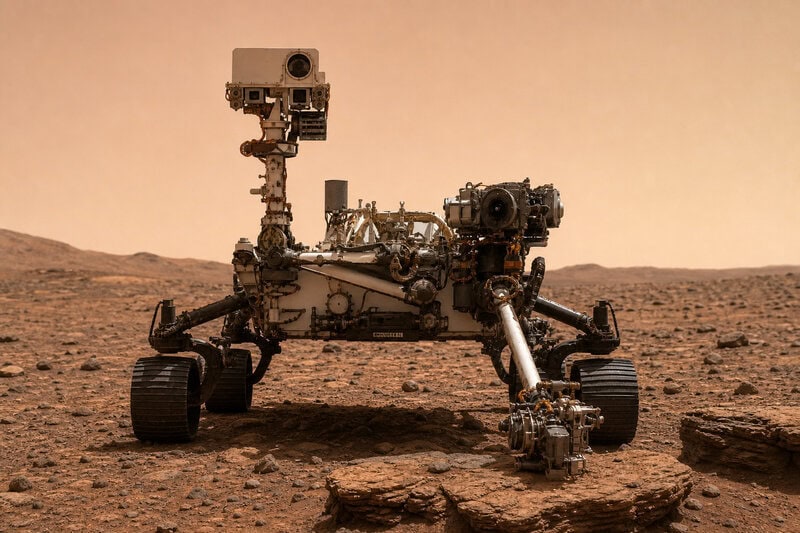
NASA’s Curiosity rover previously detected smaller organic molecules — including chlorobenzene, thiophenes, and benzene derivatives — in Gale Crater mudstones, establishing that organic chemistry survives on the Martian surface. Perseverance’s macromolecular carbon detection represents a meaningful step up in molecular complexity, suggesting that Mars does not merely preserve simple organic traces but potentially more structurally sophisticated chemistry.
The repeated detection of organic carbon across two separate craters — Gale and Jezero — by two different rovers using different instruments strengthens the case that organic preservation is a planetary-scale phenomenon rather than a localised accident. Mars once had liquid water, chemical energy sources, and a protective atmosphere: conditions scientists consider the minimum requirements for life as we understand it. The current search is therefore not for life itself but for its chemical echoes, frozen in rock for billions of years.
Further analysis of what these findings mean for astrobiology is discussed in The News International’s science report on the Perseverance findings.
What Comes Next: Samples, Science, and Sober Expectations
Perseverance has been caching sealed rock cores from Jezero, including material from the organic-carbon-bearing mudstone sites, as part of the joint NASA-ESA Mars Sample Return architecture — the most complex interplanetary retrieval mission ever attempted. If those samples reach Earth-based laboratories in the 2030s, the macromolecular carbon preserved in Cheyava Falls and Walhalla Glades could become some of the most intensively analysed material in scientific history.
In the near term, continued SHERLOC mapping of the Jezero delta and surrounding terrain will determine whether macromolecular carbon is confined to these two outcrops or distributed across a wider stratigraphic horizon. A broader distribution would sharpen hypotheses about origin — a meteoritic or hydrothermal source would likely show a different spatial pattern than biology-derived organic carbon concentrated in once-habitable microenvironments.
Scientists are also careful to set clear expectations about what a confirmed biological origin would and would not mean. Even if ancient Martian life were eventually established as the source of the organic carbon, that would not indicate Mars hosts life today. The planet’s surface is bathed in ultraviolet radiation and permeated by oxidising chemicals deeply hostile to any known biological chemistry. Whether Mars ever had life is a separate question from whether it does now, and the current evidence speaks only, cautiously, to the former.
Taken on its own terms, the discovery is already significant without requiring a biological interpretation. Organic carbon in Mars mudstones, detected reproducibly by a precision instrument across two separate rocks that once sat at the bottom of an ancient lake, is precisely the kind of evidence the Perseverance mission was designed to find. The science is not finished — it is, in many respects, only beginning.
A clear summary of the mission’s findings and their broader context is also available via We News English’s report on NASA’s closer look at organic carbon on Mars.