
Three fossilized teeth, each no larger than a human fingernail, recently sat in a researcher’s palm and quietly upended one of science’s oldest questions: when did the human lineage actually begin? Paleontologists have identified these specimens as belonging to the genus Homo — the taxonomic group that includes Neanderthals, Homo erectus, and modern humans — and dated them to between 2.6 and 2.8 million years ago, placing them among the oldest physical evidence ever recovered for humanity’s direct evolutionary branch.
A Date That Forces Scientists to Rethink the Foundations
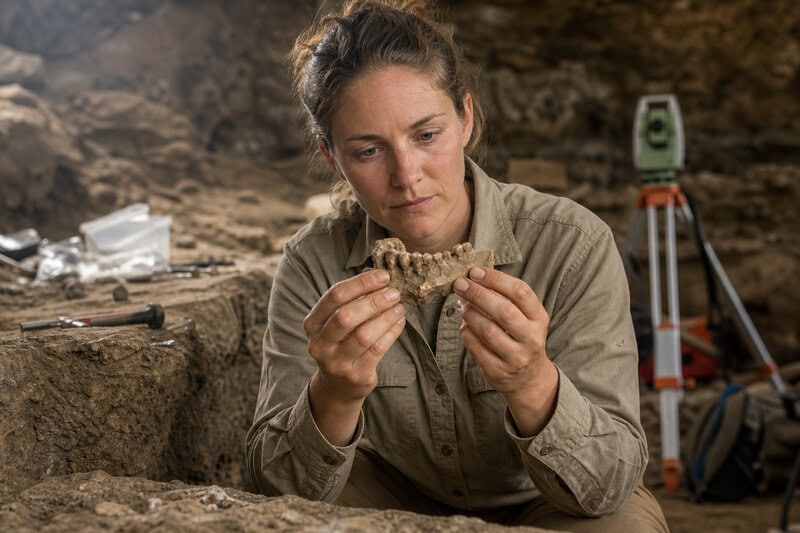
The significance of that date range is difficult to overstate. A boundary shift of this magnitude in the fossil record does not simply add a footnote to existing textbooks — it forces scientists to reconsider which environmental and evolutionary pressures first forged the genus Homo, and whether the conditions that produced our lineage were more widespread or more ancient than the evidence had previously allowed. These are not minor calibrations. They are the kinds of revisions that reshape the foundational diagrams in every introductory course on human evolution.
Before these specimens entered the record, the earliest widely accepted Homo fossil was a partial lower jawbone from the Ledi-Geraru region of Ethiopia, dated to approximately 2.8 million years ago and described in a landmark 2015 paper in the journal Science. The new teeth are therefore best understood as corroborating and potentially extending that frontier — adding geographic and numerical weight to a date that was already pushing the boundaries of what the fossil record had revealed. Whether they ultimately survive the full gauntlet of independent peer scrutiny is a question still being answered. That process is ongoing, and it matters enormously.
The discovery arrives alongside a separate but thematically linked finding: paleontologists have recovered what are described as the southernmost fossils of Purgatorius, a tiny creature identified as the earliest known relative of all primates. That finding pushes the deep ancestry story further back in time still, and it underscores a pattern that has emerged repeatedly across the history of paleoanthropology — small teeth, easily overlooked, are consistently the fossils rewriting humanity’s family tree.
Why Teeth? The Unlikely Star Witness of Human Evolution
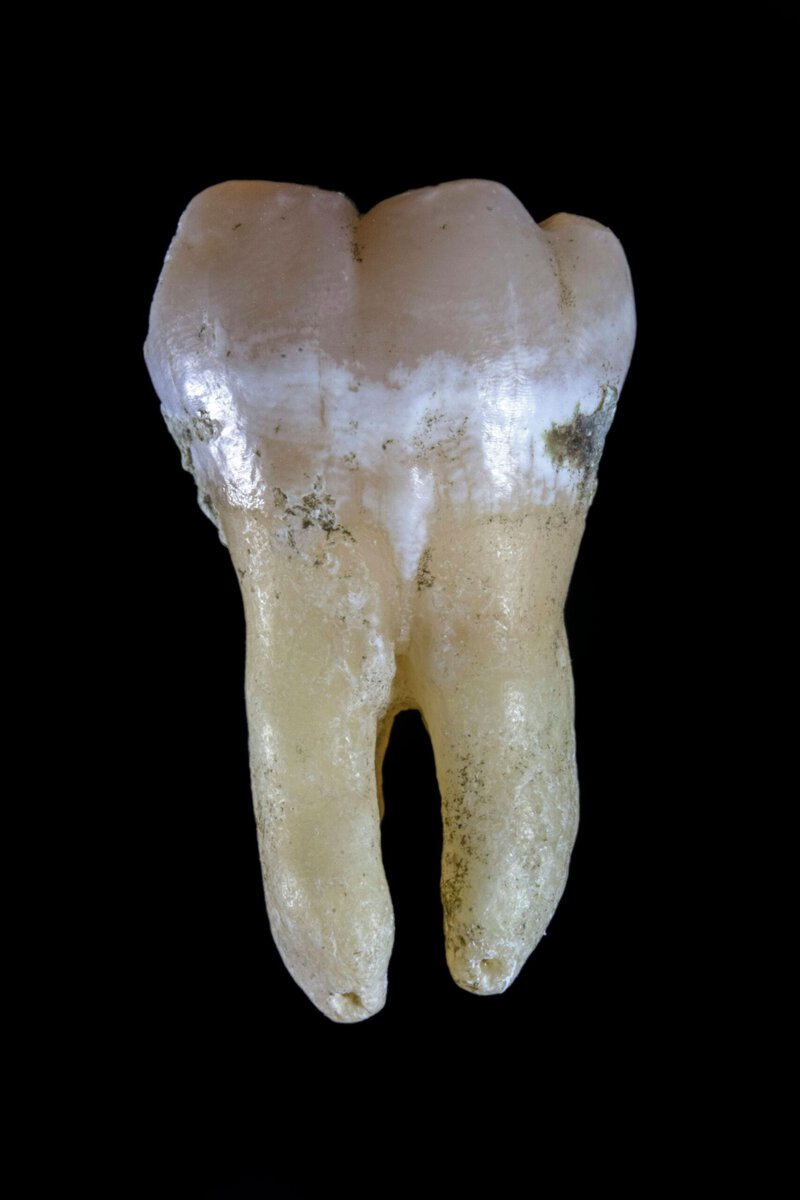
Enamel, the hard outer coating of a tooth, is the most durable tissue the human body produces. It resists decay, chemical erosion, and the crushing pressure of geological burial across timescales that reduce bone to powder. This biological resilience means that when everything else is gone — the skin, the muscle, the organs, even the skeleton — teeth frequently survive. The fossil record of early human ancestors is, as a result, disproportionately built from dental remains, and each recovered tooth carries outsized scientific weight precisely because of how rarely anything else makes it through millions of years intact.
Tooth morphology — the precise architecture of cusps, the thickness of enamel, the geometry of roots — functions like a biological fingerprint. Paleontologists can assign a specimen to a genus or species with a confidence that a fragmentary jaw or partial skull rarely permits, because these structural details are both species-specific and remarkably consistent within lineages. The reliability of this approach rests on decades of comparative methodology: newly recovered teeth are cross-referenced against vast catalogued collections of known specimens. Increasingly, researchers also use micro-CT scanning — a non-destructive imaging technique that maps the internal structure of a tooth at microscopic resolution — to extract information invisible to the naked eye. As detailed reporting on ancient teeth and human evolution has documented, this analytical pipeline has become one of paleoanthropology’s most powerful and reproducible tools.
The Discovery: What Was Found, and Why the Details Matter
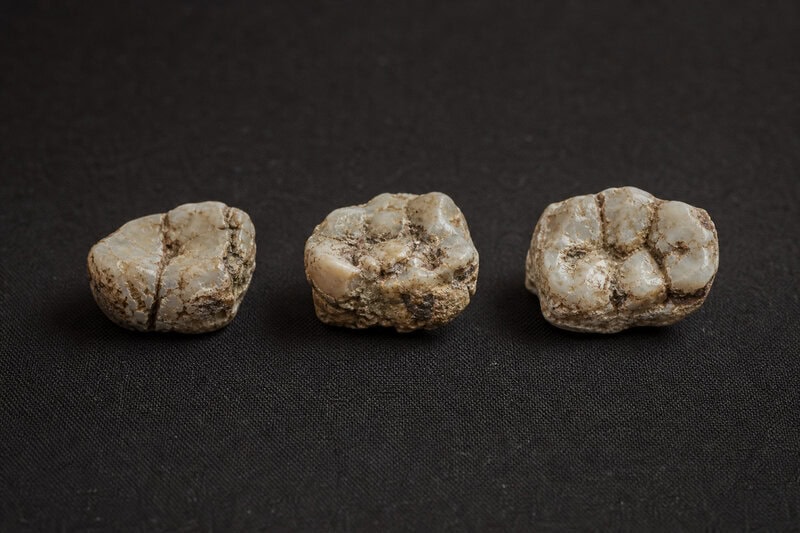
The three specimens at the center of the current discussion were identified as belonging to the genus Homo and dated to between 2.6 and 2.8 million years ago. If those attributions and dates withstand continued independent review, they represent some of the earliest Homo fossil evidence ever recovered. It is important to be precise about what that means and what it does not.
The genus Homo is not synonymous with modern Homo sapiens, which paleontologists place at roughly 300,000 years ago based on fossil evidence from Jebel Irhoud in Morocco. Early Homo species were anatomically and cognitively distant from contemporary humans, but they represent the evolutionary branch from which our species ultimately descended. The gap between 2.8 million years ago and today is not a straight line — it is a branching, sometimes dead-ending tree of related species, most of which left no living descendants. Characterizing these teeth as evidence of “early humans” in any colloquial sense would misrepresent what the science actually shows.
The separate Purgatorius discovery adds a meaningful geographic dimension to the broader story. Identifying the new specimens as the “southernmost” fossils of this ancient creature is not merely a trivia point. Fossil distribution maps tell scientists where ancient species actually ranged across prehistoric landscapes, and those maps feed directly into theories about climate adaptation, migration corridors, and the ecological pressures that drove evolutionary change. When a known geographic range expands, so do the questions scientists can ask about which environments shaped early primate evolution.
What 2.8 Million Years Ago Actually Looked Like on Earth
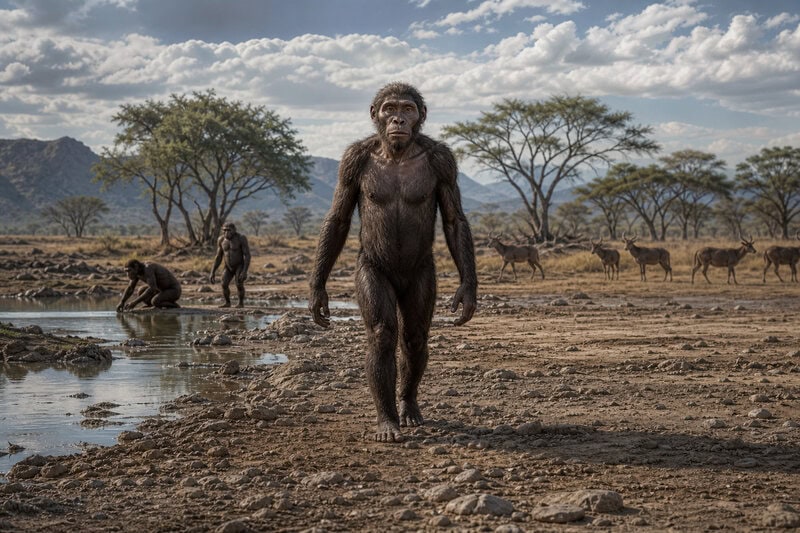
To understand the weight of that number, it helps to anchor it in planetary history. Approximately 2.8 million years ago, Earth was entering the Pleistocene epoch — a period of intensifying glacial cycles that many researchers believe acted as an evolutionary pressure cooker, driving species toward greater behavioral and physiological flexibility. A growing body of research suggests these climate oscillations may have been a key catalyst in the emergence of the genus Homo, selecting for adaptability in ways that the more stable climates of earlier epochs had not demanded.
The African landscape of that era was itself in flux. Forests were fragmenting, grasslands were expanding, and the food resources available to hominins were changing in ways that would have placed a premium on dietary flexibility and new foraging strategies. It is within this environmental context — not as an isolated anatomical event — that the emergence of Homo is best understood. Fossils do not exist in a vacuum; the sediment layers that preserve them also preserve the ecological record of the world those creatures inhabited.
Dating those sediment layers introduces its own layer of honest uncertainty. Radiometric techniques — including argon-argon dating applied to volcanic rock layers and uranium-lead dating applied to certain associated minerals — provide chronological anchors for fossil specimens. These methods carry margins of error that vary depending on the geological context of a site, and those margins must be taken seriously. A specimen’s assignment to the genus Homo rather than a predecessor genus like Australopithecus also hinges on morphological criteria that paleontologists sometimes dispute, particularly when specimens are fragmentary or worn by time. Both the dating and the taxonomic classification of these teeth remain subject to the normal scrutiny of the scientific process.
Purgatorius and the Deep Roots: How Far Back Does the Story Go?

Purgatorius — a tiny, shrew-like creature whose name derives from Purgatory Hill in Montana, where early specimens were first recovered — sits at the very base of the primate family tree. Researchers describe it as the earliest known relative of all primates, placing it at the origin point of the lineage that eventually produced monkeys, apes, and humans. Its fossils date to the earliest Paleocene epoch, shortly after the mass extinction event that ended the age of non-avian dinosaurs approximately 66 million years ago.
The recovery of its southernmost fossils adds meaningful data to the geographic picture of early primate evolution. When researchers can map where ancient species actually lived — rather than only where their fossils happen to have been found — they gain leverage on questions about which environments supported primate development, which climate zones proved hospitable, and how the earliest relatives of our lineage moved across ancient landscapes. Every new data point refines the models scientists use to reconstruct the conditions that ultimately made human ancestors possible.
Connecting these two discoveries — Purgatorius at the dawn of primate history and Homo teeth at the threshold of the human lineage — reveals something consistent and important about the fossil record: it is still actively being assembled. The characterization of Purgatorius as the earliest known primate relative reflects the current state of evidence, not a permanent ceiling. Future excavations could push that date further back, as has happened repeatedly throughout the discipline’s history. The story keeps growing because researchers keep looking, and because small, easily overlooked specimens keep delivering large answers.
How Scientists Decode Ancient Teeth: The Method Behind the Meaning

The analytical process that transforms a fragment of ancient enamel into a data point on the human evolution timeline follows a disciplined sequence. A recovered tooth is first photographed and measured under magnification, producing a precise geometric record of its external morphology. It is then typically scanned using micro-CT technology, which generates three-dimensional maps of enamel thickness, root architecture, and internal structural features without damaging the irreplaceable specimen. Those measurements are compared statistically against reference collections spanning dozens of known species across millions of years of primate history.
The morphological markers that distinguish early Homo teeth from those of predecessor genera such as Australopithecus include smaller molar size relative to estimated body mass, specific cusp configurations on the chewing surface, and particular patterns of enamel distribution. No single feature is diagnostic on its own — each characteristic is a data point contributing to a probabilistic assessment, not a standalone verdict. This is where interpretive disagreement legitimately enters the process. Assigning fragmentary or worn specimens to a genus involves probabilistic reasoning, and paleoanthropologists have a well-documented history of substantive disagreement over borderline cases. That disagreement is not a weakness of the discipline. It is how rigorous science sharpens collective understanding over time.
What the Teeth Can Tell Us — and What They Cannot
If the findings hold up to continued peer scrutiny and independent replication, they suggest that the genus Homo may have a slightly longer or geographically broader history than the previous fossil record indicated. That is a meaningful scientific refinement — the kind that accumulates over decades into a fundamentally improved understanding of human origins. It is not a demolition of existing knowledge. The prior timeline was not wrong so much as incomplete, which is the normal condition of science operating at the frontier of the knowable.
What these teeth cannot tell researchers is equally important to acknowledge. Dental remains alone cannot reveal brain volume, capacity for language, tool-making behavior, social organization, or dietary range with anything approaching certainty. The richer picture of what early Homo actually did and experienced requires corroborating evidence: stone tools found in associated sediment layers, the bones of prey animals bearing cut marks, and ideally more complete skeletal remains that allow estimates of body proportion and locomotion. Teeth open the door; they cannot furnish the room behind it.
The verification process that follows a discovery of this kind is well established within the discipline. Independent laboratory teams will apply their own dating analyses to the sediment layers surrounding the specimens. Paleoanthropologists not involved in the original study will conduct their own morphological assessments. Researchers will return to the same geographic area in search of additional specimens that could either strengthen or complicate the current interpretation. This is the standard architecture of scientific progress — slow, iterative, and deliberately resistant to premature certainty.
The larger truth that discoveries like these keep restating is that the question of when and where the human lineage first appeared is not a closed case. It is an ongoing investigation, one in which the next significant revision to the timeline may already exist — smaller than a fingernail, sitting in a drawer of uncatalogued fossils at some field museum, waiting for the right researcher, with the right tools and the right comparative knowledge, to look closely enough.