
Every few years, dust storms on Mars grow so large they swallow the entire planet — yet scientists have never had a dedicated orbital instrument capable of measuring Martian winds directly. That gap in humanity’s understanding of the Red Planet is what NASA and California-based startup Relativity Space are now formally partnering to close, with a target launch date of 2028.
A Mission Built Around a Measurement Mars Has Never Had
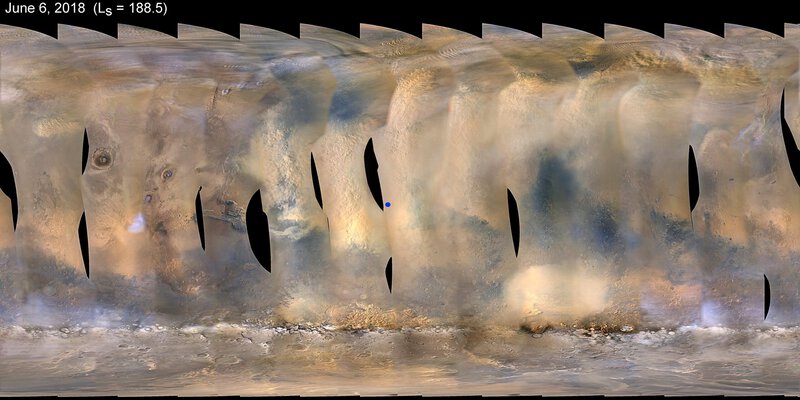
Mars is not a quiet world. Its atmosphere, though roughly one percent as dense as Earth’s, generates regional and global dust storms capable of blanketing the surface for months at a time — a phenomenon that ended the solar-powered Opportunity rover’s mission in 2018 and poses serious hazards to any future crewed expedition. Despite decades of orbital observation, scientists have never been able to measure Martian wind velocities directly from space. Existing spacecraft infer wind patterns indirectly, through temperature and pressure readings processed by computer models, rather than observing the wind field itself.
NASA’s Aeolus instrument suite is designed to end that limitation. The payload — named after ESA’s Earth-observing Aeolus satellite, which used ultraviolet lidar technology to profile wind velocities over Earth between 2018 and 2023 — would characterize Martian atmospheric circulation in three dimensions from orbit. Lidar, which stands for light detection and ranging, works by firing laser pulses into the atmosphere and timing the return signal from aerosol particles carried by the wind; the Doppler shift of that return reveals how fast the air is moving and in which direction. ESA’s Earth mission validated the core measurement approach; NASA’s Mars version would apply a similar principle to an entirely different planetary environment.
Understanding wind circulation on Mars is not merely an academic exercise. Wind data is foundational to predicting dust storm behavior, modeling how Mars lost most of its thick early atmosphere over billions of years, and — critically — calculating the aerodynamic forces acting on spacecraft trying to land on the surface. Near-surface wind shear and dust loading rank among the largest engineering uncertainties in Mars entry, descent, and landing, known in the field as EDL. Any future crewed Mars mission would depend heavily on the kind of atmospheric characterization the Aeolus payload is intended to provide.
How the NASA-Relativity Space Partnership Is Structured
NASA and Relativity Space have signed a Space Act Agreement — a formal, no-funds-exchanged collaboration mechanism that allows NASA to partner with commercial entities without issuing a traditional procurement contract — to fly the Aeolus atmospheric science payload to Mars orbit. Under the agreement, NASA contributes the Aeolus scientific instrument suite itself, while Relativity Space supplies everything else: the spacecraft bus that will house the payload, the launch vehicle that will send it toward Mars, and end-to-end cruise operations from Earth orbit to Martian orbit.
That division places a significant weight of commercial and technical risk on Relativity Space. The company must finance spacecraft development, launch vehicle readiness, and interplanetary operations independently, without a direct infusion of NASA mission funding. The structure is comparable in philosophy to NASA’s Commercial Lunar Payload Services program — which also routes science instruments through commercial providers — but goes considerably further in scope, targeting another planet rather than the comparatively nearby Moon.
If successful, the Aeolus mission would mark the first time a privately led company has designed, built, launched, and operated a spacecraft to deliver a NASA science instrument to another planet — a milestone that would represent a qualitative leap beyond anything the commercial space sector has accomplished in planetary science to date.
The Space Act Agreement model also inverts the traditional NASA relationship with its contractors. On conventional planetary missions such as Mars Reconnaissance Orbiter or MAVEN — built by large prime contractors like Lockheed Martin under cost-plus arrangements with extensive NASA oversight — the agency functions as mission operator and technical authority. Here, NASA is effectively a payload customer, ceding mission design and operations authority to a commercial partner. That shift carries real consequences for how schedule risk and technical accountability are managed, a subject the article returns to below.
Who Is Relativity Space — and Why This Assignment Is Unusual
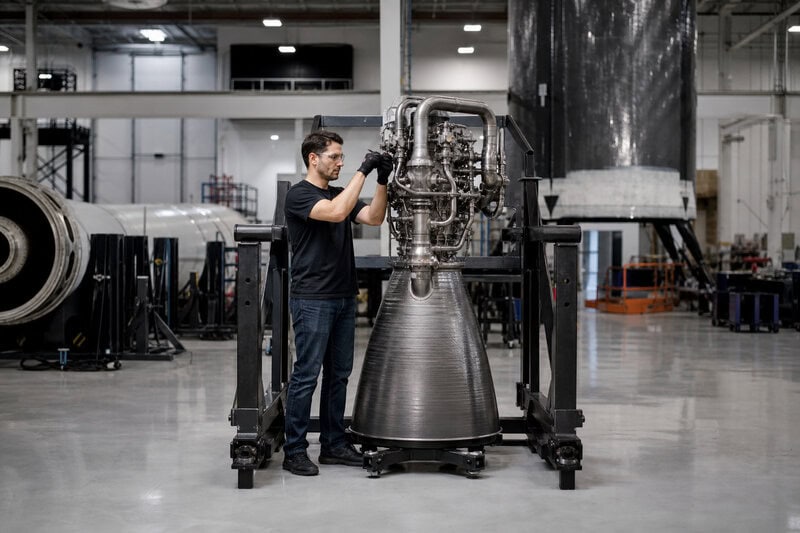
Founded in 2015 and headquartered in Long Beach, California, Relativity Space built its early reputation around an unconventional manufacturing approach: using large-scale metal 3D printing — the technical term is additive manufacturing — to fabricate rocket components that would traditionally require expensive tooling and multi-supplier supply chains. The company’s first launch vehicle, Terran 1, was the world’s first rocket constructed predominantly through additive manufacturing. Although Terran 1 demonstrated the viability of the approach during its flight program, it has since been retired in favor of a larger, more capable successor.
That successor, Terran R, is the rocket Relativity Space intends to use for the Aeolus Mars mission. Terran R is designed as a fully reusable two-stage launch vehicle capable of delivering substantial payloads to orbit and, the company asserts, of providing the performance needed to place a spacecraft on an interplanetary trajectory toward Mars. Relativity Space has framed the 2028 Mars orbiter mission as a cornerstone of a broader strategy to offer end-to-end planetary mission delivery — combining spacecraft design, manufacturing, launch, and operations into a single commercial service.
The company is led by CEO Eric Schmidt. Relativity Space’s repositioning from pure launch provider toward integrated mission delivery is what made the Aeolus partnership structurally possible: NASA needed not just a rocket, but a company willing and capable of managing a complete interplanetary mission as a commercial product. The selection of Relativity Space over more established aerospace prime contractors signals a meaningful shift in NASA’s Science Mission Directorate’s appetite for commercial risk.
The 2028 Window: Why the Clock Is Already Running
Mars launch windows open roughly every 26 months, governed by the orbital geometry that minimizes the energy — and therefore the propellant — required to travel from Earth to Mars. Missing a window does not mean a short delay; it means waiting more than two years for the next favorable alignment. The 2028 window is considered particularly attractive in terms of Earth-Mars geometry, and it is already drawing attention from multiple governmental and commercial missions simultaneously, creating real scheduling competition for range time and interplanetary trajectory slots.
The timeline pressure on Relativity Space is substantial. As of mid-2025, Terran R has not yet completed a full orbital flight test, meaning the company must achieve launch vehicle maturity, complete spacecraft integration with NASA’s Aeolus payload, and obtain range certification from the relevant regulatory authorities — all within approximately three years. That is an aggressive schedule even for organizations with deep heritage in interplanetary mission management.
NASA’s formal commitment to the 2028 target through the Space Act Agreement implies institutional confidence in Relativity Space’s development timeline, though the agency has not publicly disclosed what contingency planning exists if the window is missed or if the launch vehicle is not ready in time. The absence of a traditional contract also means NASA has fewer formal leverage mechanisms to enforce schedule compliance than it would under a standard procurement arrangement — a structural ambiguity that analysts and oversight observers are likely to scrutinize as the program matures.
What Aeolus Could Reveal — and What It Means for Mars Science

The scientific value of direct wind measurements from Mars orbit extends well beyond weather forecasting. Wind-driven transport of dust and volatiles is central to the planet’s current climate dynamics; understanding those circulation patterns is a prerequisite for building accurate global atmospheric circulation models, known as general circulation models or GCMs. The GCMs scientists currently use to simulate the Martian atmosphere are calibrated primarily on Earth atmospheric physics and constrained by indirect observations — a limitation that direct wind profiling from the Aeolus payload would significantly reduce.
Wind data from orbit would also contribute to understanding Mars’s long-term atmospheric loss. The planet once had a thicker atmosphere capable of supporting liquid water on the surface; much of that atmosphere escaped to space over billions of years through processes influenced by upper-atmosphere circulation patterns that remain poorly characterized. Missions such as NASA’s MAVEN orbiter have advanced understanding of atmospheric escape mechanisms, but MAVEN was not designed to provide the kind of three-dimensional wind field mapping that Aeolus would offer.
For future human exploration, the operational stakes are equally high. Any crewed landing system will need to navigate the final kilometers of descent through an atmosphere whose wind behavior near the surface is currently modeled with significant uncertainty. The Aeolus dataset would give mission planners observational constraints — real measurements, not simulated estimates — on the atmospheric conditions crews would actually face.
A Test Case for Commercial Planetary Science
The NASA-Relativity Space Aeolus partnership is, at its core, an experiment in whether the commercial space sector has matured enough to carry peer-reviewed science instruments to another planet on a NASA timeline and without traditional NASA mission funding. If the mission reaches Mars orbit and the Aeolus payload returns usable wind data, it would validate a model in which NASA acts primarily as an instrument provider and science customer — potentially lowering per-mission costs and increasing the cadence at which the agency can fly atmospheric and planetary science experiments across the solar system.
That outcome is not guaranteed. Interplanetary missions are among the most technically demanding endeavors in engineering, and the history of Mars exploration is marked by failures from both government and commercial actors. Roughly half of all Mars missions have failed, the majority during cruise or orbital insertion. A missed 2028 launch window would delay the science by at least 26 months and raise legitimate questions about whether commercial development timelines are compatible with the multi-year instrument maturation cycles that define NASA planetary science programs.
The risks are real, but so is the potential upside. What the Space Act Agreement already demonstrates — regardless of eventual outcome — is that NASA’s Science Mission Directorate is actively testing the boundaries of commercial mission delivery, moving beyond low-Earth orbit services and lunar deliveries toward the inner solar system itself. Whether Relativity Space’s additive-manufactured rocket and in-house spacecraft can meet that challenge by 2028 is a question the next three years will answer, with consequences that extend far beyond a single Mars orbiter.