
At 10:15 a.m. EDT on Wednesday, August 27, 2025, two NASA astronauts answered questions from New Jersey high school students — transmitted from roughly 250 miles above Earth and returned in real time. Among the first things students wanted to know was not how rockets work, but whether astronauts ever get lonely. That gap between what the public imagines space exploration to be and what working astronauts actually experience is precisely what makes NASA’s structured education downlink events so revealing.
Three Sessions, Three Crews, One State
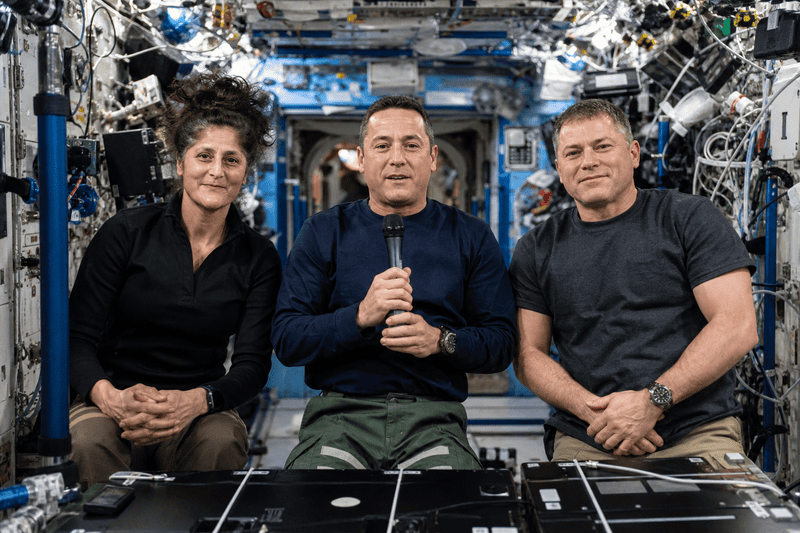
The August 27 live event was not a one-off moment of public relations. It was the most recent in a series of documented NASA education outreach sessions linking New Jersey classrooms directly to the International Space Station (ISS). NASA’s in-flight education downlink program records at least three distinct sessions connected to New Jersey schools, each using a different format and crew.
In one session, NASA astronauts Chris Williams and Jessica Meir answered prerecorded STEM questions from New Jersey students while aboard a spacecraft. The prerecorded format allowed for carefully structured, curriculum-aligned responses — a deliberate design choice that prioritizes educational clarity, though at the cost of spontaneity. In a separate event, NASA astronaut Nick Hague answered questions from students at Thomas Edison Energy Smart Charter School, a session reflecting NASA’s stated priority of reaching STEM-focused institutions.
The August 27 live downlink with astronauts Michael Fincke and Zena Cardman represented the highest-stakes format of the three: unscripted, real-time, with the authentic physics of signal delay present in every exchange. Video of NASA astronauts answering student questions live from space captures something that prerecorded sessions cannot fully replicate — the visible weight of a question traveling to orbit and an answer coming back.
Together, the three sessions form a compact case study in how NASA uses astronaut question-and-answer events as a structured engagement tool with measurable curriculum links, not simply as inspiration theater.
What Students Actually Ask
Across documented NASA astronaut Q&A sessions, student questions cluster reliably into three categories: bodily experience in microgravity (how do you sleep, eat, and use the bathroom), psychological endurance (do you get scared or lonely), and practical contingencies (what happens when something breaks). What students ask far less often is how rockets achieve orbit or how orbital mechanics work — subjects that dominate popular science media coverage of spaceflight.
This pattern functions as an informal audit of public knowledge. The engineering architecture of spaceflight has been widely covered for decades. The lived, daily, human texture of spending months aboard the ISS has not. Students asking what astronauts do on an average Tuesday are identifying a genuine gap — and NASA’s education coordinators have structured these downlinks, in part, to fill it.
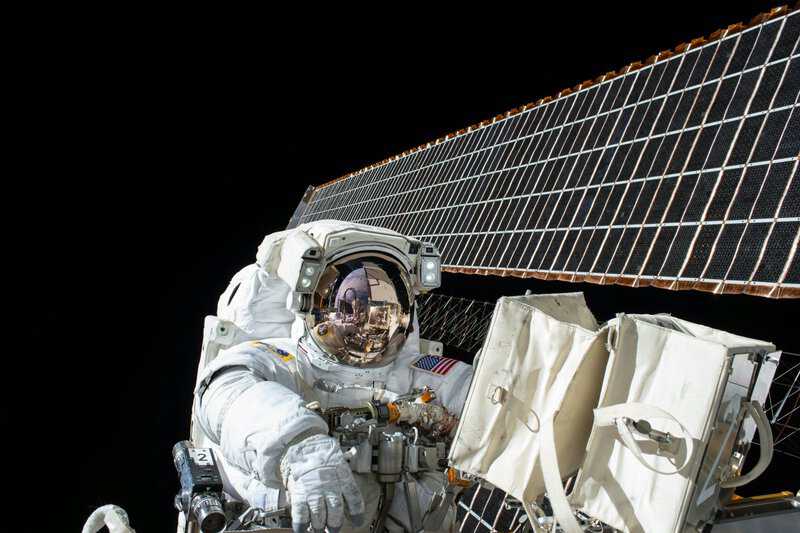
At Thomas Edison Energy Smart Charter School, the session with Nick Hague produced questions shaped by the school’s energy-focused curriculum, including how the ISS generates and manages electrical power. The station relies on eight solar array wings that collectively produce as much as 240 kilowatts of power in direct sunlight, according to NASA’s ISS program documentation — a fact that connects directly to the energy systems engineering students at that school were already studying.
Hague’s session is also notable for what he brings beyond technical knowledge. A veteran of a Soyuz launch abort in October 2018 who subsequently returned to the ISS on a later mission, Hague is frequently positioned by NASA education staff as an effective communicator of risk management and resilience — themes that carry genuine weight with adolescent audiences in ways that orbital mechanics alone do not.
The Science Behind the Answers: Living on the Space Station
The questions students ask about daily life in space are backed by genuinely surprising science. Several of the most common facts about living aboard the ISS are counterintuitive even to science-literate adults.
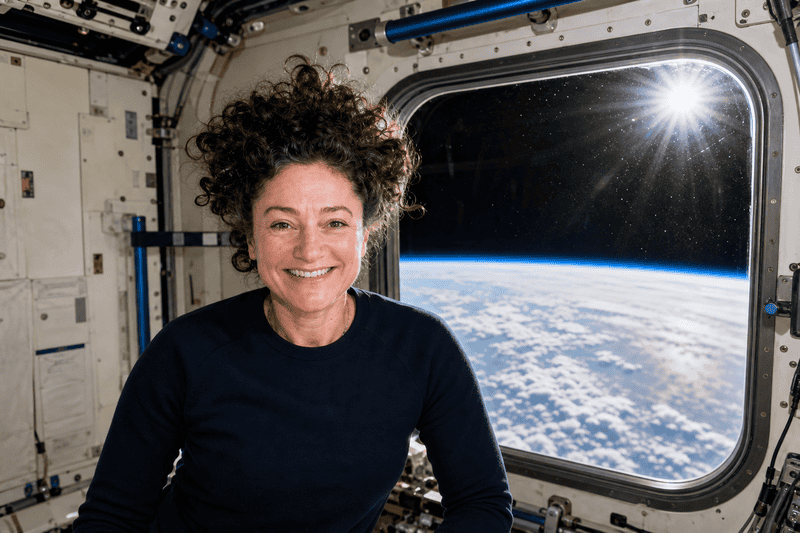
- Sixteen sunrises per day. The ISS orbits Earth at approximately 250 miles (400 kilometers) altitude, completing a full orbit every 90 minutes. Astronauts therefore experience roughly 16 sunrises and sunsets in every 24-hour period — a circadian disruption that NASA’s Human Research Program manages through timed artificial lighting protocols designed to regulate melatonin production and sleep cycles.
- Two hours of mandatory exercise, daily. Microgravity — more precisely described as continuous freefall, since the station and its occupants are perpetually falling around Earth rather than floating in zero gravity — causes measurable bone-density loss of approximately one to two percent per month and cardiovascular deconditioning without active countermeasures, according to research published in peer-reviewed journals including the New England Journal of Medicine. Astronauts are required to spend roughly two hours each day on resistance and aerobic equipment specifically engineered for freefall conditions. Students who assume space life is largely sedentary are consistently surprised by this.
- Fluid shifts and vision changes. Without gravity’s downward pull, bodily fluids migrate toward the head and upper body, producing persistent nasal congestion and, in a significant proportion of long-duration astronauts, measurable changes to eye structure and vision. NASA researchers call this Spaceflight-Associated Neuro-ocular Syndrome (SANS); it remains an active area of investigation without fully settled conclusions about long-term risk.
- Hygiene without running water. Free water aboard the ISS forms floating globules capable of damaging electronics or obstructing breathing. Hygiene therefore relies on no-rinse shampoos, wet wipes, and carefully engineered waste management systems — facts that reliably generate the most candid answers in any astronaut Q&A session.
- Sleeping bags anchored to the wall. Crew quarters on the ISS are small personal compartments. Astronauts sleep in sleeping bags fixed to the wall to prevent drifting, with airflow carefully managed to prevent the buildup of exhaled carbon dioxide around the sleeper’s face — a health risk unique to microgravity environments.
A distinction is worth drawing clearly here. Bone loss, fluid shifts, and exercise requirements are well-documented findings supported by decades of ISS research. The long-term cognitive effects of galactic cosmic radiation exposure — high-energy particles that Earth’s magnetic field partially deflects at the surface but that penetrate spacecraft — remain an area of active NASA Human Research Program investigation without consensus conclusions. Educators using these sessions as curriculum anchors should present both categories accurately and avoid conflating established findings with open research questions.
The Astronauts: Scientific Diversity as a Signal
The selection of which astronauts participate in student downlinks is not incidental. Each astronaut involved in these New Jersey sessions brings a professional background that communicates something specific about the breadth of expertise NASA now recruits.
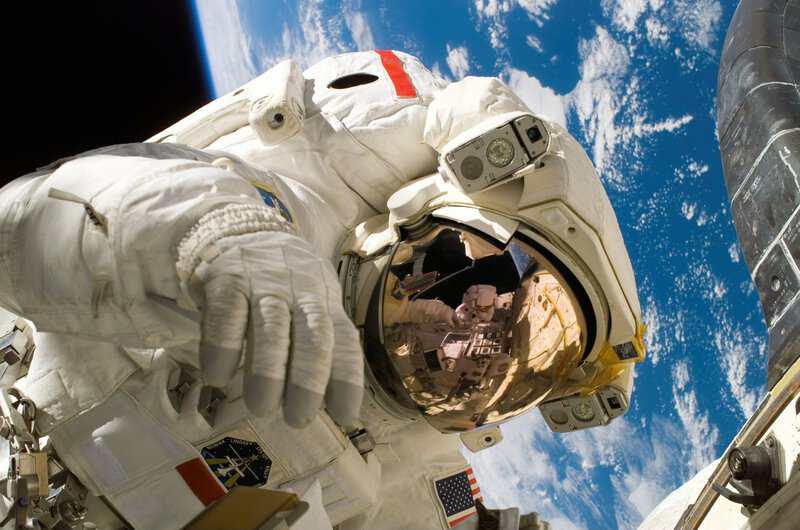
Jessica Meir holds a Ph.D. from the Scripps Institution of Oceanography and conducted research on the diving physiology of marine mammals before her NASA selection. Her presence in a student Q&A session signals that the astronaut corps includes research scientists whose primary expertise has no inherent connection to aerospace. Zena Cardman, selected in the 2017 astronaut class, holds a master’s degree in marine sciences and worked as a cave microbiologist studying microbial life in oxygen-poor environments — a background directly relevant to astrobiology and the search for life beyond Earth. Michael Fincke, one of the most experienced American astronauts by cumulative days in space across four missions, carries an operational authority that allows him to address long-duration mission psychology with direct personal credibility rather than institutional talking points.
Together, their profiles reinforce a message NASA education coordinators state explicitly: astronauts are working scientists and engineers solving real problems under unusual physical constraints, not performers staging spectacle for public consumption.
Why NASA Runs These Programs — and Why New Jersey, Repeatedly
NASA’s education outreach effort is administered through the NASA Office of STEM Engagement, with a stated mission to use the visibility of human spaceflight as a motivational lever for STEM career pathways. Research in science education indicates that even brief, mediated direct contact between scientists and students — a live video Q&A, for instance — produces measurable increases in students’ self-reported interest in science careers compared to passive consumption of equivalent content.
The repeated selection of New Jersey schools across multiple sessions is consistent with NASA’s geographic-diversity mandate, which directs outreach resources toward states and districts historically underrepresented in NASA contractor and workforce pipelines. The inclusion of Thomas Edison Energy Smart Charter School reflects a deliberate targeting of institutions where STEM identity formation is an explicit institutional goal, not simply a favorable demographic footnote.
The parallel use of prerecorded sessions (Williams and Meir) and live downlinks (Fincke and Cardman) reflects an evidence-informed program architecture. Prerecorded sessions allow for curriculum alignment review and content editing before distribution. Live sessions provide the spontaneity and unpredictability that research in science communication suggests drives stronger emotional engagement and longer-term memory retention — qualities that matter if the goal is not simply to inform students about space but to alter how they see themselves in relation to it.
A Replicable Model, With Limits Worth Noting
The cumulative record of these sessions represents a form of democratized space access with little historical precedent. A student in a New Jersey classroom asking a working scientist in orbit what it feels like to watch a sunrise every ninety minutes is participating in something genuinely new — not in the underlying technology, which is now mature, but in the normalization of that contact as an educational expectation rather than a rare novelty.
For educators and program officers, the New Jersey sessions offer a replicable model with several documented variables: institution type, question format (live versus prerecorded), crew scientific background, and curriculum alignment all appear to influence session quality and classroom impact. NASA’s willingness to conduct these sessions live, unscripted, from orbit signals an institutional confidence that the reality of spaceflight — the exercise requirements, the sleeping bags anchored to walls, the sixteen sunrises, the loneliness students ask about first — is compelling enough to speak for itself without embellishment.
Based on the questions students keep asking, that confidence appears to be justified.