
A fireball consumed Blue Origin’s New Glenn rocket during a ground test firing at Cape Canaveral, destroying the vehicle and gouging structural damage into the launch pad beneath it. The setback is measured not merely in scorched hardware but in the credibility of America’s next Moon landing. With Blue Origin competing for the contract to carry astronauts back to the lunar surface on the 2028 Artemis IV mission, the explosion arrived at the worst possible moment in one of the most consequential schedules in spaceflight history.
A rocket explodes — and a Moon mission hangs in the balance
The stakes sharpened quickly when NASA Administrator Jared Isaacman stated publicly that the damaged launchpad may not be restored until 2028 — the very year NASA needs New Glenn to demonstrate flight readiness for the Artemis IV Human Landing System selection. That single projection transforms what might otherwise be a recoverable industrial accident into a potential program-level crisis.
Blue Origin’s response has been unambiguous: the company insists it will return to flight before the end of this year. Whether that pledge represents a credible engineering commitment or an ambitious corporate gamble depends almost entirely on two parallel recovery tracks — rebuilding the destroyed vehicle and repairing or replacing the damaged launch pad — both of which must converge on the same compressed timeline.
Blue Origin’s recovery effort is now one of the most closely watched programs in commercial spaceflight, not because of its scale alone, but because NASA’s lunar ambitions are partly riding on the outcome.
What New Glenn is — and why it is not just another rocket
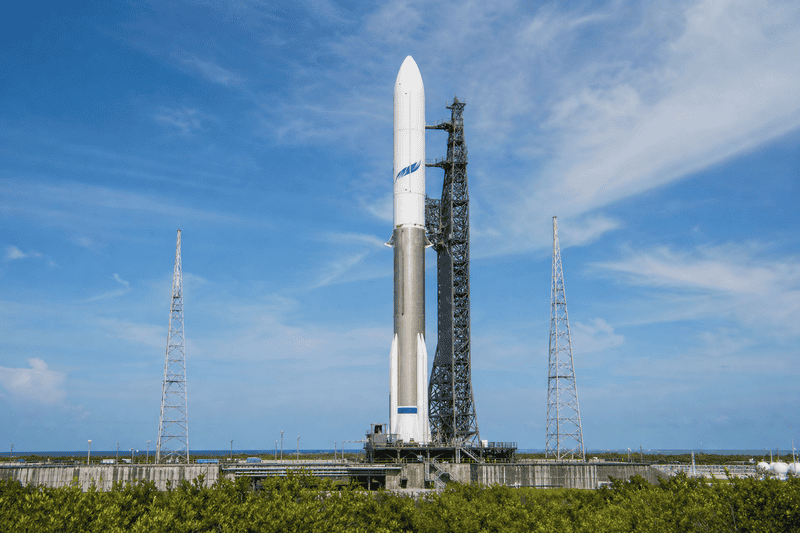
New Glenn is a heavy-lift orbital rocket standing roughly 98 meters tall — approximately 322 feet — designed to carry large payloads, including satellites, cargo, and eventually crew hardware, into orbit and beyond. That places it among the most capable vehicles in the current U.S. commercial fleet by payload mass. But raw size is not the primary reason NASA cares about this vehicle.
The key engineering distinction is reusability. New Glenn is designed so that its first stage — the large, fuel-laden booster that does most of the work getting off the ground — can separate after launch, descend, and land on a ship at sea for refurbishment and reuse. The concept is similar in principle to what SpaceX demonstrated with its Falcon 9 booster, but New Glenn targets heavier payloads. If proven in practice, that reusability could significantly reduce the per-flight cost of repeated lunar supply and crew runs — exactly the kind of economics that make a sustained Moon program financially defensible.
Blue Origin’s role in NASA’s broader strategy reflects a deliberate policy the agency has pursued since the retirement of the Space Shuttle in 2011. NASA has systematically cultivated multiple commercial launch providers, viewing market competition as a hedge against single-point failure: if one company stumbles, another is available. That policy makes Blue Origin’s health a systemic concern for NASA, not merely a corporate one. A weaker Blue Origin means a weaker hedge.
What remains unproven, however, is significant. As of the explosion, New Glenn had not yet completed a successful full-duration static fire test — a controlled ground burn that verifies a rocket’s propulsion system can perform across its full operational envelope. The explosion did not simply destroy a rocket; it erased progress toward a proof point the program still needs.
Anatomy of the explosion: what happened and what it damaged
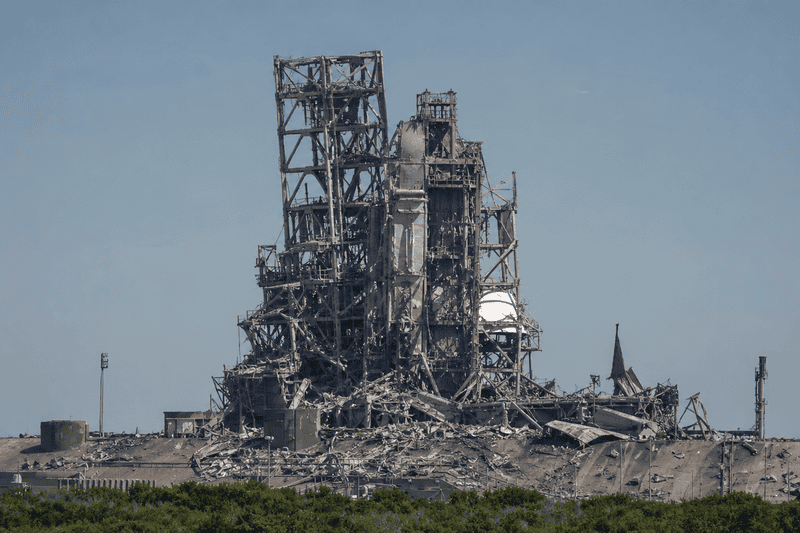
The explosion occurred during a ground test firing at Blue Origin’s Cape Canaveral facility. The incident destroyed the rocket and caused structural damage to the launch pad itself — a detail that aerospace engineers treat as potentially more consequential than the loss of the vehicle alone.
A launch pad is not simply a concrete slab. It is an integrated system of flame trenches, high-pressure propellant lines, hold-down mechanisms that restrain the rocket during ignition, and water-deluge suppression systems — all embedded in reinforced concrete structures engineered to absorb enormous thermal and acoustic loads. When those structures are compromised, reconstruction typically takes years, not months. Before any rocket can fly from a repaired pad, that pad must be fully recertified for safety, a process that does not move on optimistic schedules.
NASA Administrator Isaacman’s projection that the damaged launchpad may not be restored until 2028 reflects that engineering reality. Blue Origin has acknowledged the severity of the incident while maintaining its return-to-flight commitment, but the company has not publicly identified whether it will accelerate pad reconstruction or secure an alternative launch site — either of which would represent a significant logistical undertaking.
Blue Origin must now run two demanding recovery tracks simultaneously: restoring the launch infrastructure to flyable condition, and designing, building, and testing a replacement vehicle. Both must be completed before year’s end if the stated timeline is to hold.
NASA’s Artemis program: why the 2028 deadline is real and why it is fragile

Artemis IV is the fourth crewed mission in NASA’s Artemis lunar program, currently scheduled for 2028. It is the mission during which astronauts would descend to the lunar surface — the first such landing under Artemis and the first time humans would stand on the Moon since Apollo 17 departed in December 1972. To accomplish that descent, the mission requires a Human Landing System, or HLS: a specialized spacecraft capable of ferrying crew from lunar orbit down to the surface and back up again.
NASA is evaluating Blue Origin and at least one competing provider for the HLS contract associated with Artemis IV. That evaluation weighs demonstrated launch reliability heavily. A company whose rocket has not yet completed a successful orbital mission, and whose launch pad may be out of service until the very year the mission flies, enters that evaluation at a structural disadvantage it must close quickly.
The Artemis program has already accumulated a history of delays. Artemis I, an uncrewed test flight around the Moon, flew in late 2022 after years of development slippage. Crewed missions have continued to push to the right on the schedule. Another delay driven by a commercial provider’s setbacks would compound pressure on a program that already faces intense congressional and budgetary scrutiny.
NASA’s reliance on commercial providers is a conscious policy choice with genuine efficiency advantages — private competition drives down costs and accelerates innovation in ways that traditional government contracting struggles to match. But the New Glenn explosion surfaces the trade-off that policy entails: the agency’s Moon timeline is now partly dependent on the engineering execution and financial health of private companies it does not directly control.
Blue Origin vs. SpaceX: the commercial lunar landscape in plain terms
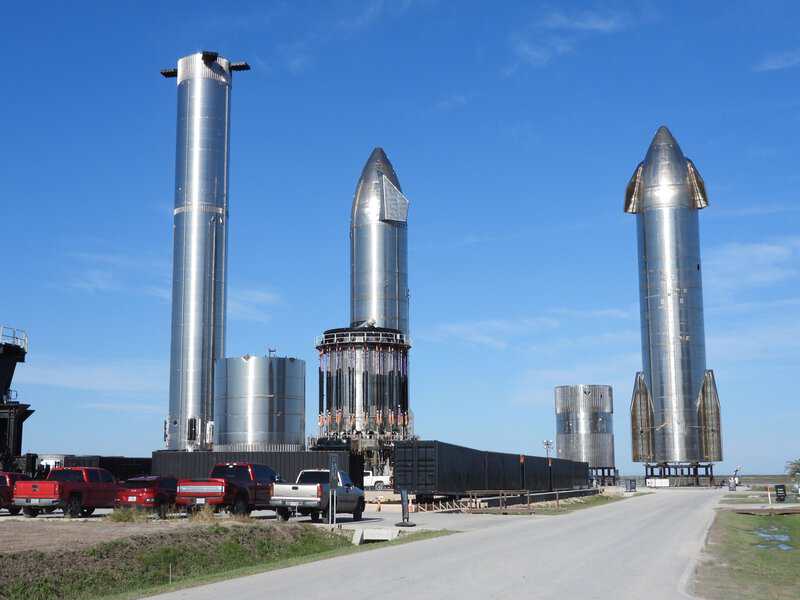
Comparisons between Blue Origin and SpaceX are inevitable but require precision to be useful. SpaceX’s Starship has already been selected by NASA as the Human Landing System for Artemis III — the mission preceding Artemis IV — giving SpaceX a confirmed and contractually established role in the crewed lunar landing sequence. Blue Origin is competing for the Artemis IV slot. The two companies are rivals on different rungs of the same ladder, not direct head-to-head competitors for an identical contract.
The asymmetry in demonstrated flight heritage is substantial. SpaceX’s Falcon 9 has accumulated hundreds of successful orbital flights, building an institutional confidence at NASA that comes only from repeated, verified performance. New Glenn has not yet completed a successful orbital mission. That gap is not a matter of opinion or corporate positioning; it is a measurable difference in proven reliability that Blue Origin must systematically close before any crewed lunar role can be seriously contemplated.
Where Blue Origin holds a genuine technical argument is in propellant chemistry. The company’s BE-7 engine — the propulsion system designed for its lunar lander — burns liquid hydrogen and liquid oxygen, the same propellant combination used by NASA’s own Space Launch System. That compatibility offers potential integration and logistics advantages in certain lunar architecture scenarios that SpaceX’s methane-burning Raptor engines do not provide. It is a real engineering argument, though one that remains theoretical until the hardware demonstrates it in flight.
Can Blue Origin actually fly again this year? Evaluating the claim
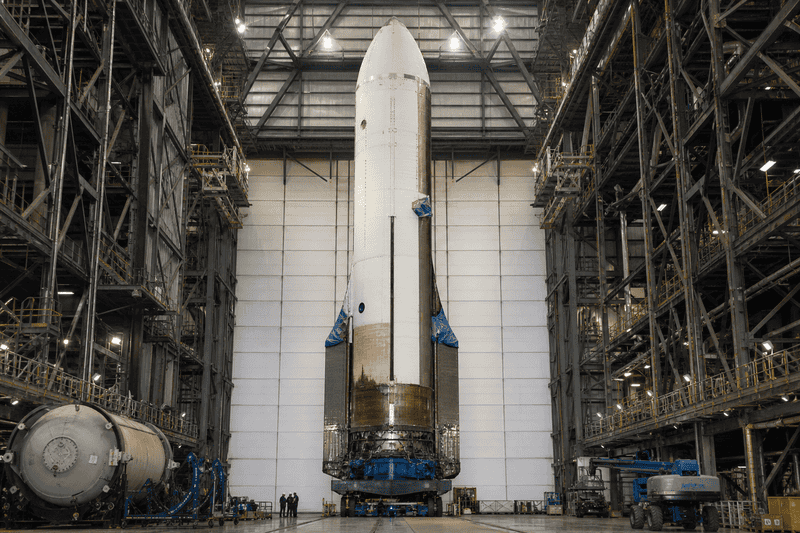
Blue Origin has publicly committed to flying New Glenn before the end of the year — a statement that implies the company has assessed the full extent of the damage, identified a viable recovery path, and believes its supply chain, manufacturing capacity, and workforce can support a rebuilt vehicle on that schedule. Corporate commitments of this kind carry reputational and contractual weight.
The skeptical counterpoint, however, is grounded in aerospace history. Rebuilding a destroyed rocket and repairing or replacing a damaged launch pad within approximately twelve months is an extremely compressed schedule by industry standards. Rocket programs routinely underestimate reconstruction timelines even under favorable conditions, and no independent engineering assessment of Blue Origin’s recovery plan has been published.
The launch pad remains the binding constraint. A new flight vehicle, however quickly assembled, cannot fly without a certified launch facility. If Administrator Isaacman’s projection of pad restoration extending toward 2028 proves accurate, Blue Origin would need either to dramatically accelerate that reconstruction — compressing a multi-year process into months — or to identify and certify an alternative launch site. Neither option has been publicly confirmed, and both would represent significant logistical challenges.
A calibrated assessment: Blue Origin’s return-to-flight pledge is a meaningful corporate commitment that reflects genuine organizational intent. It also carries substantial execution risk. The explosion will likely delay NASA’s efforts to return humans to the Moon regardless of how aggressively the company pursues recovery.
What comes next: NASA’s options and the broader lesson
NASA’s realistic near-term options are neither comfortable nor cost-free. The agency can wait for Blue Origin to recover and demonstrate New Glenn’s reliability, accepting schedule risk in exchange for preserving commercial competition. It can accelerate its evaluation of the competing HLS candidate for Artemis IV, potentially narrowing the field before Blue Origin has a chance to prove itself. Or it can revisit the schedule for Artemis IV itself, accepting delay in exchange for reduced technical risk. Each path carries cost, schedule slippage, or political consequences.
The broader policy lesson is worth stating plainly. Diversifying commercial launch providers is sound risk management, and the policy has delivered real benefits over the past decade and a half. But diversification only functions as a hedge if the providers are sufficiently mature. When a key competitor is still working toward its first verified orbital flight, the redundancy the policy promises may not yet exist in operational practice. The hedge is theoretical until each provider has demonstrated it can actually fly.
The human stakes remain unchanged. The 2028 Artemis IV mission, if it flies on schedule, would mark the first time human beings have stood on the Moon in more than half a century — a milestone that now depends, in part, on whether a company can rebuild a rocket and a launch pad in time. NASA’s Moon ambitions have survived budget cuts, political transitions, and years of technical setbacks before. But the New Glenn explosion is a concrete reminder that the commercial era of spaceflight, for all its genuine promise, introduces a category of risk the agency cannot fully control.