
On the morning of September 2, 1859, telegraph operators across North America noticed something that defied explanation: their machines were still working after they had unplugged the batteries. The needles kept moving. The messages kept flowing. The power source was not coal, not chemistry — it was the sun itself, channeled through a magnetized sky and into copper wire strung across an entire continent.
The Day Telegraph Operators Unplugged Their Batteries and Kept Working

What those operators were witnessing was the peak of what is now called the Carrington Event — the most intense geomagnetic storm in recorded history, named after British amateur astronomer Richard Carrington, who had observed its solar origin just one day earlier. The storm struck during solar cycle 10, which was approaching its peak in the late summer of 1859, a period of heightened solar activity that set the stage for an unprecedented sequence of events between August 28 and September 3 of that year.
This was not a curiosity. It was a demonstration that the sun could commandeer an entire continent’s communication infrastructure without warning, without a single human decision, and with no off switch. Understanding what happened then carries urgent relevance now: a repeat would be categorically more dangerous to a civilization wired together far more thoroughly than any 19th-century telegraph network.
What Richard Carrington Actually Saw — and Why It Mattered
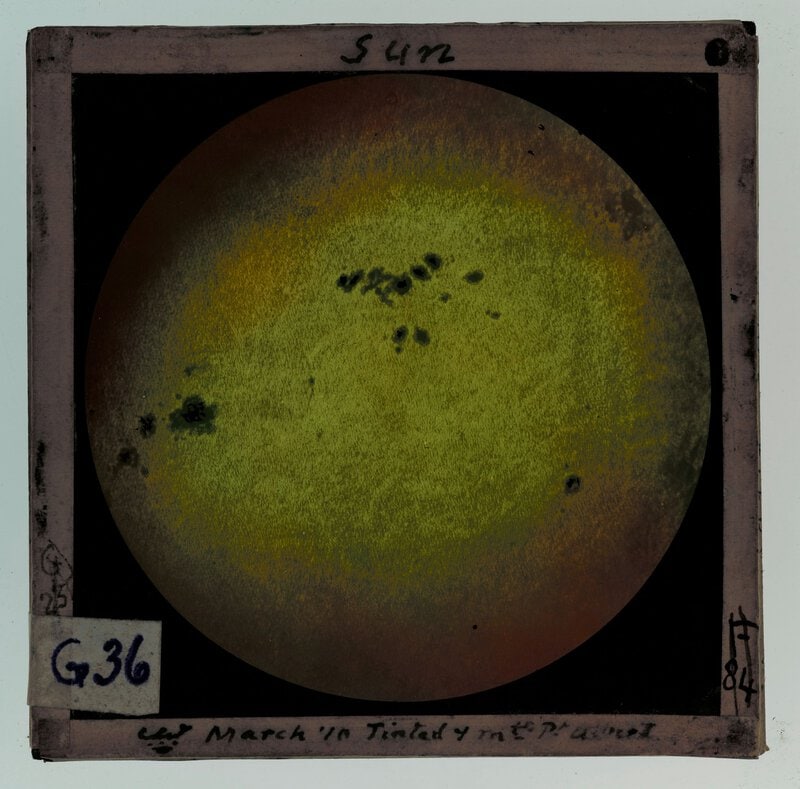
On the afternoon of September 1, 1859, Carrington was engaged in a routine exercise — projecting an image of the sun onto a white screen and sketching the positions of sunspot groups. Without warning, two brilliant white patches of light erupted from a complex sunspot region and intensified rapidly before fading within minutes. Carrington had just witnessed and recorded one of the first solar flares ever directly observed by a human being.
A solar flare is a sudden, intense burst of electromagnetic radiation originating from the sun’s surface and atmosphere. Because electromagnetic radiation travels at the speed of light, the energetic effects of that flare reached Earth in approximately eight minutes. But the flare was only the opening act. Accompanying it was a coronal mass ejection, or CME — a cloud of magnetized plasma containing roughly a billion tonnes of charged particles. Where a typical CME takes two to three days to cross the 150 million kilometers between the sun and Earth, this one completed the journey in approximately 17 hours, an extraordinary transit speed that researchers interpret as evidence of exceptional energy and, possibly, a clearing of the solar wind path by an earlier eruption days before.
The storm sequence from August 28 through September 3, 1859, is described by researchers as arguably the greatest and most famous space-weather event in the last two hundred years — a framing that reflects both its measured intensity and the richness of historical documentation it generated. That documentation — from observatory records, telegraph company logs, and newspaper accounts across multiple continents — forms the primary scientific evidence base for reconstructing what actually happened.
The Physics: How a Star 150 Million Kilometers Away Hijacks a Wire

The mechanism connecting a solar eruption to a sparking telegraph office on Earth is electromagnetic induction — the same principle that Michael Faraday demonstrated in a London laboratory in 1831. Faraday showed that a rapidly changing magnetic field drives electrons through any nearby conductor. In 1831, that conductor was a coil of wire a few centimeters long. In 1859, it was telegraph lines stretching thousands of kilometers across North America and Europe.
When a CME arrives at Earth, it collides with the magnetosphere — the region of space controlled by our planet’s magnetic field, which ordinarily deflects the continuous stream of charged particles known as the solar wind. A powerful CME compresses and distorts the magnetosphere dramatically. As the magnetosphere flexes and its field lines reconfigure, it induces geomagnetically induced currents, or GICs, in any long conductive path near Earth’s surface. The critical word is long. The longer the conductor, the greater the voltage that can accumulate along it. A household circuit spanning a few meters is effectively immune. A telegraph line or high-voltage transmission line spanning hundreds or thousands of kilometers is an ideal antenna for capturing these currents — and that is precisely why 19th-century telegraph networks and modern continental power grids share the same fundamental vulnerability.
Auroras Over Cuba — How Extreme the Storm Actually Was
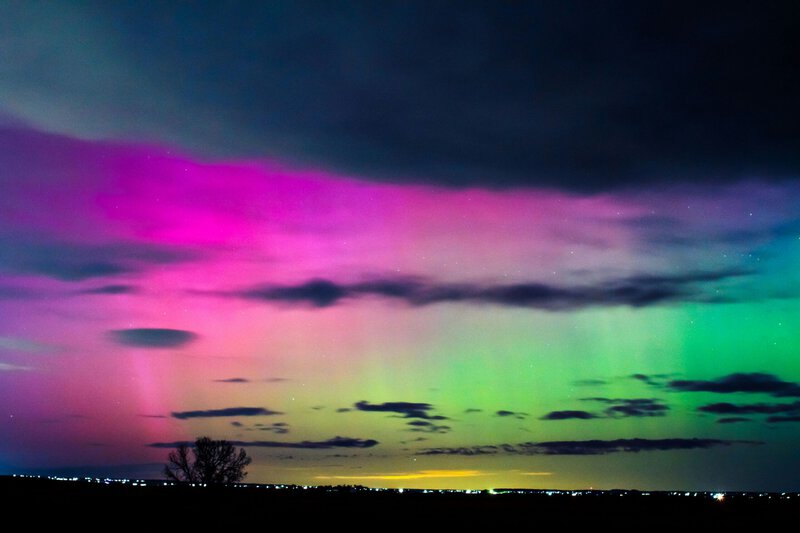
One of the most visceral measures of the Carrington Event’s intensity is geographic. Auroras — the luminous displays produced when energetic solar particles excite atmospheric gases along magnetic field lines — were observed as far south as Cuba during the storm’s peak. Cuba lies at roughly 23 degrees north latitude, a region that essentially never experiences the northern lights under ordinary geomagnetic conditions. Their appearance there was a direct indicator that the storm was pushing magnetic field lines dramatically toward the equator, far beyond any normal disturbance.
Scientists rank geomagnetic storms using the Dst index, a measure of how much a storm depresses Earth’s equatorial magnetic field. Estimates for the Carrington Event suggest a Dst value well beyond the range of any storm captured by modern instruments, which only extend back to the mid-20th century. An important caveat applies: because no magnetometers capable of full modern calibration existed in 1859, the precise Dst value is reconstructed from historical observatory records and carries genuine scientific uncertainty. Ongoing scholarly analysis of the auroral and magnetic records from 1859 continues to refine these estimates, and the exact magnitude of the storm remains an area of active rather than settled scientific discussion.
What a Carrington-Scale Storm Would Do to the Modern World
A repeat of the Carrington Event today would not simply switch off every electronic device — that is a common misconception worth correcting directly. The threat is more specific, more structural, and in some ways more difficult to recover from than a simple blackout. According to NOAA’s National Environmental Satellite, Data, and Information Service, a storm of this magnitude could severely damage satellites, disable radio and GPS navigation, disrupt telephone and television communications, and cause extended electrical blackouts.
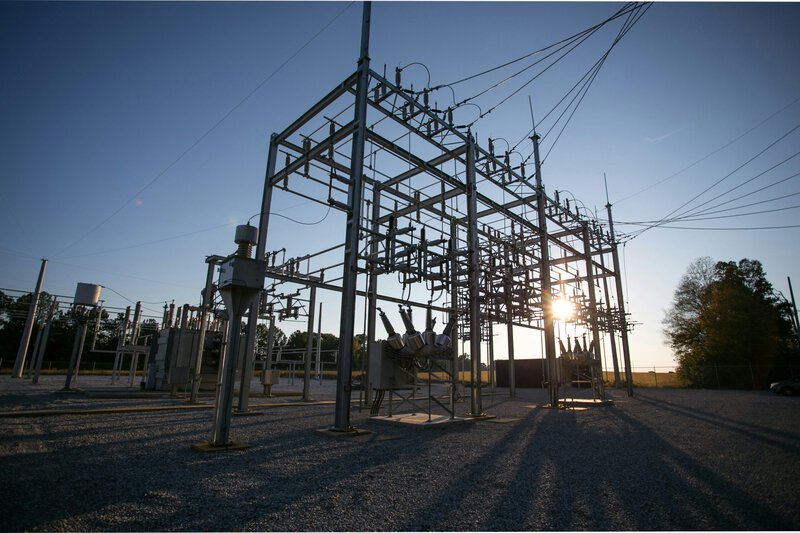
The central danger to power grids lies with high-voltage transformers. GICs can saturate the iron cores of these transformers, causing them to overheat rapidly and fail in ways that are not immediately repairable. These transformers are not off-the-shelf equipment. They are custom-engineered for specific grid configurations, they weigh hundreds of tonnes, they are manufactured by a small number of facilities worldwide, and they carry lead times of 12 to 18 months or more under normal ordering conditions. A wave of simultaneous failures across an interconnected grid would present a logistical catastrophe with no rapid solution, as the National Academies of Sciences analysis of severe space weather impacts has detailed at length.
Satellites face two distinct threats. The first is immediate radiation damage to onboard electronics. The second is more gradual: intense solar heating causes Earth’s upper atmosphere to expand, increasing aerodynamic drag on spacecraft in low Earth orbit and accelerating their orbital decay. This is a particular concern for the large constellations now providing global internet connectivity and GPS services, which operate at altitudes directly affected by atmospheric expansion during major solar storms.
Economic impact estimates for a worst-case scenario vary widely and remain contested among researchers, with figures in policy literature extending into the trillions of dollars. The range itself is the meaningful finding — it reflects genuine uncertainty about which systems would fail, how quickly they could be restored, and how cascading failures across interdependent infrastructure would propagate.
How Close Have We Come Since 1859?
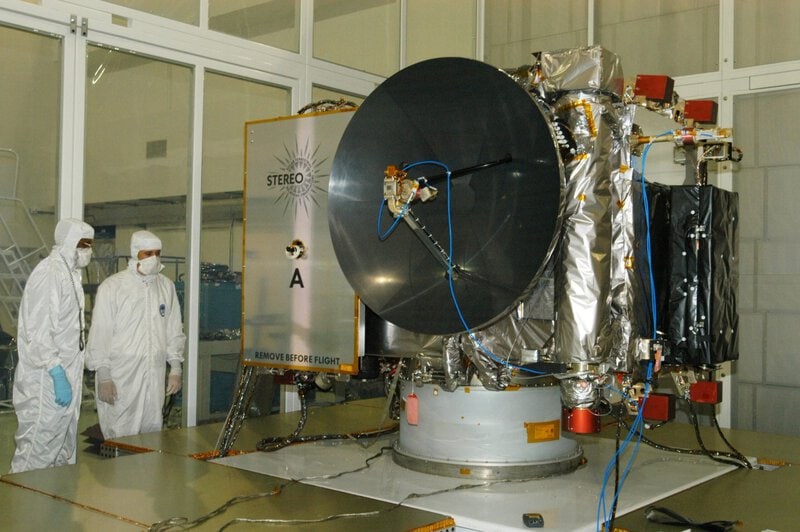
The distance between the modern world and a Carrington-scale catastrophe is not merely theoretical. In July 2012, a CME assessed by NASA scientists using data from the STEREO spacecraft as comparable in energy to the Carrington Event erupted from the sun — and missed Earth by approximately nine days in orbital timing. Had Earth been in that position nine days earlier, the storm would have arrived directly.
A documented modern reference point for infrastructure vulnerability already exists. The geomagnetic storm of March 1989 — far weaker than the Carrington Event — knocked out the Hydro-Québec power grid in Canada for approximately nine hours, leaving roughly six million people without electricity. The Halloween storms of October and November 2003 damaged or degraded more than a dozen satellites and caused localized grid disturbances in Sweden, demonstrating that even sub-Carrington events carry real and measurable operational consequences.
These precedents are why the space-weather research and emergency management communities treat the Carrington Event not as a historical footnote but as a design benchmark for infrastructure resilience.
What Scientists and Grid Operators Are — and Aren’t — Doing About It
NOAA’s Space Weather Prediction Center now issues real-time geomagnetic storm alerts and provides one-to-three-day forecasts for significant solar activity. This is a capability that did not exist before the late 20th century and represents genuine progress. However, a critical limitation remains: predicting the orientation of a CME’s internal magnetic field — the factor that most determines how severely it will interact with Earth’s magnetosphere — is not reliably possible until the cloud is approximately 15 to 60 minutes from impact. That window is too short to cold-start a power grid or move satellites to protective orientations.
Some grid operators have begun installing GIC blocking devices on transformers, and the North American Electric Reliability Corporation has issued standards requiring utilities to assess their geomagnetic storm exposure. Implementation and enforcement, however, vary considerably across the industry. Strategic stockpiling of spare high-voltage transformers — pre-positioned for rapid deployment in a crisis — is recommended in multiple government and industry analyses but has not been implemented at the scale most researchers consider adequate for a worst-case scenario.
The underlying scientific consensus is not in dispute: a geomagnetic storm of Carrington scale will occur again. The sun has not become more predictable or more gentle. What remains uncertain is timing, trajectory, and whether the incremental hardening of infrastructure accomplished since 1989 would be sufficient to prevent the kind of cascading, multi-week power failure that detailed modeling of a worst-case scenario consistently produces. In 1859, telegraph operators simply unplugged their batteries and marveled at the aurora. The modern equivalent of unplugging — and the question of whether civilization could keep sending messages afterward — is a problem that remains, at best, partially solved.