
For centuries, astronomers watched Betelgeuse pulse and dim across the shoulder of Orion, assuming it lived in solitude among the stars. Now, two independent observatories have produced the strongest evidence yet that it does not — and the implications reach all the way to the star’s eventual, spectacular death.
The Star That Was Never Alone
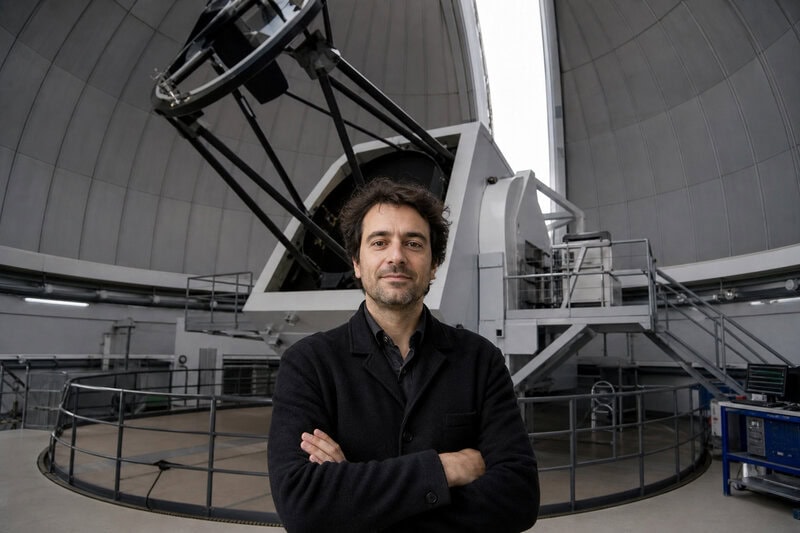
The announcement arrived with unusual directness for a field accustomed to hedged language. Astronomer Montargès at the Observatoire stated plainly: “We have shown that Betelgeuse is not single, it is accompanied by a faint stellar companion.” That single sentence reframes one of the most studied stars in human history.
The candidate companion, provisionally named Betelgeuse B and also called Siwarha, was detected using two of the most powerful ground-based observatories on Earth: the Very Large Telescope (VLT) and the Gemini North telescope on Maunakea, Hawai’i. The fact that two independent instruments, operating using different techniques, converged on the same object is central to why researchers are treating this as a serious finding rather than an instrumental artifact.
Adding further institutional weight, a scientist at NASA’s Ames Research Center independently confirmed the close-orbiting companion finding — a signal of broad confidence across the astronomical community, even as peer-reviewed verification continues.
What “Companion Star” Actually Means — and Why the Distinction Matters
In astrophysics, a companion star is a second star gravitationally bound to a primary, with both objects orbiting a shared center of mass. This arrangement is called a binary system. The critical caveat with Betelgeuse B is that gravitational binding has not yet been confirmed. Researchers are still working to rule out a chance line-of-sight alignment — an unrelated background star that simply appears close to Betelgeuse from Earth’s vantage point but is physically unassociated.
That distinction between “strongest evidence yet” and “confirmed discovery” is not a rhetorical hedge — it is a scientifically meaningful difference. The research teams are being precise, and readers following this story should understand the finding as compelling but still undergoing the scrutiny required to establish gravitational binding definitively.
What makes the candidate companion particularly striking, if confirmed, is its implied orbital geometry. Gemini North’s observations describe the orbit as “incredibly tight” — meaning Betelgeuse B sits in unusually close proximity to a star so enormous that its radius, if placed at the Sun’s position, would engulf Jupiter’s entire orbit. Threading a second star into that environment without tidal disruption raises immediate questions about the system’s history and long-term stability.
This is not, theoretically, a surprise. Stellar population models suggest that the majority of high-mass stars form with at least one companion, and massive red supergiants like Betelgeuse were long predicted to follow suit. The difficulty has always been observational: separating a faint companion signal from the overwhelming glare of a star roughly 700 times the diameter of the Sun is technically formidable, which is precisely why the multi-telescope approach was necessary.
How the Discovery Was Made: Two Telescopes, One Target
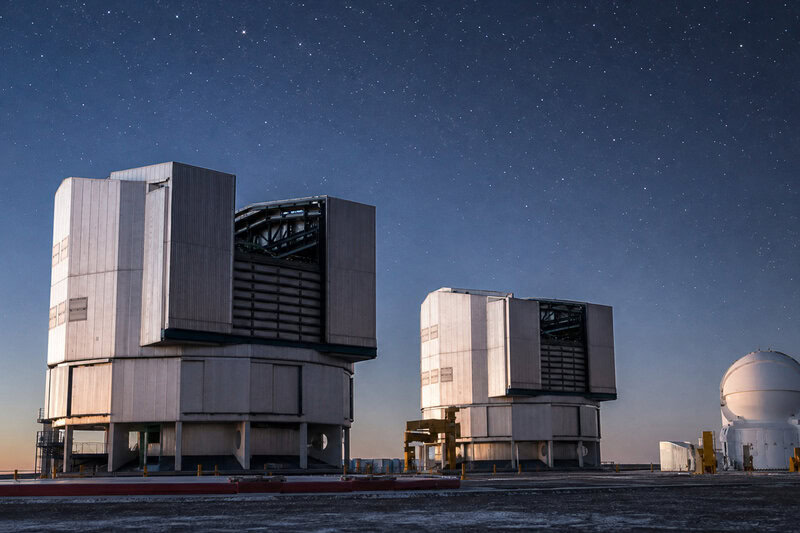
The VLT deployed high-contrast imaging techniques designed to suppress the blinding brightness of Betelgeuse itself, carving out enough dynamic range to detect a far dimmer object nearby. Gemini North then contributed complementary observations that allowed teams to cross-check the companion’s position and brightness across independent datasets — a cross-validation step that substantially reduces the probability that the detected object is a background star or imaging artifact.
The companion’s existence had been described as “long-predicted” even before these observations were made. Theorists had flagged anomalies in Betelgeuse’s radial velocity — the speed at which the star moves toward or away from Earth, measurable through the Doppler shift of its light — that a gravitational partner could help explain. Those anomalies created a theoretical expectation; the VLT and Gemini North have now provided the first direct observational candidate to match it.
The next critical milestone is already marked on astronomers’ calendars: November 2027. At that date, Betelgeuse B is expected to reach its greatest elongation — maximum apparent angular separation from Betelgeuse as seen from Earth — making the companion significantly easier to image and characterize. That geometry offers a rare opportunity to convert strong evidence into definitive proof.
The Great Dimming Revisited: Does a Hidden Star Explain It?
Any discussion of Betelgeuse’s recent behavior must address the event that briefly made it a household name. Between late 2019 and early 2020, Betelgeuse faded dramatically in what became known as the Great Dimming — a drop dramatic enough to trigger widespread speculation that a supernova was imminent. It was not.
The established consensus explanation points to a mass-ejection event: a large cloud of dust produced by expelled stellar material that temporarily obscured part of the star’s surface, mimicking a more profound dimming. That explanation, grounded in ultraviolet and optical data from multiple independent teams including researchers using the Hubble Space Telescope, remains the scientific mainstream.
The companion discovery now raises a secondary question that researchers are treating carefully: could gravitational interaction with Betelgeuse B have triggered or amplified that mass-ejection event? The honest answer, at this stage, is that nobody knows. Researchers are explicit that the dimming explanation and the companion discovery are currently parallel findings, not yet causally linked. The orbital parameters of Betelgeuse B must be pinned down before any claim about its influence on Betelgeuse’s behavior can be responsibly evaluated. Conflating the two findings would overstate what the data actually show.
What This Means for the Supernova Timeline
Betelgeuse will end its life as a core-collapse supernova — that is not a contested claim but an established conclusion of stellar evolution theory. When a massive star exhausts the nuclear fuel that supports it against its own gravity, the core collapses in milliseconds, triggering an explosion that can briefly outshine an entire galaxy. The question has never been whether Betelgeuse will explode, but when.
That “when” remains frustratingly imprecise. On a cosmic timescale, Betelgeuse is in its late evolutionary stages, but “late” here still encompasses anywhere from tens of thousands to roughly a hundred thousand years in the future — a span that defies human intuition about urgency.
A confirmed binary companion could complicate that timeline in either direction. In binary systems, mass transfer — the flow of stellar material from one star to the other — can alter the evolutionary clock of both objects. If Betelgeuse B is close enough and massive enough, models of the primary star’s evolution may need to account for material exchange that standard single-star models do not include. Some theoretical frameworks for binary supergiant systems also suggest that a companion can survive its primary star’s explosion, subsequently becoming detectable as a high-velocity runaway star after being released from the gravitational partnership by the supernova blast. That scenario could one day be tested against Betelgeuse B’s future trajectory.
For now, however, researchers are emphatic: the companion announcement alone does not revise existing supernova timing estimates. Orbital parameters must first be measured rigorously before evolutionary modeling can be meaningfully updated.
Betelgeuse in Context: Why This Star Draws Disproportionate Scrutiny
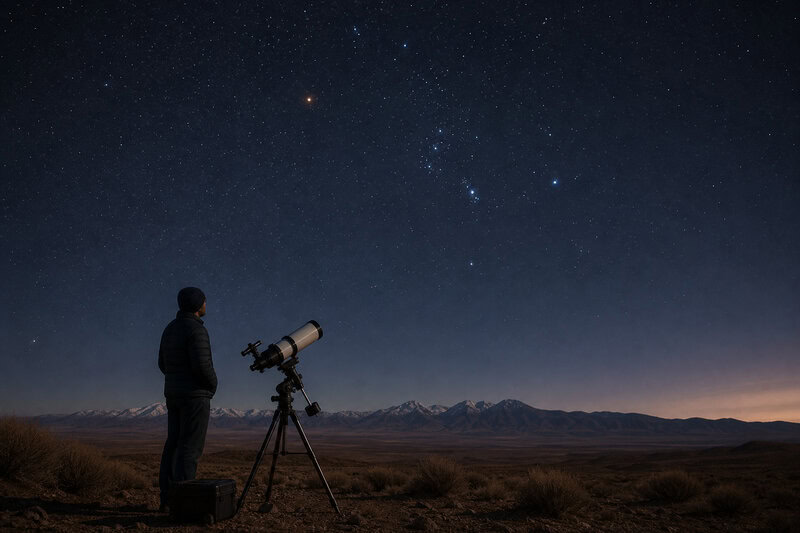
Betelgeuse ranks as the 10th brightest star in the night sky, and its position marking the shoulder of Orion places it in the sightline of observers across both hemispheres. Its semi-regular brightness variations have attracted systematic monitoring by both professional and amateur astronomers for well over a century, producing one of the richest long-baseline datasets in observational astronomy.
Its relative proximity — approximately 700 light-years from Earth — is equally significant. That distance is close enough for Betelgeuse to be one of the very few stars whose surface can be directly imaged rather than treated as a point of light. That capability makes it the single best natural laboratory available for studying the terminal phase of a massive star’s life at high angular resolution.
The companion’s name, Siwarha, reflects a broader international effort to assign names drawn from diverse linguistic traditions to newly identified celestial objects — a practice coordinated by the International Astronomical Union, the body that governs official astronomical nomenclature.
What Comes Next: The 2027 Window and the Road to Confirmation
The scientific community’s next major checkpoint is November 2027. When Betelgeuse B reaches its greatest elongation, the observational geometry will be as favorable as it can be for both direct imaging and spectroscopic follow-up — the technique of splitting starlight into its component wavelengths to measure chemical composition and velocity.
Spectroscopy will be the definitive test. If Betelgeuse B’s spectrum shows the star moving in lockstep with Betelgeuse — accelerating and decelerating in the pattern expected of two gravitationally bound objects — that would constitute the clearest possible evidence of physical association rather than chance alignment. No amount of imaging alone can fully substitute for that velocity confirmation.
Next-generation facilities are also coming online at the right moment. ESO’s Extremely Large Telescope (ELT), currently under construction in Chile, will offer angular resolution and light-collecting power far beyond current instruments — precisely the capability needed to resolve a faint companion against the glare of one of the sky’s most luminous stars.
Until gravitational binding is confirmed and orbital parameters are rigorously measured, the discovery remains exactly what the research teams call it: the strongest evidence yet. That characterization is scientifically honest. It reflects genuine, significant progress — two independent world-class observatories detecting the same object, a NASA scientist lending institutional confirmation, and a theoretical prediction finally matched by observational data. It also acknowledges, without apology, that the final chapter of this story will be written in 2027 and beyond, when Betelgeuse B emerges from behind its brilliant primary and lets astronomers take their clearest look yet at the companion Betelgeuse has been keeping hidden.