
In 1957, a Princeton PhD student named Hugh Everett III submitted a doctoral thesis proposing that every quantum event — an electron spinning up or down, a radioactive atom decaying or not — splits reality itself into branching parallel universes, all equally real, all unfolding simultaneously. His advisor, the eminent physicist John Wheeler, required him to soften the language before publication. Today, that softened idea is taken seriously by a significant and growing share of theoretical physicists worldwide. It is also, in dramatically simplified form, the conceptual engine powering one of Marvel’s most ambitious storytelling experiments.
What the Guardians of the Multiverse Actually Are
Marvel’s animated anthology series What If…? dramatizes parallel realities in a way that is easier to stream than to solve. In the show, the Watcher — a cosmic being sworn to observe every timeline but never to intervene — breaks his oath and recruits six heroes drawn from distinct parallel realities. Together they form the Guardians of the Multiverse, assembled to stop a rogue Ultron who has seized all six Infinity Stones and is systematically annihilating every reality he encounters. Each Guardian is a variant of a familiar hero — shaped not by different genetics but by a single pivotal moment that unfolded differently in their timeline.
The storytelling is deliberate and emotionally effective. The ensemble draws on voice performances from Hayley Atwell, Lake Bell, the late Chadwick Boseman, and Benedict Cumberbatch — a cast that signals how seriously Marvel treats its multiverse architecture as a long-term narrative engine. The concept now threads through films, series, and animated specials alike, functioning less as a one-off gimmick and more as a structural pillar of the entire franchise.
What the MCU’s multiverse is not, however, is a physics model. It is a dramatic framework built to serve character stakes and plot momentum. Holding that distinction clearly is the necessary first step before asking what real science has to say about parallel worlds.
The Real Physics: Hugh Everett and the Many-Worlds Interpretation

The scientific concept Marvel’s multiverse most closely resembles is the Many-Worlds Interpretation of quantum mechanics — often called MWI or the Everett interpretation. Its central claim is conceptually straightforward, even if its implications are staggering: the wave function of the universe never collapses. Instead, every quantum measurement causes reality to branch into multiple outcomes, all of which exist simultaneously and are equally real. There is no privileged result that wins out; every possibility plays out in its own branch.
This stands in direct contrast to the older Copenhagen interpretation, which dominated twentieth-century physics and treated wave-function collapse as a genuine physical event requiring an observer to trigger it. Under MWI, no collapse occurs at all. The mathematics of the Schrödinger equation — the foundational equation governing quantum behavior — is taken at full face value and applied to the entire universe without exception or editorial intervention. Branches that have diverged cannot interact; each is, in effect, its own complete and causally sealed reality.
A 2021 survey of physicists attending a major quantum foundations conference found that roughly 30 to 40 percent favored MWI or a close variant. That is a minority position, but a large and intellectually serious one. It reflects genuine ongoing debate among specialists rather than fringe speculation. Crucially, MWI is not yet falsifiable by any currently designed experiment, which is precisely why it remains classified as an interpretation rather than a confirmed theory — a distinction the scientific community maintains carefully.
Where the Marvel Analogy Holds — and Where It Breaks Down
The surface resemblance between Marvel’s multiverse and MWI is real: both propose that divergent histories coexist, that no single outcome cancels out another, and that what we experience as reality is one thread in a vastly larger fabric. That core intuition is genuinely counterintuitive, and a fictional dramatization can help audiences grasp it emotionally in a way that equations rarely achieve on their own.
The differences, however, are fundamental. In MWI, branching happens at the quantum scale — an atomic nucleus decaying or not, a photon passing through one slit or two. It does not happen because a human being makes a dramatic choice at a crossroads. The “pivotal decision” mechanism Marvel uses to generate its hero variants is a narrative convenience with no basis in quantum mechanics. Quantum branching is not driven by meaning or moral weight; it is driven by the mathematics of superposition at subatomic scales.
More significantly, physicist Sean Carroll — one of MWI’s most prominent contemporary advocates — explains in his 2019 book Something Deeply Hidden that parallel branches in MWI are causally isolated from one another. No information, no energy, and no person can travel between them. The branches diverge and never reconverge. This makes the Watcher’s cross-universe recruitment drive — the entire premise of the Guardians of the Multiverse — physically impossible under the very theory the story most closely resembles.
There is also a vocabulary problem worth naming directly. The word “multiverse” covers several genuinely distinct scientific proposals that popular culture routinely conflates. Physicist and author Brian Greene of Columbia University distinguishes at least nine separate multiverse proposals in his 2011 book The Hidden Reality, cautioning that the single word conceals radically different ideas with very different levels of theoretical grounding and observational support. Using one word for all of them obscures more than it clarifies.
Inflationary Cosmology: A Second Multiverse with Serious Credentials
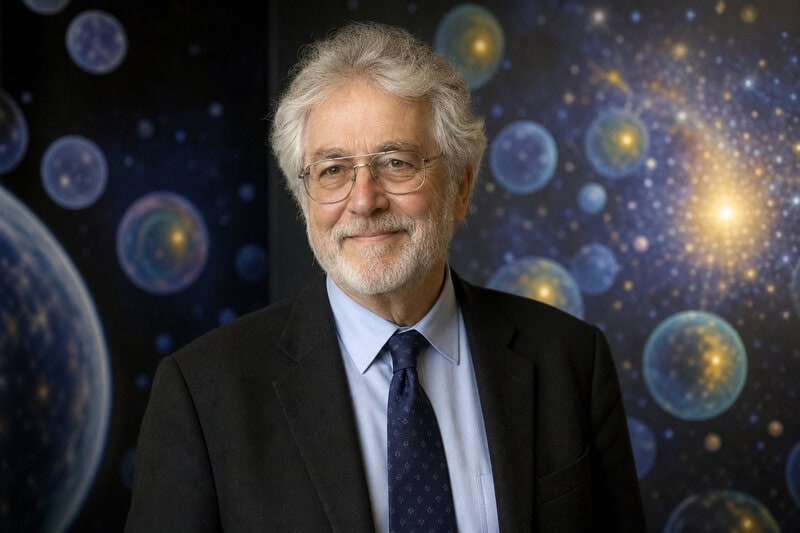
Entirely independent of quantum mechanics, cosmic inflation theory — developed by Alan Guth at MIT in 1980 and extended by Andrei Linde’s model of eternal inflation — predicts that our observable universe is one bubble in a vast, possibly infinite sea of bubble universes. Each bubble may have formed with different physical constants, different particle masses, and potentially different effective laws of physics. The differences between universes in this framework are not the product of quantum branching but of the random dynamics of an inflating cosmic field that never fully stops producing new regions of space.
The observational case for inflation itself is substantial. Data from the European Space Agency’s Planck satellite, released in 2013, confirmed the nearly scale-invariant spectrum of fluctuations in the cosmic microwave background that inflation predicts — one of the theory’s most specific and testable signatures. What remains beyond current observational reach is eternal inflation’s prediction of other bubble universes. Physicists have proposed that if bubble universes once collided with our own, they might leave faint imprints in the cosmic microwave background. That search is ongoing. No confirmed signal has been found.
The honest summary is this: inflationary cosmology gives the multiverse concept serious theoretical grounding rooted in well-tested physics. The existence of other bubble universes, however, is not observationally confirmed and may remain unconfirmable depending on the geometry of spacetime — placing it at the productive, contested frontier of science rather than in the settled interior.
Is the Multiverse Real? What Scientists Actually Agree On

There is no scientific consensus that a multiverse exists. What does command consensus is narrower but still remarkable: the mathematics of both quantum mechanics and inflationary cosmology naturally produce multiverse solutions. Parallel universes are not ruled out by the equations. In some theoretical frameworks they are the default prediction — the outcome you get if you follow the math without adding extra assumptions designed to suppress it.
Quantum mechanics itself is the most precisely tested theory in the history of science, with predictions confirmed to more than ten decimal places of accuracy. Any interpretation of quantum mechanics — MWI included — must be consistent with those confirmed results, and MWI is. The debate is not about whether quantum mechanics works. It is about what quantum mechanics means, and whether the branching it mathematically implies is physically real or merely a formal artifact of the formalism.
The question “is the multiverse real?” is, as of 2025, empirically open. It is neither confirmed nor falsified, and physicists continue to debate whether it is even in principle testable with instruments we could ever build. That places it at the frontier of science, not outside it — which is a genuinely important distinction. Frontier questions are live scientific questions, not settled ones, and they deserve to be described with corresponding precision.
Why Marvel’s Multiverse Still Matters for Science Engagement
Research in science communication consistently finds that narrative fiction lowers psychological barriers to abstract concepts. When millions of viewers watch the Watcher recruit heroes across diverging timelines to confront a threat no single universe could survive alone, they are being introduced — however imprecisely — to genuine ideas about quantum superposition, the nature of probability, and what it means for something to exist. A textbook equation rarely achieves that kind of initial engagement as efficiently.
The risk runs in the other direction too. When the fictional mechanics — cross-universe travel, a single omniscient observer, heroes who remember their branching histories and carry objects between realities — are absorbed as the actual physics rather than as a dramatic translation of stranger underlying ideas, the fiction becomes an obstacle rather than a bridge. The most productive frame for Marvel’s Guardians of the Multiverse is not science education but something closer to a thought experiment made cinematic: useful for sparking curiosity, and demanding the follow-up question of what the underlying physics actually permits.
The branching is real in the mathematics. The travel between branches is not supported by any current theory. The Infinity Stones are fiction. The wave function is not. The multiverse may ultimately be unverifiable — a feature of our best equations that observation never fully confirms or fully denies. But the conversation it forces, about the nature of reality, the meaning of probability, and whether everything that can happen does happen somewhere, is one that physics is conducting in earnest. The Infinity Stones are optional. The questions are not.