
Georgia holds the seventh-highest number of electric vehicle chargers of any state in the country — yet drive an hour south of Atlanta and the charging infrastructure very nearly disappears. According to a new study examining Georgia’s EV charging landscape, Central Georgia is being left behind — exposing a stark geographic inequity that a single statewide ranking is powerless to reveal.
A Top-Ten State With a Glaring Blind Spot
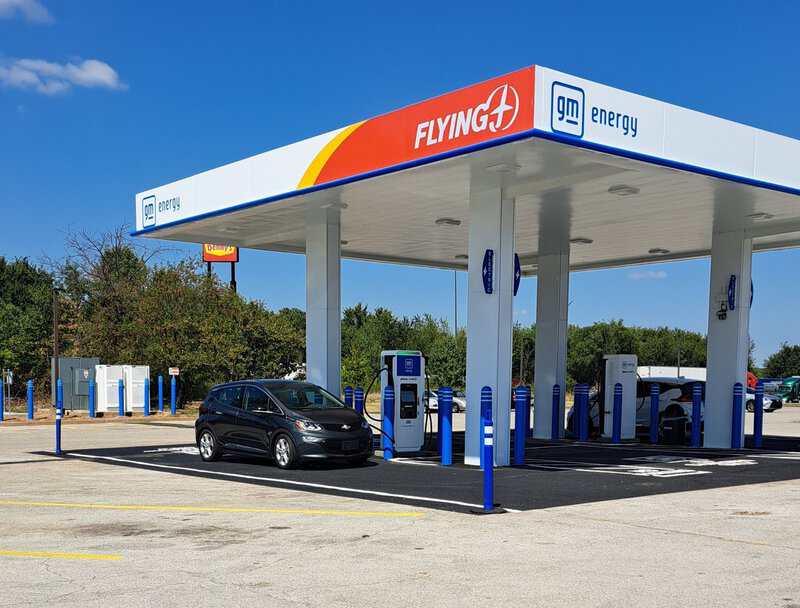
Picture an EV driver leaving Macon and heading toward Columbus or Valdosta. The charging gaps encountered on those inland routes simply do not exist along the Atlanta-to-Savannah corridor, where stations cluster reliably along I-75, I-16, and I-95. That contrast is not a minor inconvenience. It represents a structural divide in who can realistically own and drive an electric vehicle in Georgia — and who cannot.
That divide is the central finding of the study, which places Georgia seventh nationally for total EV charger count while simultaneously identifying Central Georgia — a region anchored by cities such as Macon and Warner Robins — as one the broader buildout has largely passed over. The researchers’ language is precise: Central Georgia is not merely underserved, it is being left behind.
This article explains what the study found, why charger deserts form in the first place, what the disparity costs residents and local economies, and what researchers say should happen next.
What the Study Found: Georgia’s Ranking in Full Context

Georgia’s seventh-place national ranking reflects years of investment concentrated heavily in the Atlanta metropolitan area, along the coastal Savannah market, and along the major interstate corridors connecting them. That geographic concentration is critical for interpreting the number: Georgia’s high overall charger count is driven disproportionately by metro Atlanta, which inflates the statewide figure in a way that obscures conditions elsewhere in the state.
Researchers studying EV infrastructure typically count two distinct types of charging equipment. Level 2 chargers operate on 240-volt circuits — comparable to a household dryer outlet — and add roughly 10 to 20 miles of range per hour. DC fast chargers, commonly called DCFC, can add 100 to 200 miles of range in 20 to 30 minutes and are the equipment most critical for enabling longer-distance travel. The study’s breakdown by charger type is where the regional disparity becomes especially sharp: fast-charging infrastructure — the kind that makes cross-regional travel practical — is thinnest precisely in the areas where it is most needed.
That finding is consistent with emerging national research showing that EV infrastructure investment tends to follow existing economic corridors rather than distributing according to population need, a pattern researchers have begun calling “charger clustering.” Central Georgia’s situation is, in that respect, less an anomaly than a case study in a national phenomenon.
Defining the Charger Desert: How Infrastructure Gaps Are Measured

The term “charging desert” has a working definition in transportation research and federal policy: an area where the distance between publicly available charging stations exceeds practical EV range thresholds. Federal agencies typically flag gaps exceeding 50 miles along major travel corridors as a baseline concern. By that measure, portions of Central Georgia qualify.
The U.S. Department of Energy’s Alternative Fuels Station Locator — the most widely cited national dataset for this kind of analysis — shows that Central Georgia counties have charger-per-capita and charger-per-square-mile ratios well below the state average and below the equity benchmarks that federal programs use to target underserved communities. Those ratios describe not just scarcity in absolute terms, but scarcity relative to where the need is greatest.
Equity analysis is particularly important in this context. Lower-income and rural communities — characteristics that describe much of Central Georgia — are disproportionately likely to lack access to home charging. A homeowner with a garage and a dedicated 240-volt circuit can charge overnight and visit a public station only for occasional top-ups. A renter in a multi-unit building, or a resident without off-street parking, has no such option. For those households, public charging infrastructure is not a convenience — it is a prerequisite for EV ownership. When that infrastructure is absent, EV adoption is effectively foreclosed regardless of how affordable vehicles become.
Why Central Georgia Got Left Behind: The Underlying Mechanisms
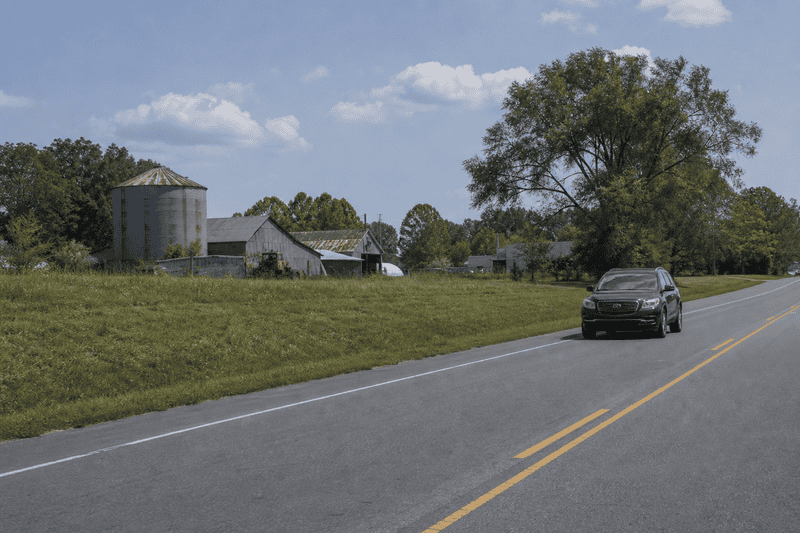
The infrastructure gap in Central Georgia did not emerge from a single decision. It is the cumulative product of several overlapping systems, each of which independently produces the same outcome.
Private charging networks site their stations using traffic-volume models and return-on-investment projections. Those models systematically favor high-throughput interstate corridors over lower-density inland routes. A station placed along I-75 north of Atlanta will serve far more vehicles per day than one placed in a Warner Robins parking lot, and that utilization differential drives private capital toward the former and away from the latter.
Federal funding adds a structural layer to the same bias. The National Electric Vehicle Infrastructure Formula Program — known as NEVI — allocated approximately $135 million to Georgia through the Infrastructure Investment and Jobs Act. NEVI’s design prioritizes build-out along designated Alternative Fuel Corridors, which are specific federally recognized highway segments. Communities that lie off those corridors are structurally excluded from the program’s primary funding stream, regardless of their level of need.
Local government capacity compounds the problem further. Accessing public EV funding typically requires grant-writing expertise, utility partnerships, and administrative bandwidth. Many Central Georgia jurisdictions — smaller cities and rural counties operating with lean staffs — lack those resources, placing them at a systematic disadvantage relative to larger municipalities when federal and state dollars become available.
Finally, historic underinvestment creates its own momentum. Areas with fewer chargers generate less EV adoption data, which in turn depresses the utilization projections that private operators use to justify new stations. Researchers describe this as a “low-demand trap”: the absence of infrastructure suppresses the demand signal that would otherwise attract infrastructure, making the gap self-reinforcing over time.
Who Bears the Cost: Real-World Impacts on Central Georgia Residents
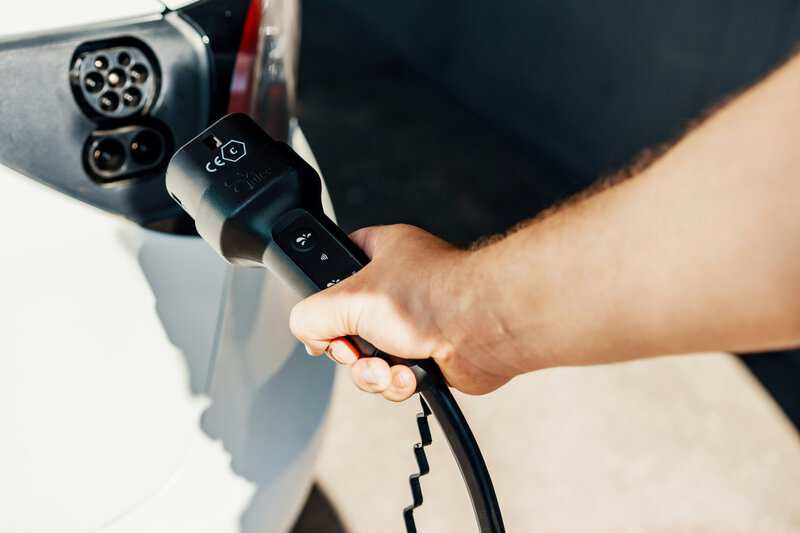
For EV drivers already living in Central Georgia, the infrastructure gap manifests as range anxiety — a documented behavioral phenomenon in which uncertainty about charging availability leads drivers to shorten trips, avoid unfamiliar routes, or forgo EV purchase altogether. Range anxiety is not irrational; it is a reasonable response to a real scarcity of options.
The burden falls most heavily on lower-income households. Residents without access to home charging depend entirely on public networks, meaning the infrastructure gap hits hardest precisely where economic margins are thinnest. An inadequate public charging network in a low-income area does not merely inconvenience EV owners — it functions as an effective barrier to EV ownership for a substantial portion of the population.
Local businesses are affected as well. Research has found that EV drivers spend meaningfully at retail and food establishments adjacent to charging stations — economic activity sometimes called the “charging halo effect.” Communities in charging deserts are not capturing that spending, representing a tangible opportunity cost for local economies already navigating limited commercial investment.
The disparity carries public-health dimensions, too. Electric vehicles produce zero tailpipe emissions, and communities with low EV adoption rates — which frequently correlate with poor charging access — continue to bear disproportionate exposure to vehicle exhaust and the respiratory and cardiovascular conditions associated with it. The U.S. Environmental Protection Agency’s environmental justice analyses have consistently identified low-income and rural communities as shouldering an outsized share of transportation-related pollution burdens, a pattern that inadequate EV infrastructure perpetuates.
What Should Happen Next: Policy Options Researchers Support

The study’s findings point toward policy interventions that deliberately decouple infrastructure deployment from pure market logic. Several approaches have support in the research literature and precedent in other states.
- Geographic equity mandates: State-level requirements or incentives that direct a minimum share of EV funding to underserved regions — regardless of projected utilization — can counteract the market bias toward high-traffic corridors. Such mandates effectively subsidize the first generation of chargers in a region until organic demand develops.
- Utility-led charging programs: In this model, regulated electric utilities deploy and operate public chargers as part of their rate base, spreading costs across all ratepayers rather than depending on private investors to find a return. Several states have used utility programs specifically to reach rural and low-income areas that private networks have not served.
- Anchor-institution deployment: Hospitals, universities, transit hubs, and other community anchor institutions in cities like Macon and Warner Robins are logical first-deployment sites. These locations generate predictable foot traffic, which can seed charger utilization and produce the usage data that eventually attracts broader private-sector interest.
- Off-corridor NEVI flexibility: Georgia’s NEVI implementation plan, administered through the Georgia Department of Transportation, is currently focused on Alternative Fuel Corridor build-out. Advocates argue that subsequent phases of the program must explicitly target off-corridor communities in Central Georgia if the state’s equity gap is to close.
The Bigger Picture: Georgia’s EV Ambitions and the Equity Test
Georgia has positioned itself as a national leader in EV manufacturing. The state is home to Hyundai’s Metaplant America facility in Bryan County and a rapidly expanding battery supply chain that has drawn billions in investment. That industrial ambition makes the state’s internal charging equity gap both ironic and strategically significant: Georgia is building the vehicles and the batteries while leaving portions of its own population unable to use them reliably.
Equitable charging access is widely considered among the strongest predictors of sustained EV adoption in lower-income and rural markets. If that holds for Georgia, Central Georgia’s charging deficit is not merely a regional fairness issue — it is a constraint on the statewide EV market that the state’s own manufacturing investments depend on expanding.
The study’s core conclusion carries a lesson that extends well beyond Georgia: a top-ten statewide ranking can coexist with severe regional neglect, and aggregate metrics are insufficient proxies for equitable progress. Policymakers in every state with a similarly respectable national ranking should ask whether their own numbers conceal a Central Georgia hiding somewhere within their borders.
The path forward is contested in its specifics but not in its general direction. Researchers broadly agree that closing charger deserts requires a deliberate combination of public funding prioritization, regulatory design that explicitly accounts for geography, and utility investment structured to reach communities that private capital will not serve on its own. Georgia already has access to each of those tools. The question the study leaves open — and the one policymakers must now answer — is whether the state will deploy them with geographic equity as an explicit and enforceable goal.