New Pteosaur Dinosaur Species Discovered
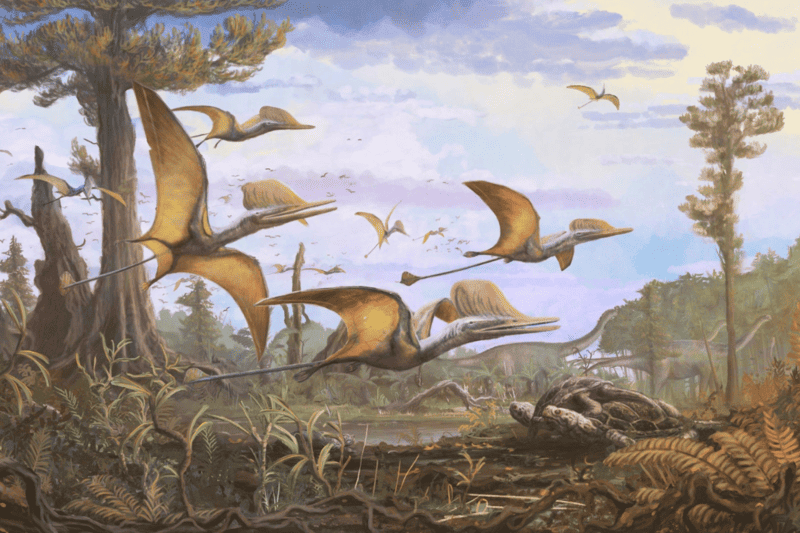
In a groundbreaking discovery, paleontologists have unearthed a remarkable new species of flying reptile on Scotland’s Isle of Skye, shedding light on the enigmatic world of pterosaur evolution during the Middle Jurassic period. Initially spotted as a few protruding bones in 2006 by researchers from the UK’s Natural History Museum during a field expedition, the fossil has now been identified as a previously unknown species of pterosaur, named ‘Ceoptera evansae’.
Pterosaurs, colloquially known as ‘wing lizards’, roamed the skies from the Late Triassic to the mass extinction event that wiped out the dinosaurs. With a wingspan estimated at 1.6 meters, Ceoptera evansae soared above a diverse ecosystem in ancient Scotland around 165 million years ago, alongside a plethora of other prehistoric creatures including dinosaurs and marine life.
The discovery of Ceoptera adds to the growing understanding of pterosaur diversity during the Jurassic period. Previously, another pterosaur named ‘Dearc sgiathanach’ was unearthed on Skye in 2017, suggesting there’s more to the pterosaur species than previously imagined. Pterosaurs, the earliest vertebrates to achieve powered flight, remain shrouded in mystery due to the scarcity of their fossil remains. Most of what scientists know about them comes from a few exceptional fossil sites worldwide, making each new discovery invaluable.
The painstaking excavation process, spanning over 18 years, features the meticulous nature of paleontological research. Embedded in a Site of Special Scientific Interest, the fossil was carefully collected and prepared, revealing a treasure trove of information about this ancient inhabitant of the skies. Named for the Scottish Gaelic word for mist, ‘ceò’, and in honor of Professor Susan Evans of University College London, Ceoptera evansae symbolizes the collaborative efforts and dedication of scientists in unraveling the mysteries of our planet’s past. With each discovery, the fog surrounding the evolution of prehistoric life grows clearer, offering glimpses into the remarkable diversity and resilience of ancient ecosystem.