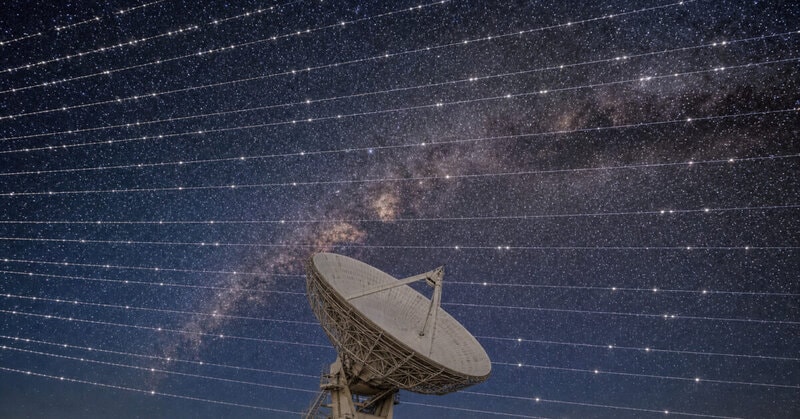
In November 2026, the Federal Communications Commission authorized SpaceX to deploy up to one million “Starmind” satellites — a number that exceeds every spacecraft ever launched in human history combined — with the first units required in orbit by November 25, 2033. That single regulatory decision may reshape not just the telecommunications industry, but the entire scientific enterprise of observing the universe from Earth. It also forces an overdue reckoning with how humanity governs the orbital environment it increasingly depends upon.
What Starmind Actually Is: AI Data Centers in Orbit
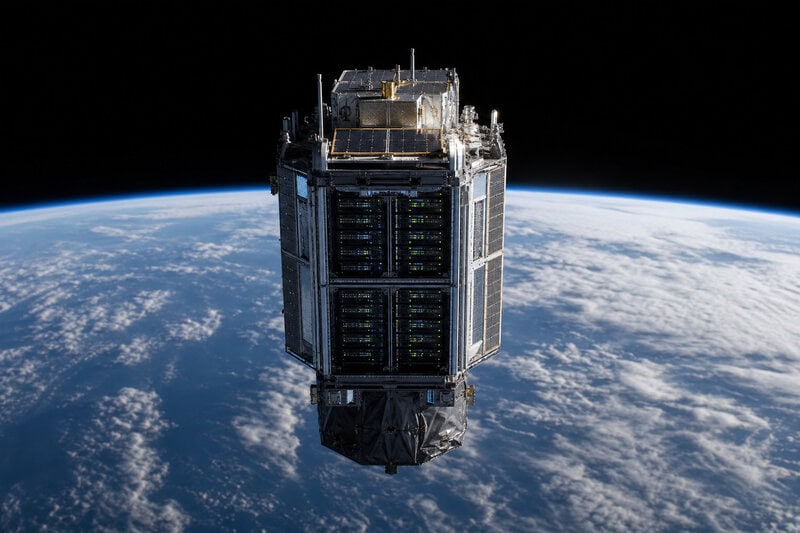
Starmind is not a communications constellation in the conventional sense. Where Starlink satellites relay internet signals between ground stations, each Starmind node is designed to function as an orbital data center — processing information autonomously in space rather than transmitting raw data down to ground-based servers for analysis. The FCC has stated that the constellation is intended to help meet massive data processing demands, effectively turning low Earth orbit into a planetary-scale computing layer.
The core engineering logic is rooted in edge computing — the practice of processing data as close as possible to its source, rather than routing everything through centralized infrastructure. Applied to orbital altitudes, this means each satellite would handle what engineers call inference tasks: filtering, compressing, and interpreting data before deciding what is worth sending to the ground. The latency and bandwidth savings over transmitting raw sensor data can be substantial, which is why the approach has attracted serious commercial interest well before this authorization.
SpaceX’s FCC approval for the AI orbital data center constellation establishes a legal precedent for this kind of orbital infrastructure at a scale that, until recently, existed only in speculative engineering literature. The full technical architecture of the satellites remains under development, but the regulatory momentum is now real and legally binding — which is precisely why the scientific and policy communities have little time to negotiate the terms of coexistence.
To appreciate the scale: astronomers currently document interference effects from roughly 6,000 Starlink satellites in orbit. Starmind would add approximately two orders of magnitude more objects to low Earth orbit. That is not a difference of degree; it is a difference of kind, and existing regulatory and scientific frameworks were not designed to accommodate it.
The Radio Astronomy Problem: Silence Is the Instrument
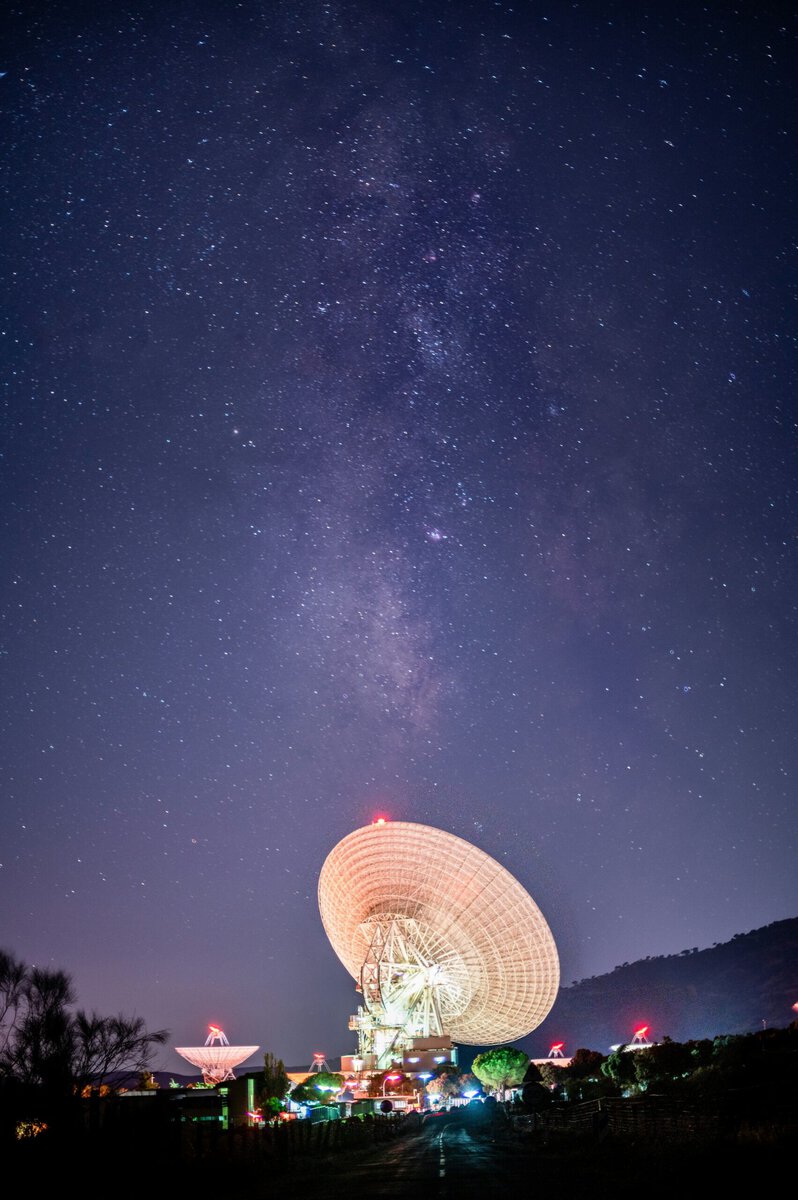
Radio telescopes operate by detecting electromagnetic signals of extraordinary faintness — in some cases, signals billions of times weaker than the emission from a household Wi-Fi router. That sensitivity is the instrument. Any source of unintended electromagnetic radiation within the telescope’s field or frequency band is not merely an inconvenience; it is noise written directly into the data, potentially invalidating observations that took years to plan and execute.
The problem with existing mega-constellations is already well-documented. A 2023 study published in Nature Astronomy by Bassa and colleagues found that unintentional electromagnetic leakage from Starlink satellites was detectable across protected radio-frequency bands — frequencies that international treaty reserves exclusively for scientific observation. The International Astronomical Union has formally raised concern about this finding through its Centre for the Protection of the Dark and Quiet Sky.
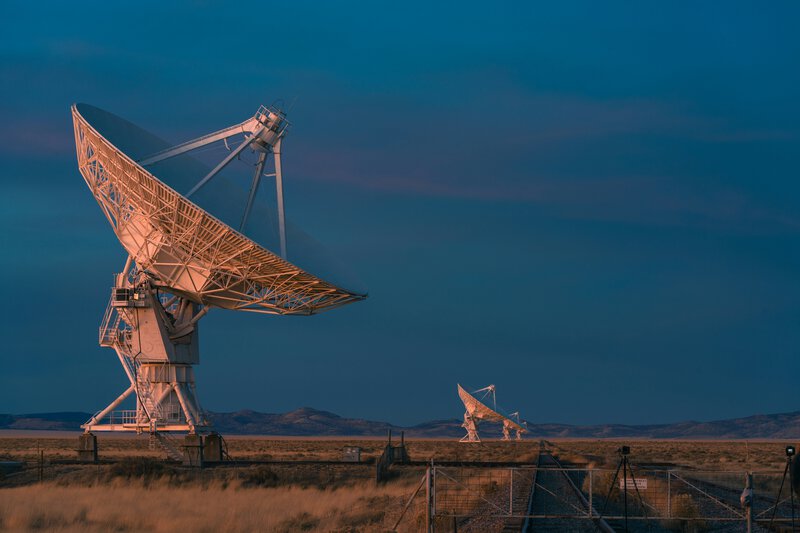
The Square Kilometre Array, currently under construction across South Africa and Australia and designed to be the most sensitive radio telescope ever built, faces a particularly acute version of this challenge. One million satellites emitting even low-level electromagnetic noise would statistically guarantee that some portion of the sky is electromagnetically compromised at any given moment. Researchers at the IAU’s dark-sky protection body have noted that software mitigation strategies can reduce but cannot fully eliminate this effect — a distinction that matters enormously for high-precision science, where corrupted baselines cannot simply be subtracted away.
What remains genuinely unknown is the specific frequency profile of AI-processing satellites. Communications satellites emit radiation primarily in well-characterized bands tied to their transmission functions. Satellites running machine-learning inference workloads may produce different electromagnetic signatures from their onboard processors — a concern that is scientifically plausible but as yet unquantified. This is an emerging question, not an established finding, and it deserves systematic study before deployment begins rather than after.
Optical Astronomy and the Streak Problem, Now at Scale
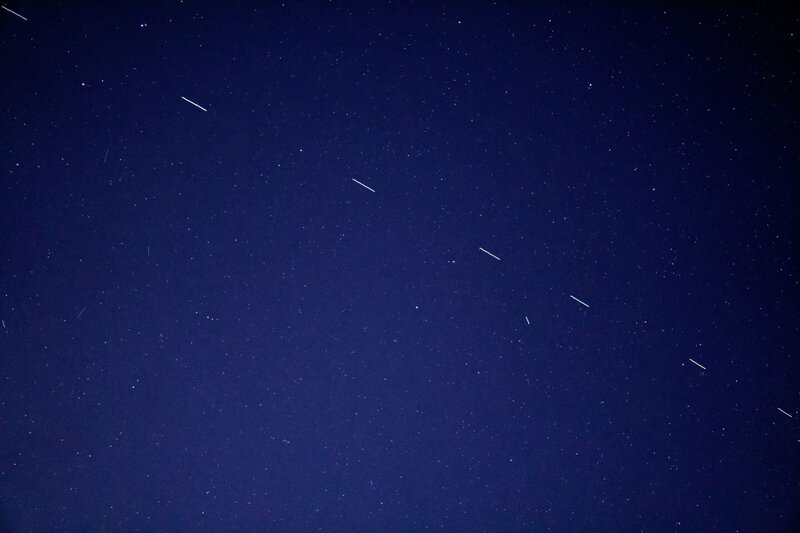
Every satellite passing through a telescope’s field of view during a long photographic exposure leaves a bright streak across the image — reflected sunlight that overwhelms fainter celestial objects in the same frame. This phenomenon has been extensively documented for existing Starlink satellites by researchers working with the Vera C. Rubin Observatory team at NOIRLab.
A 2022 NOIRLab analysis estimated that up to 30 percent of twilight images from wide-field sky surveys could be affected by satellite streaks under current mega-constellation densities. Twilight windows — the brief periods after sunset and before sunrise when the sky is dark but satellites in higher orbits are still sunlit — are among the most scientifically valuable observing periods for detecting near-Earth asteroids and other fast-moving objects. Scaling the constellation to one million objects would make those windows significantly more compromised, and potentially unusable for the most demanding survey science.
SpaceX’s DarkSat and VisorSat mitigation programs for Starlink reduced individual satellite brightness by roughly a factor of four, according to measurements published by Tregloan-Reed and colleagues in 2021 — a meaningful engineering achievement. But brightness reduction does not scale linearly with satellite population. Halving the brightness of each object does not halve the total number of streaks when the population grows by two orders of magnitude. The arithmetic of mitigation breaks down long before you reach one million objects.
Time-domain astronomy — the science of detecting transient events such as gamma-ray bursts, supernovae, or close asteroid approaches — is considered especially vulnerable. These events are, by definition, fleeting. A single corrupted image frame at the wrong moment is not a recoverable data loss; it is a missed detection that cannot be reconstructed after the fact. No amount of post-processing restores an observation that was never cleanly made.
The Unexpected Upside: What a Million Orbital Sensors Could Offer Science
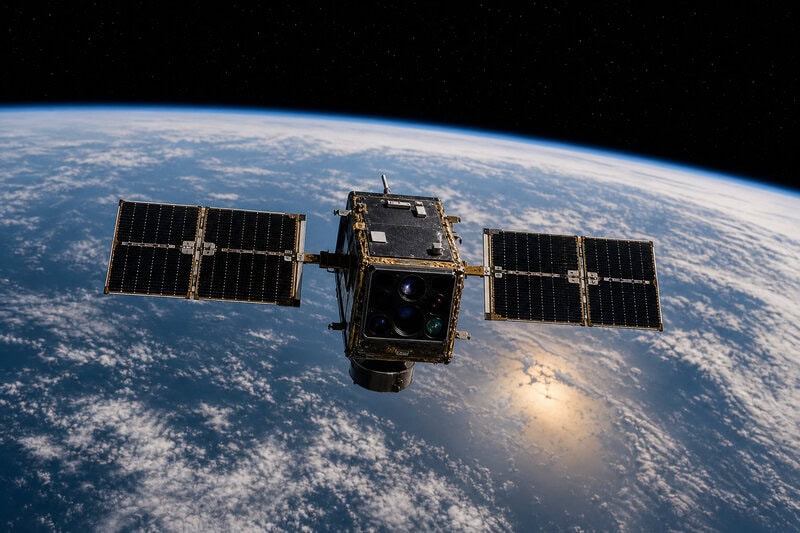
The scientific picture is not uniformly negative, and intellectual honesty requires acknowledging the genuine potential benefits alongside the risks. A constellation of AI-enabled satellites distributed across low Earth orbit would, if designed with scientific access in mind, constitute an unprecedented sensor network — one capable of contributing to Earth observation, atmospheric science, and space weather monitoring at resolutions no ground-based system can replicate.
The European Space Agency’s Φ-sat program offers a credible proof of concept: onboard AI reduced data downlink requirements by up to 30 percent while simultaneously improving cloud-detection accuracy in Earth observation imagery. Applied at Starmind’s scale, that kind of onboard intelligence could dramatically accelerate climate data processing — a capability with direct and measurable value for environmental science.
Space weather researchers at NOAA’s Space Weather Prediction Center have noted that a dense orbital network could provide real-time ionospheric measurements — data about the electrically charged upper atmosphere — that would meaningfully improve forecasting of solar storms. Solar storm forecasting has direct economic consequences for power grids, aviation routing, and satellite operations themselves, including the Starmind constellation.
These benefits are real but contingent. They depend entirely on whether Starmind’s operational architecture includes open data-sharing agreements with the research community — a policy question that the FCC authorization does not resolve. Commercial orbital infrastructure has historically been designed around proprietary data models, not scientific access. Without deliberate policy intervention requiring data sharing as a condition of operation, the sensor benefits may accrue exclusively to SpaceX’s commercial customers, and the scientific community will bear the interference costs with none of the gains.
Orbital Debris and the Kessler Threshold
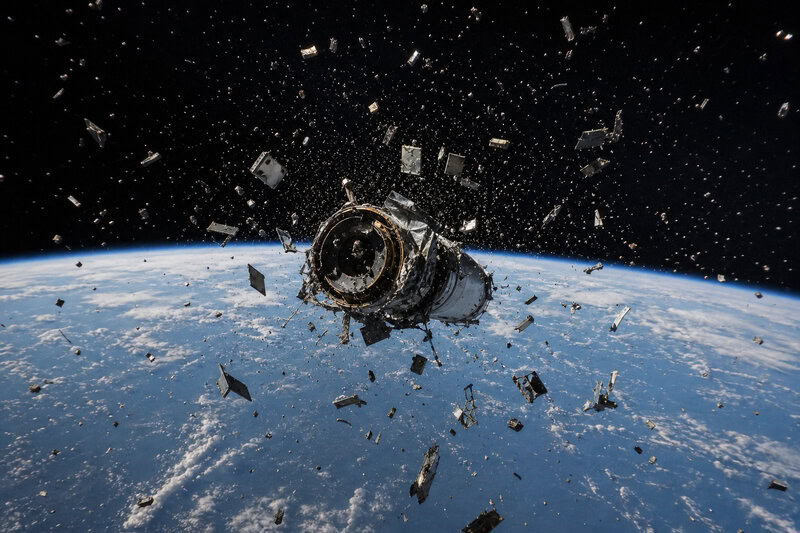
Beyond electromagnetic interference, the deeper long-term risk is physical. The Kessler Syndrome — first described by NASA scientist Donald Kessler in 1978 — is a cascade scenario in which collisions between orbiting objects generate debris fragments, each of which becomes a new collision hazard, eventually rendering certain orbital shells unusable for decades or longer. It is a threshold effect: the system behaves differently on either side of it, and crossing the threshold is not reversible on any timescale relevant to human civilization.
NASA’s Orbital Debris Program Office currently tracks roughly 27,000 objects larger than 10 centimeters in orbit. A constellation of one million satellites, even with robust deorbit protocols built into every node, would represent a step-change increase in the statistical probability of collision events that existing debris models have not been validated to characterize at this scale.
A 2021 study published in Science Advances by Boley and Byers calculated that already-approved mega-constellations, if fully deployed, would increase the annual probability of a catastrophic fragmentation event by a statistically significant margin. Starmind, at roughly ten times the aggregate scale of all existing approved constellations combined, extends that analysis into territory where the models themselves become uncertain — which is itself a form of scientific concern worth taking seriously, not dismissing because the worst case has not yet occurred.
The stakes extend well beyond astronomy. A debris-compromised low Earth orbit would impair weather satellites, GPS infrastructure, and crewed space stations — systems that underpin both daily scientific operations and broader societal function. The orbital environment, once severely degraded, cannot be cleaned on a human timescale. That asymmetry between the speed of deployment and the permanence of potential harm is the central reason this decision warrants more scrutiny than a standard FCC authorization typically receives.
What Comes Next: Policy, Precedent, and a Bounded Window to Act
The 2033 deployment deadline for initial Starmind satellites creates a concrete, bounded window during which regulatory frameworks, dark-sky protection agreements, and debris-mitigation standards could be negotiated and codified — if that opportunity is taken seriously by both the space industry and the scientific community. Science policy experts at institutions including the American Astronomical Society have called for updated electromagnetic interference standards before large-scale AI satellite deployment begins. That call is now more urgent than it was before November 2026.
International coordination faces structural complications that make urgency all the more important. Orbital spectrum allocation is governed by the International Telecommunication Union, while debris liability falls under frameworks administered by the UN Committee on the Peaceful Uses of Outer Space. Neither body has yet developed explicit standards for AI-processing satellite constellations — a regulatory gap that the Starmind authorization has now made urgent rather than theoretical. Closing that gap requires the kind of slow, consensus-driven international negotiation that does not respond well to being left until the last moment.
Coverage of the FCC’s Starmind authorization from Spaceflight Now and reporting on SpaceX’s green light for orbital data centers both note that the full scope of the deployment plan is still being defined. That ambiguity is precisely where scientific and policy input has the greatest leverage — before architectures are finalized, not after launch campaigns have begun and sunk costs make redesign politically impossible.
The honest scientific position, as researchers in both astronomy and debris modeling have consistently stated, is that humanity is being asked to make a planetary-scale infrastructure decision with incomplete data. The question of whether a one-million-satellite AI network would ultimately enrich or degrade our collective ability to observe the universe does not yet have a definitive answer. What is clear is that the window to ask that question rigorously — and to build the answer into the design — is open now. Engineering choices made in the next several years will determine which scientific questions remain answerable from Earth for generations to come. That window will not remain open indefinitely, and the history of large-scale infrastructure decisions suggests that once it closes, it closes fast.