30. The Reality of Dark Matter
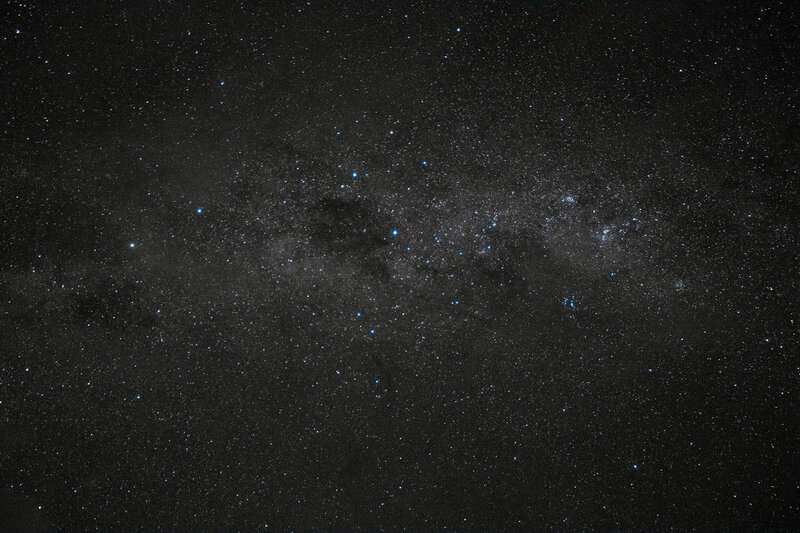
Dark matter is a form of matter that does not interact with light or electromagnetic radiation, making it invisible to current detection methods. Despite its elusive nature, dark matter’s existence is inferred from its gravitational effects on visible matter, such as the rotation curves of galaxies and the gravitational lensing observed in galaxy clusters. These observations suggest that dark matter constitutes approximately 27% of the universe’s total mass-energy content, significantly outweighing the visible matter, which accounts for about 5%. (science.nasa.gov) The exact composition of dark matter remains one of the most profound mysteries in astrophysics, with various hypotheses proposed, including weakly interacting massive particles (WIMPs), axions, and sterile neutrinos. (home.cern) Ongoing research and experiments aim to detect dark matter particles directly, but as of now, it remains undetected, making its true nature one of the greatest unsolved scientific riddles. (britannica.com)