
In 1957, a Princeton PhD student named Hugh Everett III proposed that every quantum measurement causes reality itself to branch into parallel worlds — an idea so radical that his advisor, John Wheeler, insisted he soften the language before publication. When Doctor Strange in the Multiverse of Madness arrived in theaters on May 6, 2022, it introduced mass audiences to a cinematic version of that same concept — yet the actual physics it borrows from may be the stranger story of the two.
What the Film Is Actually About

The 2022 superhero film, directed by Sam Raimi and running 2 hours and 8 minutes, follows Doctor Stephen Strange as he teams up with America Chavez, a teenager with the rare ability to physically punch through the boundaries between universes. Together they traverse alternate realities that are visually distinct, internally governed by their own rules, and explicitly dangerous — a premise that functions brilliantly as mythology even when it departs substantially from science.
At its core, the film is a story about grief, identity, and the corrupting pull of power. Wanda Maximoff, the Scarlet Witch, seeks to cross into a reality where her children exist and she can be their mother. Strange must decide how far he is willing to go — and how many versions of himself he is willing to trust — to protect America and contain the damage. The multiverse is the stage; the human drama is the point.
Marvel’s version of that stage is narrative and geographic: alternate universes are discrete, visitable places with their own inhabitants, histories, and physical rules, reachable by sufficiently powerful beings or artifacts. The film frames these realities as simultaneously compelling and catastrophically threatening. That dramatic tension does echo one genuine scientific puzzle — if other branches of reality exist, why can’t we reach them? The answer physics gives is far less cinematic, and considerably more unsettling. Viewers curious about the film’s world can stream it on Disney+.
How the Film Fits Into the Marvel Cinematic Universe
Doctor Strange in the Multiverse of Madness is the direct sequel to the 2016 film Doctor Strange and functions as a continuation of threads established in the Disney+ series WandaVision and the 2021 film Spider-Man: No Way Home. Viewers unfamiliar with those entries may find the film’s emotional stakes — particularly Wanda’s motivations — harder to follow, since her grief over losing her children is established in WandaVision rather than recapped in any detail here.
Raimi’s direction is the film’s most distinctive quality. A veteran horror filmmaker responsible for the Evil Dead franchise, he brings a visual grammar — Dutch angles, practical monster effects, sequences that lean into genuine dread — that sets this entry apart from most Marvel productions. The film earns its PG-13 rating more aggressively than the studio’s usual fare, and that tonal commitment is one of the reasons it generated both enthusiastic praise and pointed criticism upon release.
The film also introduces the Illuminati, a council of powerful figures from an alternate universe, in a sequence that functions primarily as fan service. How much satisfaction a viewer derives from that sequence depends heavily on their familiarity with Marvel Comics source material and prior MCU films. It is one of several moments where the film rewards franchise investment more than it earns dramatic weight on its own terms.
The Many-Worlds Interpretation: Real Physics, Wild Implications
The closest legitimate scientific analog to Marvel’s concept is the Many-Worlds Interpretation of quantum mechanics, universally abbreviated as MWI. It holds that the universal wave function — the mathematical object describing all possible quantum states of the universe — never collapses into a single outcome. Instead, every quantum event causes the universe to branch into non-communicating copies, each equally real. The electron doesn’t land in one place; reality splits, and in each branch, it landed somewhere different.
Hugh Everett III proposed this in his 1957 dissertation at Princeton University. The idea was largely dismissed for decades before physicist Bryce DeWitt championed it and coined the phrase “many worlds” in a 1970 article in Physics Today. A 2021 survey by the American Institute of Physics found MWI ranks among the top three interpretations of quantum mechanics accepted by working physicists, alongside the Copenhagen interpretation and QBism — though no consensus has been reached among the community.
The crucial distinction from Marvel’s version is mathematical, not merely conceptual. In MWI, branches are not places. They are orthogonal quantum states — meaning they share no causal future and have no mechanism for exchanging information or matter. Inter-branch travel is not merely technologically difficult; it is forbidden by the theory’s own internal logic. America Chavez’s reality-punching fist has no analog in Everett’s equations.
A Taxonomy of Scientific Multiverse Models
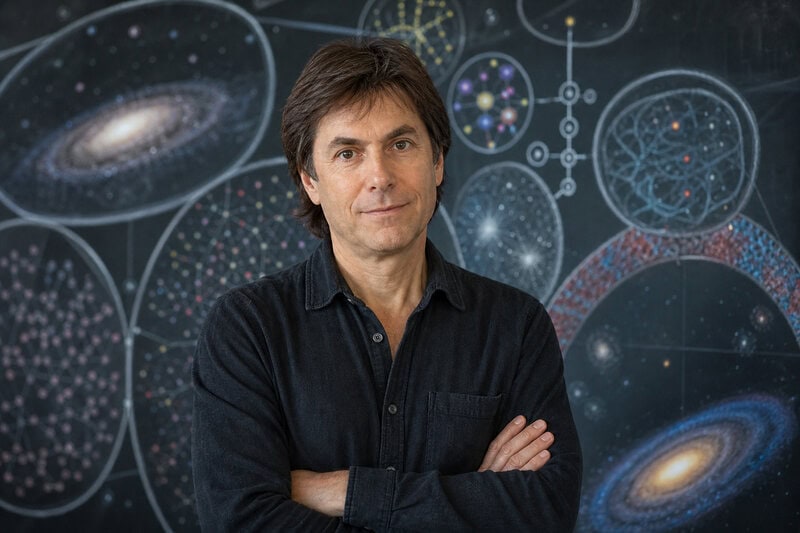
MWI is only one of several distinct scientific frameworks that use the word “multiverse,” and conflating them is one of the most common sources of public misunderstanding on this topic. Cosmologist Max Tegmark of MIT published an influential classification in Scientific American in 2003, organizing multiverse proposals into four levels based on their underlying physics.
- Level I: Regions of space beyond our cosmic horizon. The observable universe is finite, but if space is infinite, statistically identical regions must exist somewhere far beyond what light has had time to reach us from.
- Level II: Bubble universes spawned by eternal inflation. Physicists Andrei Linde at Stanford and Alan Guth at MIT developed the eternal inflation model, in which quantum fluctuations in the early universe continuously produce new “bubble” regions, each potentially with different physical constants. Observations of the cosmic microwave background provide indirect support for inflationary cosmology, though not yet for the bubble universe prediction specifically.
- Level III: The Many-Worlds Interpretation — Everett’s branching quantum universe.
- Level IV: Entirely different mathematical structures, a deeply speculative philosophical extension of the framework.
String theory adds another layer of complexity. Stanford physicist Leonard Susskind has argued that string theory permits roughly 10500 possible configurations of physical constants — a “landscape” so vast that our universe’s particular laws may simply be one solution among an astronomically large set. This remains highly contested and is currently untestable by any known experimental method.
All of these frameworks are scientifically distinct from one another and from Marvel’s cinematic version. The physics community does not speak with one voice about any of them.
What the Scientific Community Agrees On — and Where It Draws the Line
There is no ambiguity about the underlying mathematics. Quantum mechanics is the most precisely tested theory in the history of physics, with predictions confirmed to approximately one part in a trillion, according to the National Institute of Standards and Technology. The interpretive dispute — including the debate over MWI — concerns what that mathematics means physically, not whether the equations work. The equations work with extraordinary precision.
The contested territory is the ontological claim at MWI’s core: that all branches are equally real. Because no experiment can in principle detect another branch — branches are defined by their mutual inaccessibility — this claim is empirically untestable with current or any foreseeable technology. Philosopher of physics David Albert of Columbia University has argued on those grounds that MWI is metaphysics dressed in the language of physics, a serious charge in a discipline that prizes falsifiability.
Nobel laureate Roger Penrose of Oxford has made a related argument: that multiverse proposals in general, by invoking entities that cannot be observed or tested, step outside the proper boundaries of scientific inquiry. This is a minority position among physicists, but it is a credentialed and carefully argued one, not fringe dissent.
On the other side, physicist Sean Carroll of Johns Hopkins University has argued in his 2019 book Something Deeply Hidden that MWI is the most parsimonious reading of quantum mechanics — that it adds nothing to the theory’s equations and merely takes them seriously. The debate is genuine, ongoing, and unresolved.
Meanwhile, the 2022 detection of rare Higgs boson decay modes at CERN’s Large Hadron Collider offered new probes of the quantum vacuum’s structure — indirectly relevant to the question of why our universe’s physical constants have the specific values they do, the very question that multiverse models in cosmology attempt to address.
The Quantum Multiverse vs. the Marvel Multiverse: A Direct Comparison
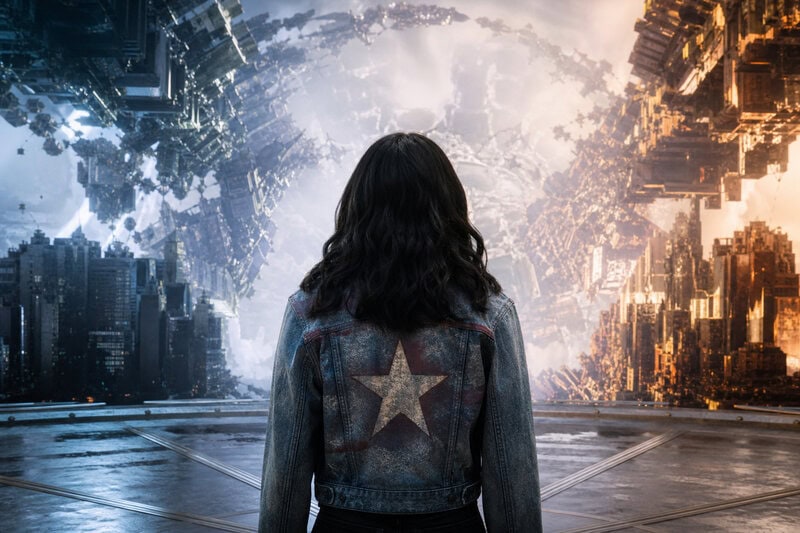
Mapping the film’s premises against the physics reveals where the metaphor is productive and where it breaks down entirely.
- Travel between worlds: In Marvel, America Chavez’s power and artifacts like the Darkhold make inter-universe travel possible. In MWI, it is mathematically forbidden — branches share no future light cone and have no channel for information transfer of any kind.
- Alternate versions of people: Marvel presents other-universe Doctor Stranges as fully independent beings with entirely divergent life histories. MWI branches split only from the moment of a specific quantum event, not from birth — making the dramatically convenient “lived a completely different life” alternate far less probable than the film implies.
- Different physical laws: Marvel depicts universes with radically different rules. This is actually the most scientifically resonant element of the film — the string theory landscape and eternal inflation both genuinely predict that different regions of reality could have different physical constants.
- The nature of danger: Marvel’s multiverse is existentially threatening in visceral, visual ways. Physics offers a different kind of danger: conceptual vertigo about identity, probability, and what “real” means when every quantum outcome occurs. Philosopher David Deutsch explored these stakes in his 1997 book The Fabric of Reality.
Why the Real Theory Might Be the Stranger Story
If MWI is correct, every quantum event — including every neuron firing as a reader processes this sentence — is continuously branching reality into versions of that reader who experienced infinitesimally different outcomes, with no version holding any greater claim to reality than another. The scale of this, if it is happening, makes Marvel’s multiverse look modest by comparison.
Carroll has estimated that the number of branches generated per second in a cubic centimeter of ordinary air exceeds any number with a practical name in human mathematics. The Marvel Cinematic Universe depicts perhaps a dozen alternate realities as dramatically significant. Everett’s equations, taken literally, describe a structure of incomprehensible scope unfolding continuously inside every cubic centimeter of space.
The philosophical stakes are equally large. Questions about personal identity, moral responsibility, and the meaning of probability in a world where every possible outcome occurs are actively explored in peer-reviewed journals including the British Journal for the Philosophy of Science. These are not idle speculations — they are live debates with implications for how physics itself should be understood.
Verdict: Spectacle Built on a Genuinely Open Question
Doctor Strange in the Multiverse of Madness is a confident, visually inventive piece of popular entertainment. Raimi’s horror sensibility gives it a texture that distinguishes it from the franchise’s more anonymous entries, and Elizabeth Olsen’s performance as Wanda carries emotional weight that the screenplay does not always earn on its own. As a spectacle built around a mythology of parallel worlds, it succeeds on its own terms.
What it is not is a reliable guide to the physics it name-checks. Marvel’s multiverse is a metaphor — geographically navigable, dramatically legible, and scientifically disconnected from the actual frameworks physicists argue about. That is not a criticism; films are not textbooks. But the universe the film borrows its central concept from operates at scales, in ways, and with implications that no production budget has yet found the geometry to contain. The real multiverse theory is not science fiction window-dressing. It is a direct mathematical consequence of the equations that make semiconductors, MRI machines, and the sun’s fusion reactions possible. What those equations actually mean remains, genuinely, one of the most unsettled questions in modern science — and that uncertainty is more disorienting, and more interesting, than anything on screen.