
Sixty-six million years ago, a rock slammed into shallow tropical seas off what is now the Yucatán Peninsula in Mexico — and new research suggests the impactor that ended the age of dinosaurs was not the common type of space rock scientists long assumed, but a rare and chemically unusual class of meteorite whose distinctive composition may have made an already catastrophic event significantly more destructive.
The Chicxulub Impact and Why the Impactor’s Identity Now Matters
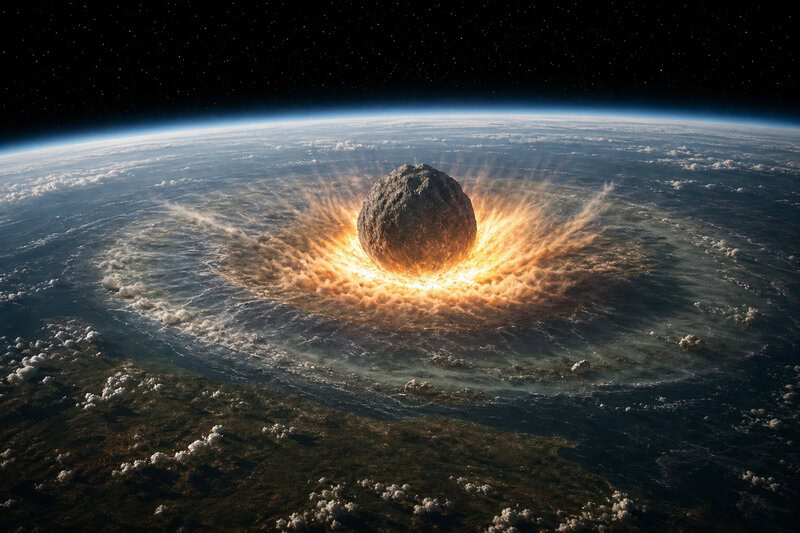
The Chicxulub impact — named for the crater it left beneath what is now the Gulf of Mexico — is the most consequential collision in the history of complex life on Earth. It eliminated roughly 75 percent of all species on the planet, including every non-avian dinosaur, and redirected the course of evolution in ways that eventually made the rise of mammals, and humans, possible.
For decades, scientific debate focused on the impactor’s size, speed, and angle of entry. Now, new research reported by Sci.News is shifting the central question to something more fundamental: what kind of rock was it? The answer is forcing researchers to reconsider the precise chain of events that transformed a single moment of impact into a global extinction cascade.
What Is a CO Chondrite — and Why Does the Classification Matter?
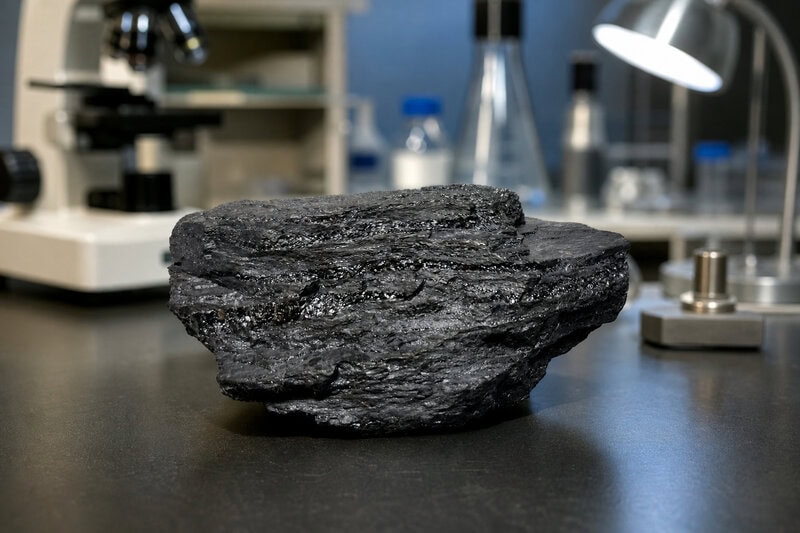
A chondrite is a stony meteorite that has never been melted or significantly altered since the early solar system formed roughly 4.5 billion years ago. That makes chondrites primitive time capsules — preserved samples of the raw material from which planets were assembled. CO chondrites are a specific, relatively uncommon subgroup within that broader family. Researchers describe them as an “oddball” class of meteorite because their chemical and mineralogical fingerprint differs markedly from more common types, such as the ordinary chondrites that make up the majority of meteorites recovered on Earth.
The composition of an impactor is not merely a matter of geological classification — it has direct consequences for what happens when that rock strikes a planet at tens of thousands of miles per hour. Different rock types carry different inventories of sulfur, carbon, and volatile compounds, all of which influence what gases are blasted into the atmosphere on impact. Identifying the Chicxulub impactor as a CO chondrite recalibrates the models scientists use to estimate how much planet-altering material was injected into the stratosphere 66 million years ago.
How Scientists Fingerprinted a Rock That No Longer Exists
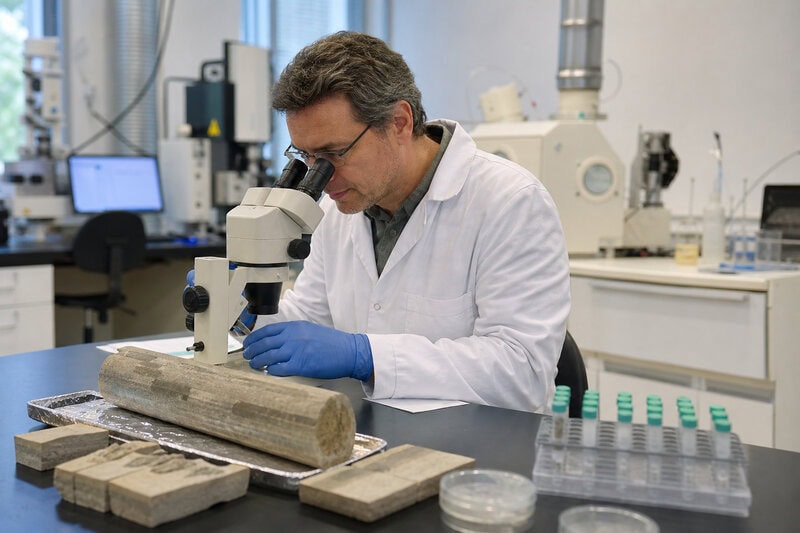
The central challenge of this research is immediately apparent: the original impactor was largely vaporized on contact with Earth. There is no surviving fragment to examine directly. Instead, researchers work from geochemical signatures preserved in a thin but globally distributed layer of sediment — the K-Pg boundary layer — deposited at the precise moment of impact. This layer is famously enriched in iridium, an element rare in Earth’s crust but abundant in certain meteorite types, and its discovery in the 1980s provided the first strong geochemical evidence for an extraterrestrial cause of the end-Cretaceous extinction.
The newer technique goes further. By measuring precise ratios of rare elements such as ruthenium and osmium isotopes preserved in boundary-layer rocks collected from sites around the world, researchers can match the chemical fingerprint of the impactor to known meteorite classes with increasing precision. This approach amounts to forensic geochemistry — crime-scene analysis conducted on a weapon that disintegrated on use. According to research discussed by the University of British Columbia, the CO chondrite identification represents the current best match to the available isotopic data. The finding carries significant scientific credibility while leaving room for further verification as more boundary-layer samples are analyzed globally.
The Sulfur Factor: Why the Impact Site Made Everything Worse
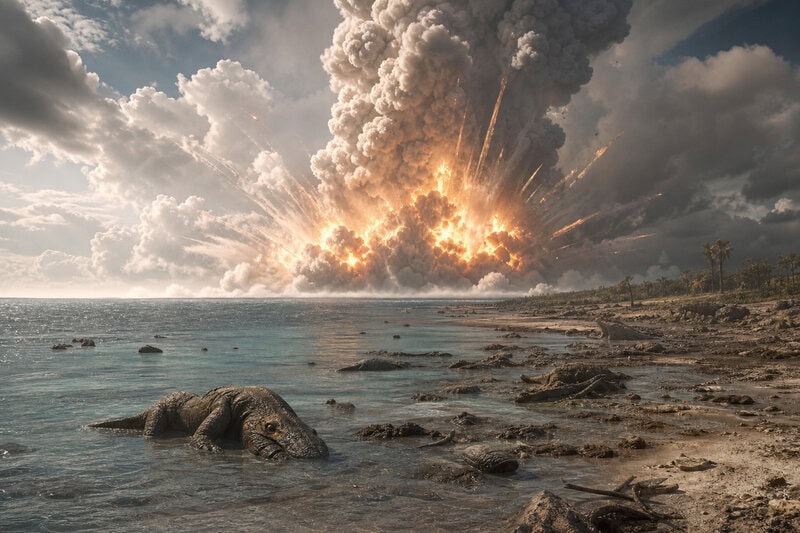
The Chicxulub impactor did not strike random terrain. It hit shallow tropical seas overlying thick deposits of sulfate-bearing rocks called evaporites — a geological coincidence with catastrophic consequences. When the asteroid vaporized those sulfur-rich sediments, it launched enormous quantities of sulfur dioxide into the stratosphere, where the gas converted to sulfate aerosols that reflected incoming sunlight back into space. The result was rapid, severe global cooling known as an impact winter.
That prolonged darkness and cold suppressed photosynthesis across the planet, collapsing food chains from the bottom up. Acid rain formed as sulfur compounds reacted with atmospheric water. The established scientific consensus holds that this combination of cooling, acidification, and darkness — rather than the initial blast alone — was the primary driver of the mass extinction that followed. The new research sharpens rather than overturns that picture: knowing the impactor was a CO chondrite adds precision to estimates of the total sulfur and volatile load released, and to models of how severe and prolonged the resulting environmental disruption actually was.
What This Means for Understanding Dinosaur Extinction
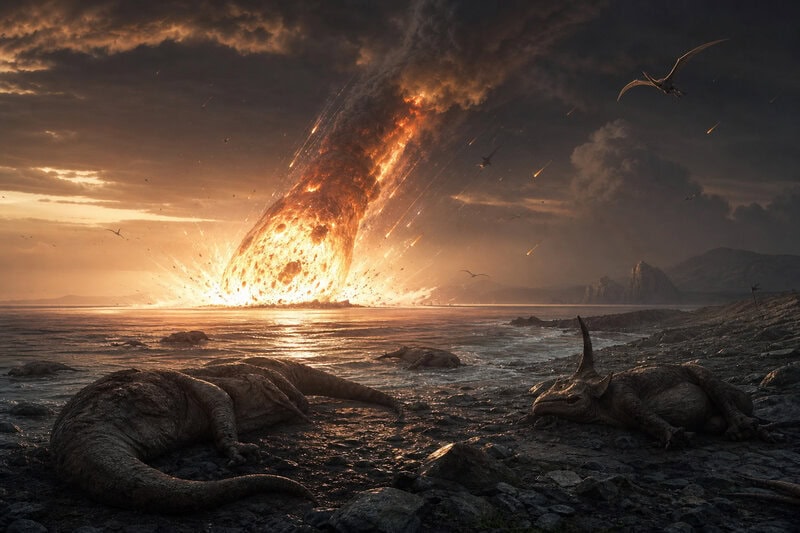
The identification of the impactor as a rare CO chondrite reinforces a view gaining ground among impact scientists: the end-Cretaceous mass extinction may have depended on a convergence of low-probability factors rather than being the inevitable outcome of any sufficiently large impact. An unusual rock type. A geologically vulnerable target rich in sulfur-bearing sediments. A trajectory and angle that maximized atmospheric injection of vaporized debris. Each factor alone would have been destructive; together, they appear to have produced environmental disruption severe enough to push roughly three-quarters of all species past the threshold of survival.
This framing bears directly on one of paleontology’s most debated questions: why did some lineages survive while non-avian dinosaurs perished? The severity and duration of environmental disruption determines which survival strategies are viable. Animals capable of sheltering underground, entering dormancy, surviving on stored energy, or exploiting detritus-based food webs had advantages that apex predators and large-bodied herbivores lacked. The more accurately scientists can model the post-impact environment — including by refining their understanding of what kind of asteroid caused it — the better they can explain the specific pattern of survivors and victims.
Researchers are also careful to note that the CO chondrite hypothesis does not diminish the role of contemporaneous volcanic activity. The Deccan Traps, a vast series of volcanic eruptions in what is now India, were releasing significant quantities of carbon dioxide and sulfur dioxide in the hundreds of thousands of years before and after the impact. Many scientists view those eruptions as a contributing stress on global ecosystems, and the new impactor research is considered complementary to that picture rather than competing with it.
How Rare Is “Rare”? Putting CO Chondrites in Context
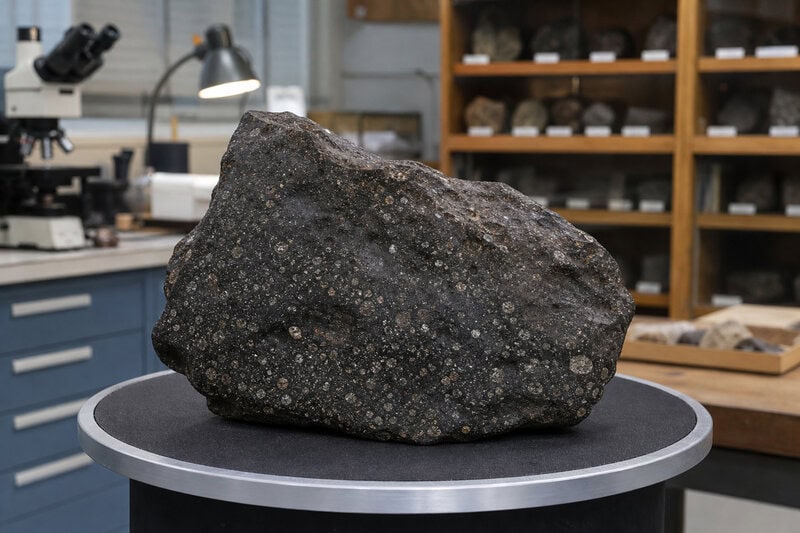
CO chondrites represent a small fraction of the meteorites that fall to Earth and are recovered for study, making them genuinely uncommon within the catalogued meteorite record. Scientists are cautious about drawing firm conclusions from that statistic alone — the sample of recovered meteorites is biased toward rock types that survive atmospheric entry and are recognizable on the surface — but the rarity of CO chondrites is nonetheless real and meaningful in the context of what we know about the asteroid belt, the primary source of Earth-crossing impactors.
The asteroid belt contains a diverse mix of compositional types. CO chondrites originate from a specific region and parent-body population within that belt, distinct from the sources of more common impactor types. Their statistical rarity as large impactors adds weight to what researchers sometimes call the “cosmic bad luck” framing of the dinosaur extinction — the idea that the event required a specific and unlikely convergence of circumstances. Scientists emphasize that rarity does not mean impossibility: over geological time, large impacts of diverse compositions are expected. What makes Chicxulub unusual is the intersection of impactor type, target geology, and timing relative to existing ecosystem stresses.
Open Questions and Broader Stakes
The research is ongoing. Scientists plan to test the CO chondrite identification against boundary-layer samples from additional global sites, particularly marine sediment cores that preserve fine-grained geochemical records with minimal contamination from surrounding rock. Confirmation across a wider dataset would substantially strengthen the hypothesis and move it toward established consensus.
The implications extend beyond paleontology. Improved understanding of how different asteroid compositions produce different impact consequences directly informs planetary defense — the field dedicated to assessing and potentially deflecting near-Earth objects. Space-based telescopes can determine the spectral type of an approaching asteroid as a proxy for composition, but translating that observation into a reliable hazard assessment requires knowing how rocks of different types behave on contact with Earth’s atmosphere and surface geology. The CO chondrite finding contributes useful data to that problem.
The study also raises a broader question: were other major extinction events in Earth’s history shaped by similarly unusual impactors, or is Chicxulub’s outcome uniquely tied to its specific impactor composition? That question is likely to drive research for years. For now, the CO chondrite hypothesis stands as a scientifically grounded and actively tested advance in impact science — one already changing the questions researchers ask about what kind of asteroid killed the dinosaurs, and about how differently life on Earth might have unfolded had the rock been even slightly more ordinary.