
Last week, students at Birchwood School watched a routine school day transform into something altogether different: dinosaur bones, fossils, and eggs emerged from the ground in a controlled discovery event staged on their own school grounds, turning a classroom morning into a live paleontological field site. What followed — the wide eyes, the reaching hands, the torrent of questions — was not simply excitement. According to researchers at the University of California, Berkeley’s Greater Good Science Center, it was awe, and awe, it turns out, is one of the most consequential neurological states a young learner can enter.
What Is Happening Inside a Child’s Brain During a Dinosaur Discovery
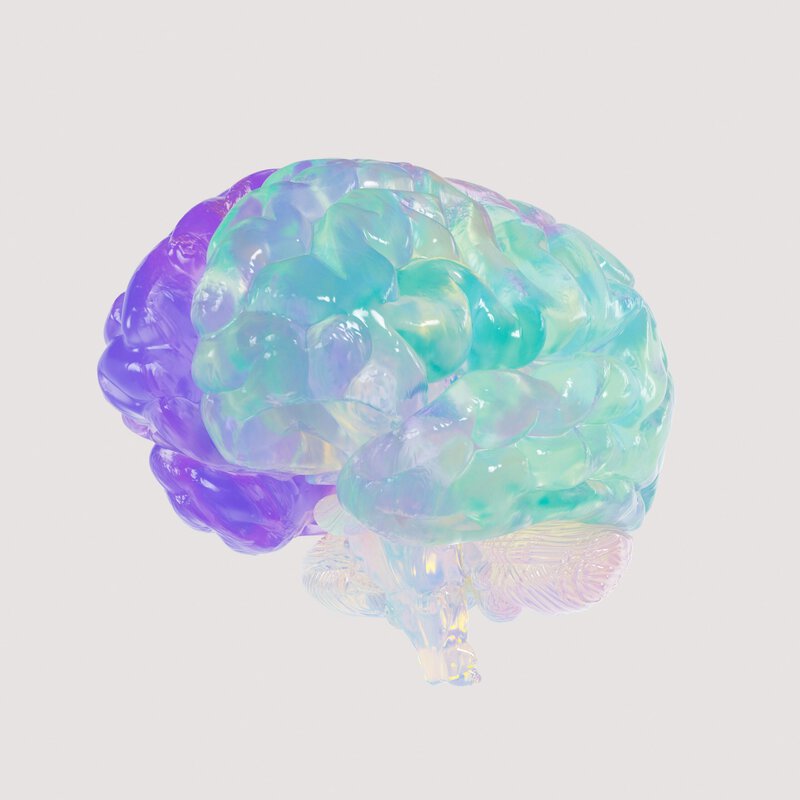
The Greater Good Science Center defines awe as the emotion triggered when something vast or extraordinary challenges our existing mental frameworks, forcing the brain to revise its model of what is possible. Few stimuli qualify more completely than a 66-million-year-old skeleton appearing in your schoolyard. But the precise question worth asking is this: what is the underlying neuroscience, and why does it matter for lifelong learning?
Awe appears to activate the brain’s default mode network — the system associated with self-referential thought, narrative construction, and meaning-making — while simultaneously reducing analytical inhibition in the prefrontal cortex, a pattern documented in neuroimaging research published in Psychological Science. The result is a brain that is simultaneously wide open and deeply engaged: less inclined to filter incoming information and more inclined to absorb and integrate it.
Children are disproportionately susceptible to this effect for a structural reason. The prefrontal cortex, which functions partly as a cognitive braking system, is not fully developed until the mid-twenties. In a child’s brain, the brakes are lighter by design, which means wonder floods in faster and anchors more deeply. This is not a deficit — it is, from an educational standpoint, a remarkable window of opportunity.
The memory implications are equally significant. Research has found that emotionally arousing, awe-inducing stimuli increase norepinephrine release in the locus coeruleus, a brainstem region that effectively tags experiences as worth storing in long-term memory. A child who digs a fossil out of the ground is not just having fun — their brain is actively marking the moment for durable retention. It is worth noting, as Dacher Keltner at UC Berkeley has acknowledged, that direct pediatric neuroimaging studies of awe remain limited; most neuroimaging research in this area draws on adult subjects. The pediatric picture is compelling but should be treated as emerging rather than fully established science.
Why Dinosaurs Specifically: The Cognitive Profile of a Near-Perfect Learning Object
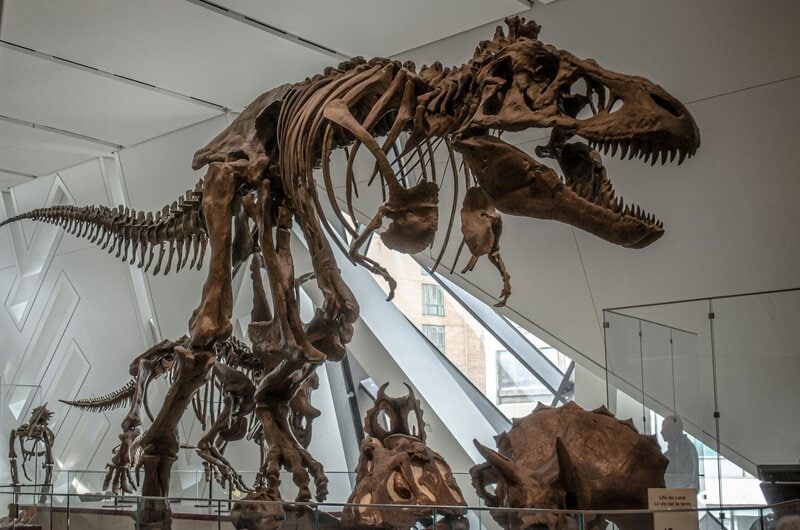
Dinosaurs are not an arbitrary hook. Psychologist Tracy Gleason’s research, published in Developmental Psychology in 2011, documented that children who develop what she called “intense interests” — a category dinosaurs consistently dominate — show measurably stronger attention spans, deeper information-processing habits, and greater tolerance for conceptual complexity than peers without such focused passions. The mechanism appears to be that intense interest trains the brain’s executive attention systems, building cognitive habits that transfer across subjects.
Part of dinosaurs’ power as a learning object lies in their conceptual density. A single fossil lesson, like the one staged at Birchwood School — where each student chose a dinosaur species to research individually — naturally surfaces deep geological time, the mechanics of extinction, the principles of evolution, and the logic of ecological interdependence, all within a single thematic container. Dinosaurs are not merely a topic; they are a gateway system.
There is also a psychological dynamic that researchers in threat-appraisal theory describe as optimal challenge. Dinosaurs are simultaneously enormous — cognitively arresting by scale alone — and safely extinct, meaning they stimulate the brain’s arousal systems without triggering genuine avoidance behavior. The child is challenged without being threatened, a balance that tends to maximize engagement and reduce defensive processing.
Developmental psychologists have argued that the deeper draw is ontological rather than merely dramatic. Dinosaurs force children to confront the fact that the world was radically different before they existed — that time is vast, that dominance is temporary, that the planet has a history entirely unrelated to human presence. That confrontation is a foundational step in developing genuine historical and scientific thinking, and it is one that very few other topics in an early-childhood curriculum can reliably deliver. Early-years education researchers have made a similar case, noting that dinosaurs offer a rare combination of emotional engagement and conceptual seriousness that educators would be unwise to undervalue.
Birchwood in Practice: How a Discovery Event Translates Neuroscience Into Pedagogy
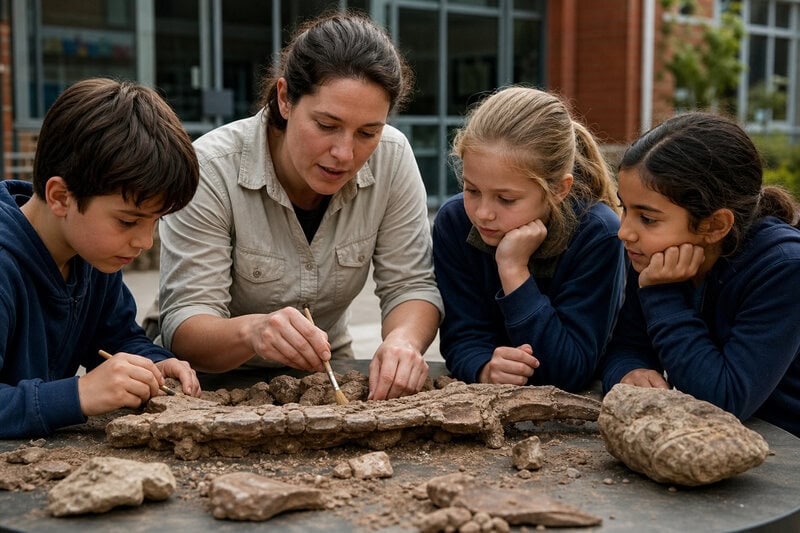
When Birchwood School students encountered dinosaur bones and fossils on their school grounds, the event was structured across several cognitive layers. Physical excavation came first, providing a concrete sensory experience — the weight of a fossil, the texture of bone. Individual species research followed, assigning each child intellectual ownership over a specific subject. Then came making: students built their own dinosaurs from clay, cardboard, recycled materials, and paint, constructing physical representations of what they had learned.
This layered structure maps directly onto what cognitive scientist David Kolb described as the experiential learning cycle: concrete experience, reflective observation, abstract conceptualization, and active experimentation. Each phase reinforces the others. Research on project-based learning — including work by Krajcik and Shin in the Cambridge Handbook of the Learning Sciences (2014) — consistently shows that this cyclical structure produces deeper conceptual retention than linear instruction alone.
The making component deserves particular attention. When students built their own dinosaurs from recycled materials, they were engaging in what MIT Media Lab researchers call constructionist learning: the act of building an external artifact forces the brain to externalize and stress-test internal understanding. You cannot successfully build a model of a Triceratops without resolving what you actually believe about its anatomy, its proportions, and its biology. The physical object becomes a visible record of the child’s current understanding — and an immediate prompt for revision when something does not look right.
The Birchwood event also surfaced what many educators tend to avoid: the difficult conversations. Dinosaurs open natural, low-stakes doors to discussions of extinction, death, geological time, and evolution — topics that teachers often defer because they feel too large or too fraught for young students. Research from the University of Cambridge’s Faculty of Education suggests that framing these as “big questions” rather than facts to be delivered increases conceptual engagement in primary-age students. The dinosaur context provides emotional distance that makes the vastness of these ideas approachable rather than overwhelming.
One honest caveat belongs here. While the excavation-plus-creation model aligns with well-replicated project-based learning research, whether the specific combination of awe-induction followed immediately by constructionist making produces superior outcomes compared to either approach alone remains an open and under-studied research question. The alignment with theory is strong; the direct comparative evidence is not yet.
Scaling the Moment: The HoloTheater and Informal Science Learning
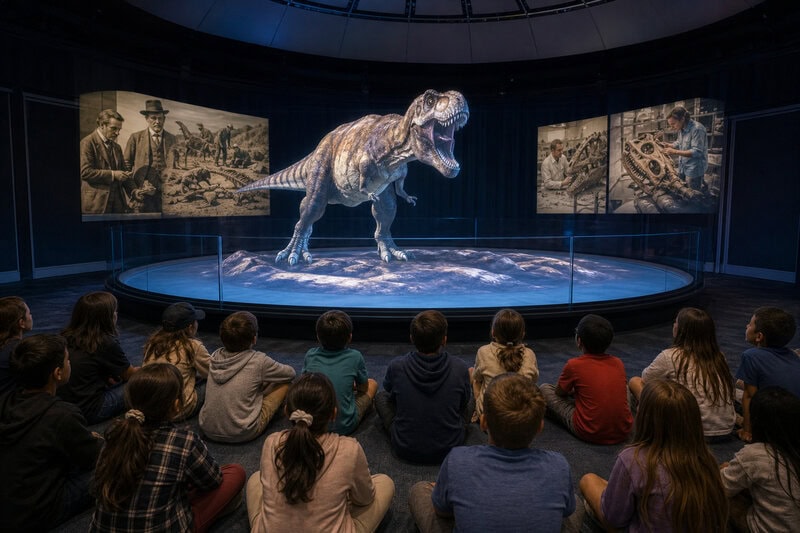
Not every school can stage a fossil excavation. The Museum of Discovery and Science has developed an institutional response to that access gap: a HoloTheater presenting Dinosaur Discoveries: A Holographic Adventure, a 25-minute immersive journey through 140 years of paleontology history. Described by the museum as the first holographic theater of its kind in the United States, the experience moves participants through the arc of dinosaur discovery science — from 19th-century bone hunters to contemporary analysis of fossil proteins.
The choice of holographic technology connects to research on what media psychologist Matthew Lombard at Temple University calls presence — the subjective sense of being physically located inside a depicted environment. Lombard’s work identifies presence as a meaningful amplifier of emotional engagement and information retention, and holographic displays score higher on presence measures than flat-screen equivalents in preliminary trials. The format may not be mere spectacle; there is a plausible pedagogical case for it, though large-scale learning-outcome studies in holographic environments remain limited.
The 140-year historical scope of the HoloTheater experience carries its own distinct pedagogical value. Walking students through the evolution of paleontology as a discipline — including its false starts, its revisions, and its continuing debates — models science as a living, self-correcting process rather than a fixed canon of settled facts. This is precisely the disposition that the Next Generation Science Standards prioritize, and it is one that the history of dinosaur science is unusually well positioned to demonstrate: few fields have revised their core assumptions more visibly or more often.
The access dimension matters here. A 2019 National Science Foundation report found that 65 percent of U.S. adults who identified as STEM-interested cited a museum or informal learning experience as a formative trigger for that interest. If that finding holds, the HoloTheater’s reach may extend well beyond its immediate audience and into the long-term scientific identities of the children who pass through it. Several significant paleontological findings announced in early 2025 — including revised phylogenetic analyses of theropod lineages — have kept new dinosaur science prominent in mainstream media, giving educators and museum educators alike a supply of current, real-world anchors for connecting historical narrative to living research.
What Educators and Parents Can Do With the Science
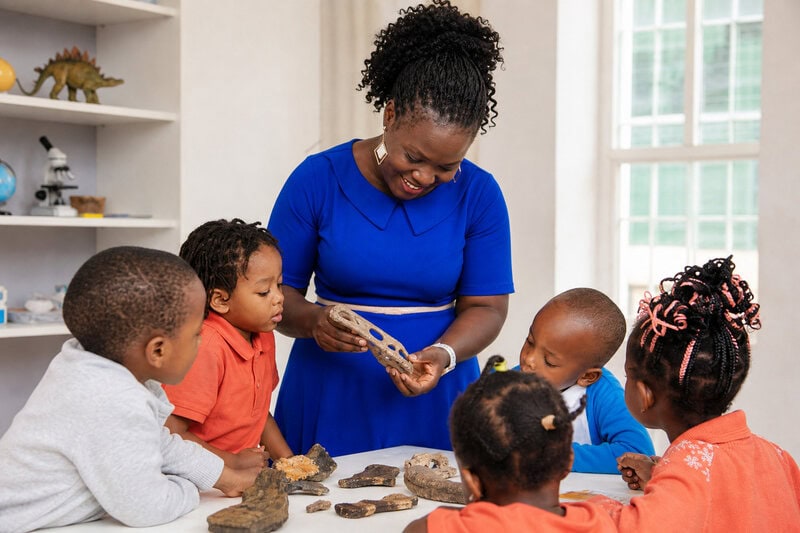
The research, taken together, points toward a set of practical principles rather than a single prescription. Self-determination theory, developed by Deci and Ryan at the University of Rochester, identifies learner autonomy — the sense of genuine choice and ownership — as a strong predictor of intrinsic motivation. The Birchwood model operationalizes this directly: letting each student choose their own dinosaur to research hands the intellectual territory to the learner. That seemingly small act meaningfully changes the brain’s relationship to the material by shifting the experience from compliance to ownership.
Educators and parents should also resist the instinct to shelter children from the harder concepts that dinosaurs naturally raise. Child psychiatrist Stuart Brown at the National Institute for Play has argued that children process existential complexity — death, extinction, the vastness of time — more effectively through narrative and play contexts than through direct instruction. The dinosaur frame provides exactly that: a narrative container in which enormous ideas feel explorable rather than threatening.
Museum visits, including immersive experiences like the Museum of Discovery and Science’s HoloTheater, are most effective when treated as sequels to classroom activity rather than substitutes for it. The research on informal learning consistently shows higher impact when a museum visit is preceded by classroom preparation and followed by structured reflection. The awe generated in the museum is a genuine resource — but without deliberate follow-through, it tends to dissipate rather than compound into lasting understanding.
A 2020 meta-analysis in the Journal of Research in Science Teaching found that novelty-based engagement — including museum visits and discovery events — produces measurable short-term motivation gains but does not automatically translate into sustained science identity without ongoing structural support from educators. The spark is real and neurologically significant. Keeping it alive requires deliberate, continued effort from the adults in the room.
The underlying principle that the neuroscience most clearly supports is this: the specific animal matters less than the conditions it creates. Awe, agency, and the freedom to ask questions that have no tidy answers — these are the variables that drive durable learning. Dinosaurs, with their combination of physical scale, cultural familiarity, deep mystery, and perfect safety, reliably deliver all three. That is not an accident of popular taste. It is a convergence of cognitive conditions that educators, given the weight of the evidence, would be unwise to overlook.