
On the limestone cliffs above the Zuojiang River in southern China, hundreds of vivid red figures have stared out across the landscape for more than 2,000 years — surviving monsoon rains, typhoons, and decades of punishing subtropical heat without fading into the rock. Scientists have now identified the unlikely ingredient behind that extraordinary durability: human blood.
A Discovery Hidden Inside the Pigment
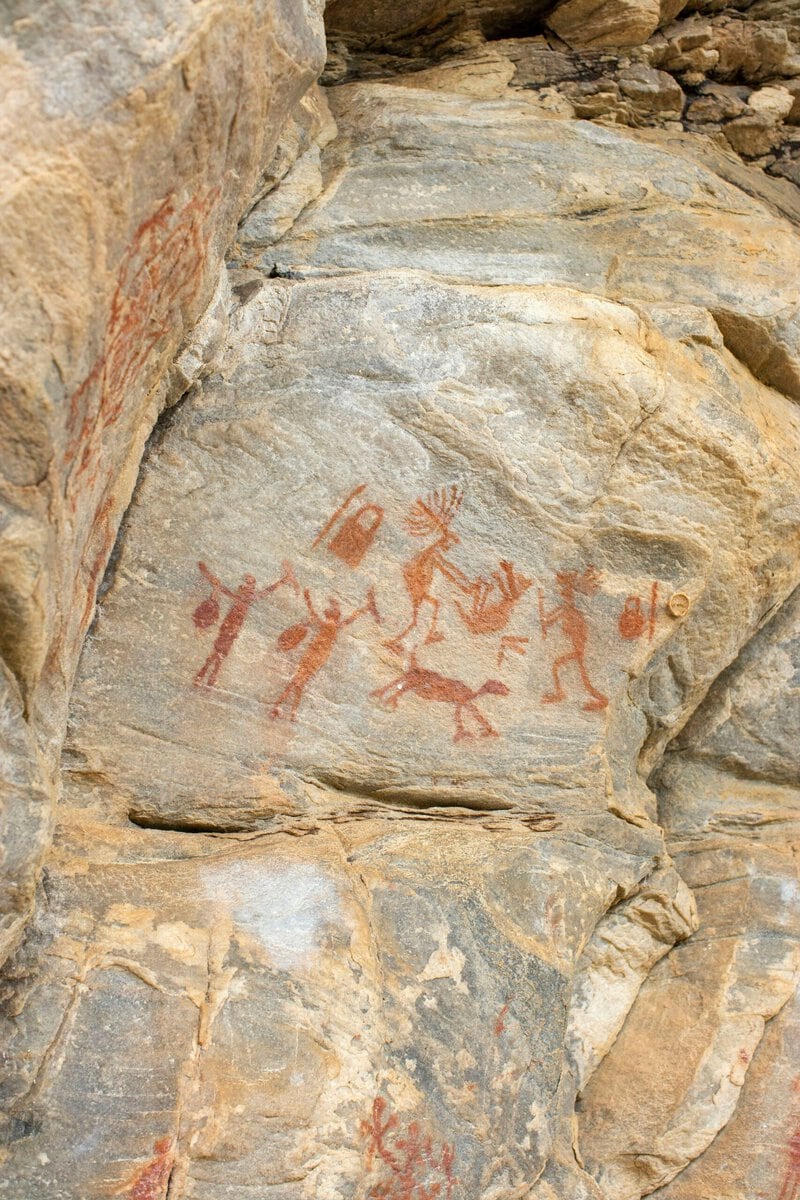
The ancient Chinese rock art at Huashan, located in the Guangxi Zhuang Autonomous Region, is one of the largest and best-preserved rock art complexes in East Asia. Attributed to the ancient Luoyue people and estimated to be at least 2,000 years old, the murals depict human figures, animals, drums, and scenes interpreted as fertility and ancestor veneration rituals — all rendered in a striking, iron-rich red that has survived conditions capable of destroying virtually any conventional paint.
Most organic paint binders — the substances that hold pigment particles together and fix them to a surface — degrade rapidly under sustained moisture and ultraviolet exposure. That Huashan’s pigment has remained structurally intact through two millennia of one of the world’s most demanding monsoon climates makes it, in the language of materials science, scientifically anomalous. Understanding why it survived is not purely academic: the answer could reshape conservation strategies for deteriorating rock art worldwide.
Laboratory analysis of paint samples from the site identified human serum proteins — molecular components found specifically in blood — embedded within the pigment matrix. Researchers were able to distinguish human serum proteins from animal proteins, pointing to a human rather than animal blood source. The proteins were not contaminants introduced later; they were a deliberate ingredient in the original paint formulation.
The detection of intact proteins in material this old is itself remarkable. Proteins typically break down over decades, let alone centuries. Their survival inside the Huashan paint strongly suggests that the mixture created a chemically protective microenvironment — one in which the biological molecules were shielded from the very processes that would ordinarily destroy them.
The Chemistry: How Blood Made Paint Nearly Indestructible
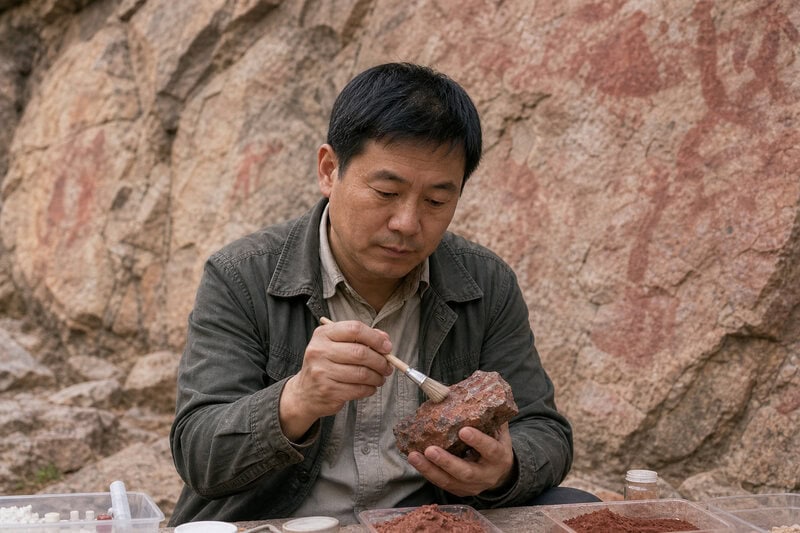
The Huashan paint was not simply blood applied to stone. Analysis indicates a composite formulation: hematite (a red iron-oxide mineral providing the pigment), lime (calcium hydroxide), and blood acting as a binder. Each component played a distinct role, and the interaction between them appears to be central to the paint’s longevity.
Proteins in blood behave as natural polymers — long-chain molecules that, when combined with lime and allowed to cure, form a tough, flexible matrix. The lime raises the pH of the mixture, partially denaturing the blood proteins in the process. Denaturation, in this context, means unfolding: the proteins lose their original three-dimensional shape and expose reactive molecular sites that bond more aggressively to both the mineral pigment and the calcium-rich limestone rock face beneath.
The most striking finding concerns what happens at the microscopic level. Research findings indicate that the proteins appear to have triggered the nucleation and growth of microscopic crystals around individual hematite pigment particles — effectively welding the mineral grains to the cliff surface in a process analogous to biological mineralization, the same mechanism by which living organisms build shells and bones. The result is a paint layer that becomes progressively more stone-like than organic over time. This inverts the usual logic of deterioration: the monsoon rains and heat that would dissolve a conventional organic binder instead appear to accelerate the mineralization process, strengthening rather than eroding the paint’s grip on the rock.
The use of lime as a co-ingredient deserves particular attention. Lime-based mortars and plasters have served as durable construction materials across multiple ancient civilizations for thousands of years. Combining lime with a protein binder to fix pigment to a vertical rock surface represents a sophisticated understanding of materials chemistry — one that the Luoyue people appear to have developed and refined through accumulated experience, whether or not they would have described it in those terms.
Whose Blood, and Why?
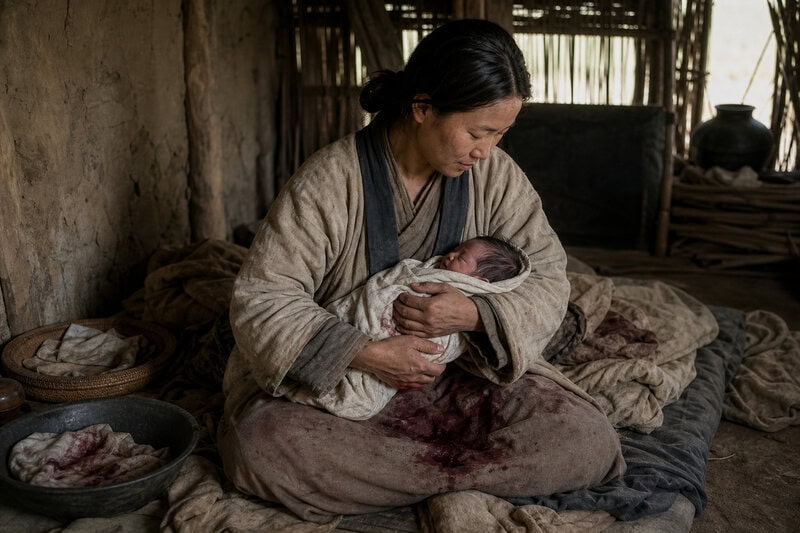
The protein analysis points specifically to human blood, and some researchers have proposed a more precise origin: post-partum blood, associated with childbirth. This hypothesis, reported in connection with the broader findings, remains difficult to confirm definitively from chemical evidence alone, and scientists acknowledge the interpretation requires further investigation.
If the post-partum hypothesis proves correct, it would situate the paint’s ingredients within a broader pattern documented by ethnographers across multiple cultures. Childbirth blood has been regarded as symbolically potent in numerous traditions, associated with fertility, new life, and auspicious transformation. The Luoyue people left no written records explaining their methods or intentions, so the ritual significance of the blood ingredient is inferred indirectly — from the content of the art itself, which features scenes consistent with fertility and ancestral ritual, and from comparative anthropology.
That inference points toward a possibility worth taking seriously: the ancient artists may not have drawn a sharp boundary between the functional and the sacred. Choosing a substance that carried deep ritual meaning — and that also, through accumulated experience, demonstrably worked as a binder — may have been a single, unified decision rather than two separate ones. The practical and the symbolic would have been inseparable.
Blood Pigment in the Wider History of Ancient Art
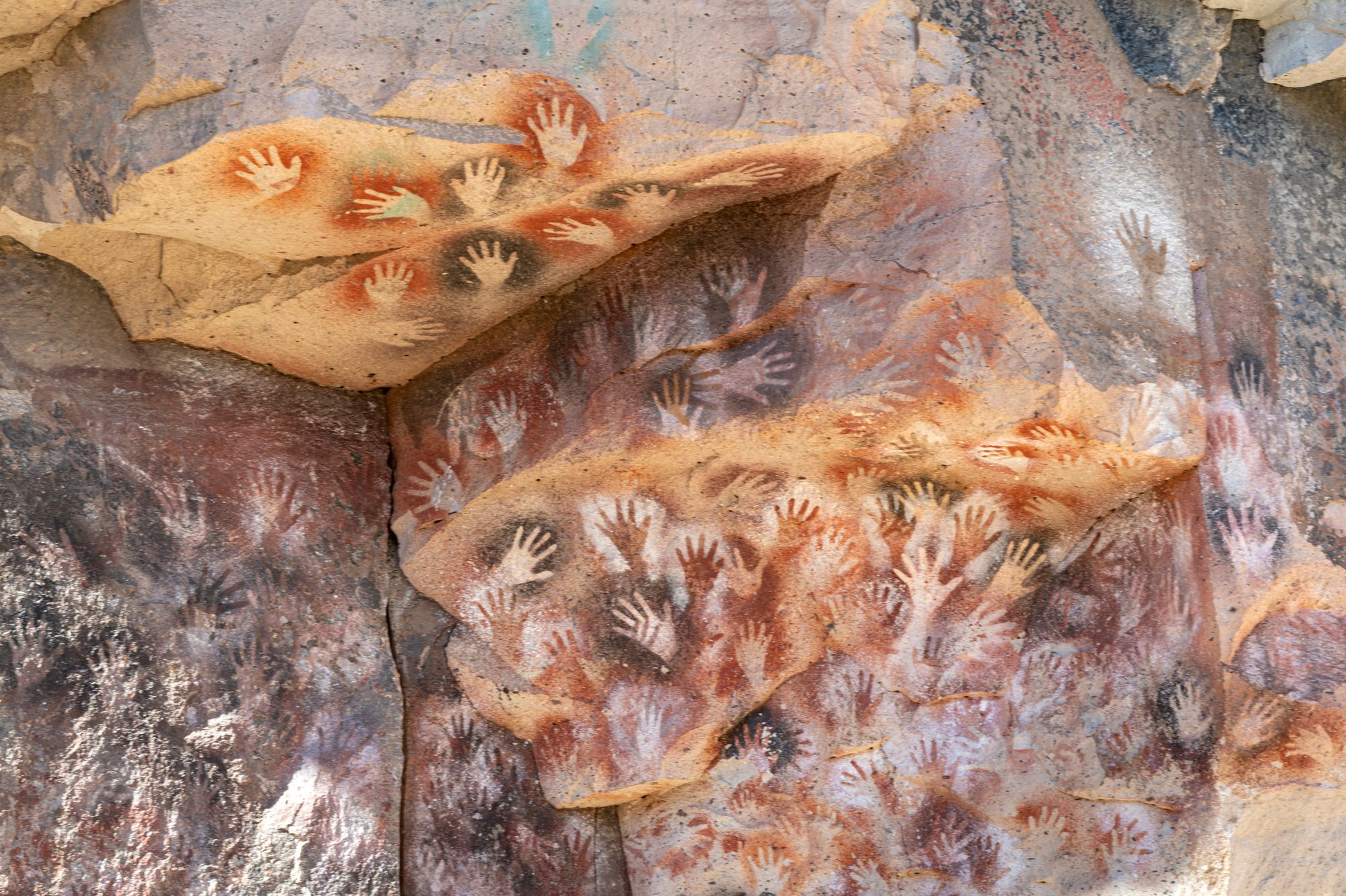
Blood as a paint binder is not unique to China. Researchers have identified protein-based binders, including possible blood components, in European prehistoric cave paintings, suggesting that independent cultures across the ancient world arrived at similar solutions to the problem of making pigment adhere to stone. What distinguishes the Huashan case is the specific combination — human blood proteins, lime, and hematite — deployed in a high-humidity monsoon environment, and in a formulation that appears to have been optimized for precisely those conditions.
The established consensus in archaeometry — the application of scientific methods to archaeological materials — holds that ancient paint-makers worldwide experimented extensively with organic binders, including egg whites, plant resins, animal fat, and blood. What the Huashan findings contribute is rare direct molecular evidence: not just that a protein binder was used, but which specific proteins were present, and a plausible mechanism explaining how those proteins contributed to the paint’s two-millennium survival.
Researchers note that the crystal-nucleation mechanism — the microscopic welding of pigment to rock — is an emerging finding rather than settled science. Further work is needed to map precisely how protein structure, lime concentration, and curing conditions interact to produce the observed durability across the full range of Huashan’s painted surfaces.
What the Finding Means for Conservation
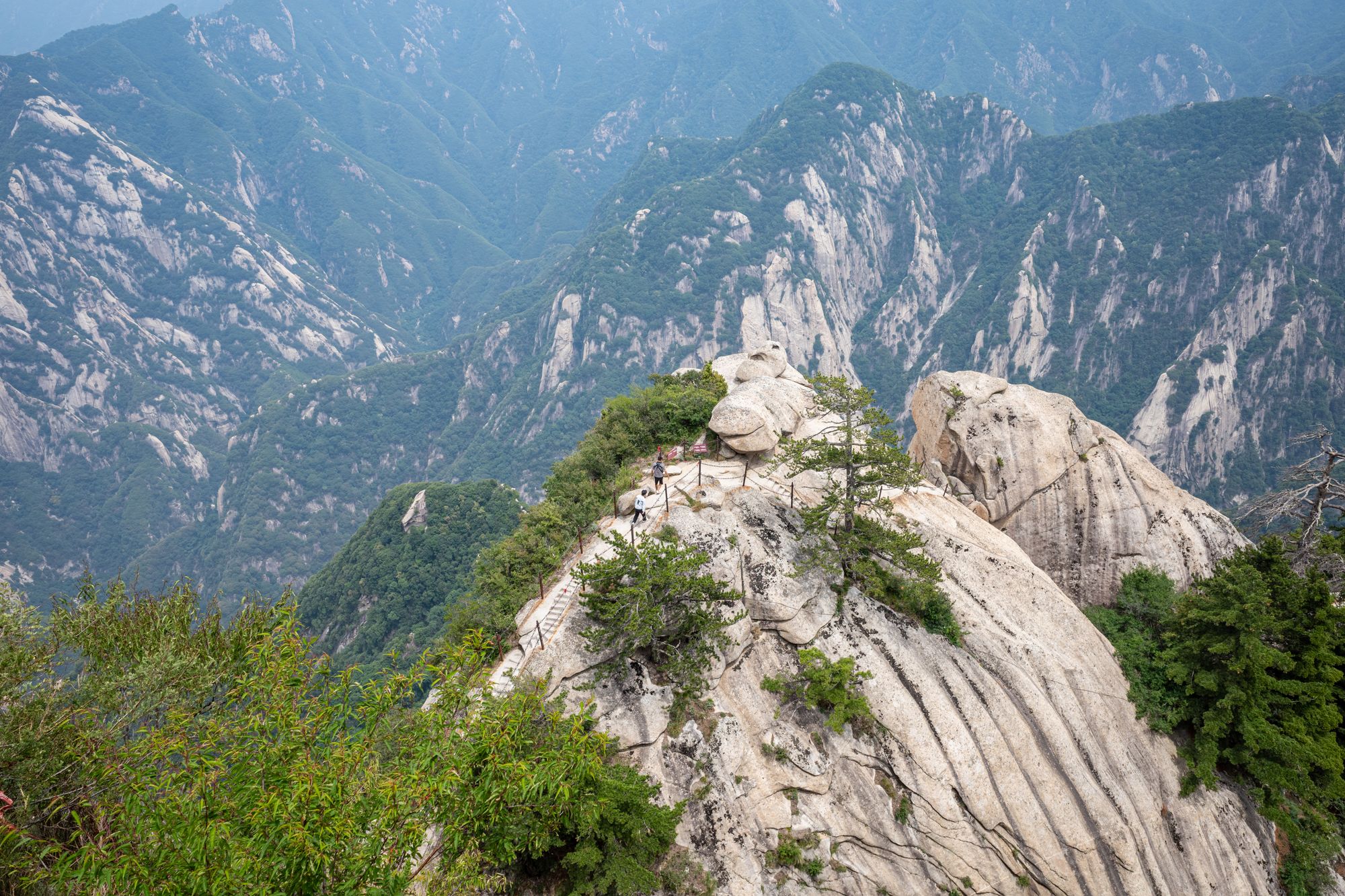
Huashan was inscribed as a UNESCO World Heritage Site in 2016, and the site continues to face genuine threats: rising humidity from regional development, increased visitor activity, and the compounding effects of climate change on an already demanding environment. That context makes the scientific understanding of the site’s preservation chemistry both intellectually significant and practically urgent.
Identifying the precise chemistry responsible for the murals’ survival gives conservators a molecular target. Rather than applying modern synthetic consolidants that may be chemically incompatible with the original protein-mineral matrix, restorers can investigate approaches that replicate or reinforce the natural system already present in the paint. That represents a meaningfully different conservation philosophy — one grounded in the original materials rather than imposed over them.
More broadly, the Huashan study illustrates the growing power of proteomics — the large-scale analysis of proteins — as an archaeological tool. Where earlier techniques could confirm the presence of organic material in ancient pigments without identifying exactly what that material was, modern protein analysis can read a molecular ingredients list from artifacts thousands of years old, recovering cultural and technological information that no written record preserved. In the case of the ancient Chinese rock art at Huashan, that ingredients list turns out to contain one of the most fundamental substances in human biology — and to have kept a record written in red for longer than most civilizations have existed.