
In June, across India’s densely populated plains, something increasingly dangerous is unfolding: the air is thick with moisture, temperatures are climbing past the point where the human body can safely cool itself, and the rains that are supposed to bring relief have not yet arrived. A new climate study affiliated with the Institute of Atmospheric Physics has formally identified this overlap not as a seasonal quirk but as a structural and growing threat — a deadly compound of extreme humid heat and intense rainfall that is reshaping the risks South Asia faces every monsoon season.
What Climate Scientists Mean by a ‘Compound Extreme Event’
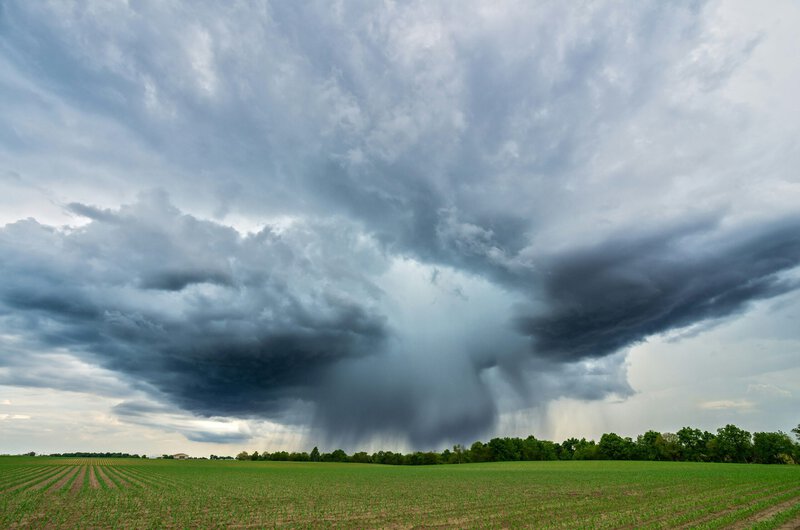
A compound extreme event — the technical term climate scientists use — describes a situation in which two or more hazardous weather conditions overlap in time or space, producing risks that are far greater than either hazard would generate alone. A heat wave and a flood, occurring separately, each carry well-documented dangers. When they converge, or arrive in rapid succession, they can overwhelm the infrastructure, institutions, and human bodies that might otherwise cope with either one individually.
The Indian Summer Monsoon sits at the center of this emerging crisis because it functions as a vast thermal engine. The monsoon is driven by the temperature contrast between a rapidly heating landmass and the cooler Indian Ocean. As climate change accelerates the warming of land surfaces, that engine is being tuned toward more volatile and less predictable outputs. More heat over the continent draws in more moisture-laden air — but the timing, intensity, and geographic distribution of that moisture are shifting in ways that decouple the familiar seasonal rhythm that millions of people and agricultural systems have been built around.
A critical piece of the danger lies in the physics of humid heat. When high temperatures combine with high relative humidity, the human body’s primary cooling mechanism — sweating — becomes severely impaired. Sweat evaporates poorly in humid air, meaning the body cannot shed heat effectively. Scientists measure this risk using wet-bulb temperature, which represents the lowest temperature achievable by evaporative cooling alone. Beyond certain wet-bulb thresholds, prolonged outdoor exposure becomes physiologically dangerous regardless of fitness or acclimatization. It is this combination of heat and humidity — not air temperature alone — that defines the acute risk during India’s pre-monsoon and monsoon transition period.
It is established scientific consensus that climate change independently intensifies both heat extremes and precipitation extremes. What the new research is contributing, and what remains a more actively investigated finding, is the degree to which these extremes are increasingly co-occurring within the same monsoon season rather than separating cleanly into a pre-monsoon heat phase and a monsoon rainfall phase. That blurring of boundaries is where the compound threat emerges.
When Monsoon Delay Becomes a Health Emergency
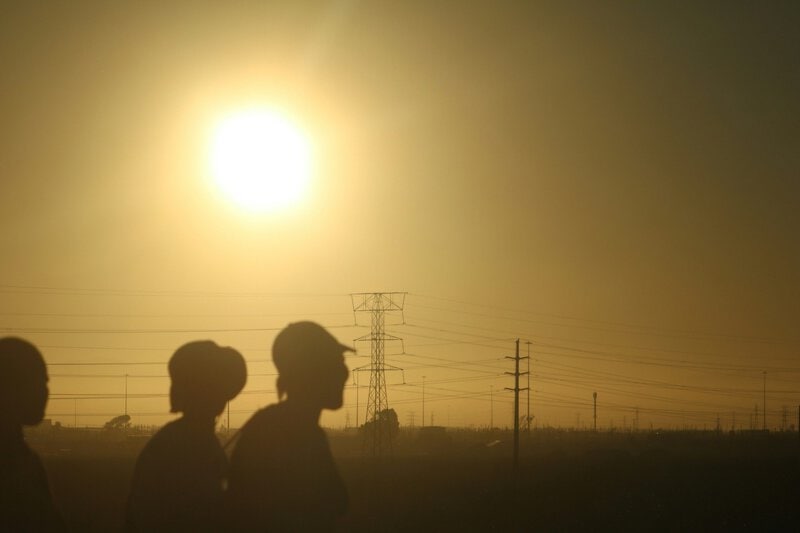
A particularly hazardous scenario arises when the monsoon’s arrival is delayed by days or weeks, allowing continental heat to continue building over an atmosphere already laden with moisture. The result is a window of extreme felt temperatures — combining air temperature and humidity into a single physiological burden — that can breach danger thresholds even when the nominal air temperature might appear manageable by historical standards.
A delayed monsoon does not simply push the rains back on a calendar. It allows heat to accumulate over a landscape and an atmosphere that are already primed with humidity from oceanic moisture transport. The combination can produce oppressive conditions before any meaningful rainfall arrives to lower surface temperatures or provide physical relief. Outdoor workers — agricultural laborers, construction crews, street vendors — face the full exposure of that window with little institutional recourse.
India has been grappling with record heat events in recent years, and the Institute of Atmospheric Physics-affiliated research situates these episodes within a pattern of monsoon transformation rather than treating them as isolated anomalies. Deccan Herald’s reporting on the heat-rain double threat places the study’s findings explicitly in this context, describing the convergence of delayed onset, extreme humidity, and intensified rainfall as an emerging structural feature of South Asian climate rather than a deviation from the norm.
What the New Study Found — and What It Does Not Claim
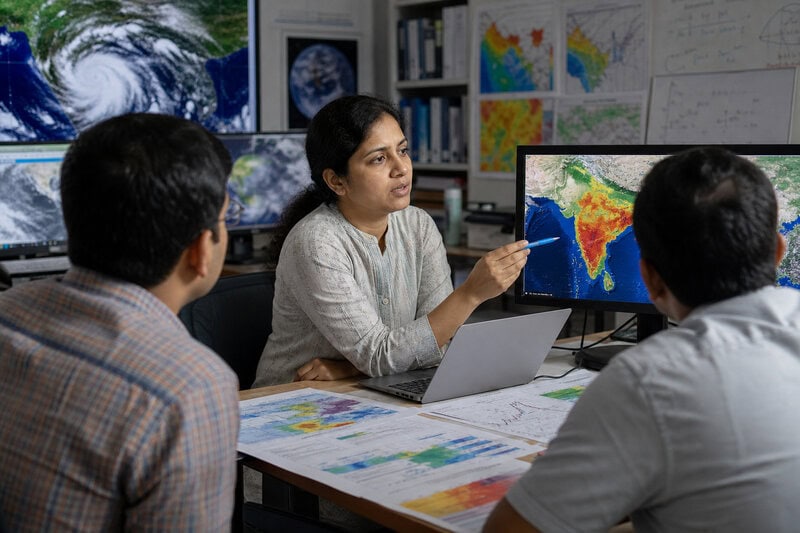
The research associated with the Institute of Atmospheric Physics identifies a statistically significant and growing pattern: extreme humid heat and extreme rainfall events tied to monsoon variability are co-occurring with increasing frequency across densely populated regions of the Indian subcontinent. The study, as summarized by Farms.com, formally characterizes this as a deadly dual threat — one driven by shifts in the monsoon’s onset timing, intensity distribution, and interaction with large-scale atmospheric circulation patterns.
The physical pathway the research traces is important to understand. Shifts in when and where monsoon moisture arrives are creating windows in which heat stress and flood risk are no longer clearly separated. When flooding strikes urban areas already under heat stress, the compounding effect is not simply additive. Flooded roads block access to cooling centers. Waterlogged electrical infrastructure disrupts power supply to hospitals and air conditioning systems. Overwhelmed drainage systems prevent communities from leaving flooded homes to seek relief. The two hazards, in other words, actively amplify each other’s lethality by dismantling the very systems societies rely on to survive either one.
What the study does not claim is equally important for accurate public understanding. The research identifies patterns and physical mechanisms; it does not assign specific casualty projections to future compound events. Readers should treat with caution any downstream coverage that implies precise mortality forecasts derived from this work — the science does not support that level of specificity.
Imagery documenting the shifting patterns in Indian monsoon rainfall — with some regions experiencing intensification and others seeing redistribution — helps illustrate why the compound threat is not geographically uniform and why regional differentiation matters for accurate risk assessment.
The Forecasting Breakthrough: Two Years of Warning Before a Dangerous Season
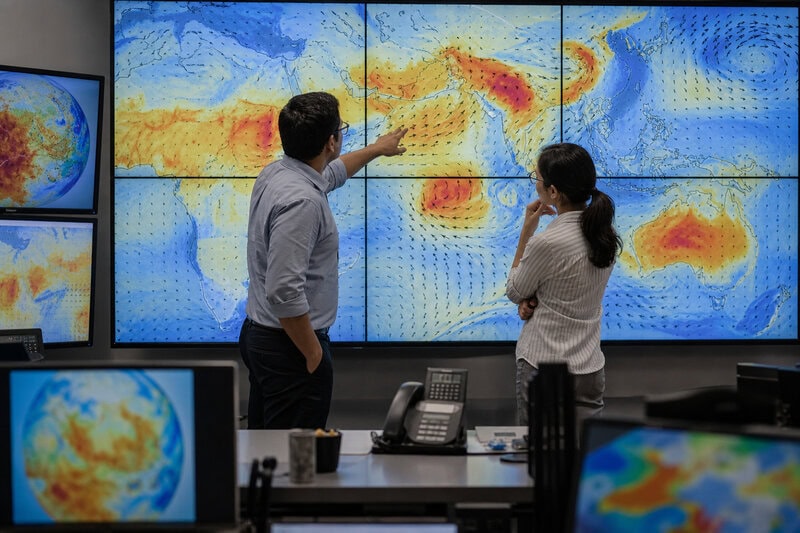
The most practically significant contribution of the new research may be a forecasting advance that, if validated, could change how governments and emergency managers prepare for compound monsoon risks. Researchers have identified climate signals — patterns in large-scale ocean-atmosphere coupled systems — that can flag elevated risk of a heat-rain compound season up to two years in advance.
That lead time matters operationally in ways that shorter-range forecasts cannot match. Standard seasonal weather forecasts extend roughly three to six months, giving governments limited time to pre-position resources, expand hospital capacity, or alert agricultural communities. A two-year window would theoretically allow for infrastructure investment decisions, public health system scaling, agricultural contingency planning, and coordination with international humanitarian agencies — the kind of anticipatory action that is rarely possible under conventional forecasting timelines.
The scientific concept underlying this advance is predictability derived from slowly evolving ocean-atmosphere coupled systems. Phenomena such as El Niño-Southern Oscillation (ENSO) — the periodic warming and cooling of tropical Pacific Ocean surface temperatures — and the Indian Ocean Dipole (IOD) — a pattern of east-west temperature contrast across the Indian Ocean — are known to modulate monsoon behavior on interannual timescales. Because these ocean systems evolve slowly relative to atmospheric weather, they can in principle be observed and tracked far enough in advance to generate useful probabilistic forecasts of monsoon seasons one to two years out.
Epistemic caution is warranted here. A two-year predictive skill for compound extremes, if independently validated across multiple monsoon seasons, would represent a meaningful and genuinely novel advance over current operational capabilities. The critical next step — independent replication and rigorous testing against out-of-sample historical seasons — has not yet been publicly completed as far as available reporting indicates. Operational forecasting agencies will need that evidence before incorporating such a signal into official risk communications. Early reporting from Jio News on the dual threat finding reflects the significance the scientific community is already attaching to the research even at this preliminary stage.
Who Bears the Greatest Risk
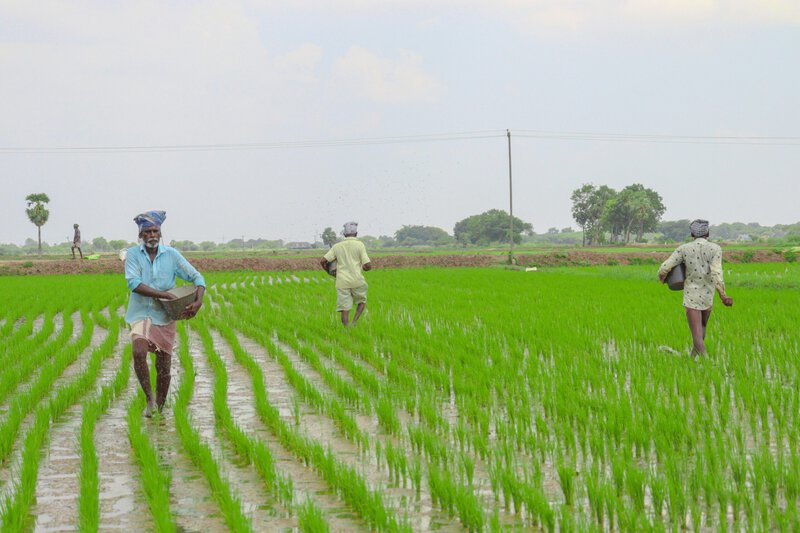
The compound threat is not distributed equally across India’s population or geography. The populations at highest risk share a common vulnerability: limited ability to shelter from heat, limited access to flood-safe infrastructure, or both.
- Outdoor agricultural and informal urban laborers face prolonged heat and humidity exposure during the precise window when the compound threat is most acute, with little institutional protection or legal recourse.
- Low-income urban communities in flood-prone areas often live in neighborhoods with inadequate drainage systems and unreliable power supply — the two resources most critical for surviving simultaneous heat and flood events.
- Elderly individuals and those with chronic illness have compromised thermoregulatory capacity, making dangerous wet-bulb conditions more rapidly life-threatening even with brief outdoor exposure.
India’s cities were largely designed around a predictable monsoon rhythm. Drainage systems, building codes, heat emergency protocols, and agricultural calendars all assume a seasonal separation between heat stress and flood risk — a separation that the emerging pattern is steadily eroding. The Indo-Gangetic Plain — among the most densely populated corridors on Earth, and situated precisely where heat waves and monsoon moisture converge — faces disproportionate exposure compared with drier western regions or higher-altitude terrain.
The broader climate change context is grounded in established international science. The Intergovernmental Panel on Climate Change (IPCC) Sixth Assessment Report projects increased variability and intensification of monsoon precipitation under continued greenhouse gas emissions, with significant implications for both agricultural systems and human health across South Asia. The new Institute of Atmospheric Physics-affiliated research adds granularity to that picture by identifying the compound nature of the emerging risk and tracing its physical mechanisms in detail. Disaster risk reduction resources tracked by PreventionWeb increasingly reflect the recognition that compound events require planning frameworks that go well beyond those designed for single-hazard scenarios.
Prediction Is Necessary — But Not Sufficient
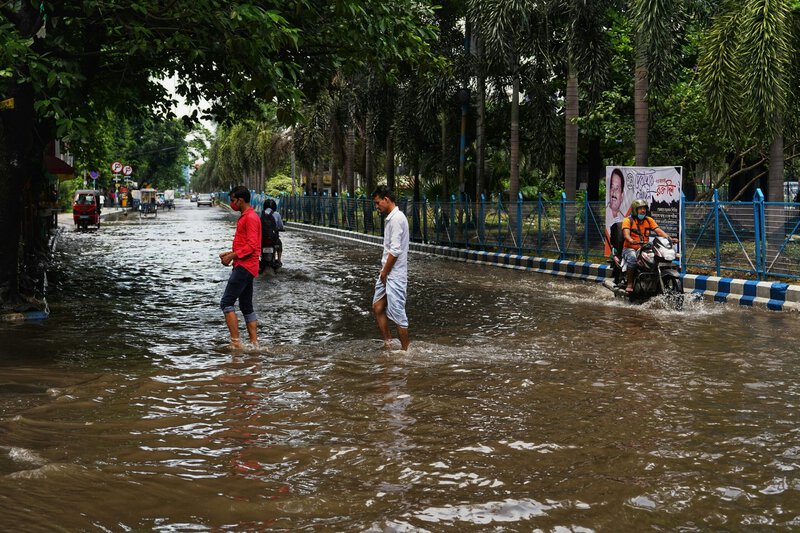
The two-year forecasting advance, if it holds up to independent validation, represents a genuine opportunity to save lives. But a longer warning window reduces risk only if governments, institutions, and communities have the resources, the planning frameworks, and the political will to act on probabilistic long-range signals — a gap that remains substantial across much of South Asia.
Several research and policy frontiers must follow from the current findings. Scientists need to validate the two-year signal across additional monsoon seasons, characterize the uncertainty ranges around the forecast, and develop methods for translating probabilistic climate signals into actionable risk thresholds that public health agencies and emergency managers can actually use. Risk communication — how to convey a statistically elevated probability of a compound season two years from now in a form that motivates preparation without generating alarm fatigue — is itself an active area of applied research that deserves investment alongside the meteorological work.
The policy timing may be consequential. The research arrives at a moment when India is engaged in revisions to its National Disaster Management frameworks. Whether scientific findings of this kind can be translated into policy language quickly enough to influence those frameworks is a question that extends well beyond meteorology into governance, institutional capacity, and political priority-setting.
The Indian Summer Monsoon has always been simultaneously India’s most essential resource and its most powerful natural hazard — the source of the water that sustains agriculture for more than a billion people and the driver of floods that can kill thousands in a single season. What a shifting climate is now producing, and what the new research is beginning to quantify with meaningful precision, is a future in which both of those realities intensify at once. Meeting that future will require not just better forecasts, but the institutional commitment to act on them years before a dangerous season arrives.