19. Himalayan Yak
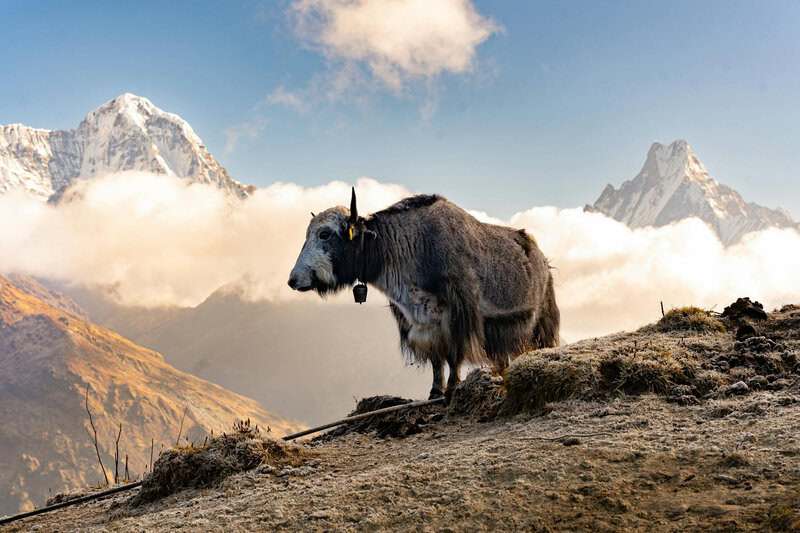
The Himalayan yak, Bos grunniens, is a hardy mammal native to the high-altitude regions of the Himalayas, typically residing at elevations above 5,000 meters (16,400 feet). These yaks have developed several remarkable adaptations to thrive in such extreme environments:
Thick Fur Coat: Yaks possess a dense double-layered coat consisting of long, coarse outer hair and a fine, soft undercoat. This combination provides excellent insulation against freezing temperatures, allowing them to withstand the cold and harsh winds characteristic of high-altitude habitats. (MDPI)
Large Lungs and Heart: To cope with the reduced oxygen levels at high altitudes, yaks have proportionally larger lungs and hearts compared to other cattle species. This anatomical adaptation enhances their ability to extract and circulate oxygen efficiently throughout their bodies. (Oxford Academic)
Efficient Oxygen Utilization: Yaks have a higher number of red blood cells, which improves oxygen transport in their blood. Additionally, their blood contains hemoglobin with a high affinity for oxygen, facilitating better oxygen uptake and delivery to tissues. (SchoolNet)
Compact Body Structure: Their compact bodies, with short necks and limbs, reduce heat loss and minimize exposure to cold winds. This body design also aids in conserving energy and maintaining body heat in the frigid environment. (MDPI)
Adapted Digestion: Yaks have a large rumen relative to their omasum, allowing them to consume large quantities of low-quality food and ferment it longer to extract more nutrients. This adaptation is crucial during times of nutritional scarcity. (OpenEdition)
These adaptations enable the Himalayan yak to thrive in environments where human survival would be challenging, underscoring the resilience and specialized survival strategies of this remarkable species. For more information, see BBC Earth.