
The copper threading through a smartphone’s circuit board, the gold in a wedding ring, the lithium powering an electric vehicle battery — these materials feel urgently modern, yet their origins are written in geological events that unfolded hundreds of millions of years before the first multicellular animals appeared on Earth. A study led by geoscientists at the University of Sydney, announced in late June 2026, now offers the clearest explanation yet for why those metals ended up where they did: ancient subduction zones silently fertilized specific regions of deep rock, leaving behind a chemical inheritance that billions of years later became the world’s richest mines.
What Subduction Actually Does to Earth’s Interior
Subduction occurs when one tectonic plate — typically a denser oceanic plate — is forced downward beneath another, sinking gradually into the hot mantle below Earth’s crust. That definition is straightforward, but what happens chemically during the descent is anything but simple. As the descending plate heats and compresses, it releases the water, carbon, sulfur, and metal-rich sediments it scraped from the ocean floor on its way down, effectively injecting a concentrated chemical cocktail into the surrounding mantle rock. The result is a zone of altered, enriched material embedded deep beneath the surface — invisible from above but geologically consequential for billions of years afterward.
Active subduction zones, such as those ringing the Pacific Ocean in the so-called Ring of Fire, have long been recognized as productive geological environments. It is well established in the geoscience literature that subduction-related volcanism produces copper-gold porphyry deposits — large bodies of disseminated ore formed when metal-rich magmatic fluids cool and crystallize in the upper crust. Those porphyry systems account for roughly 75 percent of the world’s copper supply, making subduction one of the most economically significant geological processes on the planet.
What the University of Sydney research adds is a deeper and older dimension to that story. Rather than focusing exclusively on active or geologically recent subduction, the study examines zones that ceased activity hundreds of millions to over a billion years ago — what geologists call fossil or ancient subduction zones. The question the researchers set out to answer was whether the chemical signatures those vanished zones left in the mantle lithosphere, the rigid rocky layer directly beneath the crust, could explain the distribution of ore deposits that formed much later and far from any active volcanic arc.
Simulating 1.8 Billion Years of Earth’s Interior
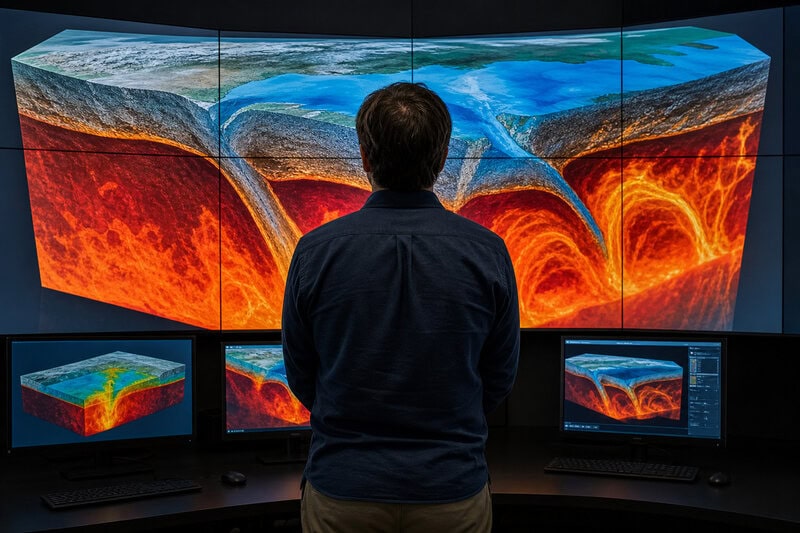
To investigate that question, University of Sydney geoscientists constructed computer simulations that modeled 1.8 billion years of plate tectonic movement. Crucially, the models tracked not only the surface motion of plates but also the resulting deep flows within Earth’s mantle beneath ancient continental edges — a level of temporal and spatial scope that represents a significant methodological advance over earlier approaches to understanding how ore deposits form in relation to deep tectonic history.
One of the study’s key mechanical discoveries was that subduction can generate what researchers describe as broad mantle return-flow cells — large, slow convection currents in the lower mantle that persist and continue to redistribute heat and chemically altered material long after the subducting plate itself has stalled or been fully absorbed. In other words, the chemical effects of a subduction event do not simply switch off when the plate stops moving. They reverberate through the deep Earth across geological timescales, continuing to shape the composition of the mantle lithosphere above.
From those simulations, the researchers identified specific regions of mantle lithosphere that had been chemically enriched — or, in the language the study uses, fertilized — by subduction processes over geological time. According to the University of Sydney research, that fertilized mantle lithosphere may represent an important first step in seeding today’s critical mineral deposits of copper, zinc, and lead. The findings were formally announced on June 25-26, 2026, with the work presented as peer-reviewed science rather than speculative modeling.
From Fertilized Mantle to Ore Deposit: A Billion-Year Journey
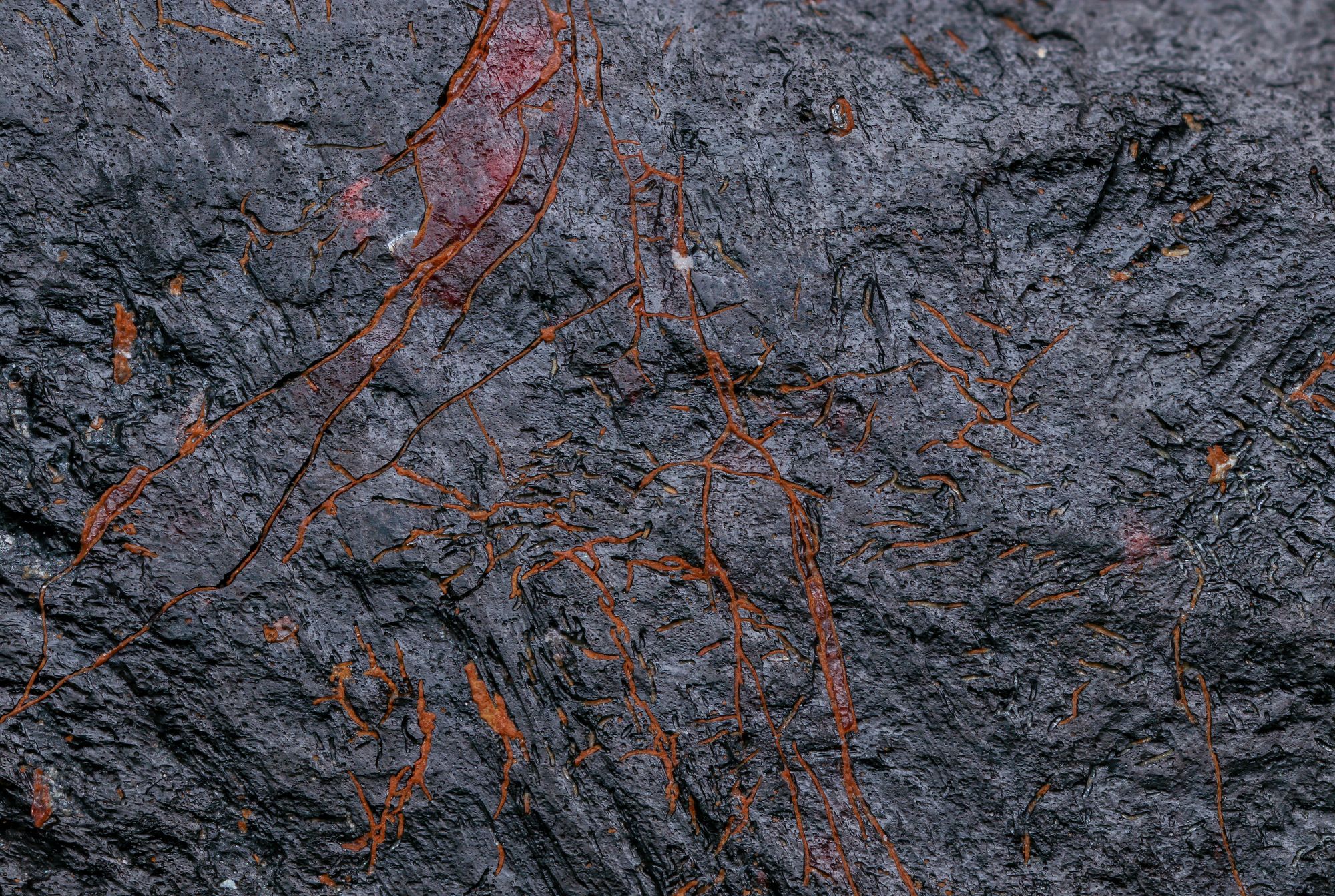
A fertilized region of mantle lithosphere is not itself a mine — it is a precursor, a locked vault of chemically enriched rock. Over millions of years, tectonic stress, heat, and later magmatic events can remobilize the metals stored in that enriched rock, driving metal-bearing fluids upward through the crust where they cool, concentrate, and crystallize into the ore bodies that miners eventually discover. The process is multi-stage, slow, and dependent on a sequence of geological conditions aligning correctly.
A useful analogy is that of a slow-release geological savings account. Metals deposited by ancient subduction sit locked in deep rock for hundreds of millions of years. They are not mobilized until a later geological event — a rifting episode, a new phase of magmatism, a continental collision — finally delivers the right combination of heat and fluid pathways to bring them into the shallow crust where they become economically recoverable. Without that initial chemical endowment, no amount of later geological activity would produce a world-class ore body.
The University of Sydney study links this mechanism specifically to rich deposits of copper, zinc, and lead, whose ore bodies are frequently found along ancient continental margins consistent with the zones the simulations flagged as having undergone sustained prior tectonic processing. Researchers also flag the fertilized mantle lithosphere as potentially relevant to understanding subduction zone lithium deposits — a connection scientists are beginning to investigate as global lithium demand accelerates under the pressure of clean-energy transition. The lithium dimension remains an emerging rather than fully established finding, and the authors treat it as a direction for future research rather than a confirmed conclusion.
Why Continental Edges Became the World’s Richest Mining Districts

The simulations revealed a second mechanism operating alongside chemical fertilization: ancient subduction zones did not merely enrich the mantle — they also mechanically weakened the edges of continents. By thinning and fracturing the lithosphere along those margins, ancient subduction events made continental edges more susceptible to later magmatic intrusion and the upward flow of metal-bearing hydrothermal fluids. In effect, the ancient subduction zone both loaded the gun and built the barrel, creating the chemical preconditions for ore formation and then providing the structural pathways needed to deliver those metals into the crust.
This structural insight helps explain a long-observed pattern in economic geology: many of the world’s most productive mining districts sit along ancient continental margins. The Andes, whose copper and gold deposits rank among the largest on Earth, trace a former subduction boundary. The Copperbelt of central Africa, one of the planet’s most prolific sources of copper and cobalt, occupies an ancient continental margin. Parts of Australia and the southwestern United States follow the same pattern. The link between continental-margin tectonics and major ore deposits is well established in economic geology; what the University of Sydney study contributes is a quantitative, deep-time simulation demonstrating the mantle-level mechanism that explains why those margins were preferentially enriched in the first place.
According to the research, the mantle lithosphere fertilized by ancient subduction may represent the critical first step in a multi-stage geological process that ultimately concentrates copper, zinc, lead, and potentially lithium into the economically viable ore deposits the modern world depends on. That framing, grounded in the study’s own conclusions, offers a clean statement of the research’s central contribution to understanding ancient subduction copper and gold deposit formation.
What This Means for Finding Tomorrow’s Critical Minerals
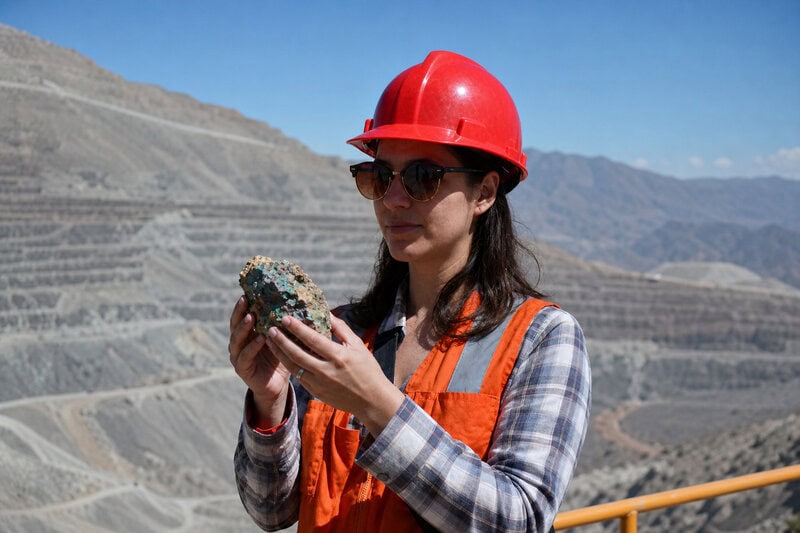
The practical implication of the University of Sydney modeling is significant for mineral exploration. If geologists can map where ancient subduction zones fertilized the mantle lithosphere, they gain a new predictive tool — a way of identifying regions likely to host undiscovered deposits of copper, zinc, lead, and potentially lithium before a single drill bit enters the ground. At a moment when global supply chains for these critical minerals face mounting pressure from clean-energy technology demand, a more systematic understanding of subduction zone mineral deposits could meaningfully accelerate discovery and reduce the cost and environmental footprint of exploration.
Translating billion-year simulations into actionable exploration targets is, however, far from straightforward. It requires integrating mantle-flow models with surface geological mapping, geochemical sampling, and geophysical surveys — a multidisciplinary effort that the study’s authors describe as a logical next step rather than a solved problem. The simulation provides a framework; converting that framework into coordinates on a map is a separate scientific and logistical challenge that will demand collaboration across disciplines and national geological surveys.
The research also clearly acknowledges what it does not yet fully explain. The study identifies fertilized mantle regions as a necessary early condition for major ore deposits, but it does not resolve why some chemically similar fertilized regions produced giant ore bodies while others did not. That question — why only certain preconditioned zones went on to generate economically significant concentrations of metal — remains open in the literature and represents a focus of ongoing investigation in the geoscience community. Readers should understand this distinction: the study establishes a compelling and quantitatively grounded framework, not a complete predictive theory.
Deep Time, Plate Tectonics, and the Geography of Wealth
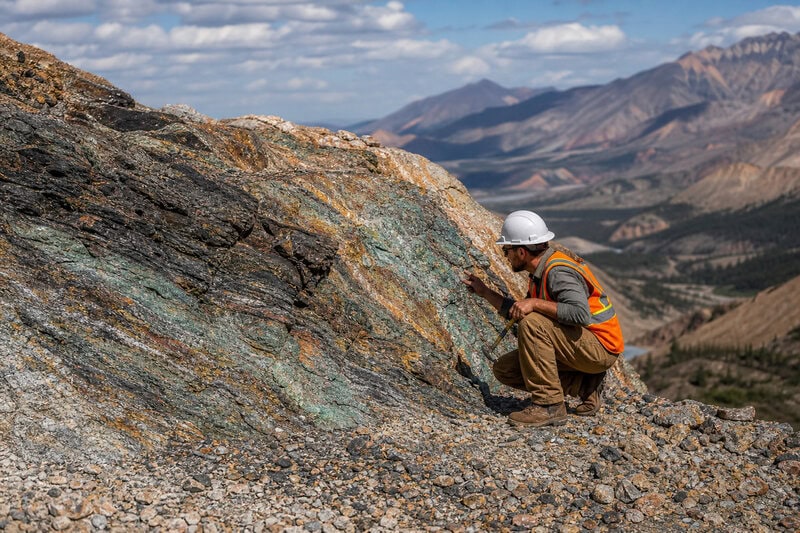
The distribution of mineral wealth across nations is not random. It is, in significant part, an accident of ancient plate tectonics — meaning that the countries sitting atop former subduction margins inherited a geological lottery ticket written 1.8 billion years ago, long before any human civilization existed to claim or contest it. That realization reframes contemporary debates about resource security in a striking way: scarcity is not simply a matter of how much metal exists on Earth, but of how well humanity can read the ancient geological record to find what has not yet been discovered.
The University of Sydney simulations represent a genuine methodological advance in that effort. Modeling 1.8 billion years of mantle dynamics necessarily involves assumptions and approximations, and the authors and the broader geoscience community treat the results as a compelling framework requiring further field validation rather than a definitive map of undiscovered riches. Scientific humility is warranted: Earth’s interior is not a laboratory, and the deep-time geological record is incomplete by nature. Independent replication of the modeling approach and comparison against known global ore deposit databases will be essential next steps before exploration programs move in earnest.
But the trajectory of the research is clear. The copper that will thread through the next generation of wind turbines and electric motors may already exist in the ground, hidden in a stretch of rock whose geological destiny was set by a vanished ocean floor sinking into Earth’s mantle long before the first multicellular animals evolved. For the first time, scientists have a simulation detailed enough — and a mechanistic understanding deep enough — to begin looking for it with something more than geological intuition.