On November 19, 2026, the U.S. Department of the Interior auctioned 31.5 million acres of Pacific seafloor off American Samoa for roughly $6 million total — about 19 cents per acre — in what officials described as a historic first federal deep-sea mining lease sale. The price amounts to less than what a cup of coffee costs, yet the seafloor being leased hosts ecosystems that took millions of years to assemble and have never been touched by industrial machinery.
19 Cents an Acre for One of Earth’s Last Untouched Ecosystems
The lease sale did not happen quietly. Before the auction was finalized, a federal court ruled that the administration’s deep-sea mining lease plan violates the Endangered Species Act. A second federal judge separately ruled against the administration’s ocean-floor leasing plans — a pattern of judicial skepticism that legal analysts say reflects more than an isolated procedural dispute. The Department of the Interior proceeded with the sale anyway, an unusual posture that may accelerate court challenges capable of voiding or suspending the leases before any mining equipment reaches the water.
The administration’s decision to proceed despite the Endangered Species Act ruling raises immediate questions about the legal durability of the leases, the ecological stakes involved, and what exactly lives at those depths. This article addresses all three.
What Was Leased, and Why This Area Matters
The leased acreage sits in deep Pacific waters surrounding American Samoa, a U.S. territory whose ocean floor rests atop one of the planet’s most mineral-rich abyssal plains — flat, sediment-draped regions typically 4,000 to 6,000 meters below the surface. At 31.5 million acres, the leased footprint is roughly the size of the state of Mississippi, making the potential industrial zone one of the largest ever proposed in the history of ocean resource extraction.
The target resource is polymetallic nodules — potato-sized, rocklike concretions that accumulate on the seafloor over geological timescales and contain high concentrations of manganese, cobalt, nickel, and copper. These metals are critical to electric vehicle batteries and renewable energy infrastructure, a fact that lends the industry a geopolitical argument: domestic seabed sources, proponents say, could reduce dependence on land mines in politically unstable regions. Critics counter that land-based recycling programs and emerging alternative battery chemistries could significantly reduce that demand before deep-sea mining at this scale becomes operational.
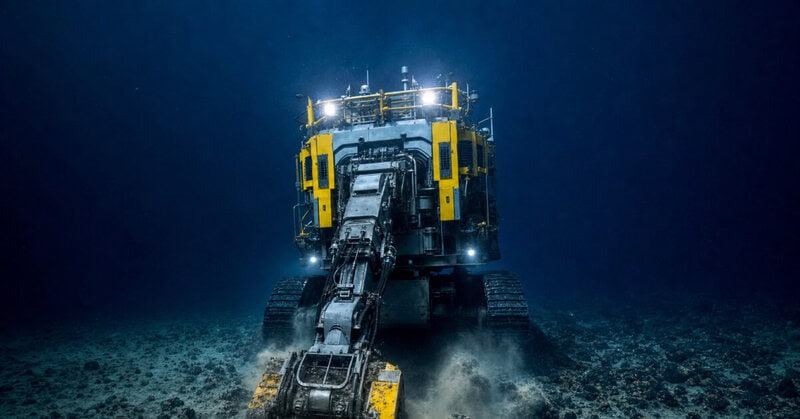
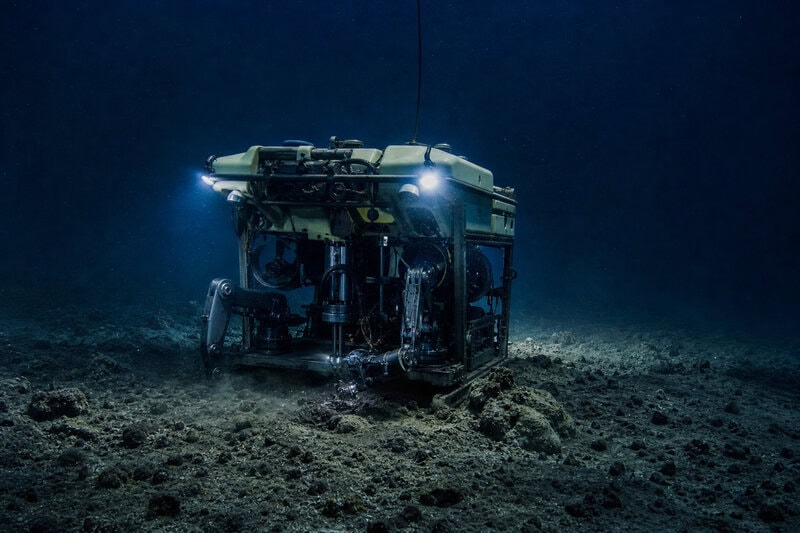
The private company awarded the leases is seeking to harvest these nodules at commercial scale. That process would involve large seafloor crawler vehicles and sediment-suction systems operating across vast swaths of ocean bottom — not a surgical extraction, but a wide-area industrial sweep of the most biologically active layer of the deep seafloor.
The Abyssal Seafloor: A Slow-Motion World Built Over Millennia
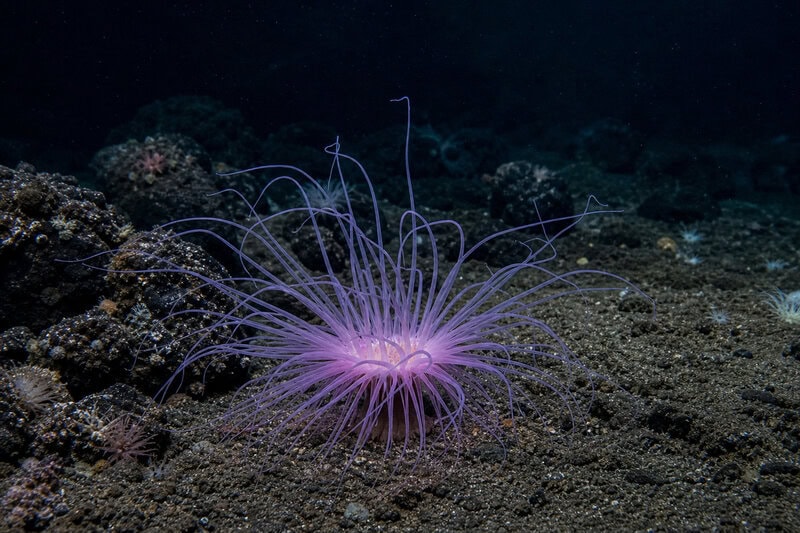
To understand what is at stake ecologically, it helps to understand what kind of place the abyssal seafloor actually is. It is defined by extreme pressure, near-freezing temperatures, complete darkness, and vanishingly low food supply — conditions that have produced life forms uniquely adapted to permanence and patience rather than speed or abundance.
According to research published by the Natural History Museum in London and the NOAA Office of Ocean Exploration, a single polymetallic nodule can take 1 to 15 million years to grow just one centimeter. That means the substrate targeted for mining is not simply a mineral deposit — it is a biological archive of deep time, and the organisms living on it have evolved alongside it across the same extraordinary timescales.
Surveys conducted by the SMARTEX project (Seabed Mining And Resilience To EXperimental impact) and the Deep-Ocean Stewardship Initiative have documented hundreds of species living on and among nodules, including sponges, corals, holothurians (sea cucumbers), polychaete worms, and dense microbial mats. Many of these species remain undescribed by science — meaning they have no formal scientific name and no assessed conservation status.
Because nutrient input at these depths is so slow, population recovery timescales in abyssal ecosystems are measured in decades to centuries, not years. The scientific community considers that distinction fundamental to any honest risk assessment of deep-sea mining environmental impact. An ecosystem that requires a century to partially recover from a single disturbance event is categorically different from a forest or a fishery.
What Deep-Sea Mining Actually Does to That Environment
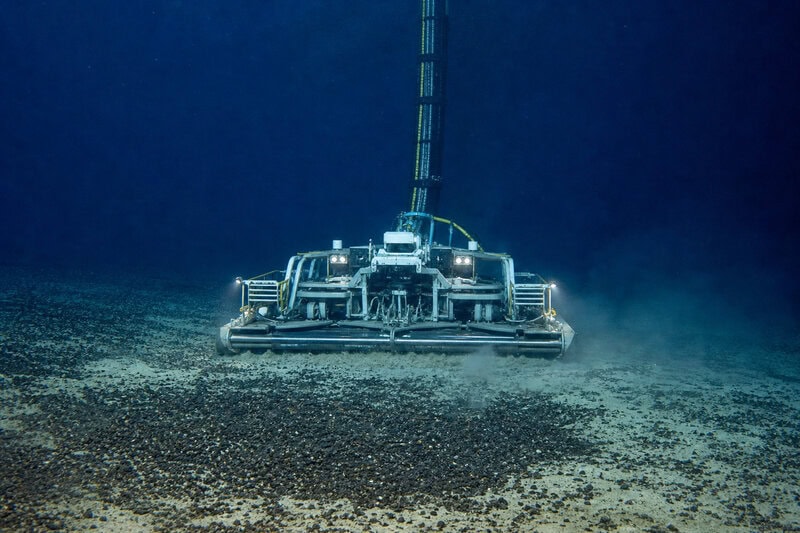
Nodule extraction works by dragging collector vehicles across the seafloor, vacuuming up nodules along with the top layer of sediment — the biologically richest zone — then pumping the material up a riser pipe to a surface vessel. At the surface, nodules are separated and the remaining sediment slurry is discharged back into the water column.
That discharged sediment plume is a central concern among researchers. Studies from the DISCOL experiment site in the Pacific, monitored by GEOMAR Helmholtz Centre for Ocean Research Kiel over 26 years, found that disturbed sediment tracks remained visible and biologically impoverished more than two decades after a single disturbance event. No commercial-scale mining has yet occurred; DISCOL used a relatively small plow harrow. Researchers emphasize that commercial operations would disturb areas orders of magnitude larger.
A 2023 study published in Current Biology found that carbon stored in nodule-field sediments — sequestered over geological timescales — could be resuspended and potentially oxidized by mining disturbance, adding an underexplored climate dimension to the ecological impact calculus. If confirmed at scale, that finding would mean deep-sea mining carries a carbon cost not currently factored into most regulatory or industry assessments.
Scientists distinguish between three overlapping but distinct harm pathways that make total impact modeling genuinely difficult:
- Direct physical footprint: the seafloor area where collector vehicles travel and the nodule layer is physically removed.
- Sediment plume impact zone: the area affected by resuspended bottom sediment, which studies suggest can extend hundreds of kilometers from the collection site.
- Discharge plume impacts: effects at mid-water depths where separated sediment slurry is released back into the ocean, potentially affecting species and biological processes far above the seafloor.
The Legal Collision: Courts Versus the Administration

The ESA ruling carries particular ecological weight because several species with documented habitat in Pacific abyssal zones — including certain whale populations that use deep-water acoustic corridors — carry Endangered Species Act protections. The interaction between large-scale seafloor disturbance, sediment plumes, and those protected species has not been formally assessed by regulators, which is precisely the gap the court identified.
A second federal court ruling against the administration’s deep-sea mining ambitions compounded the legal exposure. The Department of the Interior’s decision to proceed with the auction despite both rulings is legally unusual; standard federal practice is to pause contested actions while litigation proceeds. Legal analysts note that this posture may invite injunctions that freeze the leases before any equipment is deployed, potentially making the $6 million in lease revenue a footnote to a larger statutory dispute.
The Bulletin of the Atomic Scientists has covered the lease sale in the context of broader debates over resource extraction, national security, and environmental governance — framing it as a test case for how the United States will balance critical mineral supply chains against legal and ecological constraints.
What Science Says We Still Don’t Know
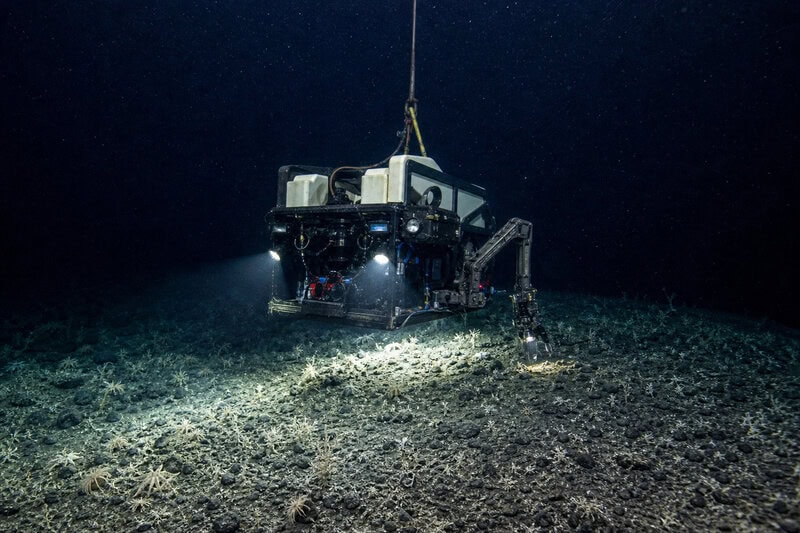
Policymakers and the public should be clear-eyed about the limits of current scientific knowledge. The International Seabed Authority (ISA), which governs mining in international waters, has acknowledged in its own environmental reports that baseline biodiversity data for most targeted Pacific abyssal regions remains incomplete. Impact assessments are therefore being conducted against an incompletely characterized baseline — a significant methodological problem that independent researchers have flagged repeatedly.
Whether deep-sea ecosystems can recover meaningfully on human-relevant timescales remains an area of active scientific debate, not settled consensus. The most cautious peer-reviewed estimates suggest full faunal recovery may require centuries. Industry-affiliated models are more optimistic, but those models have drawn methodological criticism from independent researchers for relying on assumptions about recolonization rates that lack empirical support at commercial scales.
Microbial communities, which drive nutrient cycling across the abyssal plain and underpin the entire food web, are among the least-studied components of nodule ecosystems. A 2022 review published in Nature Reviews Microbiology described their response to physical disturbance as “largely uncharacterized” — a striking admission given that microbial processes are foundational to every other biological function in these systems.
Researchers at Woods Hole Oceanographic Institution and the Scripps Institution of Oceanography have called for moratoriums or precautionary pauses specifically to allow baseline surveys to be completed before commercial-scale operations begin. That position was endorsed by more than 700 scientists in an open letter to the ISA in 2023, one of the largest coordinated expressions of scientific concern about deep-sea mining to date.
Indigenous and Pacific Island Voices
The Pacific Islands, including American Samoa, have cultural and subsistence fishing relationships with the ocean that extend far beyond extractive economics. Indigenous Pacific voices have been prominent in opposition to seabed mining across the region, arguing that the ocean represents not a resource to be liquidated but a living system on which communities have depended for millennia. Those communities have had no formal role in the lease approval process, a procedural gap that environmental justice advocates say compounds the legal vulnerabilities already identified by the courts.
Reporting from the New York Times on the November 19 auction documented those concerns alongside the administration’s framing of the leases as an economic and strategic opportunity — a juxtaposition that illustrates how differently the same ocean floor can be understood depending on who is asked to value it.
What Comes Next: The Stakes Beyond the Seafloor
If courts uphold the Endangered Species Act violation finding — a plausible outcome given two separate adverse rulings — the leases could be suspended or invalidated before equipment ever reaches the water. That scenario would leave the $6 million in lease revenue as the entire tangible output of a process that consumed significant legal, regulatory, and scientific resources, while establishing a precedent that the administration attempted to open the deep Pacific to extraction without adequate legal foundation.
Whatever the courts ultimately decide, the November 2026 lease sale has already accomplished something durable: the United States government has formally treated the deep-ocean floor as a leasable public resource. That framing — the abyssal seafloor as a commodity rather than a commons — will shape domestic and international ocean governance debates for years to come, regardless of whether a single nodule is ever brought to the surface.
The scientific consensus is not that deep-sea mining is impossible to do responsibly. It is that the knowledge required to do it responsibly does not yet exist — and that 31.5 million acres of the Pacific, priced at 19 cents an acre, may be too large a bet to place on optimism alone.