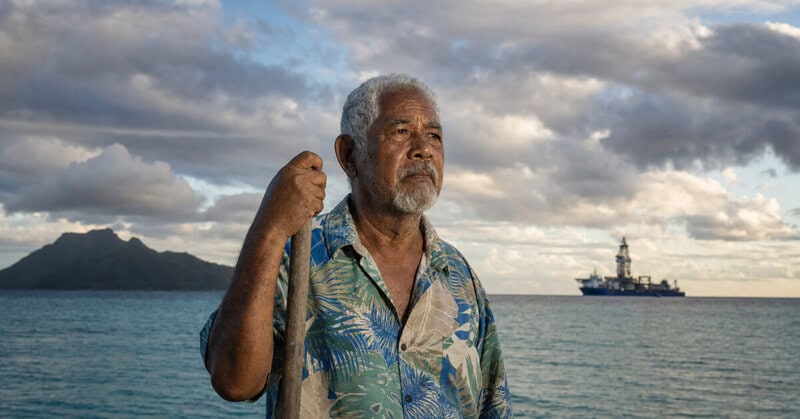
Roughly 2 million people live on Pacific island chains that sit directly above the most mineral-rich seabed on Earth — and the debate about whether to mine that floor has, for too long, been conducted almost entirely without them. The Center for Strategic and International Studies has designated the Pacific as “ground zero” for deep-sea mining — a label that lands with particular weight when the communities at that ground zero are small, fiscally constrained, and largely absent from the international bodies making the governing decisions.
This article examines the science of what is at stake, the governance structures that will decide the outcome, and the range of Pacific Islander perspectives that immersive cross-border journalism has worked to surface — perspectives that resist reduction to any single headline verdict.
What Is Down There: The Science of an Invisible Resource
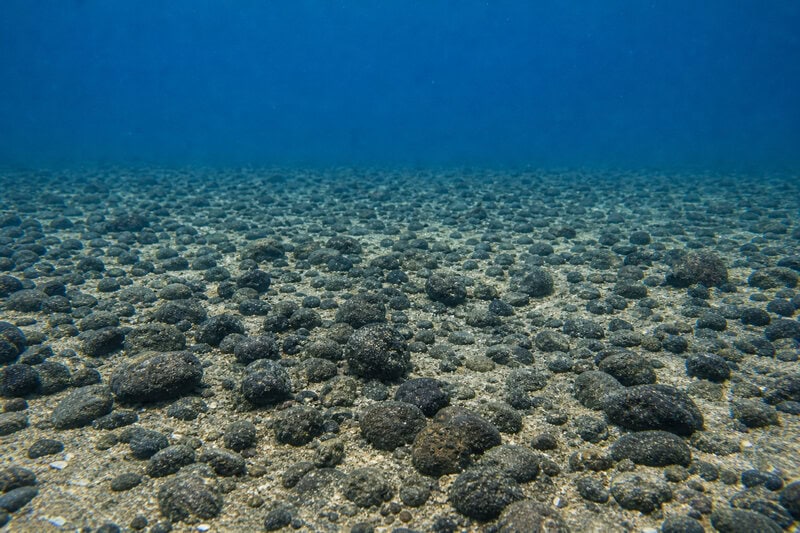
Three distinct types of mineral deposits make the Pacific Ocean floor commercially consequential. Polymetallic nodules are potato-sized rocks — studded with manganese, cobalt, nickel, and copper — that accumulate on the abyssal plain at a rate of roughly a centimeter per million years. Seafloor massive sulfides are hydrothermal vent formations, rich in copper and gold, that build where superheated water vents through the ocean crust. Cobalt-rich crusts are mineral coatings on the flanks of underwater mountains, or seamounts. All three deposit types have existed largely undisturbed since before human civilization; all three became commercially attractive over the past decade because the metals they contain are essential components of electric vehicle batteries, wind turbines, and other clean-energy technologies.
The Clarion-Clipperton Zone — a swath of central Pacific seafloor stretching roughly 4.5 million square kilometers between Hawaii and Mexico — is the most intensively explored nodule field on the planet. But the exclusive economic zones, or EEZs, of small Pacific island developing states are also active frontiers for exploration licensing. An EEZ is the 200-nautical-mile sovereign sea area each coastal nation controls under international law. That legal geography places Pacific governments at the center of decisions whose consequences extend far beyond their borders.
The Earth Journalism Network’s “Mining the Unknowns” cross-border collaboration frames the race to extract these critical minerals as driven by intersecting political, environmental, economic, and social forces simultaneously — not by any single industry actor or government. That framing has direct implications for governance: when the pressure is diffuse and structural rather than traceable to one corporation or state, no single regulatory body or corporate actor can be held solely accountable.
One point is scientifically established and not seriously contested: these ecosystems took millions of years to form. What remains genuinely unknown is how quickly — or whether — they could recover from industrial-scale disturbance. That distinction between established fact and open scientific question is not a minor caveat. It is the fault line along which the entire policy debate runs.
The Ecosystem Risk: From the Seafloor to the Dinner Table
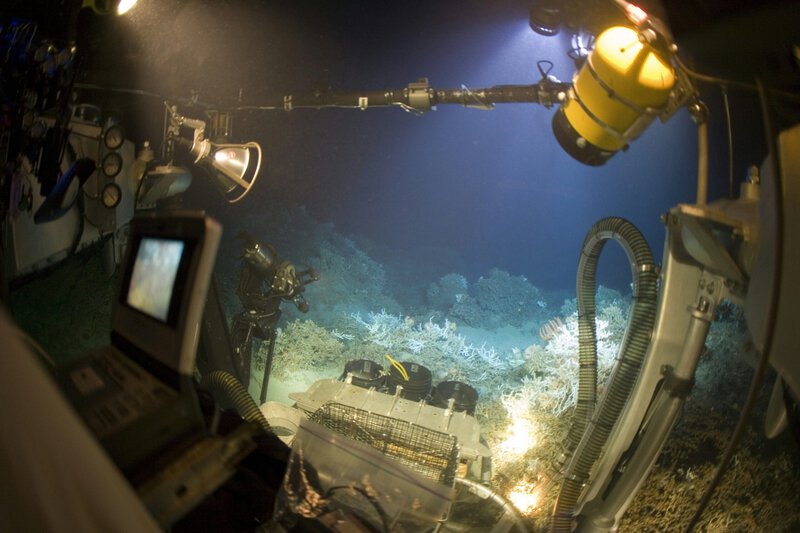
Environmental concerns over deep-sea mining center on the unknown consequences for deep-sea ecosystems and their interconnected food webs. Marine scientists broadly agree on the direction of potential harm even when the magnitude remains contested. The mechanism most frequently cited is the sediment plume. Mining equipment would vacuum nodules from the seafloor and discharge the fine sediment it separates back into the water column. That plume could travel hundreds of kilometers, smothering filter-feeding organisms and disrupting the vertical migration of zooplankton — the microscopic animals that form the base of open-ocean food chains — with effects that could cascade upward through fish populations to the tuna and marine mammals that Pacific island communities depend on for both protein and income.
As documented in reporting from the “Mining the Unknowns” collaboration and examined in detail by the Honolulu Star-Advertiser’s coverage of Pacific deep-sea mining, the risks extend well beyond the immediate extraction site. A subsistence fisher in Fiji or the Marshall Islands has no direct relationship with equipment operating several kilometers below the ocean surface — but may have an intimate relationship with the tuna that migrate through the water column above it. The connection between the two is biological, not abstract.
Scientific honesty requires holding a specific line here: because the deep sea remains one of the least studied environments on Earth, “unknown consequences” is not a rhetorical hedge deployed by advocacy groups. It is a precise scientific description. The temptation in coverage of this issue — and in regulatory debates — is to treat uncertainty as equivalent to safety, as though the absence of proven catastrophic harm is itself a reason to proceed. It is not. Uncertainty about magnitude is not uncertainty about direction.
Responsible reporting and responsible regulation must hold that distinction firmly. If extraction begins before baseline ecosystems are fully characterized, the harm cannot be measured. If it cannot be measured, it cannot be regulated. If it cannot be regulated, it cannot be compensated for. And because the deposits and the organisms living among them took millions of years to form, any harm cannot be reversed on any timescale meaningful to the communities currently affected.
Who Decides? Sovereignty, the ISA, and a Region Finding Its Voice
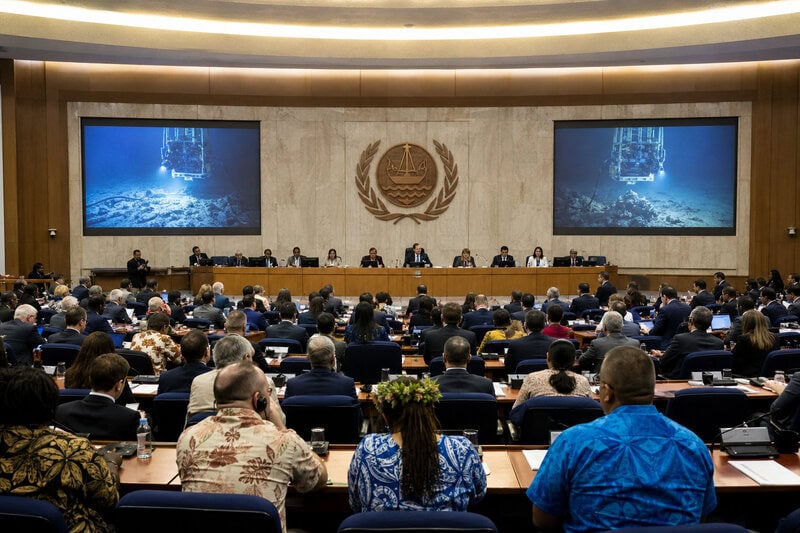
In international waters, the governing body for seabed mineral extraction is the International Seabed Authority, or ISA — a United Nations body established under the UN Convention on the Law of the Sea to regulate mining of what UNCLOS describes as “the common heritage of mankind.” The ISA’s 36-member council includes major sponsoring states and reflects industry interests; small Pacific island nations with the most direct exposure to extraction consequences hold limited procedural leverage within that structure. The ISA is under sustained pressure to finalize an exploitation code — a binding regulatory framework — a process that has been repeatedly delayed but cannot be deferred indefinitely.
In February 2025, the Pacific Islands Forum Secretariat hosted a high-level meeting on deep-sea minerals, bringing together regional leaders specifically to build a coordinated Pacific position ahead of further ISA deliberations. The meeting was a signal that island nations are no longer willing to allow external bodies to set the terms of a debate whose consequences fall most directly on Pacific communities.
Within their own EEZs, Pacific governments already hold the legal authority to permit or prohibit seabed mining unilaterally — no ISA approval required. Whether that formal legal right translates into genuine self-determination is a more complicated question. It depends on each government’s debt exposure, fiscal alternatives, access to independent scientific advice, and the degree of insulation it has from the economic pressure that resource-hungry states and corporations can apply to small nations with limited bargaining power. Deep-sea mining raises not just the question of what happens to the ocean floor, but who gets to decide — and whether the communities living closest to the resource hold any real power over that decision.
Those two questions — what happens and who decides — are not separable. The governance structure determines whose evidence is admitted, whose risk tolerance sets the threshold, and whose economic calculus defines “benefit.” A regulatory framework designed around the interests of sponsoring states and mining contractors will produce different thresholds than one designed around the food security and cultural integrity of Pacific island communities.
The Verdict That Defies the Headline

The most important finding from immersive on-the-ground reporting — including the work recognized by the Associated Press and conducted through the Earth Journalism Network’s cross-border structure — is that Pacific Islander opinion cannot be flattened into a single anti-mining stance. Views range across a wide and genuinely complicated spectrum, and responsible coverage requires holding that complexity rather than resolving it prematurely.
Some Pacific governments have actively pursued exploration licenses as a development revenue strategy, reasoning that chronic fiscal vulnerability leaves few alternatives for funding health care, education, and climate adaptation. Fishing communities and Indigenous leaders within those same countries have simultaneously expressed alarm about threats to food security and to marine ecosystems managed through customary systems developed over generations. Conservation organizations have called for outright moratoria pending fuller scientific characterization of baseline ecosystems. Elders in some communities frame the question not in economic or even environmental terms but in cosmological ones: in many Pacific cultures, the ocean is not a resource to be managed but a relational entity to be respected.
These are not positions that can be reconciled into a single headline verdict. Advocates have called for Pacific Indigenous knowledge — including oral traditions, ecological observation, and customary resource management systems — to be given the same evidentiary weight as Western scientific data in the deep-sea mining debate. That position reframes the governance question in a fundamental way: “who decides” becomes inseparable from “what counts as evidence.” If only peer-reviewed Western science qualifies as legitimate input into regulatory thresholds, then communities whose ecological knowledge exists in oral and customary form are structurally excluded from a process that will determine what happens to the ocean they depend on.
The unexpected finding from sustained Pacific reporting is not that Pacific Islanders oppose mining. It is that they refuse to have the question answered for them — by industry, by conservation organizations, or by distant international bodies that were not designed with Pacific agency in mind. That refusal is itself a governance position, and one that the ISA’s current structure is poorly equipped to accommodate.
Immersive Journalism as a Governance Argument
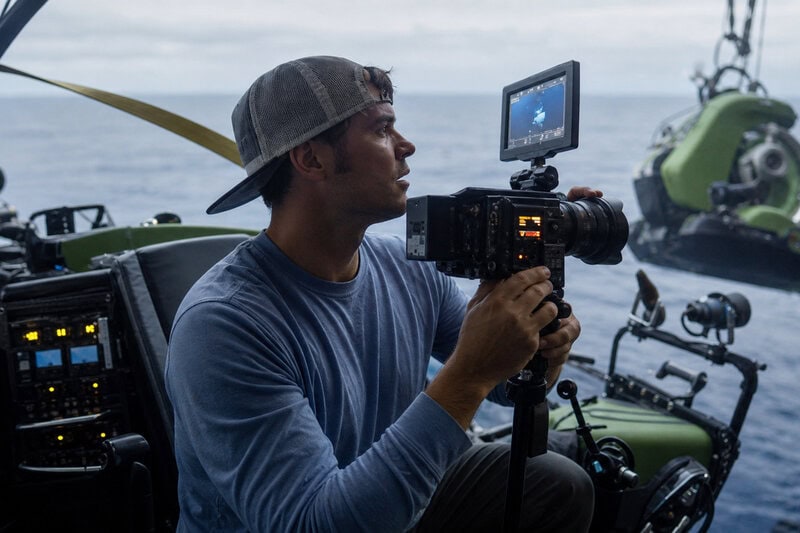
The AP-recognized “Mining the Unknowns” reporting collaboration combined immersive text, distinctive photography, and video with a map and mining graphic by visual artist Kevin Vineys — a multimedia architecture designed to make a kilometers-deep, invisible subject legible to general audiences. The form is not incidental to the story. The deep seabed is, by definition, unseeable to nearly every person on Earth, which has historically allowed the debate about mining it to remain abstract, technocratic, and insulated from public scrutiny. Immersive visual journalism reduces that distance in a way that text alone cannot.
The cross-border structure of the collaboration — multiple reporters working across multiple island nations, coordinating toward unified publication — also mirrors the collaborative governance model that Pacific advocates argue the ISA itself should adopt. When journalists from across the region work together to produce a single body of reporting, they demonstrate something that Pacific diplomats are simultaneously arguing at the ISA: that the Pacific is not a collection of isolated micro-states to be addressed individually, but a region with shared interests that can speak with a coordinated voice.
That symmetry between journalistic form and political argument is not accidental. The editorial commitments embedded in this kind of reporting — centering named community voices rather than institutional spokespersons, attributing every scientific claim to a specific source, and explicitly distinguishing established consensus from contested findings — set a replicable standard for covering extractive industry debates in under-reported regions. Those commitments are more demanding than standard practice, and that difficulty is precisely the point. Easy coverage of a complicated, invisible, distant issue will default to the voices already in the room: industry representatives, government officials, and conservation organizations with established media relationships. Getting to the other voices requires the investment that cross-border, immersive journalism makes.
Three Pressure Points Worth Watching
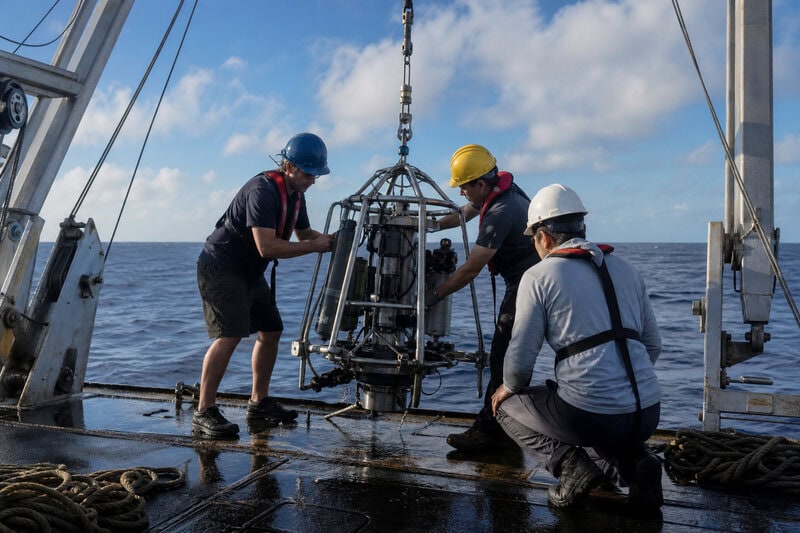
The governance decisions being made now — at the ISA, in Pacific capitals, and in the scientific community conducting baseline ecosystem surveys — will determine the conditions under which commercial deep-sea mining begins, if it begins at all. Three specific developments will shape the outcome more than any others.
First, ISA council votes on the final exploitation code will establish the regulatory thresholds and enforcement mechanisms governing international waters mining. The specific thresholds adopted — for sediment plume dispersal, for no-mining buffer zones around sensitive habitats, for baseline monitoring requirements — will determine whether the code functions as genuine environmental protection or as a framework that permits extraction while giving the appearance of oversight.
Second, individual Pacific government decisions within their EEZs will determine whether the most ecologically sensitive national waters remain protected or are opened to extraction. Because EEZ authority is sovereign, these decisions will not pass through the ISA. They will reflect each government’s internal political economy — the balance of power between ministries of finance and ministries of environment, between national elites with access to licensing revenue and coastal communities with exposure to ecological risk.
Third, the outcome of ongoing scientific baseline studies will determine whether environmental impact thresholds can even be measured — a prerequisite for any meaningful regulatory system. If extraction begins before those baselines are established, regulators will have no reference point against which to assess harm. That is not a hypothetical failure mode. It is the current trajectory if commercial pressure continues to outpace scientific characterization.
The logical chain connecting these pressure points is not complicated, but it is unforgiving. Each link depends on the one before it. Baseline science must precede regulation; regulation must precede extraction; accountability must precede any claim that the process is legitimate. Where that sequence is broken — and there are powerful financial incentives to break it — the communities living above the world’s most contested ocean floor will bear consequences that the bodies making the decisions will not.
Those communities are not waiting for the debate to reach them. They are already in it, navigating pressures — economic, environmental, cultural, and geopolitical — that larger and wealthier nations have the luxury of treating as theoretical. Whether their voice shapes the outcome will depend, in part, on whether the journalism covering them is immersive enough, rigorous enough, and persistent enough to make that voice impossible to ignore. And it will depend on whether the international governance structures ostensibly designed to serve “the common heritage of mankind” are reformed to actually include the people for whom that heritage is not abstract — but home.