
One hour before Russian tanks crossed into Ukraine in February 2022, a cyberattack disabled Viasat’s KA-SAT satellite network, knocking tens of thousands of modems offline across Europe and severing Ukrainian military communications at the worst possible moment. That single incident — more surgical than any missile strike, executed entirely through software — made concrete what security researchers had warned for years: satellites are not just hardware floating in the void, they are hackable infrastructure, and almost none of them were built with that reality in mind.
The Vulnerability Orbiting Above Every Connected Device on Earth

There are now more than 9,000 active satellites in orbit, and the majority run software architectures that predate modern cybersecurity practice, according to the European Union Agency for Cybersecurity (ENISA). These are not edge cases or aging relics — they are the backbone of GPS navigation, financial clearing networks, weather forecasting, and military communications. The systems that synchronize stock exchanges, guide commercial aircraft, and keep electrical grids in phase all trace a dependency back to signals broadcast from orbit. Yet until recently, the research community lacked even a dedicated peer-reviewed venue to study how those systems could be attacked and defended.
That gap is now being addressed directly. University of Pittsburgh researchers have helped launch the inaugural IEEE International Conference on Resilience and Integrated Security for Space and Critical Systems (RISC), convening November 4-6, 2026, in San Jose, California — a milestone that signals the field of satellite cybersecurity is finally maturing into a formal discipline.
Why Space Systems Are Uniquely Hard to Secure
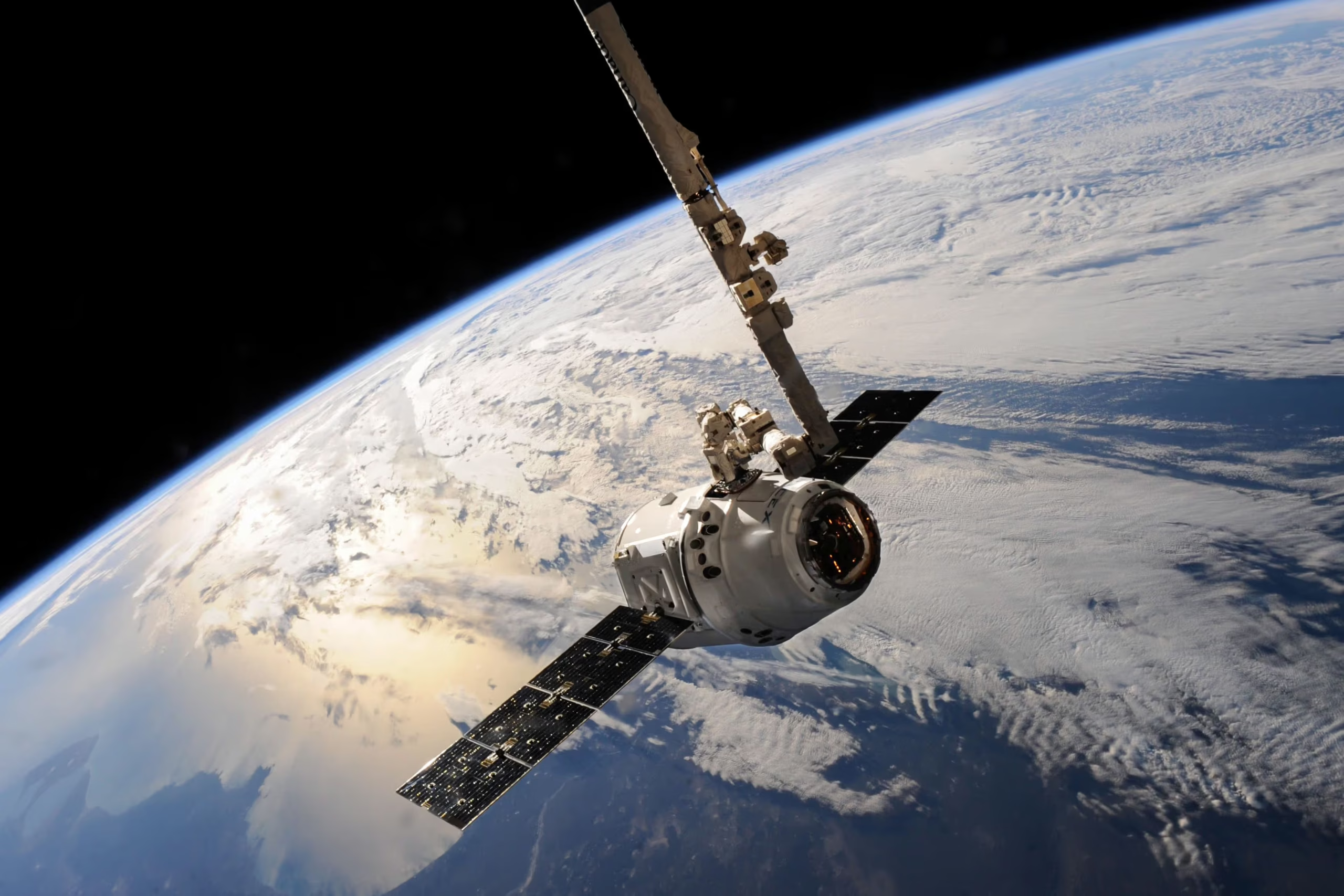
The core problem is physical permanence. Unlike a corporate server that can be patched, rebooted, or replaced overnight, a satellite in geostationary orbit sits roughly 22,000 miles above Earth and cannot be physically accessed after launch. A software vulnerability baked into firmware at the time of manufacture can persist for the satellite’s entire operational lifespan — typically 15 to 20 years. In the cybersecurity world, where critical vulnerabilities are discovered and patched within days, that is an almost incomprehensible exposure window.
The attack surface is also broader than most people assume. Security researchers divide space systems into three distinct layers: the space segment (the satellite bus and its payload), the ground segment (the uplink and downlink stations that communicate with it), and the user segment (the receivers and terminals that end users rely on). An adversary does not need to compromise the satellite itself — attacking the weakest link in that chain is sufficient to disrupt or manipulate the whole system.
ENISA’s 2023 threat landscape report for the space sector identifies jamming, spoofing, and command-link hijacking as the three most operationally significant cyber threats to space infrastructure, and notes that many commercial satellites still transmit telemetry — the stream of operational data sent back to ground controllers — without encryption. That finding deserves emphasis: the absence of encrypted telemetry is not a theoretical vulnerability waiting to be discovered by nation-state actors. It is a known, documented gap in operational systems carrying real traffic today.
At the more contested frontier of the field, researchers and government agencies debate whether nation-state actors have already pre-positioned dormant malware on commercial satellite networks as a latent offensive capability. The U.S. Cybersecurity and Infrastructure Security Agency (CISA) has described this as a credible concern, though it has not been publicly confirmed with specific evidence. That distinction — credible but unproven — is worth holding onto as the conversation about satellite cybersecurity evolves.
Can Satellites Actually Be Hacked? What the Evidence Shows

The answer, documented in multiple independent settings, is yes — with important nuance about what “hacked” means in practice. Beyond the Viasat attack, security researchers at DEF CON 2023 demonstrated live, exploitable vulnerabilities in Starlink user terminals. A 2020 report from the NASA Office of Inspector General found the agency had suffered 1,785 cyber incidents in a single year, including cases of unauthorized access to mission systems. These are not theoretical proofs of concept produced in isolated labs — they are real-world findings from operational infrastructure.
GPS spoofing — the act of broadcasting counterfeit satellite signals to fool a receiver into believing it is located somewhere it is not — has been documented near Moscow, throughout the Persian Gulf region, and in the vicinity of Chinese ports, according to tracking work conducted by the Center for Advanced Defense Studies (C4ADS). It is worth distinguishing spoofing from its less subtle cousin, jamming. Jamming overwhelms a GPS signal with radio noise; it is immediately detectable and disruptive. Spoofing, by contrast, silently substitutes false data while the targeted receiver continues to function normally, believing it has a valid fix on its position. For systems that rely on GPS not just for navigation but for precision timing — financial transaction sequencing, cellular network synchronization, power grid phase alignment — spoofing is substantially more dangerous because it can cause cascading failures before anyone realizes something is wrong.
The more dramatic scenario — a full remote takeover of an operational commercial satellite’s command link — remains in a different category. Proof-of-concept attacks on satellite command architectures have appeared in academic literature, including published work from researchers at Oxford and TU Berlin. But no publicly verified case of a complete command-link takeover of an operational commercial satellite has been confirmed. That keeps it in the category of a credible engineering risk rather than a documented incident history. Readers encountering breathless claims about satellite “takeover” scenarios should apply that distinction consistently.
The Institutional Gap That IEEE RISC Was Built to Fill
Before RISC existed, space-system security research was diffuse and siloed. Aerospace engineers published in aviation and systems conferences. Cybersecurity researchers presented at venues like IEEE S&P or USENIX Security. Policy analysts wrote in international relations journals. There was no single peer-reviewed forum where the people who build satellites, the people who attack and defend networked systems, and the people who study critical infrastructure resilience could publish together, challenge each other’s assumptions, and build shared standards.
IEEE RISC is designed to be that forum. The conference is formally described as “the premier venue for security and resilience research where space systems are the subject, the enabler, or a point of failure” — a deliberately broad framing that includes not just satellites themselves but the terrestrial infrastructure that depends on them. That second category is significant: it means a researcher studying how a GPS timing disruption would cascade through financial clearing systems is as much a part of this community as one studying satellite firmware exploitation.
University of Pittsburgh researchers were instrumental in founding RISC, positioning Pitt as an emerging institutional node in a field that is only now coalescing around shared vocabulary and research methodology. The inaugural conference runs November 4-6, 2026, in San Jose, California, co-located with three sister IEEE conferences including TPS 2026 — a structural choice that deliberately cross-pollinates the space-security community with researchers working on trust, privacy, and broader security problems. The IEEE security conference calendar also lists a RISC event for December 7-11, 2026, suggesting the community intends a rapid cadence of knowledge-building in its inaugural year.
The co-location strategy reflects a lesson learned from adjacent fields. When the network-security research community consolidated around venues like IEEE S&P and USENIX Security in the 1990s and 2000s, it accelerated the development of shared threat models, common evaluation methodologies, and eventually the coordinated disclosure norms that now govern software vulnerability reporting. RISC’s organizers appear to be deliberately compressing that timeline for the space domain, which has the advantage of learning from that history but the disadvantage of needing to move faster than the threat environment is waiting.
What Securing Space Infrastructure Actually Looks Like in Practice
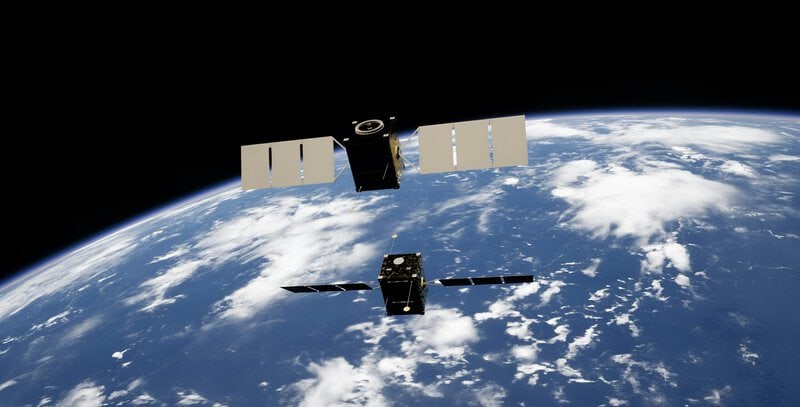
The engineering challenge is not simply a matter of writing better code. Hardening a satellite against cyber intrusion requires navigating genuine physical trade-offs. A radiation-hardened encryption processor adds mass and draws power — two resources that are strictly finite on any spacecraft. Every gram of additional security hardware is a gram that cannot be allocated to mission payload or propellant, and every watt consumed by an encryption module is a watt that could otherwise extend the satellite’s operational life. Historically, those trade-offs have resolved in favor of performance and mission longevity, with security treated as a secondary concern.
Newer satellite architectures are changing the calculus in some respects, but introducing new risks in others. Low-Earth orbit mega-constellations use software-defined radio and support over-the-air firmware updates — capabilities that allow operators to push security patches to satellites in ways that were impossible with earlier hardware. That is a genuine improvement. But it also introduces patch-management risks that any smartphone user will recognize: a botched firmware update cannot be manually rolled back when the device is traveling at 17,000 miles per hour in vacuum. The update mechanism that makes modern LEO constellations more defensible than their predecessors is also, by definition, a new attack surface that did not exist before.
The policy environment is shifting to match the technical urgency. The Biden administration’s 2023 National Cybersecurity Strategy named space systems as critical infrastructure for the first time, directing CISA and the United States Space Force to develop baseline security requirements for the sector. That policy milestone gives researchers a mandate and, eventually, a regulatory framework to design toward. As venues like IEEE RISC produce peer-reviewed work on specific technical controls, those findings can feed directly into the standard-setting process — a feedback loop between academic research and regulatory requirements that has already proven productive in aviation and nuclear security.
Some solutions are ready to deploy today. End-to-end encryption of satellite command links and telemetry is technically mature; the barrier is adoption, not invention. Other promising approaches — quantum key distribution for satellite communications, artificial intelligence-driven anomaly detection on orbit — remain at the demonstration stage as of 2025, with significant engineering work required before they are operationally viable.
The Broader Stakes: Finance, the Power Grid, and GPS Time
The dependency chain that makes GPS disruption genuinely alarming extends well beyond navigation. The atomic clocks aboard GPS satellites provide the timing pulses that synchronize stock exchange transactions, coordinate cellular handoffs between towers, and maintain phase alignment across interconnected electrical grids. A successful, sustained cyberattack on GPS infrastructure would not simply cause vehicles to navigate incorrectly — it could cascade into financial system delays and energy distribution failures within minutes of the initial disruption.
ENISA’s space threat report estimates that approximately 10 percent of EU GDP relies on space-enabled services, a figure that reframes satellite cybersecurity as an economic and national security concern of the first order rather than a niche technical specialty. The offense-defense asymmetry in this domain is structurally challenging: a commercial GPS jammer capable of disrupting signals across a wide area can be purchased online for under $50, while defending against that disruption requires receiver-side authentication technology or redundant positioning systems that cost orders of magnitude more. Security economists describe this cost asymmetry as structurally favoring attackers — a problem that cannot be solved purely through better satellite design and one that RISC’s research agenda will need to address at the economic and policy level, not just the engineering level.
What remains genuinely uncertain — and where researchers are careful not to overstate — is how long the global economy could absorb a sustained GPS outage before adaptive workarounds became sufficient. Estimates in the academic literature range from days to weeks, depending on assumptions about which systems have backup timing sources and how quickly operators can activate them. That range of uncertainty is itself an argument for urgency: the difference between “days” and “weeks” of economic disruption is not a rounding error.
The Road from San Jose to a More Resilient Orbit
The concrete outputs the RISC community is working toward go beyond individual research papers. Researchers in the field are pursuing standardized vulnerability disclosure frameworks for satellite operators — analogous to the coordinated disclosure norms that now govern software security — as well as cybersecurity labeling requirements for commercial satellite components and red-team testing protocols modeled on those already mandated for nuclear and aviation systems. These are institutional and regulatory achievements as much as technical ones, and they require exactly the kind of shared research community that RISC is designed to build.
The geopolitical complexity of the domain cannot be wished away. The United States, China, Russia, and the European Union each operate independent satellite constellations with incompatible security architectures, and the prospects for binding international norms in space cybersecurity face the same headwinds as arms control negotiations in every other domain. But the IEEE’s history of producing globally adopted technical standards — protocols governing everything from Wi-Fi to Ethernet operate under IEEE imprimaturs regardless of the political relationship between the countries using them — offers a realistic model for progress that does not require full geopolitical agreement. Standards set at the technical layer have historically outrun the politics surrounding them.
The launch of IEEE RISC does not solve the satellite cybersecurity problem, but it creates the institutional scaffolding — shared vocabulary, peer-reviewed benchmarks, and a research community with a permanent home — that every mature engineering discipline needs before it can reliably protect what billions of people depend on every day. The Viasat attack showed what a single well-timed intrusion could accomplish against unprepared infrastructure. The question the RISC community is now organized to answer is what it would take to make that kind of attack substantially harder the next time someone tries.