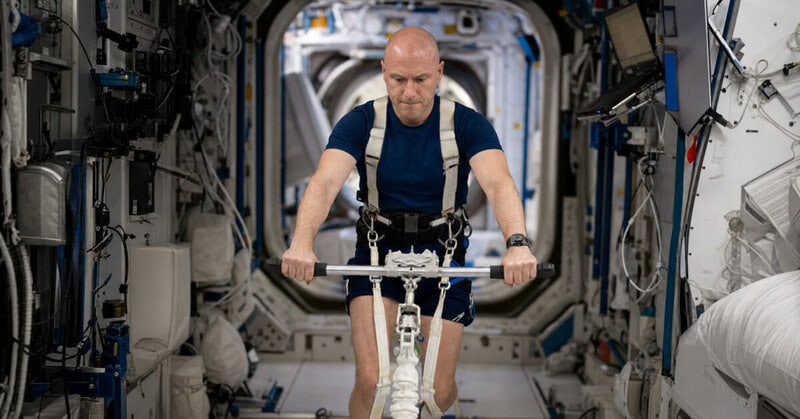
When astronauts return from a six-month mission aboard the International Space Station, they frequently cannot walk unassisted down the steps of a Soyuz capsule. That image — a person who left Earth in peak physical condition, now requiring support just to stand — is not a dramatic anomaly. It is a predictable biological consequence of microgravity, one that NASA’s Human Research Program has quantified with precision: astronauts can lose up to 20 percent of their muscle mass and one to two percent of their bone density per month during long-duration spaceflight, rates that far exceed the worst age-related decline observed on Earth. Solving that problem is now one of the central challenges of human space exploration — and the scientists best positioned to help may be working in university kinesiology departments, not aerospace engineering labs.
What Microgravity Does to the Human Body
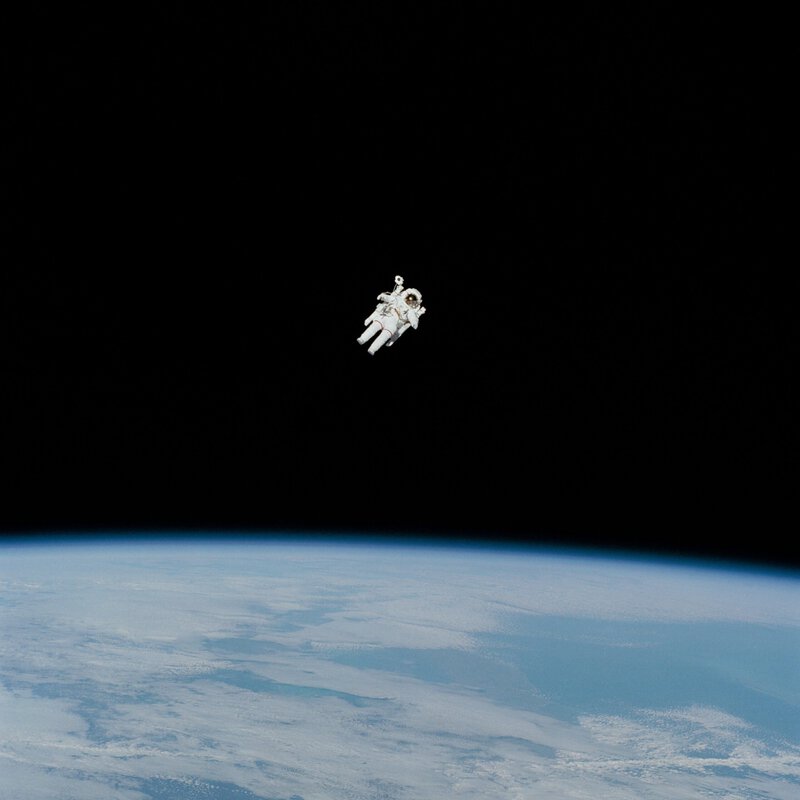
Microgravity is not the complete absence of gravity. Aboard an orbiting spacecraft, gravitational force still acts on the vehicle and its occupants — but because the station is in continuous free fall around Earth, occupants experience that force as effectively zero. The result is that the mechanical loads bones and muscles depend on for maintenance nearly vanish. That dependency is captured by a principle exercise scientists call mechanotransduction: the process by which cells convert physical force into biological signals that drive tissue maintenance and repair. Remove the force, and the signals diminish. The body, governed by ruthless metabolic efficiency, begins dismantling structures it no longer perceives as necessary.
Three physiological cascades unfold in parallel, according to NASA Human Research Program findings. Skeletal muscle atrophy accelerates as mechanotransduction signals drop, particularly in the postural muscles of the lower body. In bone, the balance between resorption — the breakdown of old bone tissue — and formation tips decisively toward breakdown, with trabecular bone, the spongy interior lattice that gives bones their structural strength, resorbing faster than it can be replaced. Cardiovascular deconditioning follows as the heart, no longer working against gravity to pump blood upward, gradually loses mass and efficiency. These three changes are established scientific consensus: they are real, measurable, and partially reversible with structured exercise countermeasures.
A fourth and more contested area involves fluid shifts. In microgravity, cerebrospinal and other bodily fluids migrate headward. Researchers at UT Southwestern and within NASA are actively debating whether this contributes to the vision impairment documented in a substantial proportion of long-duration ISS crew members. The mechanism is not yet settled science, and that distinction matters: the muscle and bone losses are well-characterized problems with well-characterized partial solutions, while the fluid-shift picture remains a genuinely uncertain and open research question.
Why Kinesiology — Not Engineering Alone — Is Central to the Solution
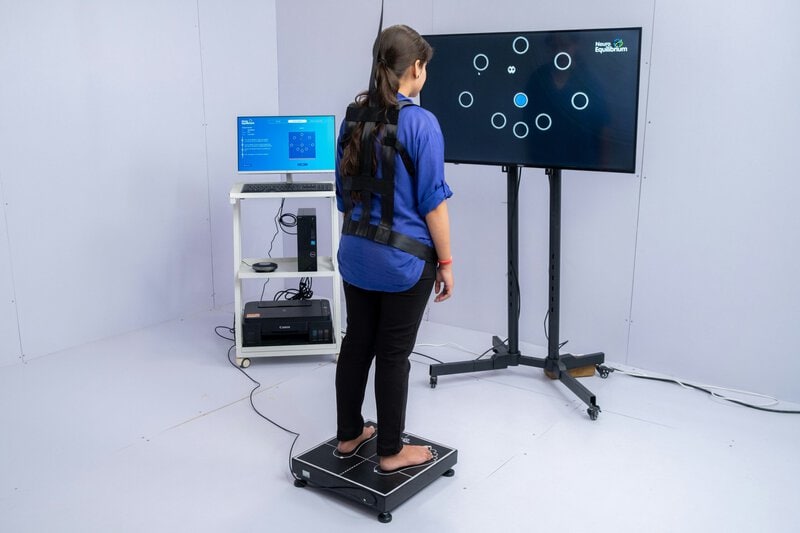
Kinesiology is the academic discipline that studies the mechanics and physiology of human movement. It sits at the intersection of biomechanics, exercise physiology, and motor control, asking not only how the body moves but why movement is essential to keeping it alive. That framing makes kinesiology unusually well-suited to spaceflight medicine, because the core problem in orbit is not broken hardware — it is a biological system that degrades without the mechanical inputs it evolved to expect.
NASA’s Advanced Exercise Concepts project has long recognized that hardware alone cannot substitute for a deep understanding of human physiology. Effective countermeasures require knowing which muscle fiber types are most vulnerable to atrophy, what patterns of mechanical loading most reliably stimulate bone formation, and how exercise protocols must be compressed and adapted to fit confined spacecraft environments with limited mass and power budgets. The Advanced Resistive Exercise Device — known as the ARED and currently deployed on the ISS — represents a significant step in that direction. Developed with input from exercise scientists, the ARED allows astronauts to perform high-load resistance training in orbit. Research published in the Journal of Bone and Mineral Research found that ARED-based protocols could attenuate bone density loss, though not fully prevent it — a meaningful but incomplete result that underscores how much work remains.
One of the sharpest frontiers in that work involves the shoulder. Astronauts in microgravity propel themselves almost exclusively with their arms, transforming the shoulder joint into a primary weight-bearing structure — a biomechanical role it was never evolutionarily optimized to perform. Research from NASA’s Johnson Space Center has identified the supraspinatus and infraspinatus muscles, two of the four rotator cuff muscles responsible for shoulder stabilization, as particularly prone to fatigue and injury during extravehicular activity, where suit pressure further restricts range of motion. Standard ISS exercise hardware provides limited targeted training for these structures, leaving a documented gap between what astronauts need and what current equipment delivers.
Team Pleiades: A Student Solution That Earned a NASA-Sponsored Stage
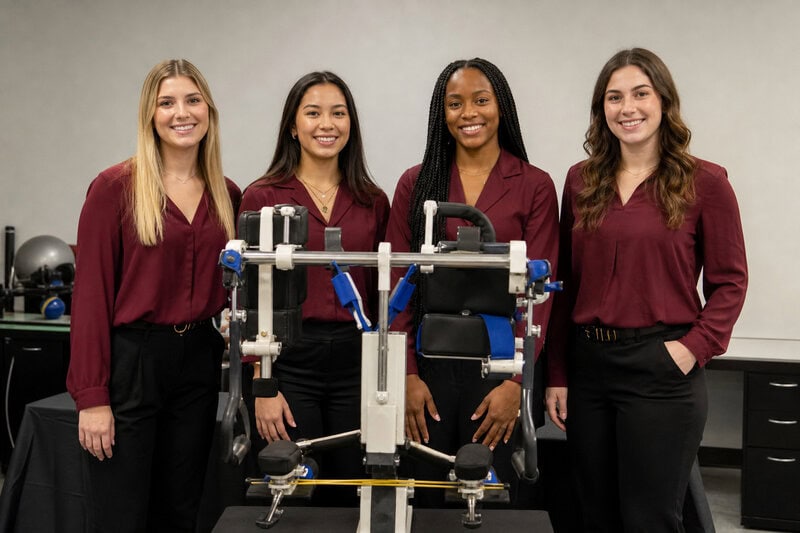
That gap is exactly what a group of senior kinesiology students at Texas Woman’s University chose to address. Calling themselves Team Pleiades, the students designed a shoulder exercise apparatus specifically intended to protect astronaut rotator cuff health in the microgravity environment. At the NASA Texas Space Grant Consortium Design Challenge Showcase, their design earned second place overall — a result that places their undergraduate work directly alongside applied aerospace engineering solutions from institutions across Texas.
The context of the competition matters. The NASA Texas Space Grant Consortium sponsors the showcase explicitly to surface practical solutions from university teams and bridge academic research with real mission needs. Placement is determined by peer evaluation against engineering and scientific criteria, not academic grading rubrics. Second place, in that environment, reflects a judgment that Team Pleiades’s work meets a standard of rigor relevant to actual spaceflight challenges. TWU’s official report on the team’s finish describes the apparatus as targeting the specific biomechanical deficits created by microgravity locomotion — a design philosophy grounded in applied kinesiology rather than general fitness engineering.
What makes Team Pleiades’s achievement particularly notable is the institutional pattern it extends. For the fifth time in the last seven years, a TWU undergraduate kinesiology team has taken the top overall prize at the same NASA-sponsored showcase — a consistency that is difficult to explain as coincidence and suggests a reproducible pipeline of applied human-movement science feeding into NASA’s research ecosystem. A previous TWU team, the Acolytes of Apollo, illustrated the ceiling of that pipeline by winning best overall team honors alongside three first-place category awards, including top overall design team and best poster. That performance demonstrated that TWU’s program is producing work evaluated against federal aerospace standards of rigor, not merely academic ones.
The Science Behind Shoulder Protection in Microgravity
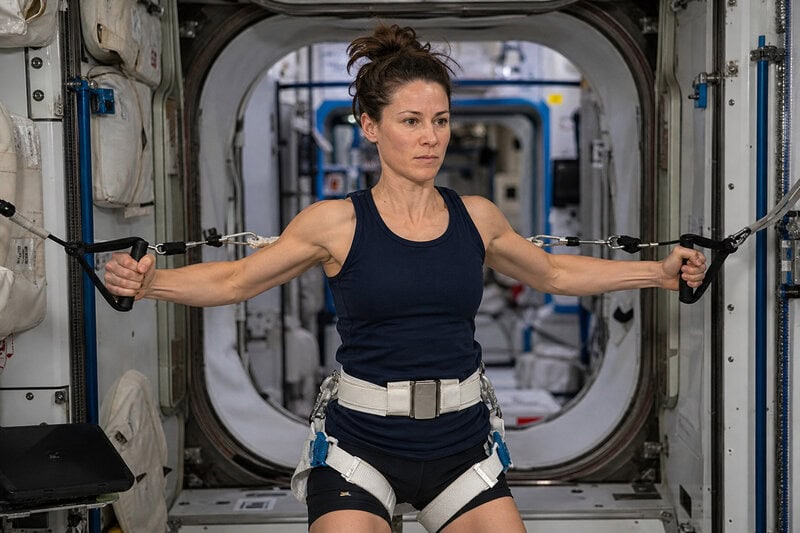
Designing an effective shoulder countermeasure for orbit is not a straightforward scaling problem. The constraints are severe and intersecting. There is no gravity anchor: any resistive force the device generates must be internally reacted, meaning the apparatus cannot simply use the user’s body weight as a stabilizing baseline. Spacecraft volume is tightly constrained, so the device must be compact. Vibrations that could propagate through the station’s structure and affect sensitive scientific instruments are unacceptable, ruling out certain mechanical designs that would work reliably on Earth.
Within those constraints, the underlying scientific principle is clear and well-established: progressive mechanical loading stimulates musculoskeletal adaptation. Apply controlled, graduated force to a muscle or bone, and the mechanotransduction cascade responds — cells sense the load, signal for repair and reinforcement, and the tissue strengthens. The question is not whether this principle operates in microgravity; available ARED data confirm that it does, at least partially. The question is how to deliver that loading specifically to the rotator cuff — a small, anatomically complex group of muscles — without gravity’s assistance, in a compact form factor, without destabilizing the station. That is a genuine open problem at the boundary of exercise physiology and aerospace engineering, and it is the problem Team Pleiades chose to engage.
From Student Prototypes to Deep-Space Missions
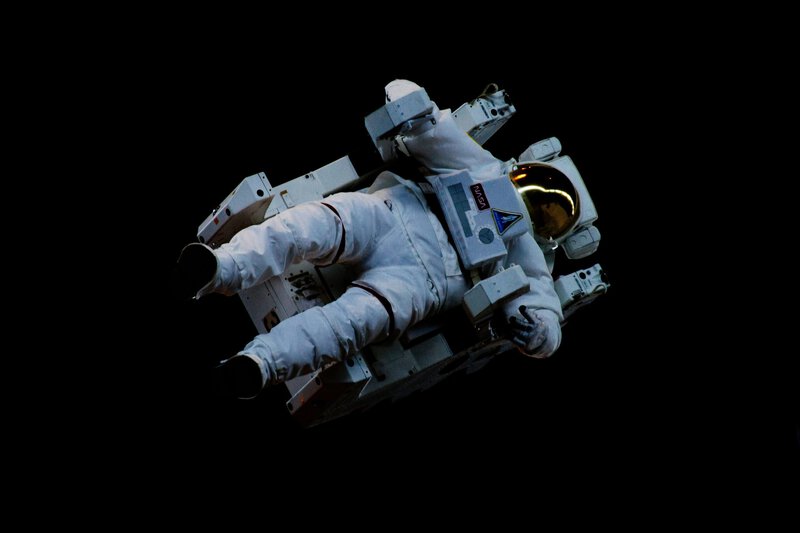
The urgency behind this work is about to increase substantially. NASA’s Artemis program and its long-term Mars architecture will push mission durations far beyond the roughly six-to-twelve-month ISS rotations that already stress current countermeasure protocols. A round-trip crewed Mars mission could last approximately 30 months. At the bone loss rates documented by NASA’s Human Research Program, an astronaut completing such a mission without effective countermeasures could return with skeletal integrity severely compromised — and Mars, with its partial gravity, offers no guaranteed rehabilitation environment on the far end.
NASA’s current research priority, as outlined in the Human Research Program’s evidence reports on spaceflight-associated musculoskeletal risk, is developing exercise prescriptions that deliver maximum physiological benefit within the tightest possible time and equipment constraints. Every kilogram of exercise hardware carried to Mars represents propellant, cost, and mission risk — meaning the most medically effective protocol that fits in the smallest possible package is not an engineering footnote but a mission-critical design objective.
One emerging candidate for that compact toolkit is blood-flow restriction training, a technique that uses pneumatic cuffs to partially restrict venous blood return from a limb, inducing a metabolic environment that prompts muscle hypertrophy even with relatively light external loads. For deep-space applications, the appeal is clear: lighter loads mean simpler, lighter equipment. However, blood-flow restriction training’s efficacy in actual microgravity conditions remains under active investigation and should be understood as a promising emerging area rather than a validated countermeasure.
Human Biology Is a Space Exploration Variable, Not an Afterthought
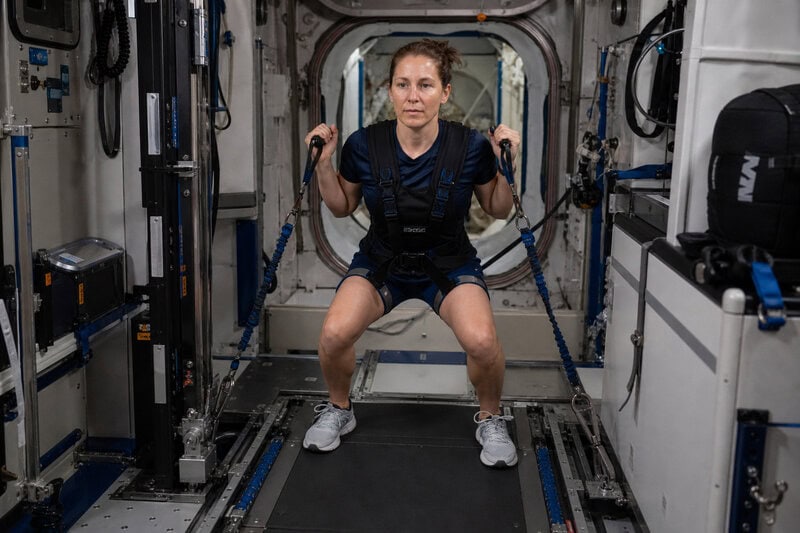
The consistent success of TWU’s kinesiology students at NASA-sponsored design challenges points toward a broader principle: embedding human movement science early in spacecraft countermeasure development, rather than retrofitting exercise solutions onto vehicles designed primarily around propulsion and life-support constraints, produces better outcomes. The human body is not a passive payload to be loaded onto a mission. It is the most complex and irreplaceable system aboard any crewed spacecraft, and it has specific, well-characterized physiological requirements that engineering alone cannot address.
Team Pleiades’s second-place finish at the NASA Texas Space Grant Consortium Design Challenge Showcase is a data point in a larger story: applied exercise science is moving from gym floors to mission-critical engineering, and the boundary between the two disciplines is dissolving faster than most people outside aerospace medicine realize. Every iteration of student-designed countermeasure hardware, evaluated under federal aerospace rigor, narrows the gap between what current ISS protocols can achieve and what a 30-month Mars mission will require.
Many questions about optimal in-space exercise protocols remain genuinely open. No current countermeasure fully prevents the physiological changes of long-duration spaceflight — that is the honest state of the science. But the next time an astronaut descends from a spacecraft and walks unaided onto a tarmac, that outcome will owe something to the evidence-driven, unglamorous work of kinesiologists who recognized that the most complex piece of equipment on any crewed mission to deep space is the human body itself.