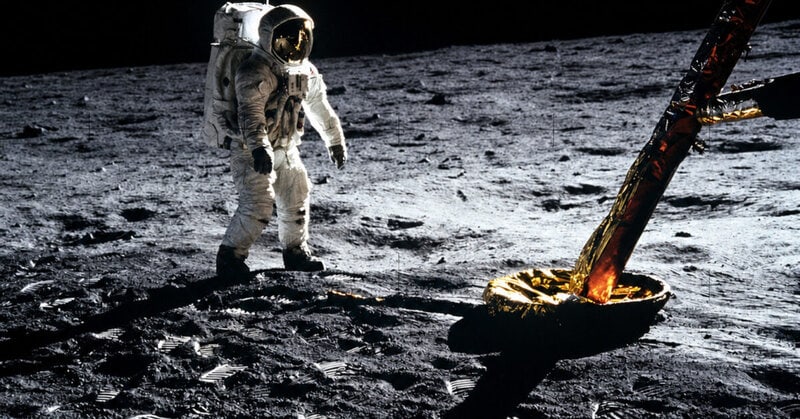
Astronauts aboard the International Space Station lose roughly 1-2% of bone density per month in key load-bearing areas — a rate that, sustained over a multi-year lunar base tour, could rival the bone loss seen in severe osteoporosis over decades, according to NASA’s Human Research Program. Now, with NASA accepting astronaut candidate applications through December 3, 2026 — its first recruitment drive since 2024 — and selected candidates potentially living and working at a future lunar base, those physiological stakes have shifted from theoretical to mission-critical.
Who Can Apply and What NASA Is Looking For

NASA’s current astronaut candidate requirements call for U.S. citizenship, at least a master’s degree in a STEM field, and either two years of relevant professional experience or 1,000 hours of pilot-in-command time. Applicants must also pass NASA’s long-duration spaceflight physical. These thresholds are designed to identify individuals with the cognitive baseline, physical resilience, and professional judgment to withstand and adapt to compounding stressors over a multi-year career — including, potentially, an extended stay on another world.
Applications for NASA’s 2026 astronaut candidate class are open through December 3, 2026. Selected candidates will train in Houston at NASA’s Johnson Space Center before potentially becoming the first humans to live and work on another world for extended periods. The agency has indicated that candidates chosen through this cycle could be assigned to lunar surface missions under the Artemis program and its Moon to Mars architecture.
Why Moon Gravity Is Its Own Unique Problem
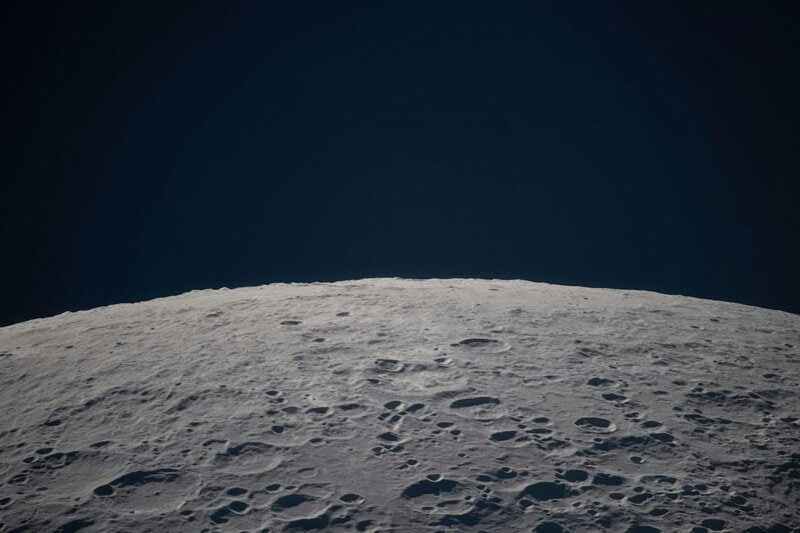
The Moon’s gravitational pull is approximately one-sixth of Earth’s (0.165 g), and that fraction places it in a physiological no-man’s-land. It is enough gravity to impose partial loading on bones and the cardiovascular system, but far too little to prevent the cascading deconditioning seen in near-zero gravity — a territory researchers have barely begun to map, because almost all long-duration human spaceflight data comes from the near-weightless environment of the ISS, not from a partial-gravity surface.
In reduced gravity, the musculoskeletal system interprets the lighter mechanical load as a signal to remodel itself downward. Osteoclasts — the cells responsible for breaking down bone tissue — outpace osteoblasts, the cells that build it. The result is a net loss of bone mineral density that accumulates with every week spent off Earth. Studies published in the journal PLOS ONE using ISS crew data have quantified this imbalance, and the numbers are sobering even for astronauts who exercise strenuously every day.
The cardiovascular system faces a parallel disruption. Without Earth’s full gravitational pull drawing blood toward the feet, fluid shifts toward the head and chest, stressing the heart and potentially raising pressure inside the skull. Researchers at NASA’s Johnson Space Center have linked this fluid redistribution to visual impairment and intracranial pressure (VIIP) syndrome — a condition in which some long-duration ISS astronauts experience measurable changes to the structure of their eyes and optic nerves. Whether lunar gravity at one-sixth of Earth’s produces VIIP-level outcomes more slowly, faster, or through a different mechanism than microgravity is, as of 2024, an open and actively studied question. That distinction matters: it means future lunar residents could face a risk profile that existing ISS data does not fully predict.
Radiation: The Risk NASA Considers Its Hardest Problem
Earth’s magnetosphere deflects the vast majority of galactic cosmic rays — high-energy particles originating from outside the solar system — and solar energetic particles produced by solar flares. The Moon has no such shield. Data from the Lunar Reconnaissance Orbiter’s CRaTER instrument indicates that radiation doses on the lunar surface run roughly 200 times higher than the annual dose a person receives on Earth’s surface. That is not a rounding error; it is a fundamental difference in the radiation environment that every future lunar resident will inhabit.
Galactic cosmic rays are particularly problematic because they include heavy ions capable of penetrating standard spacecraft shielding and directly damaging DNA strands in ways that conventional models built around X-ray or gamma-ray exposure do not fully capture. Research from the NASA Space Radiation Laboratory at Brookhaven National Laboratory has emphasized this distinction, and it has significant implications: the standard radiation risk tools used for aircraft crews or even ISS astronauts may underestimate the biological impact of heavy-ion exposure on a lunar surface.
The career radiation exposure limit NASA currently applies to ISS astronauts — framed as a 3% excess lifetime risk of cancer mortality — would, under lunar surface conditions, be reached significantly faster. This threshold problem is driving parallel research tracks: improved shielding materials, habitat design strategies, and pharmaceutical countermeasures. One structural solution with promising modeled outcomes involves lunar regolith, the powdery surface soil that blankets the Moon. Studies modeled by the European Space Agency suggest that habitats buried under approximately 2.5 meters of regolith could reduce radiation exposure to near-ISS levels. No such structure yet exists, but it represents the kind of engineering target that informs current lunar base architectural planning.
Muscle, Sleep, and the Sensory System Under Lunar Conditions
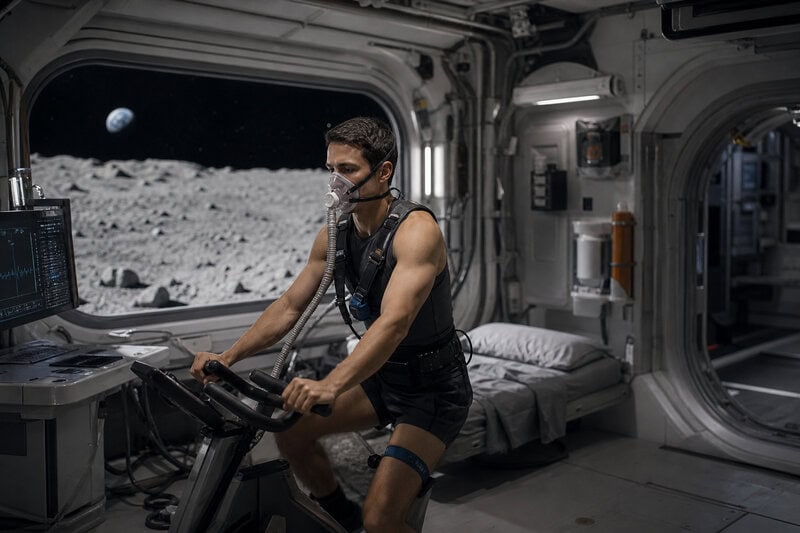
Bone loss draws the most attention, but muscle atrophy follows a nearly identical trajectory and compounds the problem. Without Earth-normal mechanical loading, slow-twitch postural muscles — the ones that keep humans upright all day without conscious effort — begin to waste within days of reduced-gravity exposure. This process has been documented extensively in bed-rest studies conducted at the European Space Agency’s :envihab facility in Cologne, Germany, which simulates weightlessness by having subjects lie at a head-down tilt for weeks at a time. The takeaway from that research is consistent: the body is remarkably efficient at shedding muscle mass it perceives as unnecessary.
Sleep and cognitive function face a disruption that has no terrestrial analog. The lunar day-night cycle lasts approximately 29.5 Earth days, meaning a lunar base would experience roughly two weeks of continuous sunlight followed by two weeks of darkness. Human circadian rhythms — the internal biological clocks that regulate sleep, hormone release, and cognitive performance — are calibrated to a 24-hour light-dark cycle. NASA’s Human Research Program identifies circadian disruption as a priority risk for cognitive performance degradation on long-duration missions, and the lunar light cycle would stress that system in ways that even polar winter on Earth does not replicate.
Dust presents an underappreciated hazard. Apollo astronauts reported that lunar regolith, which is electrostatically charged and abrasive at the microscopic level, clung aggressively to suits and equipment and found its way into habitats. Inhaled over months, the effects of fine lunar dust particles on lung tissue remain largely uncharacterized in long-duration exposure studies — a gap that lunar base planners will need to address before extended surface stays begin. The particle shape matters: unlike terrestrial dust, which weathers into rounded grains, lunar regolith particles are jagged and freshly fractured, properties associated with greater pulmonary irritation potential.
Psychological stress adds another compounding layer. Analog studies conducted in environments like the HI-SEAS habitat in Hawaii and the MARS-500 isolation experiment in Moscow consistently document measurable increases in cortisol levels, sleep disruption, and interpersonal conflict among small crews living in confined, isolated conditions over months. These psychological stressors are not separate from the physical health risks — elevated cortisol accelerates bone resorption, disrupts immune function, and impairs the quality of sleep that the body depends on for tissue repair.
What NASA Is Doing About It: Countermeasures in Practice
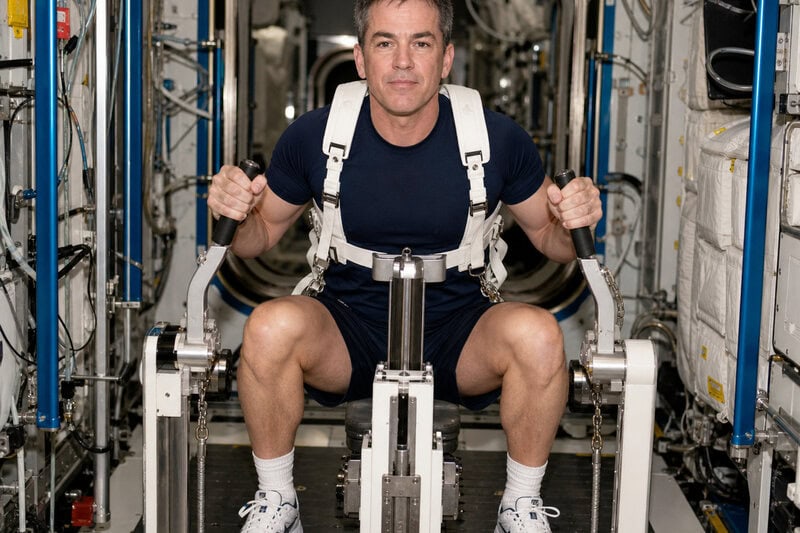
Resistance exercise remains the most evidence-backed countermeasure for both bone and muscle loss. ISS astronauts currently use the Advanced Resistive Exercise Device (ARED) for approximately two hours daily, and that regimen has meaningfully slowed — though not eliminated — the rate of bone density decline observed in earlier missions that lacked equivalent equipment. Lunar base planners are designing equivalent or superior systems for surface habitats, with the understanding that exercise time is not optional; it is a medical necessity built into the daily schedule.
Pharmacological countermeasures are under active investigation. Bisphosphonates — drugs that slow bone resorption and are commonly used to treat osteoporosis on Earth — have been tested on ISS crew members in a study published in Science Translational Medicine. That research showed modest but measurable benefit when bisphosphonates were combined with exercise, suggesting that a combined pharmaceutical-and-exercise protocol may be more effective than either approach alone. The findings are promising, but the sample sizes involved in astronaut studies are inherently small, and researchers are careful not to overstate the generalizability of the results.
Nutritional supply chains introduce additional complexity. Vitamin D, which requires ultraviolet exposure or dietary supplementation and is essential for calcium absorption and bone maintenance, degrades in packaged food over time. NASA’s nutritional biochemistry teams are working to ensure that crew members do not arrive at a bone-loss problem already nutrient-depleted from months of eating stored provisions with diminished micronutrient content. Habitat lighting designed to mimic a 24-hour light-dark cycle is also under development as a means of preserving circadian function in an environment where natural light cues will be absent or severely distorted.
NASA’s Artemis program and its planned Gateway lunar-orbit station are explicitly intended, in part, as platforms to gather the long-duration physiological data that does not yet exist for partial-gravity environments. The next generation of astronauts selected through this recruitment cycle will in some respects serve as research subjects as much as explorers — a dual role the agency openly acknowledges. The data they generate on bone metabolism, cardiovascular adaptation, radiation biomarkers, and psychological resilience at one-sixth gravity will form the scientific foundation for every subsequent mission, including eventual crewed flights to Mars.
What ‘Living and Working’ on the Moon Actually Looks Like Medically
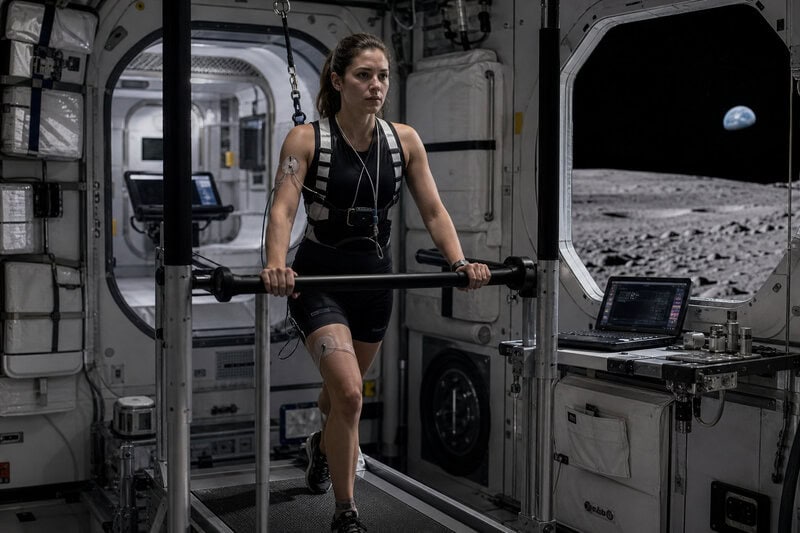
A realistic lunar base tour — currently unscheduled but planned under NASA’s Moon to Mars architecture — would likely last weeks to months, placing it squarely in the zone where cumulative bone loss, radiation dose accumulation, and cardiovascular deconditioning begin to compound in ways that short Apollo surface stays never triggered. The longest Apollo surface excursion, during Apollo 17, lasted approximately 75 hours. A lunar base tour would extend that exposure by orders of magnitude, moving the mission into physiological territory for which no direct human data exists.
Medical autonomy is a core operational challenge. Communication delays between the Moon and Earth range from approximately 1.3 to 1.4 seconds one-way — negligible for conversation but meaningful enough to prevent Earth-based surgeons from teleoperating with real-time precision. That constraint requires crew members to be trained as capable first responders and habitats to be equipped with a meaningful surgical capability. Unlike the ISS, where a medical emergency can be resolved with a roughly six-hour Soyuz descent to Earth, a lunar surface emergency would involve a multi-day evacuation — a timeline that reframes every identified health risk as a mission-critical engineering problem rather than an acceptable operational variable.
The goal articulated in NASA’s Human Research Program Evidence Reports is not to eliminate risk — a standard that is impossible to meet for any frontier endeavor — but to reduce every identified risk to a level described as “as low as reasonably achievable” while systematically expanding the knowledge base that will make longer Mars missions survivable. That framing reflects how NASA positions the lunar base program: not as an end destination, but as the nearest available laboratory for learning what extended human presence beyond Earth actually requires.
The Bottom Line
The physiological challenges of living on the Moon are real, cumulative, and in several key areas — particularly partial-gravity bone metabolism and long-duration lunar radiation biology — still incompletely understood. That scientific honesty is not a reason to avoid the mission; it is the reason the mission is scientifically valuable. Every countermeasure developed for a lunar base — better radiation shielding, smarter exercise protocols, pharmaceutical bone protection, circadian-aware habitat lighting design — feeds directly into the survivability calculus for a Mars mission that would last years rather than months.
The Moon is not a safe destination. It is, however, the closest place where humanity can learn, under real conditions, what it will actually take to keep people alive somewhere else — and that knowledge has no substitute. For anyone who meets the qualifications, NASA’s application portal is open through December 3, 2026.