
In 2007, scientists attached living animals to the outside of a satellite and launched them into open space — no suit, no oxygen, no shelter from the full radiation of the sun. Ten days later, when the capsule returned to Earth, most of those animals were still alive. They were not astronauts. They were not even visible to the naked eye. They were tardigrades, and what kept them alive is one of the strangest stories in modern biology.
What Is a Tardigrade?
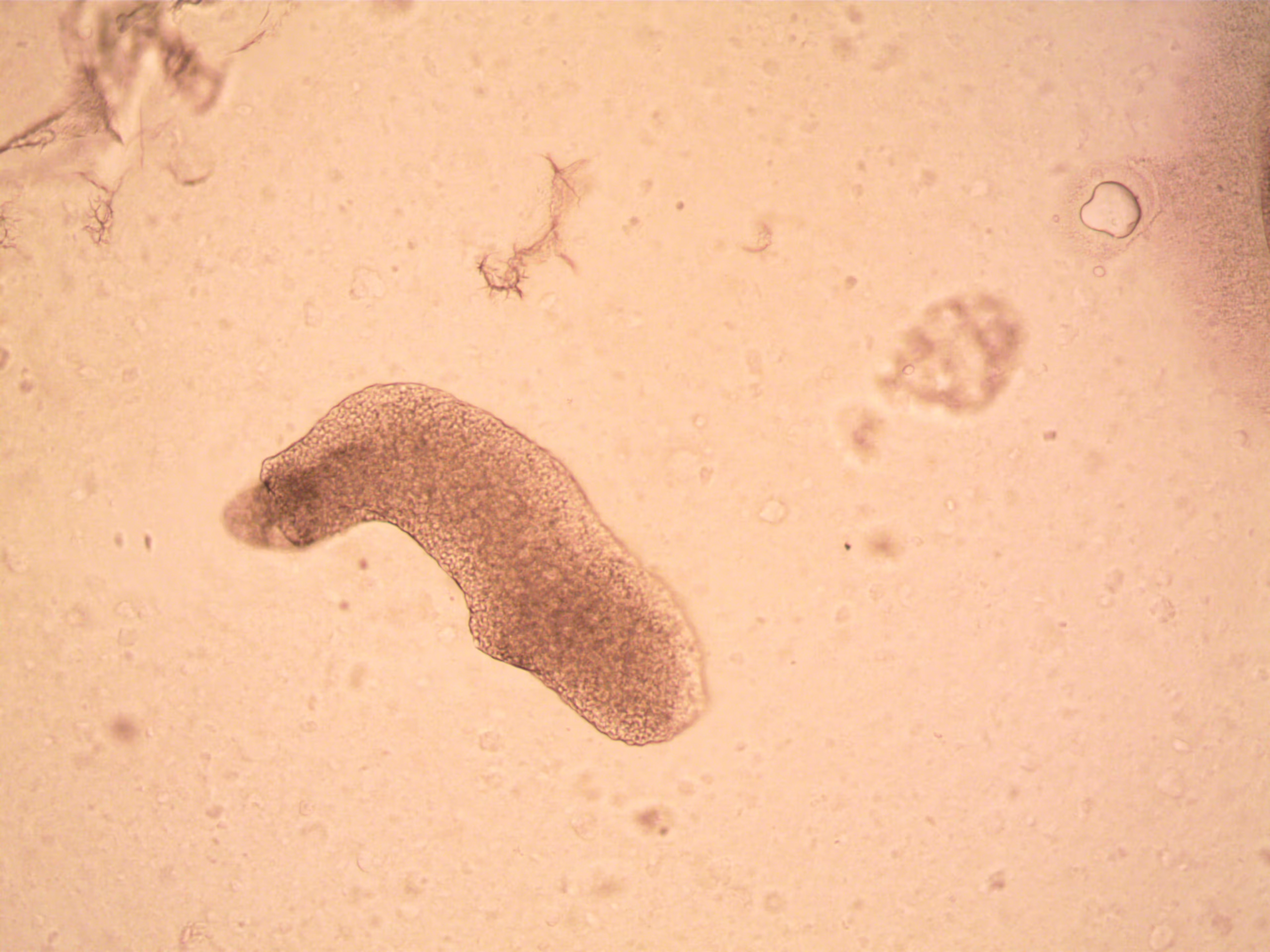
Tardigrades are eight-legged microscopic animals, typically between 0.1 and 1.5 millimetres long, found on every continent on Earth — in ocean sediment, Antarctic ice, garden soil, and the patches of moss growing on urban rooftops. Their slow, lumbering walk under a microscope earned them the nickname “water bears,” though they are not related to any bear that has ever lived. They are something far older and stranger.
Fossil evidence places the tardigrade body plan back more than 500 million years, meaning these animals predate the dinosaurs by hundreds of millions of years and have survived every mass extinction event the planet has thrown at life. There are more than 1,300 known species, occupying ecological roles that range from grazing on plant cells and algae to predating on other microscopic animals. Yet their day-to-day existence, in the right conditions, is quietly unremarkable. They are not creatures of extremes by preference — and that detail turns out to be scientifically crucial.
For a thorough introduction to their biology and evolutionary history, this overview from Frontline Genomics covers the full scope of what makes tardigrades so scientifically compelling.
Why Calling Them Extremophiles Gets It Wrong
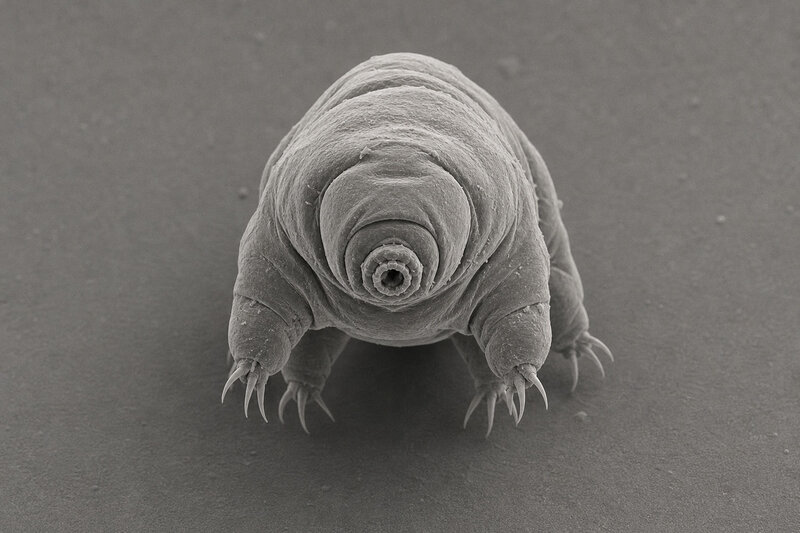
The word “extremophile” is applied to tardigrades constantly, and it is technically misleading. True extremophiles — like the heat-loving archaea that thrive in deep-sea hydrothermal vents, or the salt-saturated bacteria living in evaporation ponds — are physiologically built to exploit harsh conditions as their normal operating environment. Those organisms do not merely tolerate extreme heat or pressure; they require it. Remove them from those conditions and they die.
Tardigrades are not considered universally extremophilic because they are not adapted to exploit the extreme conditions their tolerances might suggest. They prefer mild, moist habitats and show no special appetite for punishment. The correct classification is extremotolerant — they can endure conditions that would kill almost anything else without being physiologically designed to inhabit those conditions permanently.
This distinction reshapes the entire scientific question. The puzzle is not how tardigrades thrive at the edge of survivability. The puzzle is how they press pause on life itself.
The Master Switch: Cryptobiosis
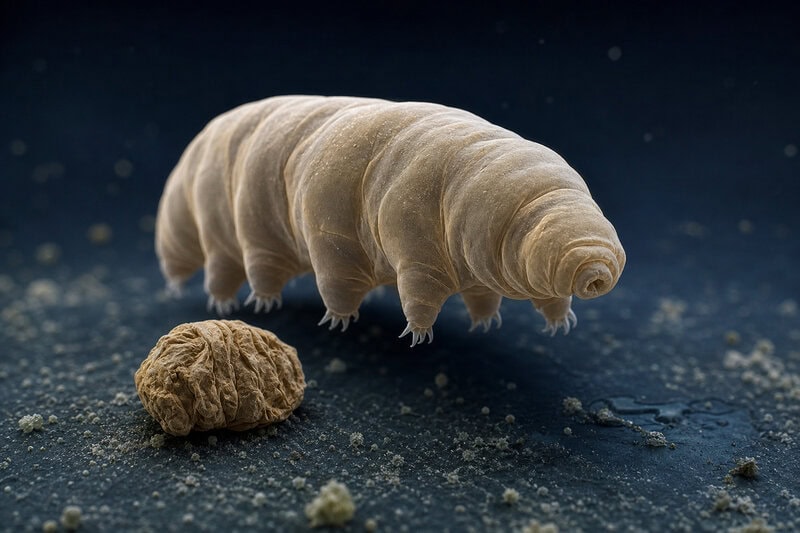
When their environment turns lethal — too dry, too cold, too irradiated, too pressurised — tardigrades activate a state called cryptobiosis, from the Greek for “hidden life.” In this condition, metabolism drops to near zero, biological processes halt almost entirely, and the animal essentially stops being alive in any conventional sense, while also not being dead.
Cryptobiosis takes several distinct forms depending on the environmental trigger. The most studied is anhydrobiosis, meaning “life without water.” As desiccation sets in, the tardigrade expels almost all of the water from its body, pulls its legs inward, and contracts into a compact, desiccated barrel shape known as a tun. Cryobiosis is triggered by extreme cold; osmobiosis by high solute concentrations; and anoxybiosis by the absence of oxygen. Each represents a distinct biochemical response, and some species can enter multiple forms depending on what threat they face.
The physical tolerances achieved in the tun state are extraordinary. Tardigrades can withstand temperatures ranging from near absolute zero up to 151°C, and pressures from the near-vacuum of space up to 6,000 times normal sea-level pressure. They can absorb doses of ionising radiation far beyond what would be lethal to any mammal. The tun is not sleep and it is not death — it is biology suspended, a trick no vertebrate and very few multicellular animals have ever evolved.
Critically, tardigrades in the tun state can persist for extraordinary lengths of time. Laboratory studies have successfully revived specimens after decades of desiccation, and there are documented cases of revival after more than thirty years in dried museum samples, though claims of revival after thousands of years remain scientifically contested.
The Space Test: What Orbit Actually Proved
The 2007 TARDIS experiment, carried on the European Space Agency’s FOTON-M3 mission, was the first time animals were exposed to open space without any protective enclosure. Tardigrades in their tun state spent ten days outside the spacecraft, exposed simultaneously to the hard vacuum of low Earth orbit, cosmic radiation, and the full, unfiltered ultraviolet output of the sun.
The results divided sharply by exposure type. Tardigrades subjected to vacuum and cosmic radiation alone showed strong survival rates and, in many cases, went on to reproduce successfully after recovery. Those exposed to the full spectrum of solar UV radiation fared considerably worse, but survival still occurred — an outcome that genuinely surprised the researchers involved. No one had expected an animal to come back from unfiltered solar UV in open space.
What the experiment confirmed was that the tun state provides real biochemical and physical shielding, not merely metabolic dormancy. Something inside the desiccated body is actively protecting cellular structures from damage that should, by any conventional biological logic, be irreversible. That finding elevated tardigrade research from a curiosity to a serious field within astrobiology and space medicine, prompting questions about whether life — or at least biological material — could survive transit between planetary bodies under certain conditions.
The Proteins at the Center of It All
The molecular explanation for tardigrade survival began coming into focus through research at UC San Diego, where scientists have gained significant new understanding of how tardigrades are protected in extreme conditions, pointing to specific molecular mechanisms that appear unique to this animal group.
At the heart of those mechanisms is a class of molecules called Tardigrade-Specific Intrinsically Disordered Proteins, or TDPs. Unlike most proteins, which fold into a fixed three-dimensional shape in order to function, TDPs have no stable structure under normal conditions. They exist in a loose, flexible state. When the tardigrade desiccates and water leaves its cells, these proteins do something remarkable: they form a protective glassy matrix throughout the cell interior, a process called vitrification.
Vitrification effectively turns the inside of a tardigrade cell into biological glass. Cellular machinery — DNA, membranes, organelles — is physically locked in place within this matrix, preventing the damage that would otherwise come from ice crystal formation, oxidative stress, and radiation. When water returns, the glass dissolves, the proteins relax back into their disordered state, and cellular processes resume.
TDPs are not the only molecular tool in the tardigrade arsenal. Tardigrades also produce elevated levels of antioxidant enzymes that neutralise the reactive oxygen species generated by radiation exposure, and some species possess a unique protein called Dsup — Damage Suppressor — which physically associates with DNA and shields it from radiation-induced strand breaks. The combination of vitrification, antioxidant response, and direct DNA protection represents a layered biochemical defence with no close parallel in the animal kingdom.
The science of extreme survival in tardigrades has direct implications for how biologists understand cellular protection across all life forms, and researchers are already investigating what these mechanisms could mean in applied contexts.
What This Means Beyond the Laboratory
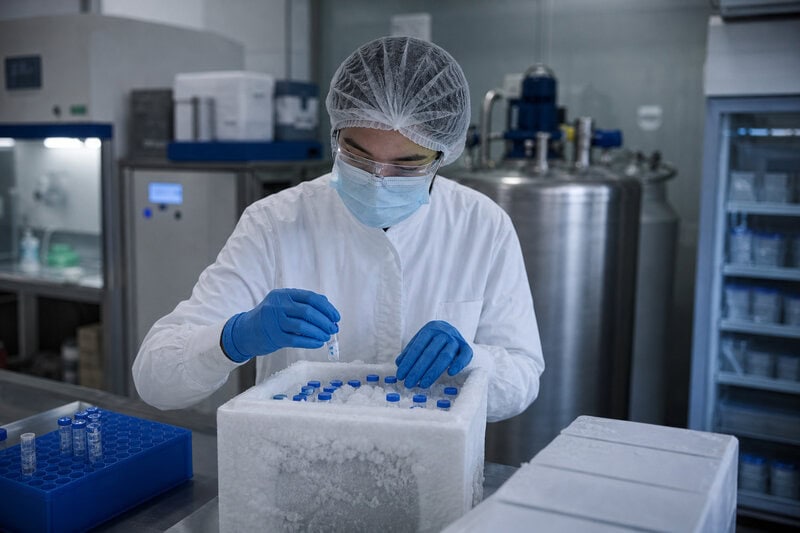
Understanding the water bear survival mechanism is no longer purely academic. The potential applications of TDP-inspired chemistry and Dsup-derived approaches span several fields:
- Vaccine and pharmaceutical storage: Many vaccines require continuous refrigeration throughout their supply chain. Proteins capable of vitrifying biological materials at room temperature could make cold-chain logistics unnecessary in regions where maintaining that infrastructure is difficult or impossible.
- Radiation protection: If the DNA-shielding properties of Dsup can be adapted for human cells, it could have implications for protecting tissue during cancer radiotherapy or reducing radiation risk for astronauts on long-duration deep-space missions.
- Crop resilience: Researchers have explored whether tardigrade genes transferred into other organisms can confer drought and desiccation tolerance — with early experiments in plants and human cultured cells showing measurable protective effects.
- Synthetic biology and pharmaceutical manufacturing: TDP-like proteins may be engineerable into production systems for sensitive biologics, potentially extending the shelf life of products that currently degrade rapidly outside cold storage.
None of these applications are in clinical use yet, but the research is advancing on multiple fronts. Scientists are actively working to harness the molecular superpowers of tardigrades for real-world biotechnology, and the pace of discovery has accelerated considerably in the past decade, driven in part by cheaper genomic sequencing that has made it easier to identify and characterise tardigrade-specific genes.
The broader lesson from half a billion years of tardigrade survival is that the most durable strategies in nature tend to be chemical rather than physical. No armour plating, no size advantage, no speed — just a quietly extraordinary set of proteins that know how to wait. For an animal smaller than a grain of sand, that turns out to be more than enough.
Key Facts at a Glance
- Size: 0.1 to 1.5 millimetres; visible under a low-power microscope but not to the naked eye
- Known species: More than 1,300 described, with new species regularly identified
- Evolutionary age: Body plan traceable to the Cambrian period, over 500 million years ago
- Temperature range survived: Near absolute zero (approximately −273°C) to 151°C
- Pressure range survived: Near vacuum to approximately 6,000 atmospheres
- Radiation tolerance: Up to 570,000 rads of X-ray radiation; a dose of around 500 rads is lethal to humans
- Cryptobiosis types: Anhydrobiosis (desiccation), cryobiosis (cold), osmobiosis (high solute), anoxybiosis (no oxygen)
- Key survival proteins: TDPs (vitrification), Dsup (DNA shielding), antioxidant enzymes
For a broader look at how tardigrades fit into the wider story of extremophile research, this piece from Big Think places their adaptations alongside those of other organisms pushing the boundaries of what life can endure.