
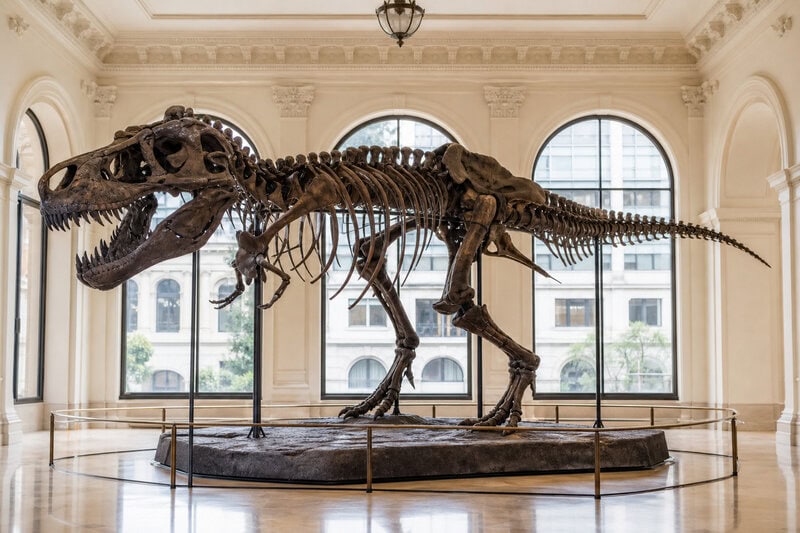
On July 14, 2026, an anonymous buyer on the other end of a phone line paid $50.1 million for a Tyrannosaurus rex skeleton nicknamed “Gus” at Sotheby’s in New York — making it the most expensive dinosaur ever sold at auction, and instantly reigniting one of the most consequential debates in modern science: who has the right to own a piece of prehistoric Earth?
A Phone Bid, a Record Price, and a 70-Million-Year-Old Specimen
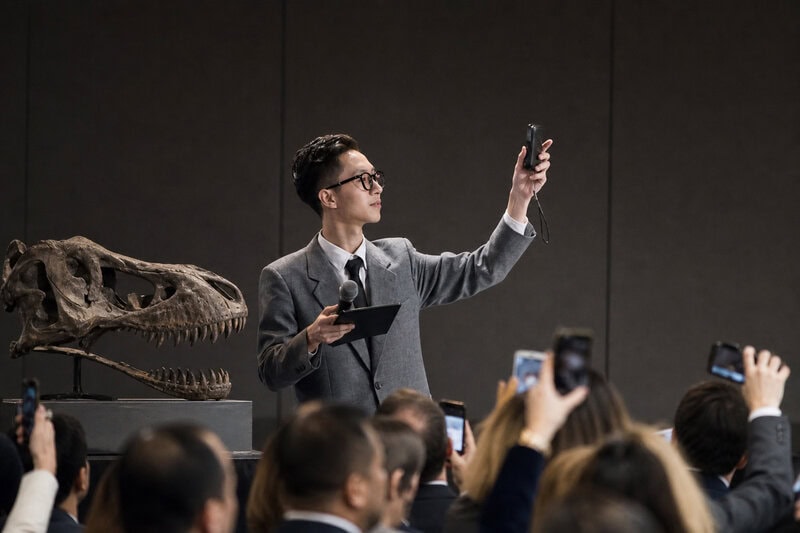
The winning bidder’s identity remains unknown. That anonymity is not merely a curiosity — it carries real scientific weight. No one outside the auction house currently knows whether Gus will end up in a private home, a corporate lobby, a foreign museum, or, in the most optimistic scenario, eventually donated to a research institution where paleontologists can study it.
The skeleton is approximately 70 million years old, which means it predates the extinction event that ended the Cretaceous period, survived burial and fossilization across deep geological time, and endured the entire arc of human civilization — only to have its fate decided in an afternoon by a phone call from an undisclosed location.
Adding a quietly human dimension to the transaction, the proceeds from the sale went to the widow of the South Dakota rancher who originally discovered the fossil. That single detail encapsulates the entire legal and ethical argument over fossil ownership in the United States: a family that did nothing improper, operating entirely within existing law, received a life-changing windfall from an object that academic researchers argue belongs, in a meaningful sense, to everyone.
From Ranch Land to Auction Block: How Gus Was Found and Excavated
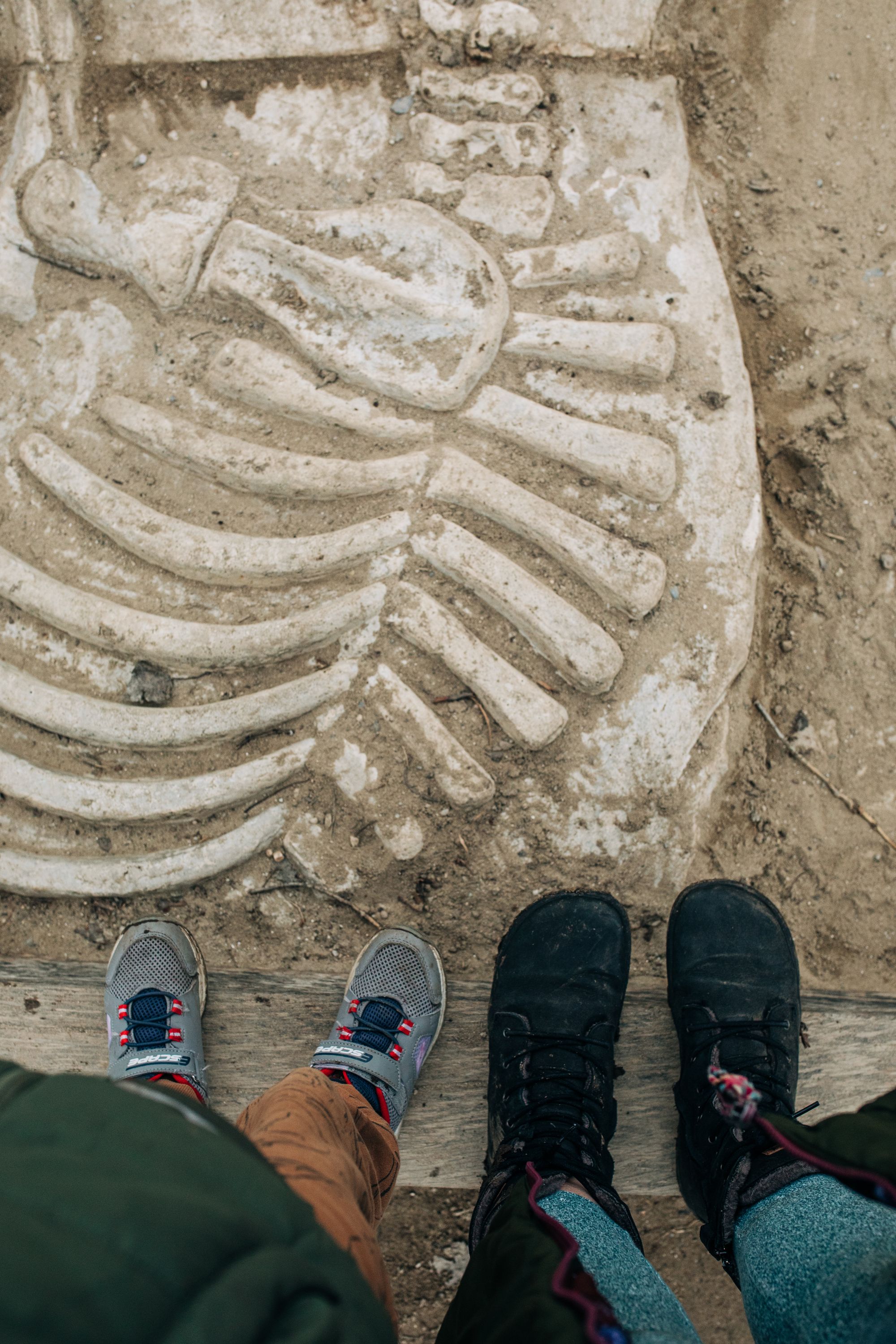
The rancher discovered Gus on his own private land — and that location triggered a legal reality that surprises most people encountering it for the first time. In the United States, fossils found on private property generally belong to the landowner, not the federal government, not a state agency, and not the scientific community. The fossil is treated, under the law, as part of the real estate itself.
Commercial paleontologists — professional fossil hunters who excavate and sell prehistoric remains for profit — began extracting Gus in 2021 and completed the recovery process in 2024 after three years of demanding fieldwork. The excavation of a T. rex is a logistical undertaking comparable in scale to a small mining operation: plaster field jackets protect fragile bones during removal, heavy equipment strips away the overlying rock known as overburden, and GPS mapping documents each bone’s precise position so that at least some spatial data can potentially be preserved for future research.
By the time Gus reached Sotheby’s, the skeleton had traveled from a remote South Dakota badland to one of the world’s most prestigious commercial venues — a journey that mirrors a growing, and deeply contested, industry. Sotheby’s sale of the Tyrannosaurus rex drew immediate international attention, both for the record-breaking price and for the broader questions it forced back into public view.
The Law That Made Gus a Commodity: Who Owns Dinosaur Fossils in America?
The legal framework governing fossil ownership in the United States is, to put it plainly, a patchwork. Under federal law, fossils found on public lands — managed by agencies such as the Bureau of Land Management or the National Park Service — are the property of the American people and cannot be commercially sold. The 1906 Antiquities Act and subsequent legislation, including the Paleontological Resources Preservation Act of 2009, enforce this principle with real consequences: illegal collection on federal land can result in criminal prosecution.
Fossils discovered on private land occupy a radically different legal space. No federal statute specifically governs the commercial sale of privately sourced vertebrate fossils, so they move through the market as freely as any other commodity a landowner might sell. South Dakota, where Gus was found, has become a focal point for this debate because the state’s Hell Creek Formation — a geological layer famous worldwide for yielding T. rex specimens — straddles a patchwork of private ranches and federal territory. The legal boundary between a fossil that belongs to science and one that belongs to the highest bidder can, quite literally, run down the middle of a working ranch.
Legal scholars and conservation advocates note that the United States stands nearly alone among major fossil-producing nations in allowing this commercial market to function at scale. Countries including China, Argentina, and Morocco prohibit or sharply restrict the private sale of significant vertebrate fossils. The U.S. framework reflects a deep cultural commitment to private property rights — but critics argue it was never designed with irreplaceable 70-million-year-old scientific specimens in mind.
The Science of What Gets Lost: Paleontology vs. the Commercial Market
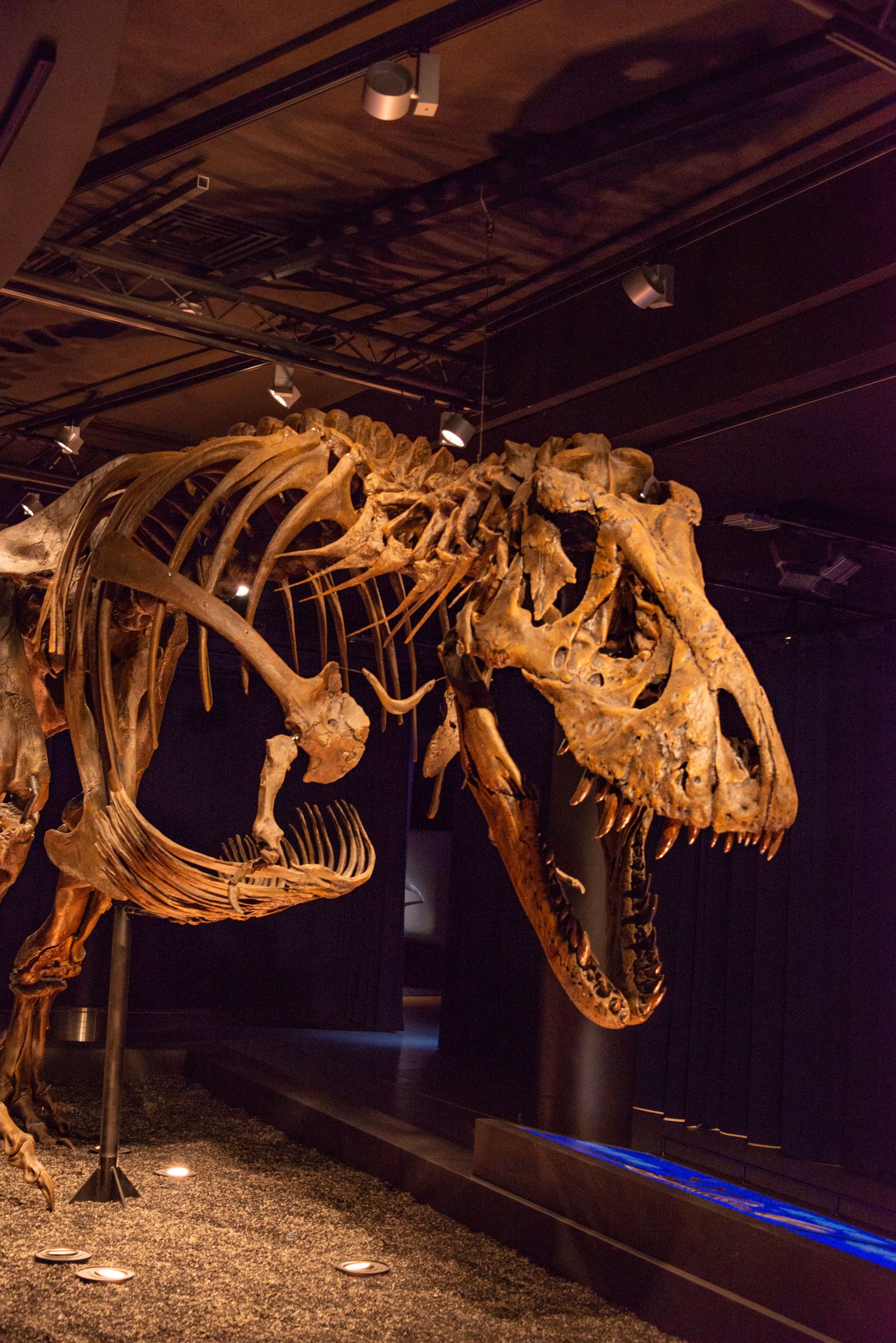
The core scientific objection to commercial fossil sales is not sentimental. It is about data loss that cannot be undone. When a specimen is excavated without rigorous scientific documentation, or when it enters a private collection inaccessible to researchers, scientists lose the contextual information — the precise rock layer, known as stratigraphic context, along with associated fauna and geographic coordinates — that gives a fossil much of its analytical value. A bone removed from its geological matrix without documentation is, in a meaningful scientific sense, diminished before a single researcher ever examines it.
The Society of Vertebrate Paleontology (SVP), the field’s primary professional organization, maintains a formal policy opposing the commercial trade in significant vertebrate fossils. The SVP argues that a commercial market incentivizes illegal collection on public lands and permanently removes specimens from open scientific inquiry. Defenders of the market counter that private landowners who cannot profit from fossils on their land have little incentive to allow excavation at all — and that some commercially excavated specimens have ultimately ended up in institutional collections.
The T. rex known as “Sue,” sold at Christie’s in 1997 for what was then a record price and subsequently acquired by the Field Museum in Chicago, is the case most frequently cited in support of this argument: a commercially traded fossil that became a cornerstone of public science and a subject of ongoing paleontological research.
The tension between these positions is real and unresolved. A 2023 analysis published in the journal PLOS ONE found that a significant proportion of theropod dinosaur specimens described in peer-reviewed literature between 2000 and 2020 had passed through commercial channels at some stage — suggesting the boundary between commercial and academic paleontology is more porous than either side typically acknowledges. The field is not simply divided into villains and heroes; it is divided into people navigating a genuinely ambiguous legal and ethical landscape.
T. Rex Auction Prices: A Market With Its Own Geology
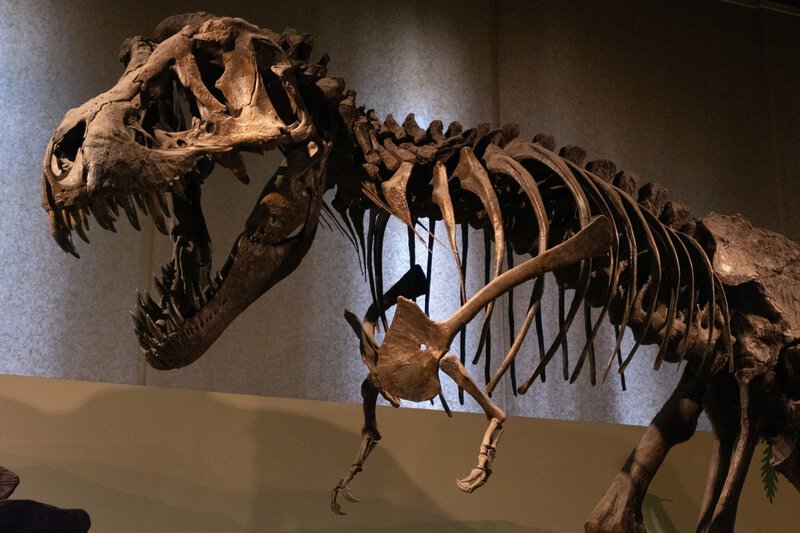
Gus’s $50.1 million sale price did not emerge from nowhere. The record reflects a decade-long escalation in the commercial dinosaur market, driven by ultra-high-net-worth collectors, aggressive marketing by major auction houses, and the totemic cultural status of Tyrannosaurus rex specifically. No other dinosaur species commands remotely comparable prices in the current market.
The previous auction record was held by “Stan,” a T. rex sold by Christie’s in October 2020 for $31.8 million to a buyer later revealed to be the government of Abu Dhabi — a sale that sparked significant scientific concern when the specimen temporarily became inaccessible to researchers. Gus has now surpassed that figure by more than $18 million, a gap that will almost certainly be read as a market signal by landowners and commercial prospectors across the fossil-rich states of the American West.
Auction house valuations for dinosaur skeletons depend on several factors: completeness (the percentage of original bone versus cast reconstruction used to fill gaps), provenance documentation, aesthetic presentation for display, and species. Economists who study collectibles markets note that dinosaur fossils share structural characteristics with fine art — they are unique, non-reproducible, status-conferring objects whose prices are set by the willingness of the wealthiest buyers to pay, largely decoupled from any metric of intrinsic scientific value.
What that dynamic means in practice is that the most scientifically significant specimens — large, visually dramatic, well-preserved — are precisely the ones most likely to attract the highest bids and exit the reach of institutional research. The market selects against science at the top end.
The Widow, the Rancher, and the Ethics of Windfall
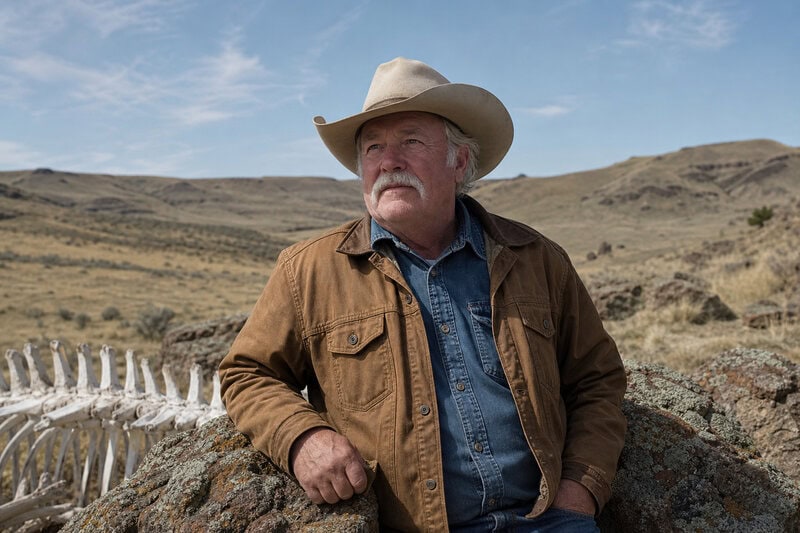
It is worth pausing on the human story at the center of this transaction. The rancher who found Gus did not manufacture the fossil. He did not exploit a loophole or circumvent any regulation. He found something extraordinary on land his family owned, and he and his widow benefited from it under rules that were already in place. Rural landowners in fossil-rich states like South Dakota and Montana often hold land that is economically marginal for farming or ranching but that sits atop geology of enormous scientific significance — a circumstance entirely beyond their control or creation.
Ethicists and legal scholars studying natural resource law have proposed middle-ground frameworks that might resolve this tension without simply abolishing private property rights. Among the proposals discussed in the academic literature are mandatory scientific documentation before any private fossil sale proceeds; right-of-first-refusal provisions that give accredited research institutions a window to match any commercial offer; and revenue-sharing models in which a percentage of auction proceeds funds public paleontological research. None of these frameworks currently exists in U.S. federal law.
For now, the widow’s windfall and the scientific community’s loss are both entirely legal outcomes of the same transaction — which is precisely what makes the debate so difficult to resolve through any mechanism short of legislation.
What Happens to Gus Now — and Why the Answer Matters
Because the buyer’s identity is unknown, so is Gus’s fate. The SVP and allied scientific organizations have repeatedly called on auction houses to require, as a condition of sale, that significant specimens remain accessible to qualified researchers. Compliance with such requests is currently voluntary and unenforceable. Sotheby’s and Christie’s have both, in recent years, acknowledged the scientific sensitivity of dinosaur sales publicly, but neither has adopted binding researcher-access requirements.
The $50.1 million T. rex sale drew global media attention precisely because it crystallizes a question that extends far beyond paleontology: who decides what counts as shared natural heritage, and who holds the legal authority to make that determination? Gus is one skeleton, but the precedent its sale sets will shape how landowners, commercial hunters, auction houses, and scientists interact for years to come.
The market signal sent by $50.1 million is not subtle. More commercial excavation will follow. More specimens will move toward auction. And the window for establishing any legal framework that balances private rights with scientific access will, like the fossils themselves, become harder to recover the longer it remains buried.
The deeper question Gus poses is not really about one dinosaur. It is about whether a society can simultaneously honor private property rights and acknowledge that some objects — pulled from the deep time of Earth’s own history — carry a weight of collective meaning that the law has not yet found the language to protect. Seventy million years in the ground, and the most consequential decision about Gus’s future came down to a single anonymous phone call lasting less than an afternoon.