
The Sun’s surface burns at roughly 5,500°C — hot enough to vaporize any known material — yet its outer atmosphere, the corona, reaches temperatures exceeding one million degrees Celsius. That paradox has persisted for more than 150 years and remains one of the most debated open questions in solar science. On August 12, 2026, researchers will have approximately three minutes to chip away at it when the Moon’s shadow sweeps across the Atlantic. Montana State University students intend to be part of that effort, launching scientific instruments into the stratosphere aboard high-altitude balloons as part of a NASA-supported national research program.
The Sun’s Outer Atmosphere Is Hotter Than Its Surface — and Nobody Fully Knows Why
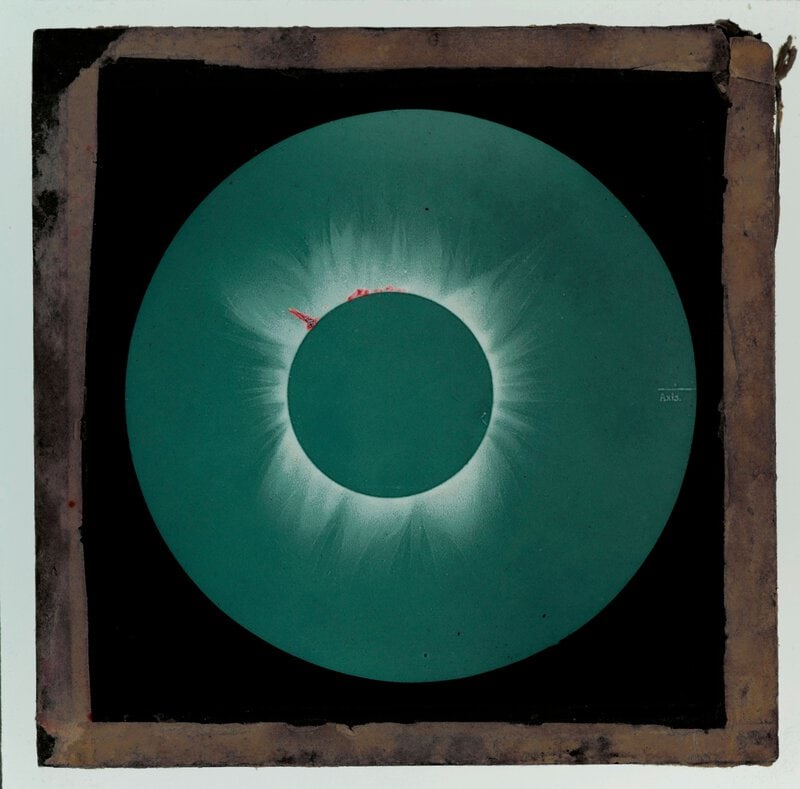
Basic thermodynamics holds that temperature should fall as distance from a heat source increases. The Sun violates that expectation dramatically. Its visible surface, the photosphere, sits at around 5,500°C, but the corona — the wispy, ghostlike halo of plasma extending millions of kilometers into space — sustains temperatures above one million degrees Celsius. Physicists have known about this inversion since the nineteenth century, and it has resisted a clean explanation ever since.
Two leading hypotheses compete to explain what is known as the coronal heating problem. The first involves magnetohydrodynamic Alfvén waves — oscillations that travel along the Sun’s magnetic field lines and may transfer energy outward from the solar interior into the corona. The second centers on nanoflares: countless small-scale magnetic reconnection events, each releasing a burst of energy too brief and faint to observe individually, but collectively capable of sustaining coronal temperatures. According to ongoing NASA solar research, neither mechanism has been confirmed as dominant. Both may be operating simultaneously, and distinguishing their relative contributions requires the kind of high-resolution coronal data that is extraordinarily difficult to collect.
The corona is normally invisible from Earth because the solar disk outshines it by a factor of roughly one million. Coronagraphs — instruments that artificially block the Sun’s disk — can reveal the corona’s outer regions, but they scatter enough light to obscure the inner corona, which is precisely where the heating mechanisms are thought to be most active. A total solar eclipse, when the Moon’s disk naturally and precisely occludes the Sun, is one of the only events that removes that blinding glare long enough for scientists to study the inner corona directly with ground-based and balloon-borne instruments.
Resolving the coronal heating mystery carries practical stakes that extend well beyond academic curiosity. The corona is the origin point of the solar wind and of solar storms — eruptions of magnetized plasma that can disable power grids, corrupt GPS signals, and expose spacecraft and astronauts to dangerous radiation. Better coronal models translate directly into better space weather forecasts, protecting infrastructure that modern society depends on every day.
Three Minutes: The Hard Constraint Shaping Every Eclipse Science Campaign
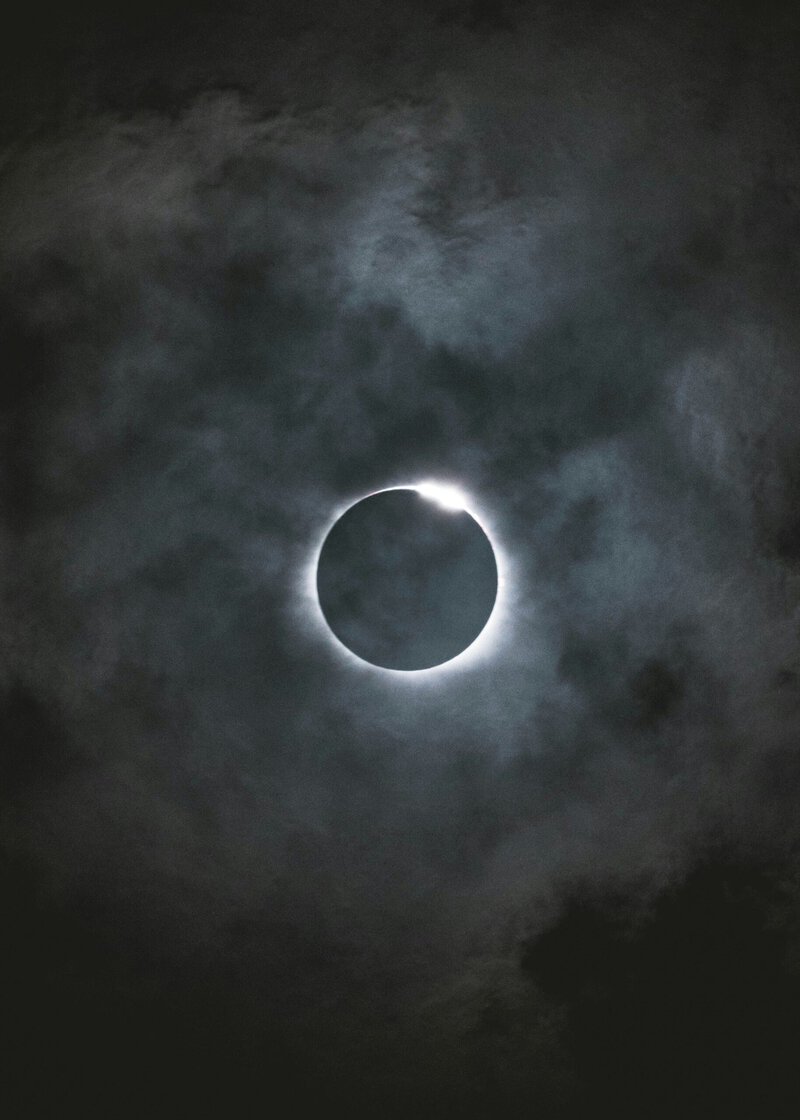
During the 2026 total solar eclipse, the period of totality — when the Moon completely covers the Sun’s disk — will last a maximum of roughly three minutes at any given point along the eclipse path. That is not a planning inconvenience; it is a hard physical constraint imposed by orbital geometry, and it shapes every decision an eclipse science team makes.
Three minutes means instruments must be pre-positioned, pre-calibrated, and capable of collecting data automatically the moment totality begins. A setup delay measured in seconds erases a meaningful fraction of usable observing time. Teams rehearse deployment procedures repeatedly before eclipse day, and payload software is typically programmed to trigger data acquisition without waiting for human input.
High-altitude balloons offer a partial solution to one of the atmosphere’s other interference problems. Ascending to approximately 30 kilometers — roughly 100,000 feet — carries instruments above about 99 percent of Earth’s atmospheric mass. At that altitude, the infrared absorption, optical distortion, and light-scattering caused by water vapor and atmospheric turbulence are dramatically reduced, producing cleaner coronal images and spectra than many ground-based stations can achieve. The balloons cannot extend the three-minute window, but they can make those three minutes scientifically richer.
The rarity of totality along any specific geographic corridor also means that the 2026 eclipse path — crossing Greenland, Iceland, Spain, and into northern Africa — represents a scientifically irreplaceable opportunity. Researchers have been planning around this date for years, coordinating instrument procurement, balloon logistics, international observatory partnerships, and airspace permits across multiple countries.
Montana State Students Enter the Mission: The Nationwide Eclipse Ballooning Project

Montana State University students are active members of the NASA-supported Nationwide Eclipse Ballooning Project (NEBP), a coordinated national research program that deploys teams of university students to study total solar eclipses using high-altitude balloons. The project is led by Angela Des Jardins, director of the Montana Space Grant Consortium at Montana State University, who has built it into a multi-institution, student-driven science and engineering enterprise with sustained NASA backing.
For the 2026 campaign, NEBP teams from several U.S. universities are slated to participate, collectively expanding the number of simultaneous data-collection points along or near the eclipse corridor. Multiple geographically distributed teams mean that cloud cover or a local equipment failure at one site does not eliminate the entire dataset — a redundancy that single-observatory campaigns cannot replicate.
The NEBP model gives students hands-on roles in genuine NASA-aligned science rather than purely observational or classroom-based experiences. Participants design and build scientific payloads, process atmospheric and coronal imaging data, coordinate balloon launches with the Federal Aviation Administration, and manage real-time radio telemetry. These are not simulated tasks; they are the actual operational responsibilities of the mission.
What the Balloons Actually Do: The Science Inside Each Payload
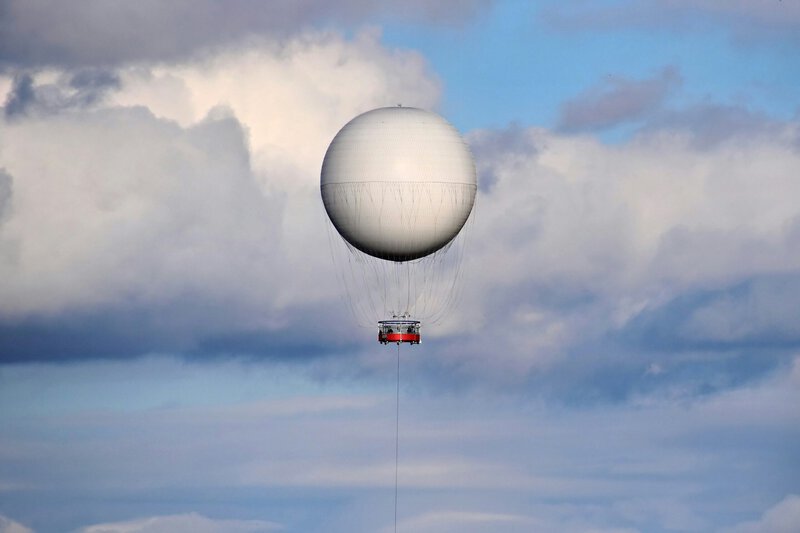
A typical NEBP balloon payload is a compact but capable instrument package. Spectrometers analyze the corona’s light spectrum, revealing information about plasma temperature, chemical composition, and the velocity of solar material moving toward or away from Earth. Cameras capture the corona’s fine structural features — streamers, plumes, and active regions — with a clarity that ground-level seeing conditions often prevent. Atmospheric sensors, meanwhile, measure how the Moon’s shadow affects temperature, pressure, and humidity in the stratosphere, turning the eclipse into a natural experiment in rapid radiative forcing.
Data from geographically distributed balloon teams can be combined after the eclipse to track how coronal features change across the solar limb during totality, providing a multi-point snapshot that no single observatory can produce alone. That spatial coverage is particularly valuable for testing coronal heating hypotheses, which predict different energy distributions across different regions of the corona.
The atmospheric measurements carry independent scientific value as well. The sudden, localized cooling caused by the Moon’s shadow crossing the stratosphere creates a controlled perturbation that meteorologists and climate scientists can use to validate atmospheric models — meaning NEBP data contributes to research agendas well beyond solar physics.
Why 2026 Specifically? The Eclipse Path and Its Scientific Advantages
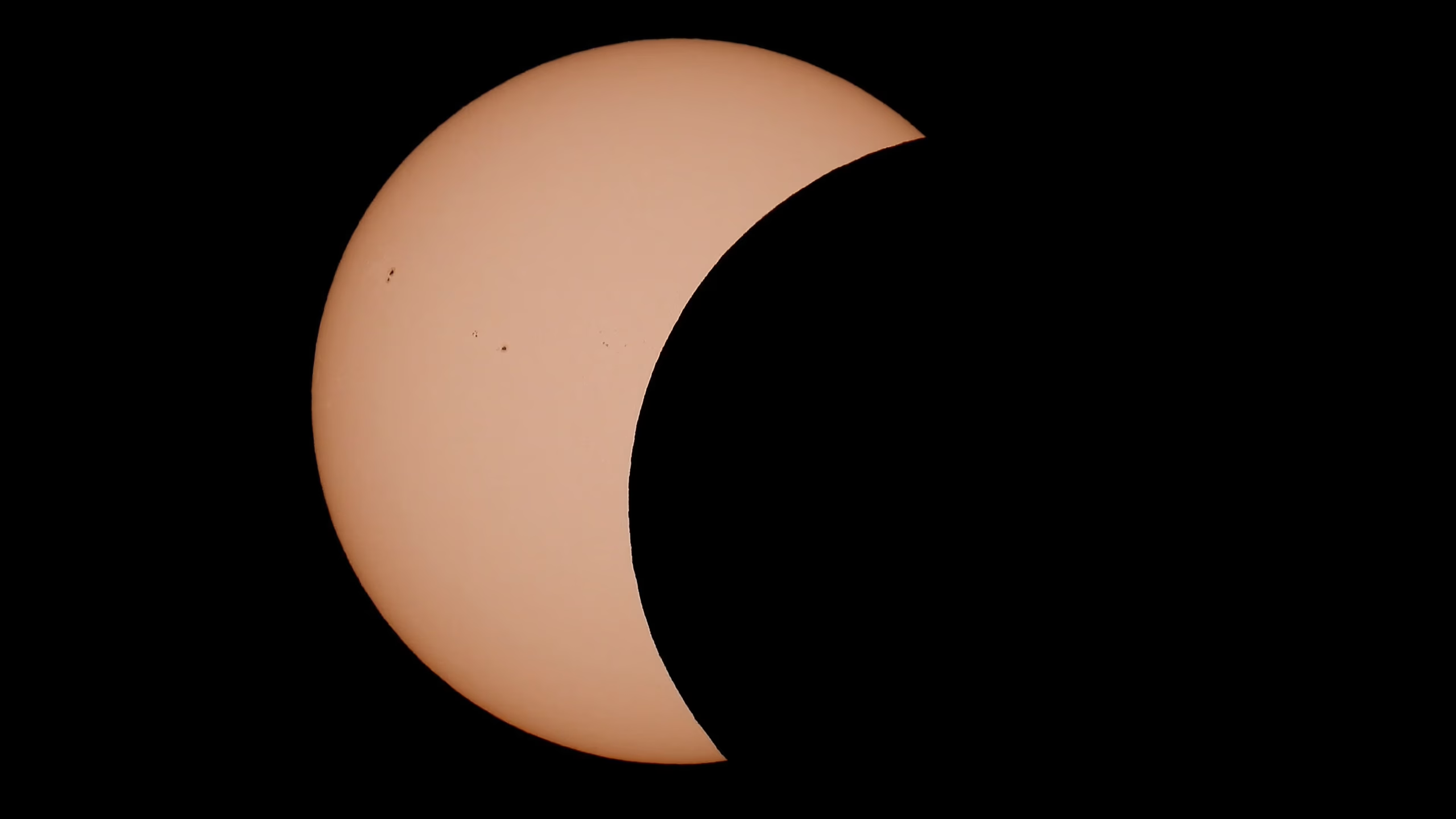
Scientists treat successive total solar eclipses not as isolated events but as a series of data points distributed across time and geography. The 2024 North American eclipse and the 2026 Atlantic-European eclipse together provide coronal observations from two different moments in the Sun’s roughly 11-year activity cycle. Comparing those datasets allows researchers to separate features of the corona that are stable across the cycle from those that respond to changing solar activity levels.
In 2026, the Sun is expected to be near or slightly past solar maximum — the peak of its activity cycle — meaning the corona is likely to display complex, dynamic structures, including multiple active regions, extended streamers, and possibly ongoing eruptions. That complexity makes the 2026 corona a richer scientific target than the simpler geometry typically seen near solar minimum, though it also makes clean interpretation more demanding.
The eclipse path over Spain and northern Africa creates opportunities for international coordination with European and African observatories that have established ground-based infrastructure. A dataset combining ground-based telescope observations, balloon-borne spectrometry, and satellite data from missions already monitoring the Sun — all collected during the same three-minute window — would represent a level of coronal coverage that no single nation’s research program could assemble independently.
From Classroom to Stratosphere: Why Student-Led Research Matters to NASA
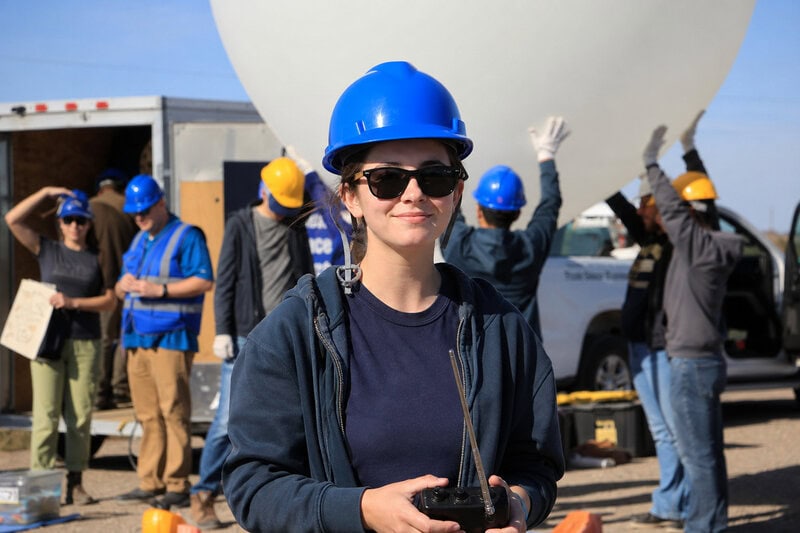
NASA’s investment in the Nationwide Eclipse Ballooning Project reflects a philosophy that eclipse events are structured scientific opportunities, not one-off spectacles, and that training the next generation of researchers through authentic mission experience is itself a program objective. Angela Des Jardins and the Montana Space Grant Consortium have positioned MSU as a national hub for this work, providing the institutional infrastructure and scientific leadership that a complex, multi-site ballooning operation requires.
Students working through NEBP must master a demanding and diverse skill set: radio communications, FAA airspace coordination, balloon inflation and release protocols, payload integration, and real-time data telemetry. Each of those competencies maps directly onto professional roles in aerospace engineering, atmospheric science, and space mission operations — fields where NASA and the broader space industry face ongoing workforce demand.
The career implications for participating students are tangible. Those who contribute to data collection and processing during a NASA-supported science campaign may earn co-authorship credit on peer-reviewed data releases, an early-career credential that carries weight in graduate school applications and aerospace hiring. High-flying balloons have already given students unique views of solar eclipses in past NEBP campaigns, and the 2026 mission extends that record into a new and scientifically significant observational window.
What a Successful 2026 Campaign Could Mean for Solar Science
No single eclipse campaign is expected to definitively solve the coronal heating problem. The physics is too complex, and the observational window too narrow, for one dataset to close a 150-year debate. But high-quality balloon and ground observations from 2026 could meaningfully constrain which heating mechanisms are most active under solar-maximum conditions, narrowing the field of competing hypotheses and guiding the design of future dedicated solar missions.
The practical downstream benefit is improved space weather prediction. Coronal models refined by eclipse observations feed into forecasting systems operated by NOAA and international agencies, which issue the alerts that prompt satellite operators to switch instruments to safe mode, power grid managers to prepare for geomagnetic disturbances, and mission controllers to schedule spacewalks away from elevated radiation periods. Better models mean earlier and more accurate warnings — with real consequences for critical infrastructure.
The atmospheric datasets gathered during eclipse totality contribute independently to climate and meteorology research, extending the scientific return of the campaign beyond heliophysics. And for the Montana State University students and their peers across the NEBP network, August 12, 2026, represents something rarer than the eclipse itself: the chance to operate real scientific instruments in a NASA-supported mission, collecting data that professional researchers will analyze and publish — all within a three-minute window the solar system will not offer again from the same vantage point for years.