
Deep inside the High Caves level of Spyro the Dragon — a 1998 PlayStation platformer played by millions — sits a painting that the vast majority of those players never saw. For roughly 25 years, a canvas depicting a figure named Nevin waited in a castle alcove, reachable only through a non-obvious sequence of movements, invisible to anyone who was not looking for it with uncommon deliberateness.
The Painting Nobody Was Supposed to Find
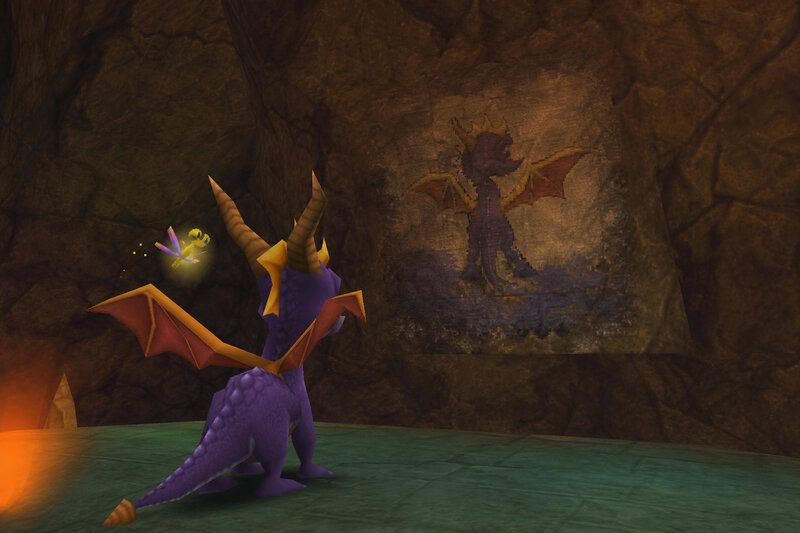
The secret is tied to one of Spyro the Dragon‘s optional mastery challenges: a Skill Point called Burn the Hidden Painting. Skill Points were themselves an underpublicized system at launch — the game offered no in-game tracker, no prompt, and no reward visible during normal play. Concealing a secret painting inside an already-obscure challenge system created a kind of double concealment: to discover the painting, a player first had to know that optional challenges existed at all.
That single artifact encapsulates a broader engineering tradition. For decades, software developers have embedded unauthorized or semi-secret content inside shipped products — a practice the industry eventually formalized under the term “easter egg.” Unpacking how this particular painting survived undetected for so long illuminates the technical and cultural mechanics behind hidden game content, and explains why historians of software now treat such finds as genuinely significant primary sources.
What the High Caves Painting Is and Where It Lives
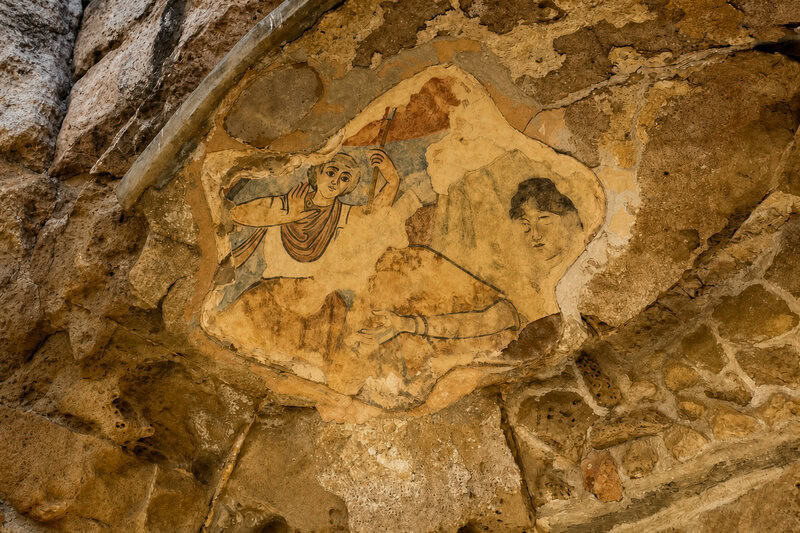
The painting is located in the castle area of High Caves, positioned beyond where the two green druids are moving the platforms — a zone most players pass through without pausing to examine the walls. The level’s critical path — the route players follow to complete its stated objectives — does not require occupying the precise position needed to see the canvas, which means the overwhelming majority of players who visited High Caves would never encounter it.
The subject of the painting, identified as Nevin, appears to be an internal reference — most likely a nod to a team member or an in-joke embedded by Insomniac Games’ developers during production. Discovery alone, however, is not enough to register the achievement. The Burn the Hidden Painting Skill Point requires the player to actively flame the canvas. The secret demands interaction, not merely observation — a design choice that, as discussed below, was almost certainly deliberate.
The Engineering Reality: How Easter Eggs Hide Inside Game Code
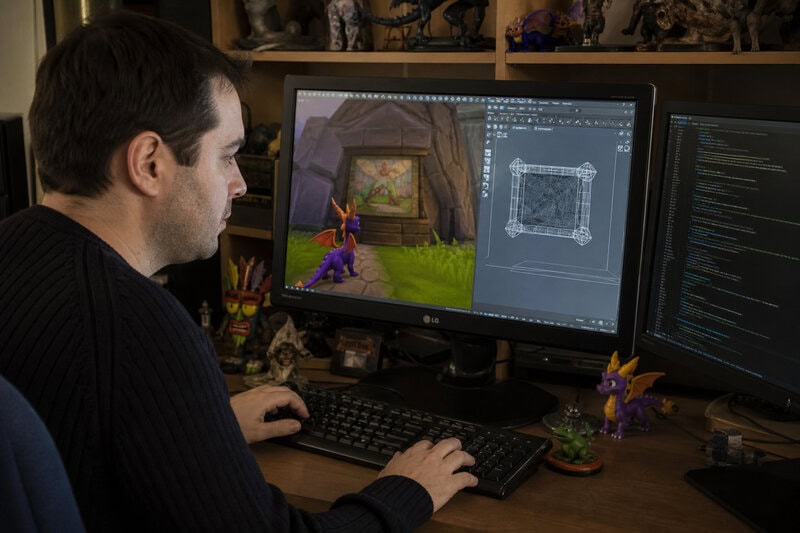
In software development, an easter egg is broadly defined as an undocumented feature or message deliberately placed by a programmer — distinct from a bug in that it requires intentional authorship rather than accidental error. The distinction matters: bugs are failures of intent, while easter eggs are expressions of it.
Late-1990s game discs shipped with significant unused memory headroom. Developers could tuck small textures, text strings, or conditional logic branches into that space with minimal risk of detection by quality assurance teams, who typically reviewed only documented features against a written specification. An asset that appeared in the game world but was never referenced in any design document was, from a QA perspective, simply part of the environment.
The High Caves painting most likely exists as a standard in-game texture asset connected to a conditional trigger. The code that registers the burn is a normal flame-interaction routine applied to an object that designers simply chose not to advertise. Nothing about the underlying implementation would have stood out to an engineer or tester reviewing the codebase for errors — it was a painting in a game full of paintings, connected to a challenge system that the studio never formally documented for players.
Because Skill Points carried no in-game signposting at launch, the challenge layer provided effective camouflage. The secret was hidden inside a secret — a layered architecture that dramatically reduced the probability of accidental discovery.
A Brief History of Hidden Messages in Video Games

The first widely documented video game easter egg is credited to Atari programmer Warren Robinett, who embedded his name in a hidden room inside Adventure in 1979. Atari’s corporate policy at the time refused to credit developers publicly, and Robinett’s response was to create an undocumented room — accessible only through a precise sequence of movements — containing the text “Created by Warren Robinett.” The practice established itself immediately as an act of authorial resistance: a way for anonymous contributors to leave a permanent mark on work the company would otherwise claim in full.
Through the 1980s and 1990s, the tradition spread as studios grew larger and development teams more anonymous. Hidden credits screens, developer portraits, and internal jokes became informal currency — gestures of solidarity on projects where public attribution was rare. By the time Insomniac Games shipped Spyro the Dragon in 1998, the practice was well-established industry-wide, even if individual instances remained largely undiscovered.
Spyro arrived at a transitional moment in the easter egg’s history. Three-dimensional environments created spatial hiding places that 2D sprite-based games could not offer: secrets could be placed behind geometry, above ceilings, or inside rooms that required unconventional navigation to reach. The High Caves painting exploits exactly this dimensionality — it occupies a real position in a navigable 3D space, but one that players have no instrumental reason to visit.
Preservation communities, including the Video Game History Foundation, have argued that undocumented content like hidden paintings represents primary-source evidence of developer intent and studio culture, making its discovery historically significant beyond mere novelty. A texture identified with a name connects a decades-old file to a real creative decision made by a real person — a connection that would otherwise be entirely lost.
Why It Stayed Hidden: Psychology and the Probability of Discovery

Cognitive load during gameplay directs attention toward objectives, enemies, and collectibles. Environmental details such as wall paintings register below the threshold of active scrutiny for most players — a dynamic consistent with research on inattentional blindness, the well-documented tendency for people to miss visible stimuli that fall outside their current focus of attention. A painting on a wall in a level full of visual detail is, perceptually, noise rather than signal for a player navigating enemies and collecting gems.
The specific route to the painting compounds this effect. According to documented sources, the painting can be accessed via Cyrus’ pad, up the route with the Tornado Wizards from the start of the level — a path that diverges from the trajectory players follow to complete High Caves’ documented objectives, meaning statistically far fewer players would ever occupy that exact spatial position. Of those who did reach the relevant area, most would be focused on nearby enemies rather than the surrounding walls.
Before widespread internet adoption, secrets spread through playground conversation and print magazines. A secret this obscure required a tipped-off journalist or an unusually methodical player to surface it — and neither apparently occurred at meaningful scale during the game’s original release window. The post-internet era introduced datamining, the practice of extracting asset files directly from game code without playing through the game, which has dramatically accelerated easter egg discovery across the industry. The High Caves painting persisted nonetheless, suggesting it was stored in a manner that blended seamlessly with ordinary environmental assets and did not trigger the anomaly-detection approaches that dataminers typically apply.
What the Painting Reveals About Insomniac’s Studio Culture in 1998

Naming the painting’s subject “Nevin” — an apparent internal reference — follows a well-documented studio tradition of embedding team members’ likenesses or names in shipped products as morale gestures during development. Insomniac Games was a small, tight-knit studio at the time of Spyro‘s production. The specificity of the reference — a named individual rather than a generic joke — implies the easter egg carried meaning for a defined circle of colleagues rather than a broad audience.
The decision to attach the painting to a Skill Point challenge rather than leave it as a purely passive texture is architecturally significant. Someone at the studio wanted the player to actively engage with the secret, not merely stumble past it. That design choice — building a required interaction into an already-hidden object — reflects a sophisticated understanding of player behavior and discovery probability.
Why This Still Matters: Preservation, Attribution, and Game Archaeology
The belated surfacing of the High Caves painting illustrates a preservation problem that extends well beyond Spyro. The Video Game History Foundation reported in 2023 that approximately 87 percent of classic video games are out of print and largely inaccessible through legitimate channels. If the underlying software becomes unavailable, secrets embedded within it become permanently unrecoverable — lost not through neglect of the secret itself, but through the loss of the medium that contains it.
Game archaeology — the systematic examination of legacy software for undocumented content — is an emerging discipline that treats hidden assets as cultural artifacts requiring methodological rigor comparable to that applied in physical archaeology. A texture identified with a name, a challenge attached to an obscure location, a conditional trigger written into a flame-interaction routine: each of these elements carries information about the human beings who made a game and the conditions under which they made it.
Attribution, in this context, is not a trivial concern. When a painting is identified as depicting someone named Nevin, that identification connects a 25-year-old file to a creative contribution that would otherwise be entirely invisible in the historical record. The developer who placed that painting — and whoever Nevin was — made a decision that shaped the texture of an experience played by millions of people. That decision deserves to be known.
As tools for scanning game binaries grow more capable of identifying anomalous or undocumented assets, the pace of discovery will accelerate. The documentation standards that communities establish today — how a find is recorded, what contextual information accompanies it, how attribution is handled — will determine whether future discoveries are preserved with appropriate care or reduced to curiosity items stripped of their historical meaning. The High Caves painting is a small example of a large question: what do we owe to the people who left messages in code, and how carefully are we listening?